Artwork
The vagabond crosses a stream with the possessions of the daughter-in-law of the king of Banaras and absconds, from a Tuti-nama (Tales of a Parrot): Sixteenth Night
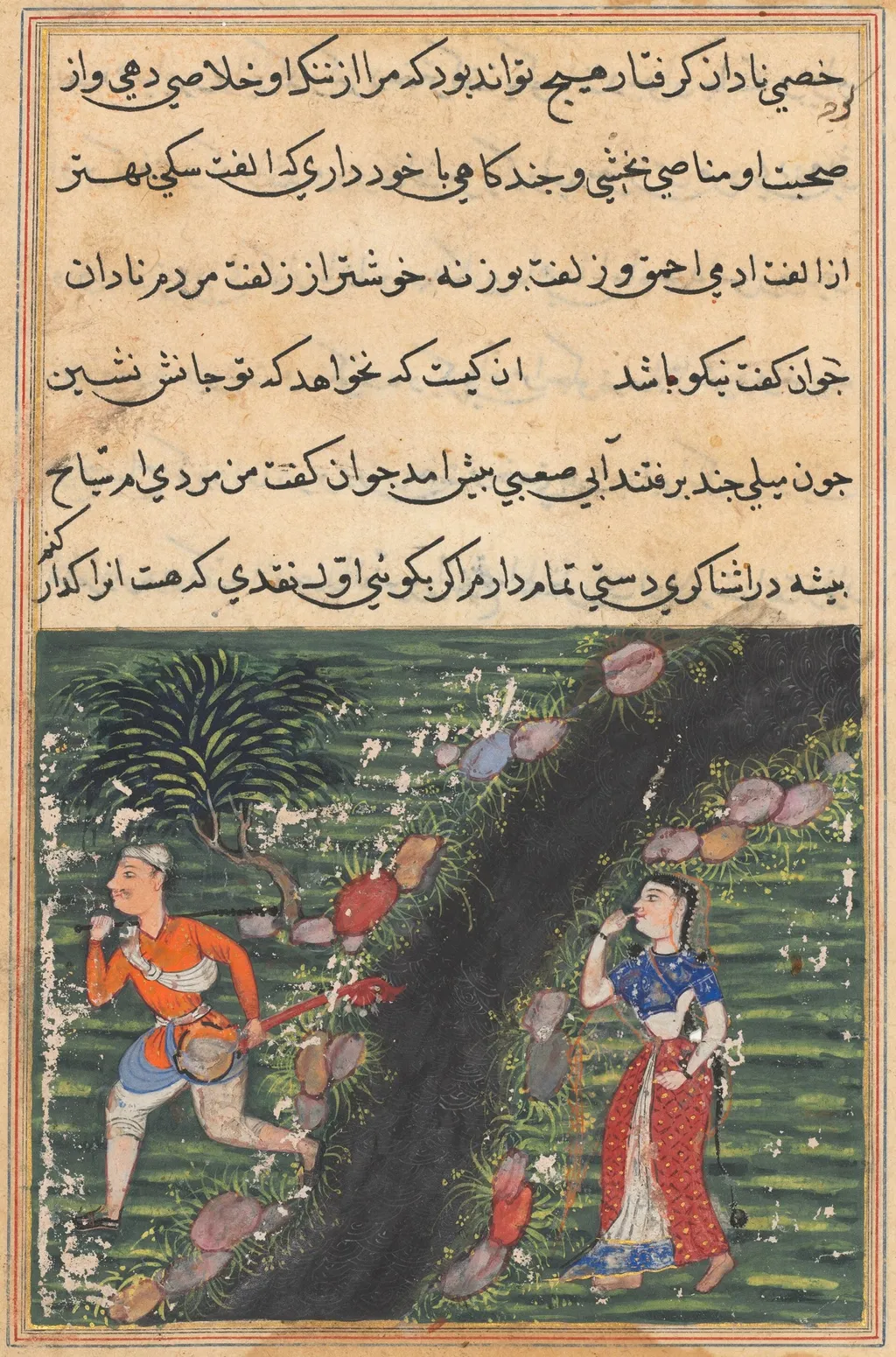
The vagabond crosses a stream with the possessions of the daughter-in-law of the king of Banaras and absconds, from a Tuti-nama (Tales of a Parrot): Sixteenth Night is an unspecified painting. It dates from 1560 and is held in the collection of the Cleveland Museum of Art.
About this work
History & Provenance
This painting was created in 1560 within the Mughal Empire as part of the illustrated manuscript known as the Tuti-nama (Tales of a Parrot).
This painting was created in 1560 within the Mughal Empire as part of the illustrated manuscript known as the Tuti-nama (Tales of a Parrot). The work is currently held in the collection of the Cleveland Museum of Art, where it is cataloged under the accession number 1962.279.120.a. While the specific individual who commissioned the manuscript or the detailed ownership chain prior to its museum acquisition is not specified in the available records, the piece is attributed to an unknown artist from the period.
Context
The painting depicting the vagabond crossing a stream with the possessions of the king of Banaras's daughter-in-law, drawn from the Sixteenth Night of the Tuti-nama, was created in 1560 during the Mughal period. It is housed in the Cleveland Museum of Art, which documents its provenance and physical details in its collection records. The work is attributed to an unknown artist associated with Mughal artistic traditions, reflecting the synthesis of Persian narrative illustration and regional courtly storytelling in 16th-century Indian painting.
Its composition and iconography have been analyzed within scholarly studies of Indo-Persian manuscript illumination, situating it within broader discussions of cross-cultural artistic exchange in early modern manuscript production.
Research on the piece emphasizes its narrative function within the Sufi moral tales of the Tuti-nama, where such scenes convey ethical lessons through allegorical storytelling. The stylistic features, including flattened perspective and intricate detail, align with Mughal atelier practices while retaining distinct regional characteristics from North Indian artistic circles. The painting’s survival in a Western museum collection underscores its significance in the global transmission of South Asian artistic heritage.
Legacy
The painting entered the Cleveland Museum of Art collection and remains on view, preserving its role as a visual narrative from the Tuti-nama series. Its depiction of a fugitive bearing royal belongings influenced later Mughal book‑art compositions that emphasized covert movement and moral ambiguity, a motif noted in scholarly studies of 17th‑century Persianate illustration.
The work continues to be cited in exhibitions on Indo‑Persian manuscript painting and in academic discussions of cross‑cultural storytelling, reinforcing its reputation as an early example of narrative suspense in Indian art.
Overview
The work, titled The vagabond crosses a stream with the possessions of the daughter‑in‑law of the king of Banaras and absconds, depicts a hurried figure in orange shirt and blue shorts clutching a red object as he dashes across a grassy riverside. A woman in a blue top and red skirt watches from the right, her demeanor composed while the man’s face shows strain and urgency. The composition is set amid verdant foliage and scattered items that suggest a domestic setting.
Subject & Meaning
The narrative derives from the sixth night of the Tuti‑nama (Tales of a Parrot), a collection of moral anecdotes. Here the fleeing vagabond is shown seizing the belongings of a royal daughter‑in‑law, a plot that underscores themes of deceit, social transgression, and the precariousness of wealth in courtly life.
Technique & Style
Executed in vivid, saturated hues, the painting relies on bold color contrasts, orange against blue, red against green, to heighten the sense of motion. The brushwork is energetic, especially in the figure’s limbs, conveying a dynamic tension that aligns with the story’s dramatic climax.
Artist & collection

- The vagabond crosses a stream with the possessions of the daughter-in-law of the king of Banaras and absconds, from a Tuti-nama (Tales of a Parrot): Sixteenth Night
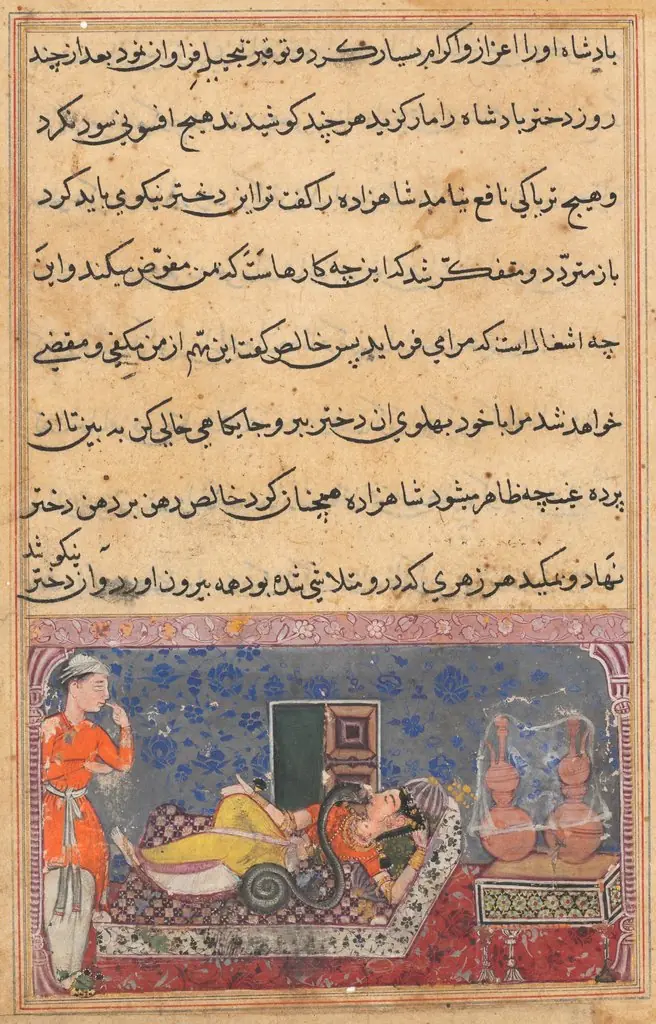 Khalis repays the prince for his kindness by changing into a snake and sucking the poison from the king’s daughter, from a Tuti-nama (Tales of a Parrot): Eighteenth Night
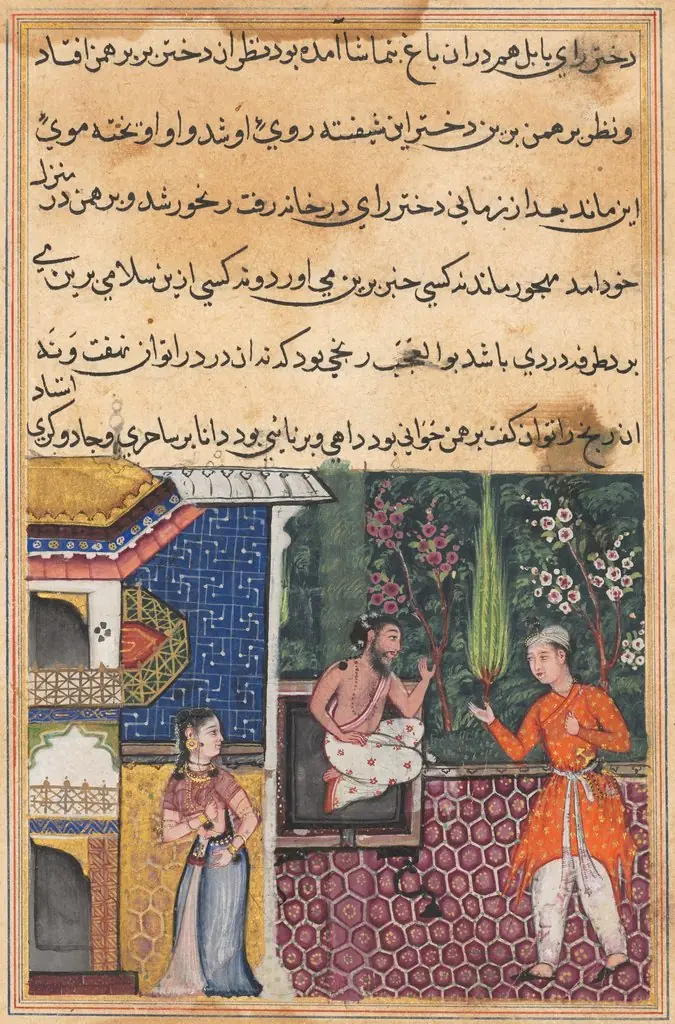 The Brahman gives an account of his falling in love with the king of Babylon’s daughter to his friend, the magician, from a Tuti-nama (Tales of a Parrot): Thirty-fifth Night
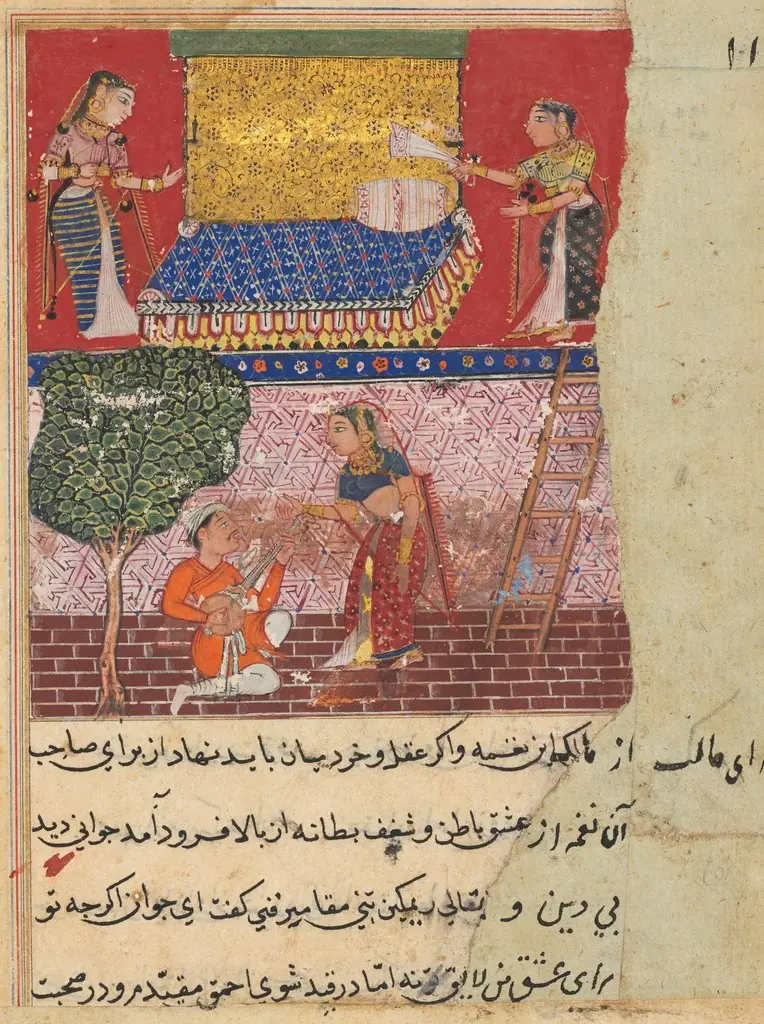 The daughter-in-law of the king of Banaras, charmed by the music of a vagabond, comes down to meet him, from a Tuti-nama (Tales of a Parrot): Sixteenth Night
 The daughter-in-law of the king of Banaras, charmed by the music of a vagabond, comes down to meet him, from a Tuti-nama (Tales of a Parrot): Sixteenth Night
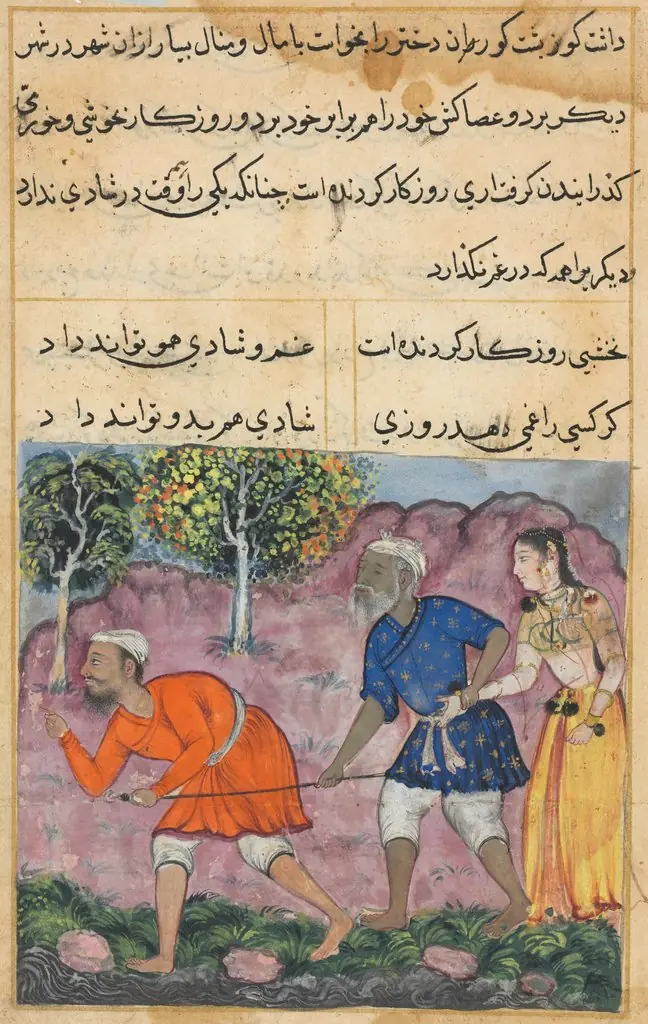 The Raja’s daughter, born with three breasts, accompanies her blind husband and his hunchback guide on a journey, from a Tuti-nama (Tales of a Parrot): Forty-second Night
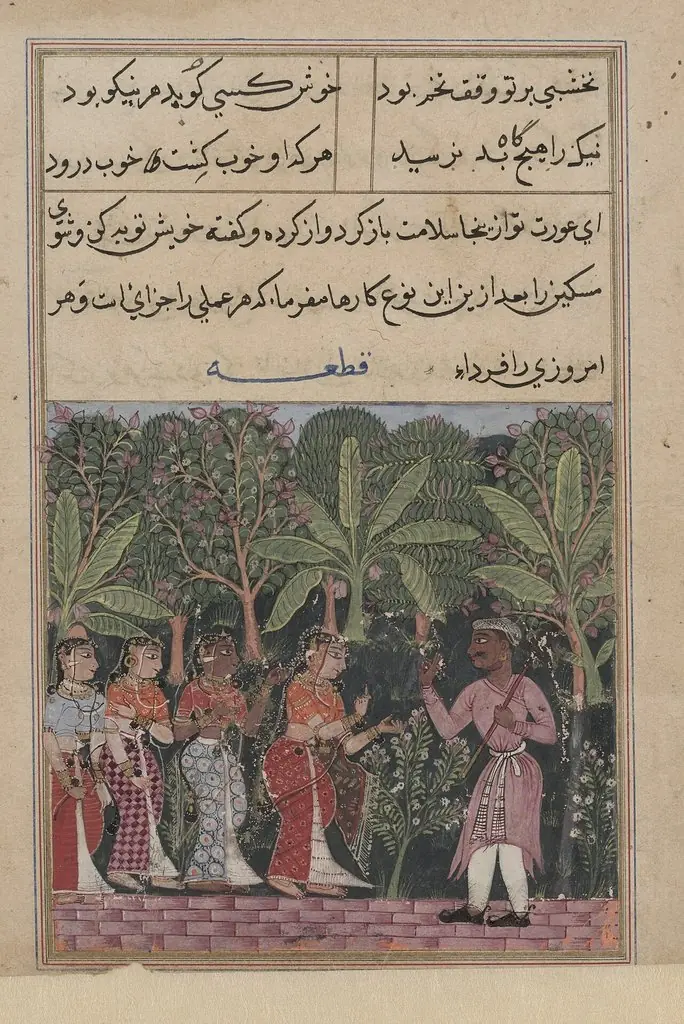 The merchant’s daughter meets the gardener, from a Tuti-nama (Tales of a Parrot): Twelfth Night
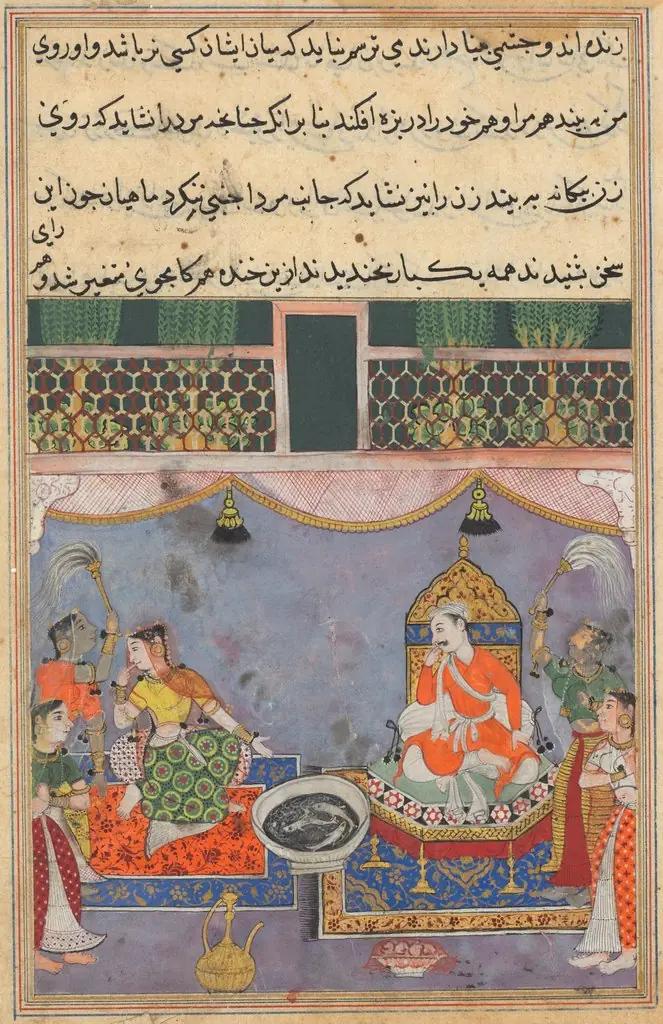 Kamjuy, the wife of the Raja, averts her face from the fishes, from a Tuti-nama (Tales of a Parrot): Twenty-third Night
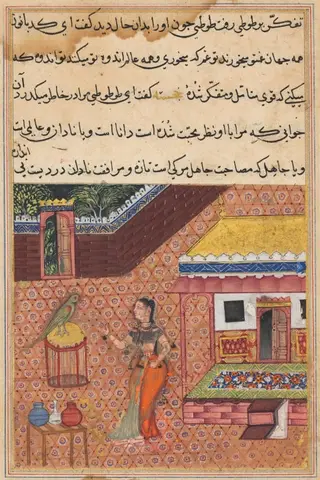 The parrot addresses Khujasta at the beginning of the thirty-fourth night, from a Tuti-nama (Tales of a Parrot)
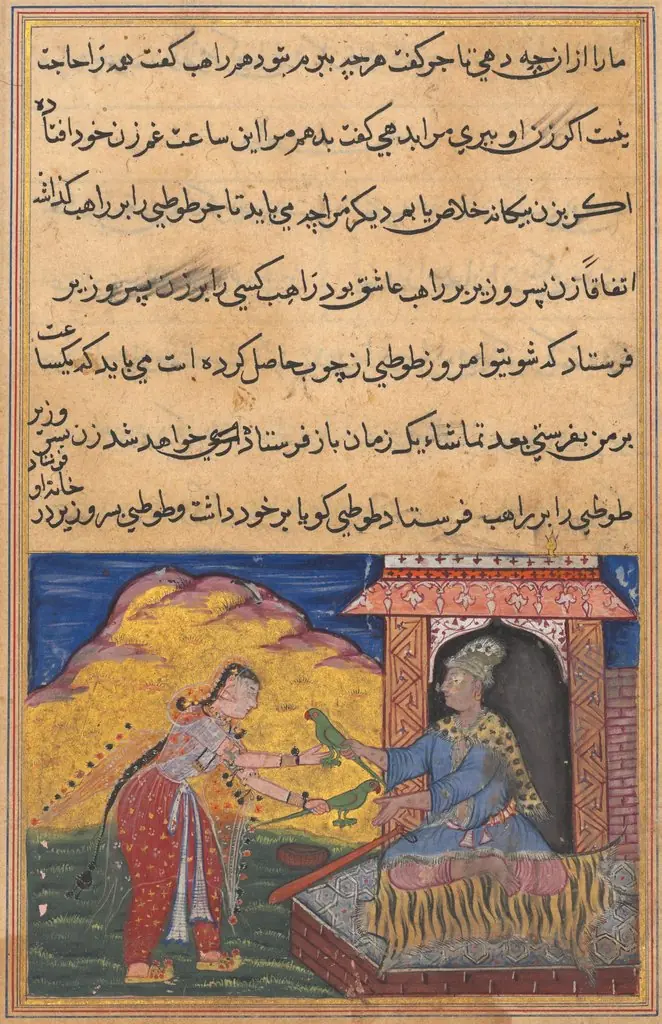 The wife of the son of the vizier brings the magic wooden parrot to her lover, the monk, who exchanges it for the replica, from a Tuti-nama (Tales of a Parrot): Tenth Night
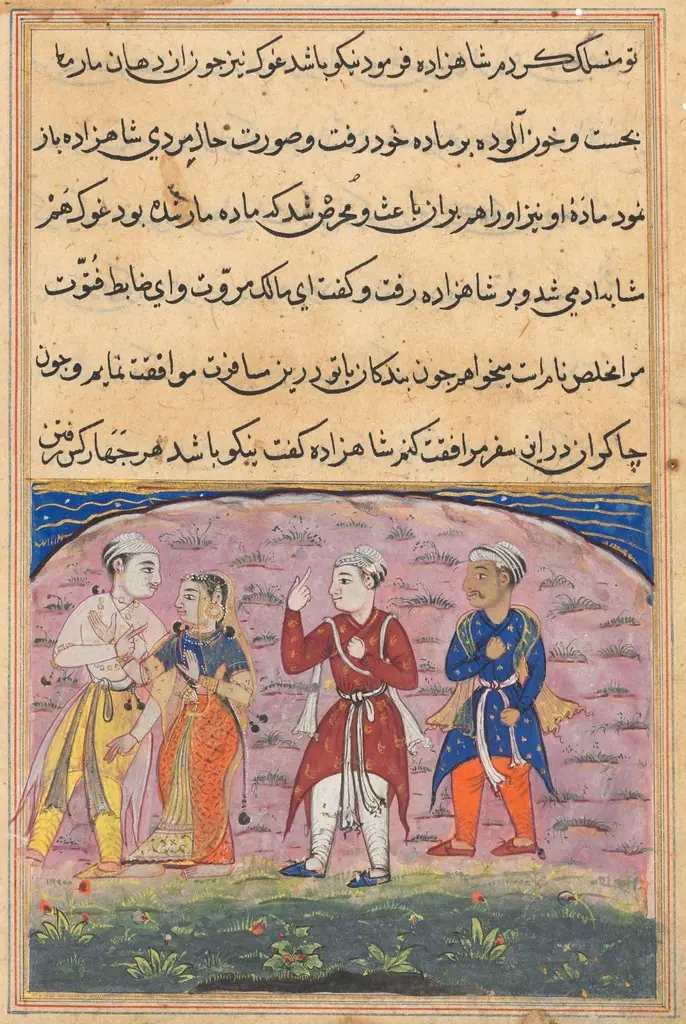 The prince and Nikfal are joined by Khalis and the Mukhlis who are the grateful snake and frog in human form, from a Tuti-nama (Tales of a Parrot): Eighteenth Night
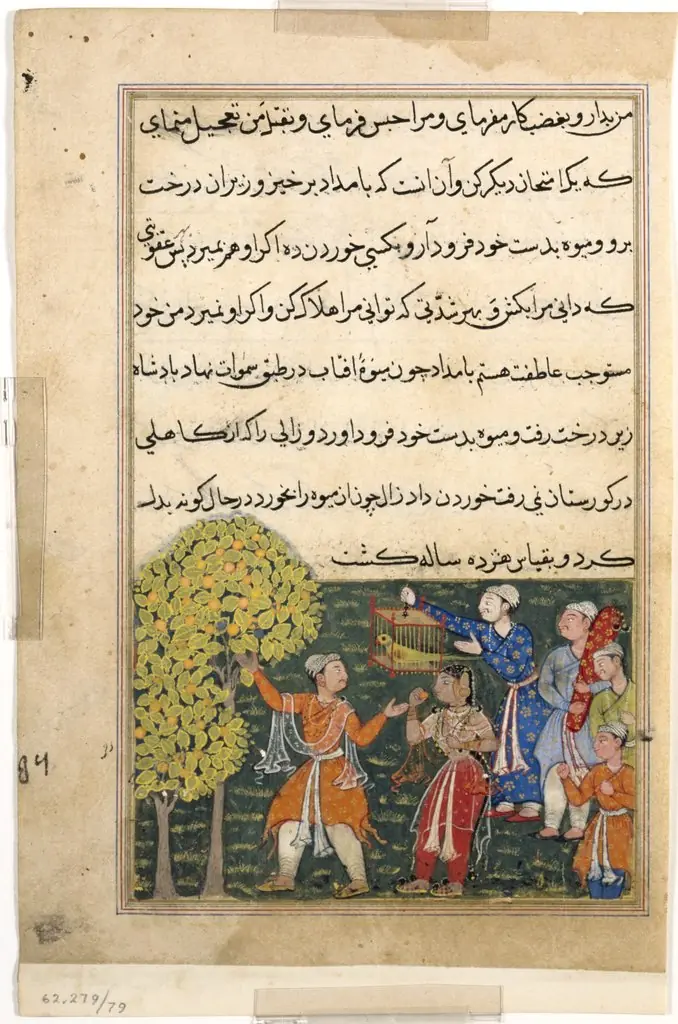 The king plucks fruit from the Tree of Life with his own hands and feeds it to a lady, from a Tuti-nama (Tales of a Parrot): Ninth Night
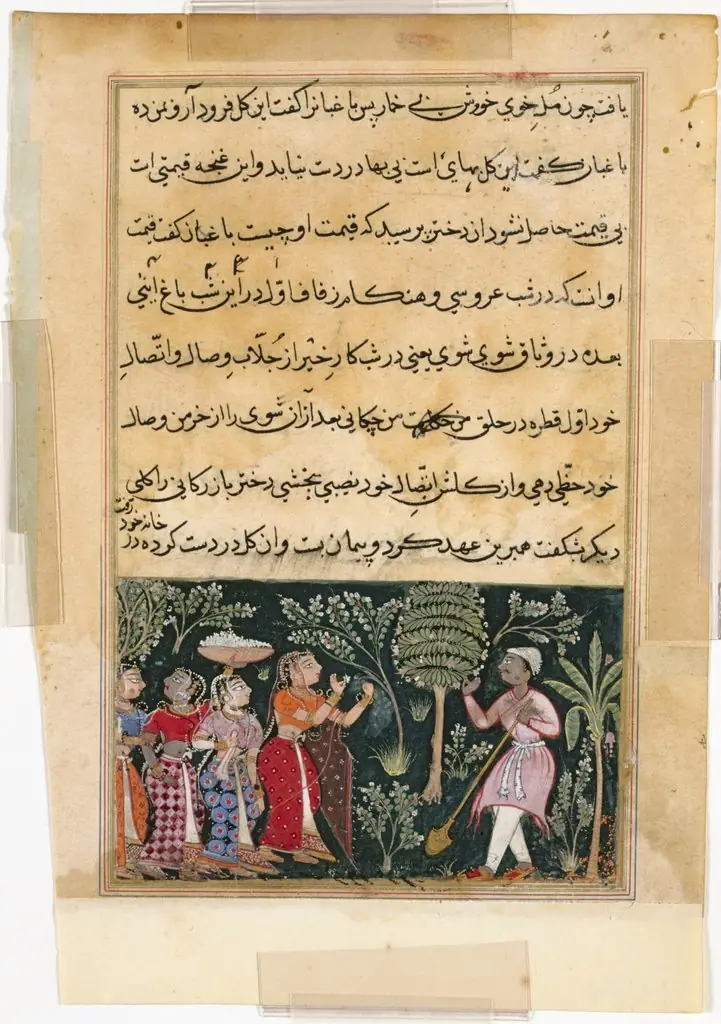 The daughter of the merchant of Mazanderan asks the gardener for the rose, from a Tuti-nama (Tales of a Parrot): Twelfth Night
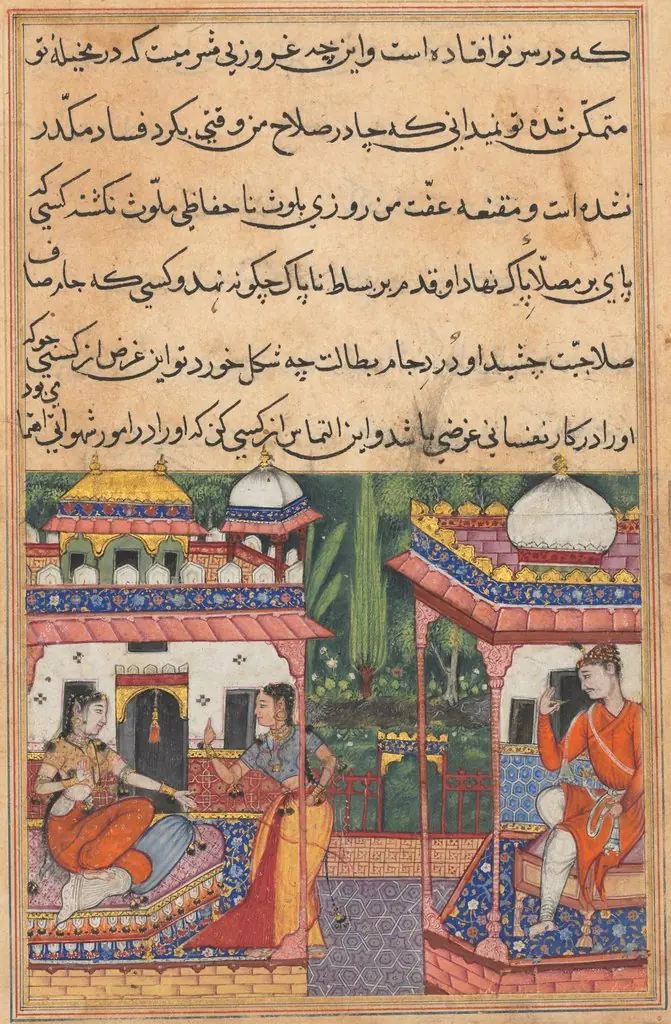 Kaiwan sends a message of love to Khurshid, wife of his brother Utarid who is away on a journey, from a Tuti-nama (Tales of a Parrot): Thirty-second Night
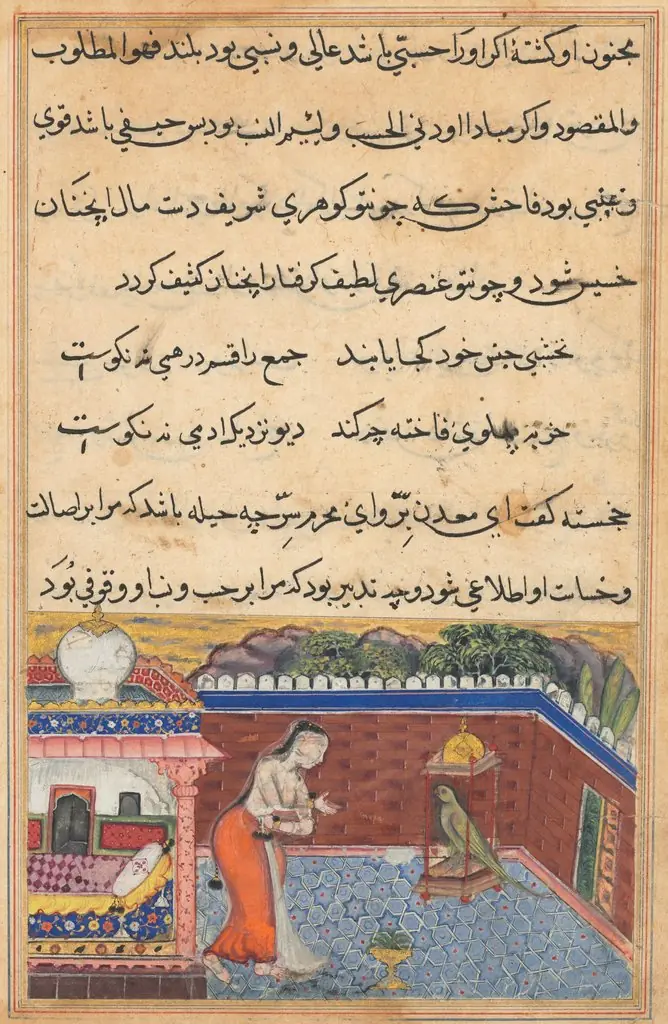 The parrot addresses Khujasta at the beginning of the thirty-first night, from a Tuti-nama (Tales of a Parrot)
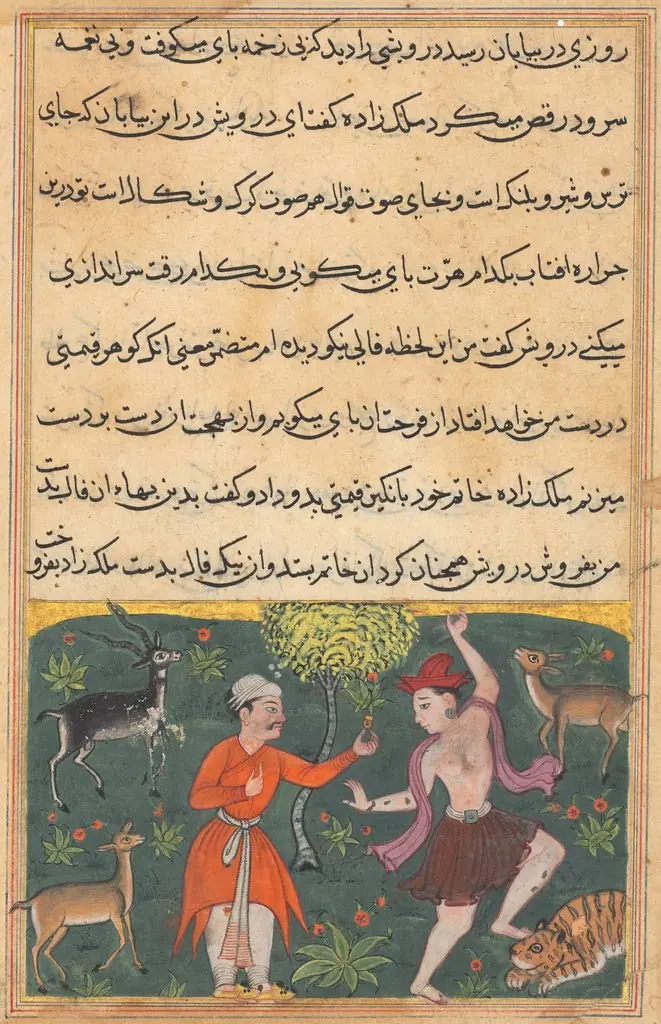 The prince meets a carefree dancing dervish whose good fortune he purchases for his ring, from a Tuti-nama (Tales of a Parrot): Eighteenth Night
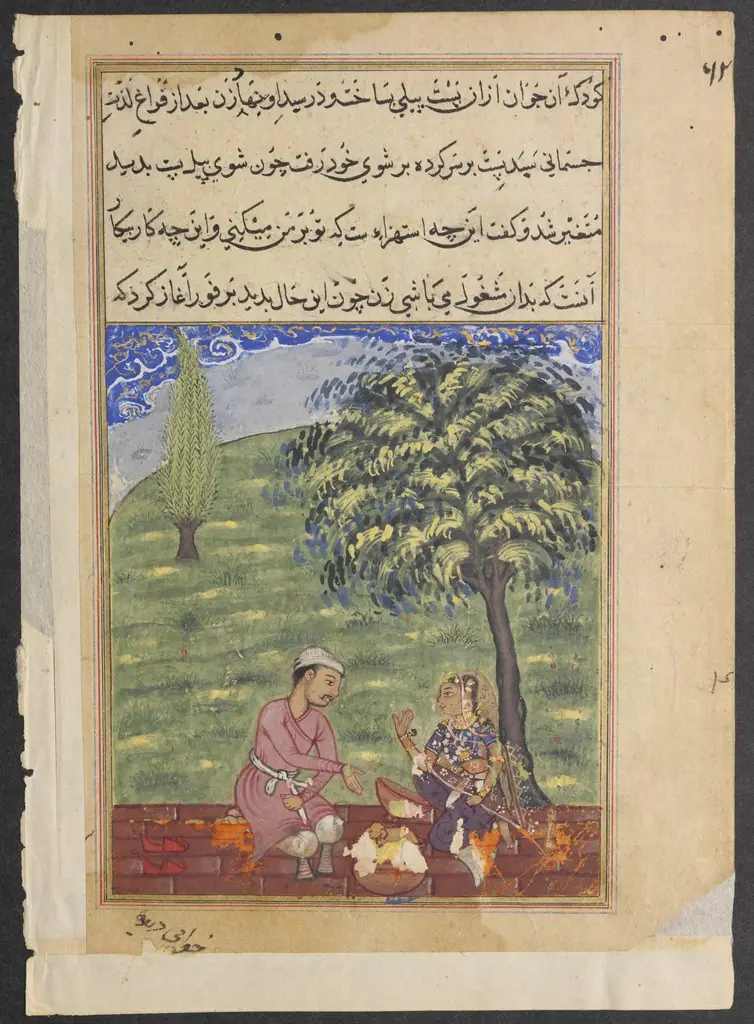 The unfaithful wife explaining away the presence of the dough elephant, from a Tuti-nama (Tales of a Parrot): Eighth Night
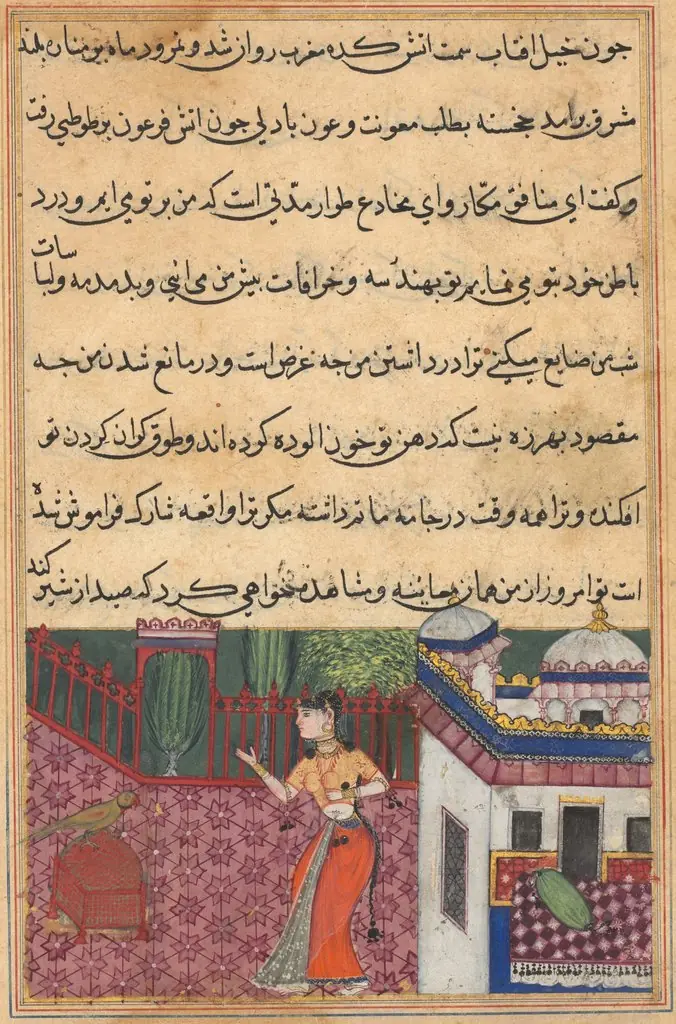 The parrot addresses Khujasta at the beginning of the thirty-third night, from a Tuti-nama (Tales of a Parrot)
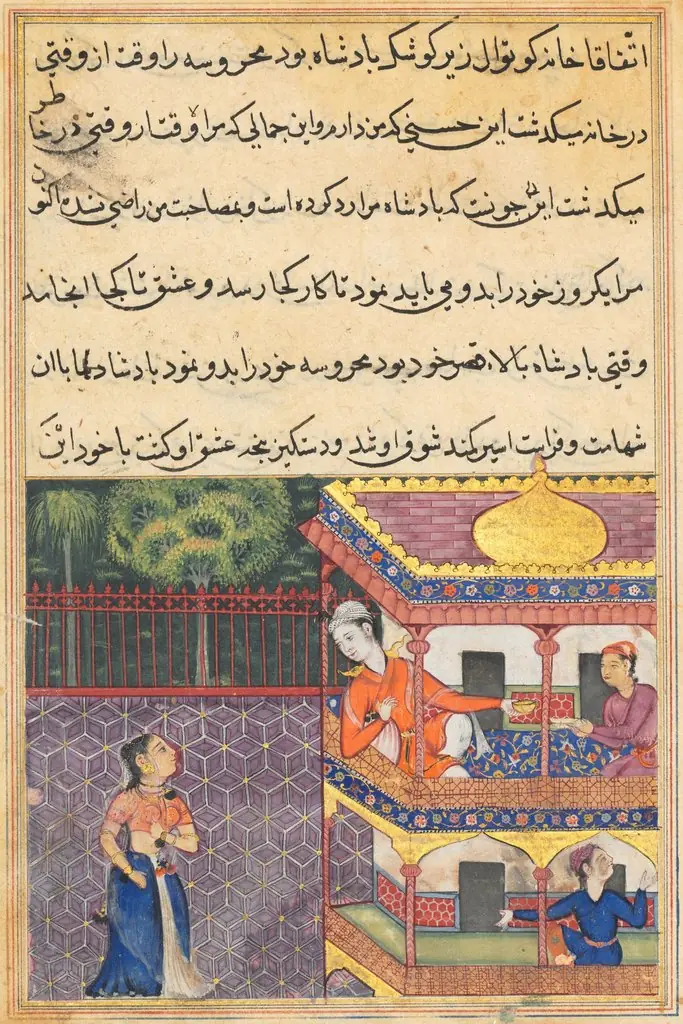 The king of Zabul sees Mahrusa from his palace balcony, from a Tuti-nama (Tales of a Parrot): Thirty-sixth Night