Artwork
Saint Roch Carried to Heaven by Angels
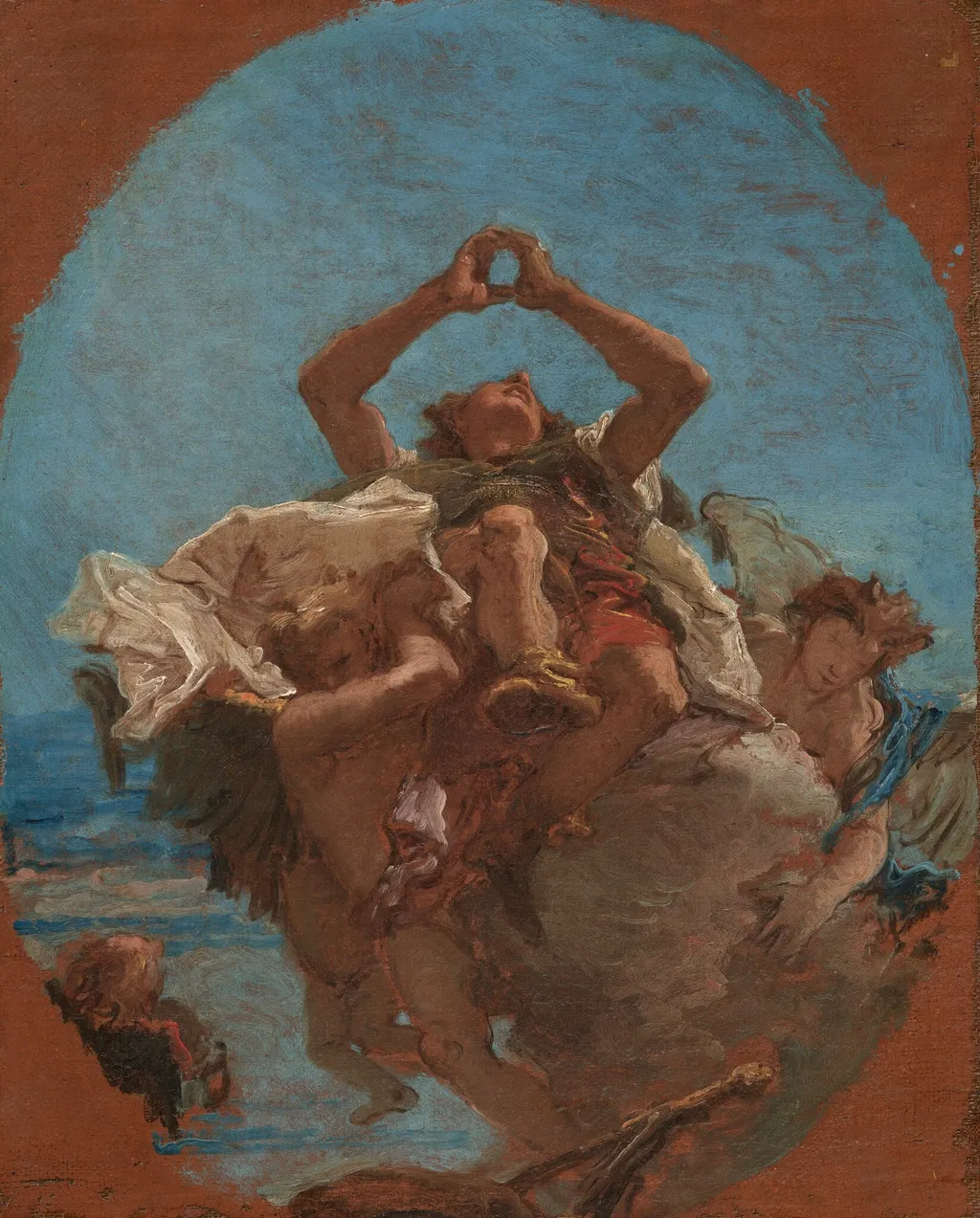
Saint Roch Carried to Heaven by Angels is an oil painting by the Baroque artist Giovanni Battista Tiepolo. It dates from 1740 and is held in the collection of the National Gallery of Art.
About this work
Subject & Meaning
The work thus represents both a hagiographic narrative and a devotional image, presenting the saint's spiritual triumph and his role as a heavenly intercessor.
The painting depicts Saint Roch, a Christian saint traditionally associated with plague protection and pilgrimage, being carried heavenward by angels. The subject belongs to the genre of religious art and centers on the saint's ascent or apotheosis, a moment of divine transport that signifies his sanctification. Tiepolo's composition frames Roch as the focal figure being borne aloft by celestial attendants, a motif drawn from the iconographic tradition of saints elevated by angels, which visually communicates the soul's reception into heaven.
The work thus represents both a hagiographic narrative and a devotional image, presenting the saint's spiritual triumph and his role as a heavenly intercessor.
History & Provenance
Saint Roch Carried to Heaven by Angels was painted by Giovanni Battista Tiepolo in 1740. The earliest documented owner is Thomas Humphrey Ward (1845–1926), a London-based sometime dealer, whose connection is established through handwritten notes by W. R. Valentiner dated May 1932. By 1932 the work had passed to Kleinberger Galleries in New York.
It was subsequently offered at Parke-Bernet Galleries in New York on 3 December 1942 (lot 34), where it was purchased by Victor Bacchi. The painting later entered the collection of Howard Sturges (d. 1955) of Providence, Rhode Island, who bequeathed it to the National Gallery of Art in Washington, D.C., in 1956. Documented exhibition history includes a 1932 College Art Association exhibition and a 1933 Springfield Museum exhibition.
Context
The 1740 oil on canvas by Giovanni Battista Tiepolo depicts Saint Roch ascending amid angels and exemplifies the Rococo emphasis on dynamic composition and decorative coloration. Its early ownership by London collector Thomas Humphrey Ward, subsequent sales at Kleinberger Galleries and Parke-Bernet in 1942, and bequest to the National Gallery of Art trace a documented provenance. The work was featured in the 1932 College Art Association exhibition catalogue and the 1933 Springfield Museum catalogue, indicating its recognition within contemporary art scholarship.
These factors situate the painting at the intersection of Tiepolo's Venetian narrative tradition and the broader European religious painting discourse of the 18th century.
Overview
Giovanni Battista Tiepolo's Saint Roch Carried to Heaven by Angels, painted around 1740, is an oil on canvas exemplifying the Rococo style. This work by the prominent 18th-century Venetian artist depicts the ascension of Saint Roch, a common religious theme in Tiepolo's extensive oeuvre. The painting showcases the artist's characteristic use of light and movement, reflecting the decorative aesthetic prevalent in Venetian art of the period.
Technique & Style
Executed in oil on canvas, this work is a characteristic example of Tiepolo's Rococo approach. The composition emphasizes upward movement and weightlessness, with soft light illuminating the figures and their drapery. Tiepolo's affinity for dynamic sky scenes is evident in the graceful forms of the angels and the ethereal atmosphere, aligning with the Rococo preference for elegance, lightness, and decorative flourish in depicting heavenly visions.
Own this work as a print
Artist & collection

Artist
Giovanni Battista Tiepolo, also known as Giambattista Tiepolo, was an Italian painter and printmaker from the Republic of Venice who painted in the Rococo style, considered an important member of the 18th-century Venetian school.


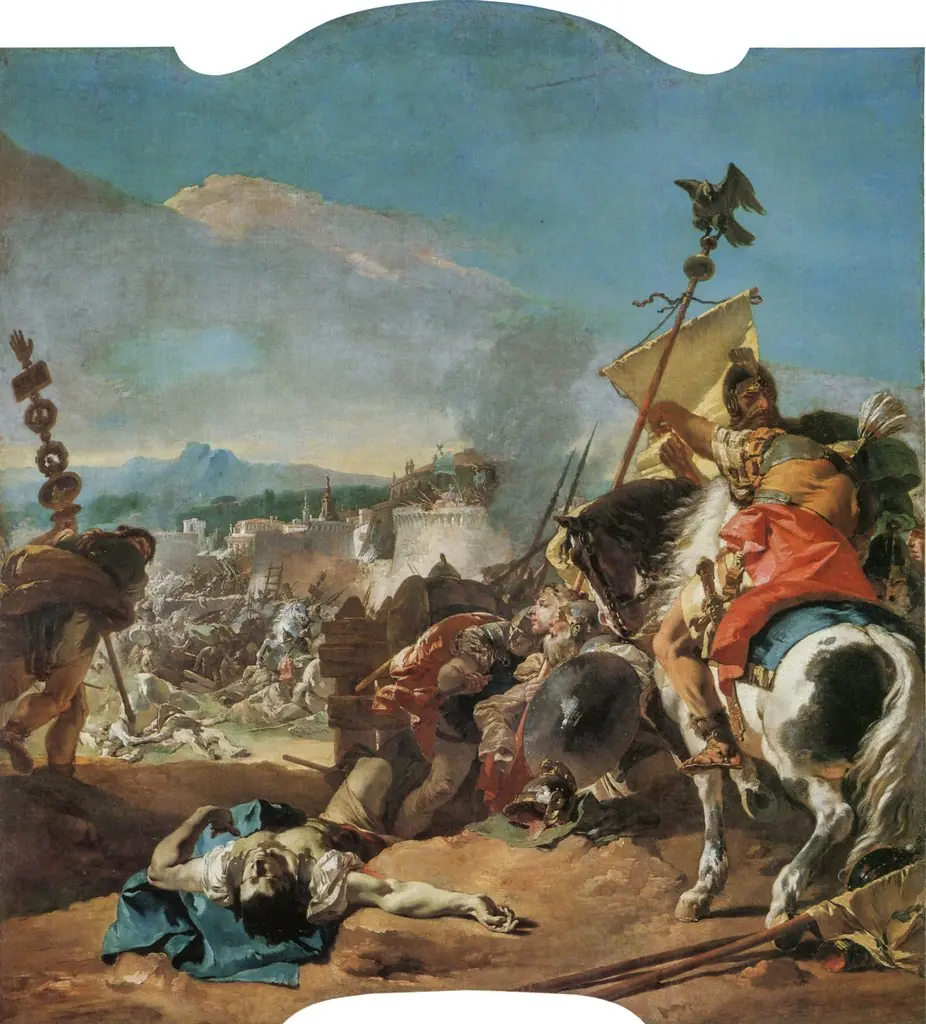
- Sketch for a Ceiling
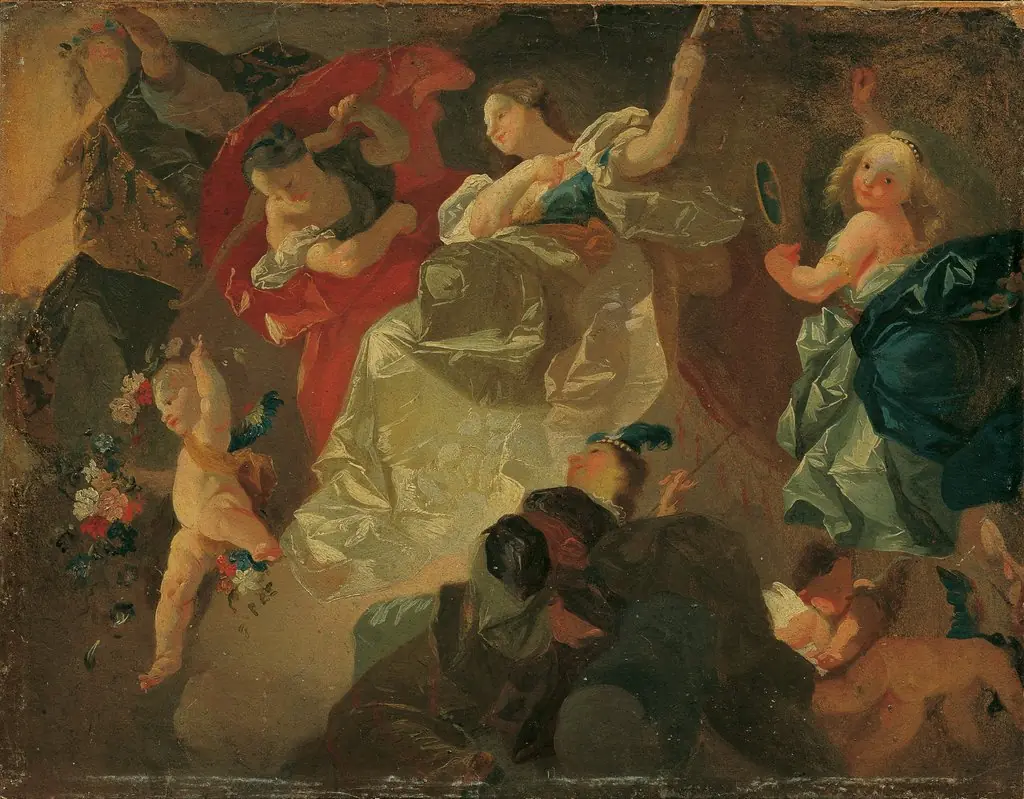 Virtues
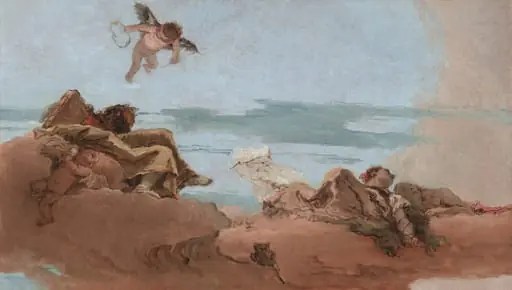 Study for a Ceiling with the Personification of Counsel
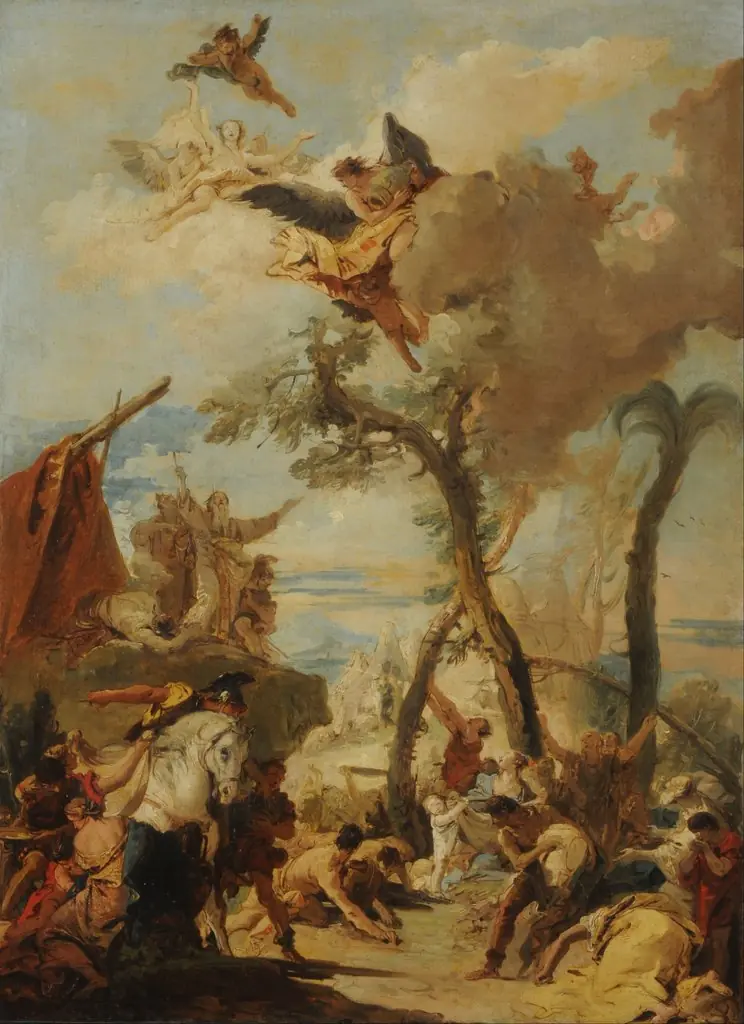 The Hebrews collecting manna in the desert
 "Aurora" ("Goddess of the Dawn") – Sketch to a Plafon at the House of Jura Nieczajew-Malcew in Sanktt Petersburg
 Neptune and the Winds
 The Apotheosis of the Spanish Monarchy
 The Sacrifice of Isaac
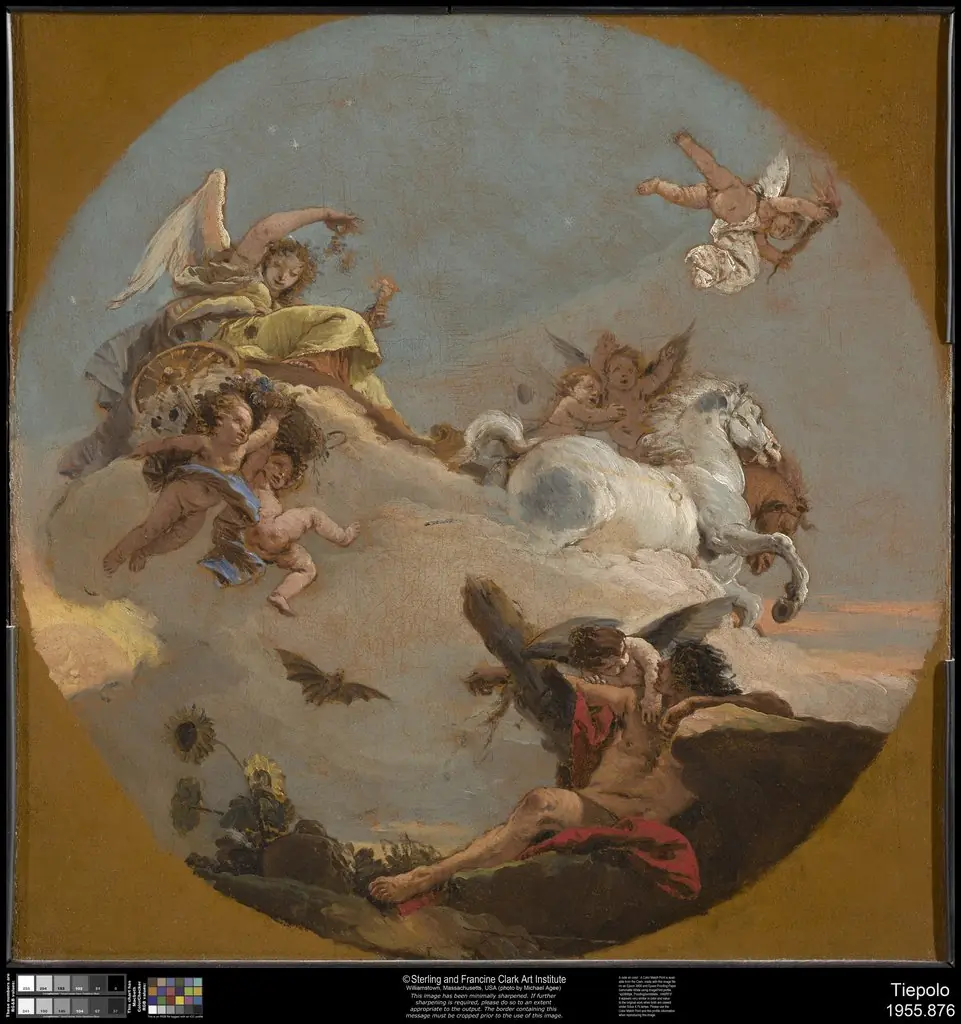 The Chariot of Aurora
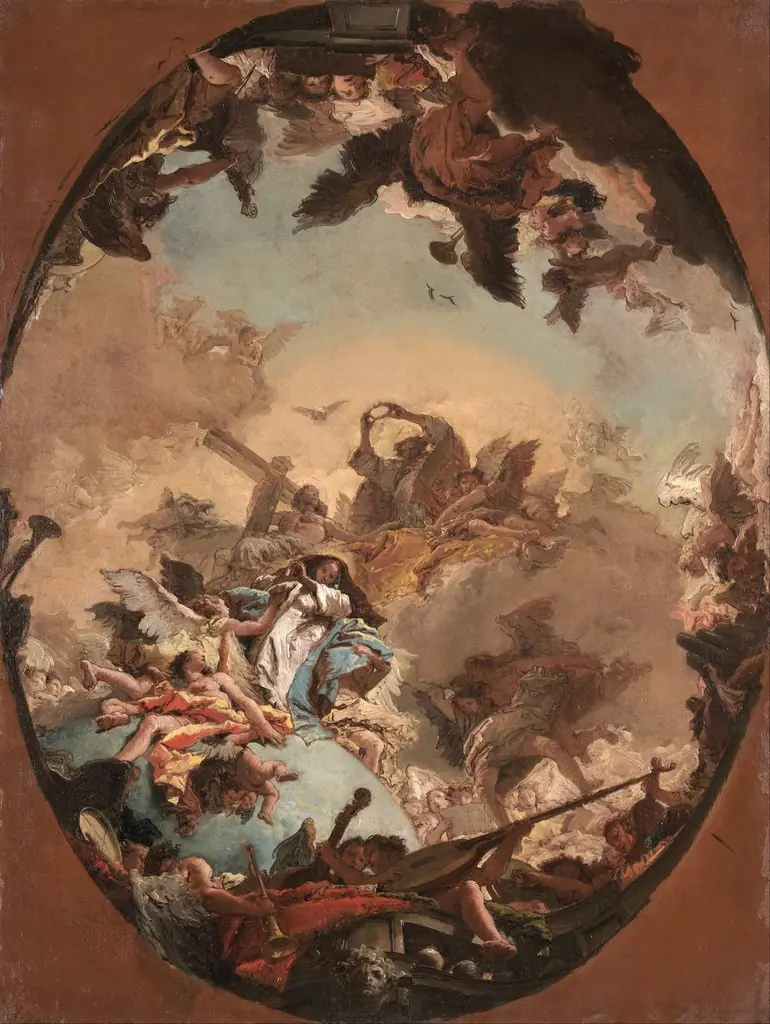 The Coronation of the Virgin
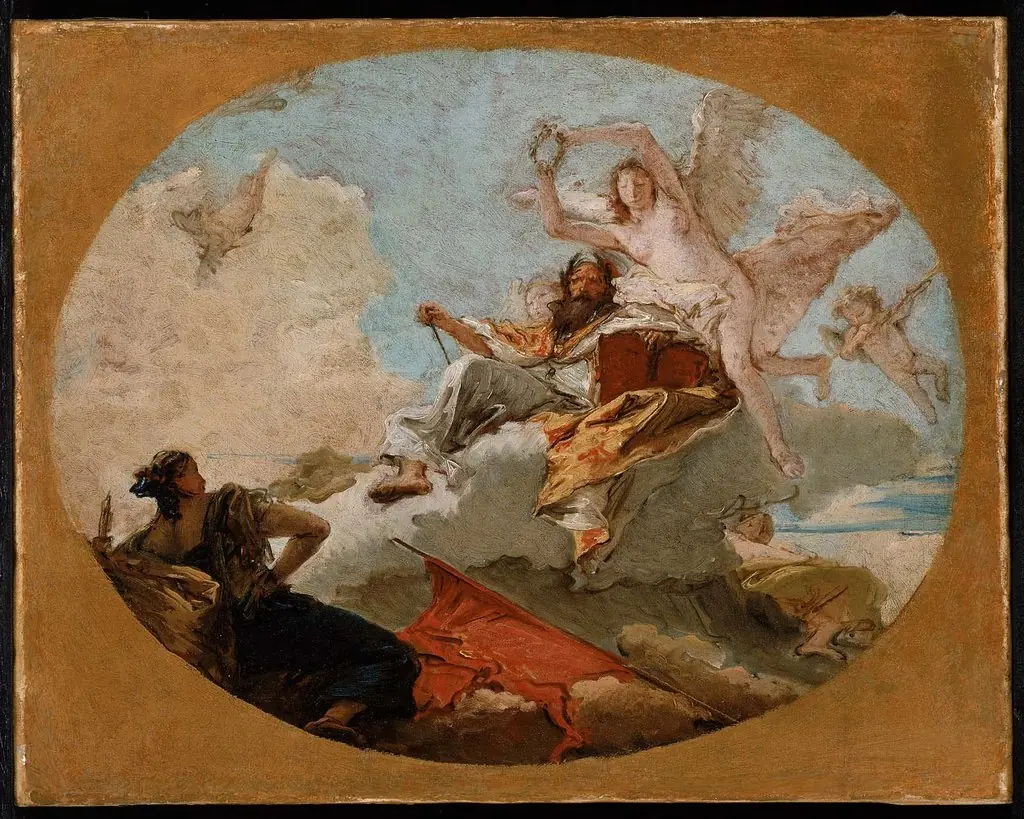 The Crowning of Merit
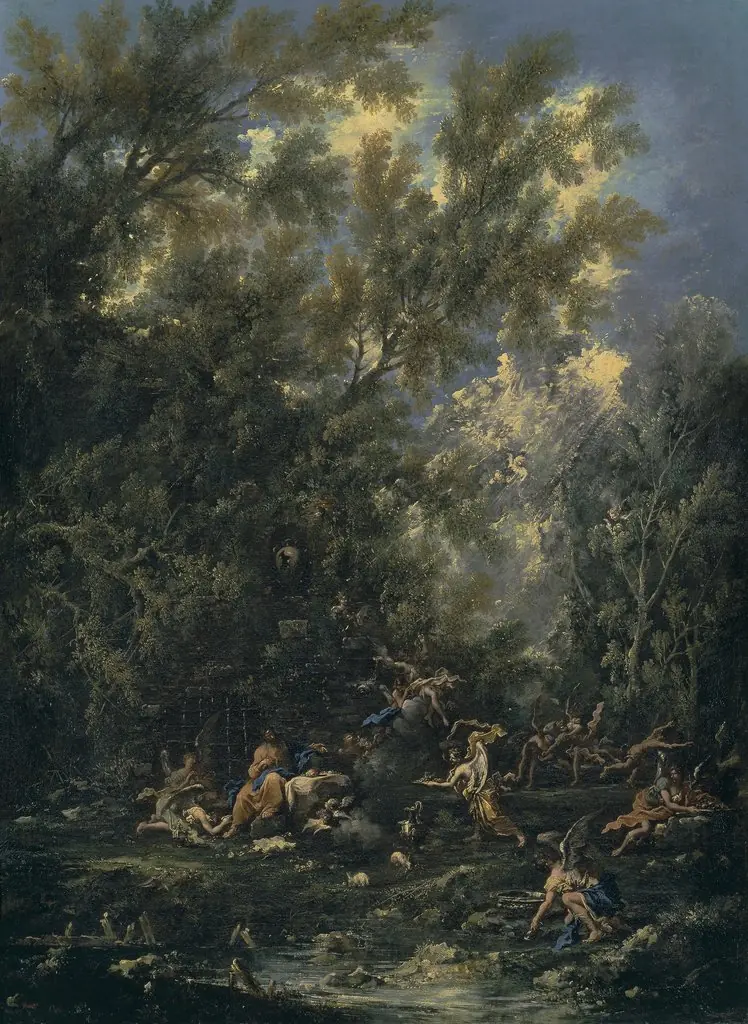 Christ attended by Angels