Artwork
Pope Paul III Farnese (1468-1549)
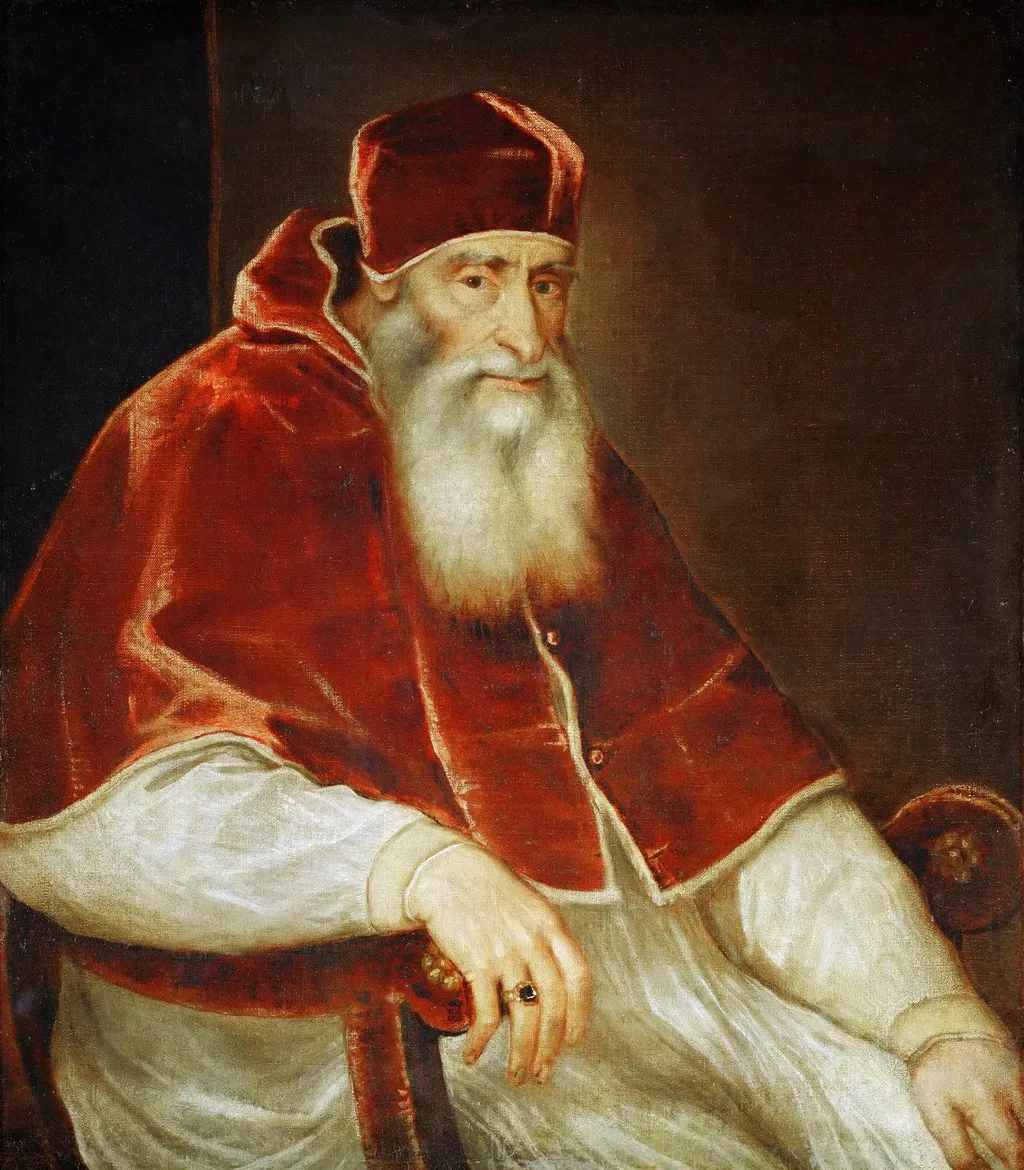
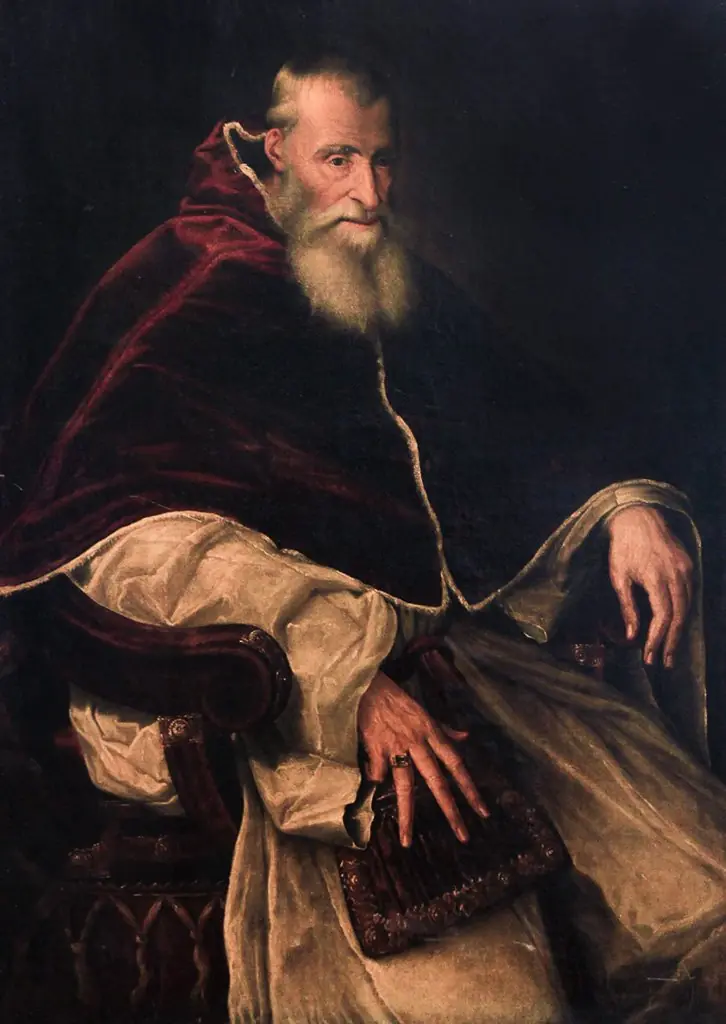
Pope Paul III Farnese (1468-1549) is an oil painting by the Mannerist artist Titian. It dates from 1540 and is held in the collection of the Kunsthistorisches Museum. Created in 1540, this oil portrait presents Pope Paul III Farnese at the age of seventy‑two.
About this work
Subject & Meaning
His aged face is rendered with pronounced wrinkles and a direct, penetrating gaze that conveys authority and gravitas.
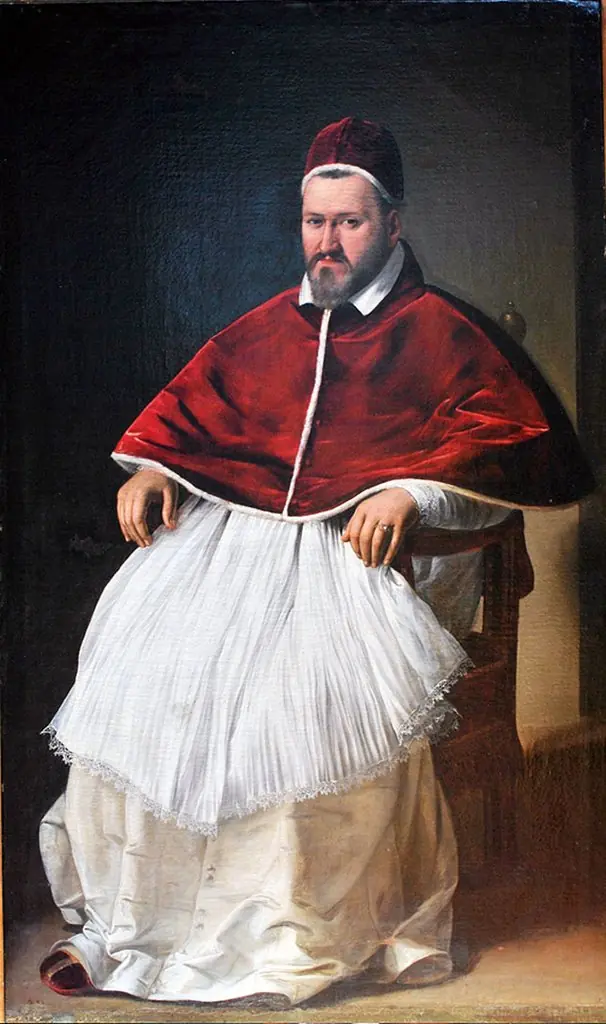
The portrait depicts Pope Paul III (1468–1549) seated in three-quarter view against a dark background. His aged face is rendered with pronounced wrinkles and a direct, penetrating gaze that conveys authority and gravitas. Dressed in a white rochet and mozzetta over a crimson habit, the pontiff’s ecclesiastical attire signals his papal office, while the crimson color traditionally evokes both cardinalatial rank and the blood of Christ.
The portrait emphasizes the sitter’s role as spiritual leader rather than temporal power, focusing on his contemplative expression and the weight of his long tenure during a period of religious and political upheaval in Europe.
Technique & Style
Executed in 1540, this portrait by Titian is an oil painting on canvas. The work measures 89 cm in height and 78 cm in width. Stylistically, it is associated with the Venetian school of painting.
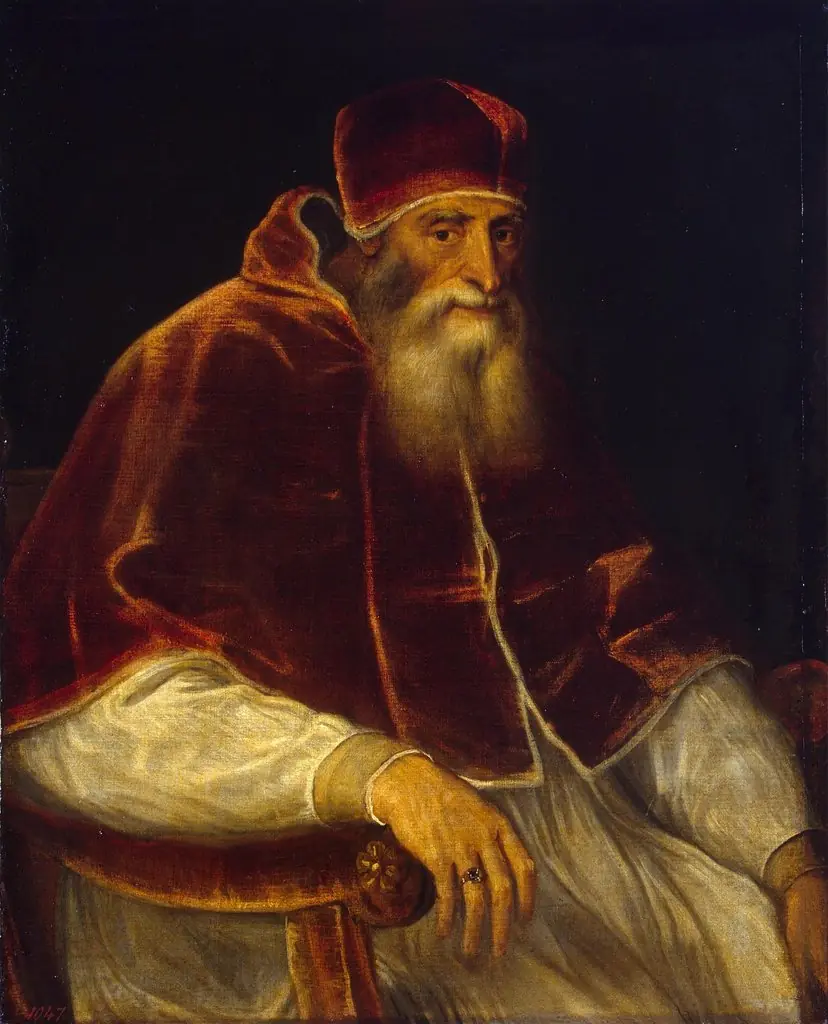
The composition focuses on the depiction of Pope Paul III, serving as a variation based on the artist's earlier Portrait of Pope Paul III with Camauro.
History & Provenance
The portrait of Pope Paul III Farnese was painted by Titian around 1540, as indicated by the work’s date and its creation in oil on canvas. According to the sources, the painting is based on an earlier likeness of the pope wearing a camauro. It has been part of the Kunsthistorisches Museum’s collection in Vienna, where it is currently housed. No further details about the original commission or subsequent owners are provided in the available sources.
The portrait is held in the collection of the Kunsthistorisches Museum in Vienna, where it is documented as part of the museum's holdings. According to the Wikidata record, the painting's location is the Kunsthistorisches Museum, and it is catalogued within that institution's collection.
The available sources do not provide a specific inventory or accession number for the work, nor do they document any exhibition history.
Overview
Created in 1540, this oil portrait presents Pope Paul III Farnese at the age of seventy‑two. Executed by Titian, the preeminent Venetian painter of the Renaissance, the work captures the pontiff in solemn repose, his gaze directed outward while his hands rest gently on the sumptuous red vestments that dominate the composition.
Context
Produced at a time when Venice was a hub of artistic innovation, the work reflects the city’s emphasis on coloristic richness and atmospheric depth. Titian’s reputation for mastering hue and texture is evident, aligning the portrait with contemporary Venetian trends while also anticipating the heightened expressiveness of later Baroque portraiture.
Own this work as a print
Artist & collection
Artist
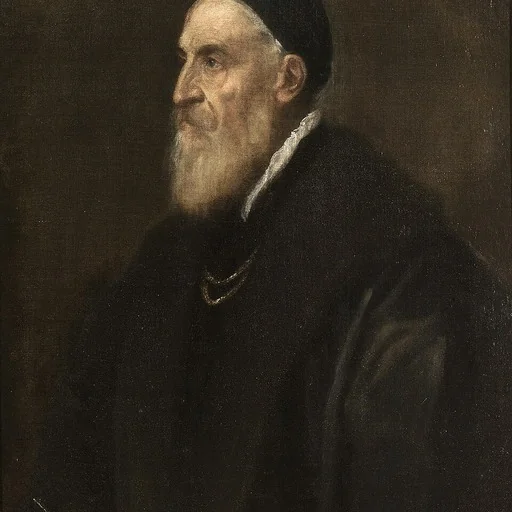
Tiziano Vecellio (Italian:; c. 1488/1490 – 27 August 1576), Latinized as Titianus, hence known in English as Titian ( TISH-ən), was an Italian Renaissance painter. The most important artist of Renaissance Venetian…