Artwork
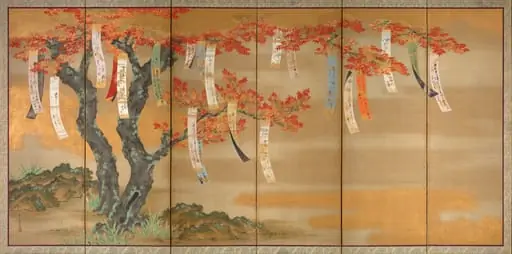
Autumn Maples with Poem Slips
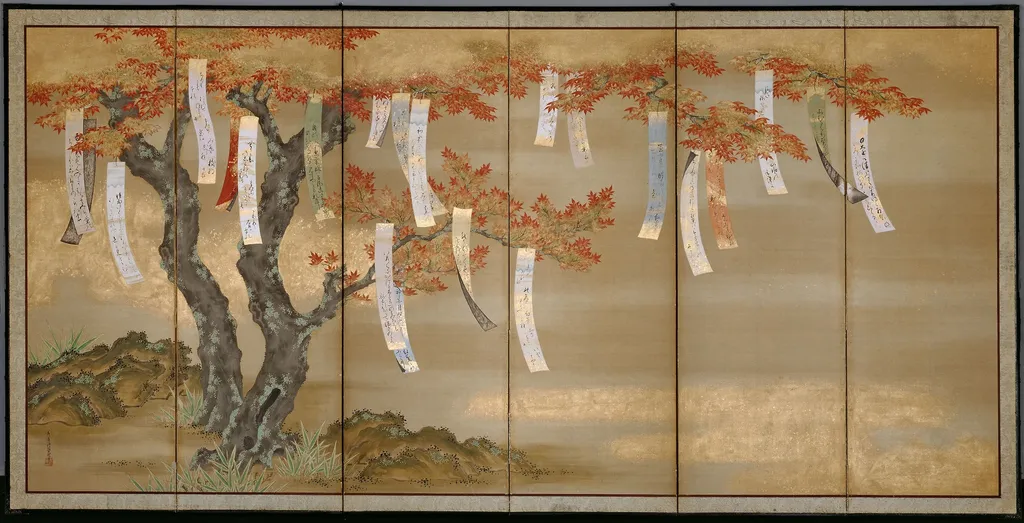
Autumn Maples with Poem Slips is an unspecified painting by the Tosa School artist Tosa Mitsuoki. It dates from 1675 and is held in the collection of the Art Institute of Chicago.
About this work
Overview
The scene evokes quiet reflection, blending natural observation with literary tradition in a format typical of Japanese courtly painting.
Painted in 1675 by Tosa Mitsuoki, this work depicts a maple tree in autumn, its branches heavy with crimson leaves. Set against a muted beige ground, the composition includes sparse rocks and low grasses at the base. Strips of paper, resembling poetic verses, are suspended from the limbs.
The scene evokes quiet reflection, blending natural observation with literary tradition in a format typical of Japanese courtly painting.
Subject & Meaning
The maple tree, a seasonal symbol of transience in Japanese aesthetics, is rendered with deliberate stillness. The attached poem slips allude to the practice of composing verses on autumn foliage, a refined courtly custom. Together, the tree and slips suggest an intimate dialogue between nature and poetry, inviting contemplation on impermanence and the quiet beauty of fleeting moments.
Technique & Style
Mitsuoki employed fine brushwork to capture the texture of bark and the delicate veins of leaves. The poem slips are rendered with precise ink lines, suggesting handwritten characters without explicit legibility. Colors are restrained yet vivid, with reds applied in layered washes.
The composition avoids perspective, favoring flat, decorative space characteristic of the Tosa school’s revival of Heian-era court painting traditions.
History & Provenance
Created during the early Edo period, the painting reflects the Tosa school’s role in preserving aristocratic artistic conventions amid rising samurai patronage. It entered the Art Institute of Chicago’s collection through documented acquisitions in the 20th century, likely originating from a Japanese imperial or noble collection before its export.
Context
In 17th-century Japan, court artists like Mitsuoki revived classical themes to maintain cultural continuity. Autumn scenes with poetic inscriptions were common in imperial albums, linking visual art to waka poetry. This work aligns with a broader trend of blending literary and pictorial traditions, serving both aesthetic and ritual functions within elite cultural circles.
Legacy
The painting exemplifies the Tosa school’s enduring influence on Japanese painting, bridging medieval court aesthetics with early modern artistic practice. Its preservation in a major Western institution highlights cross-cultural appreciation for Edo-period works. While not widely replicated, its quiet elegance continues to inform interpretations of nature and poetry in Japanese art.
Artist & collection


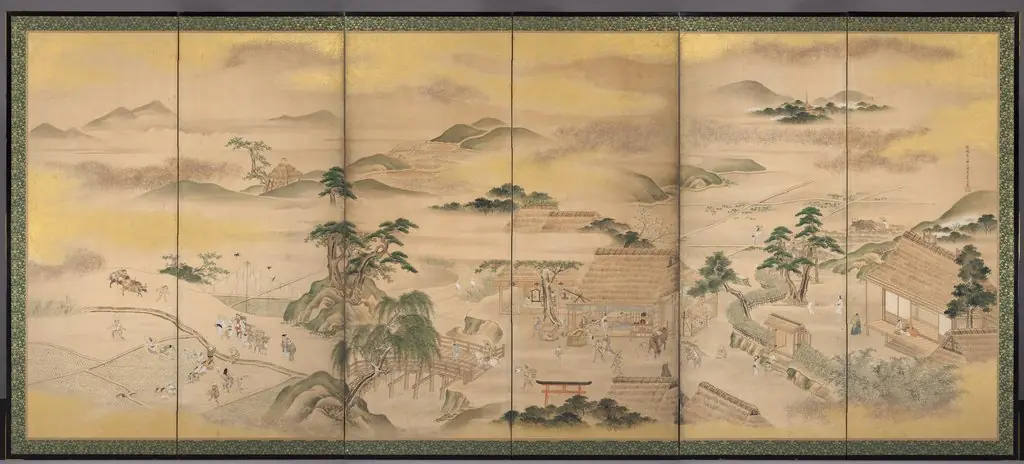 Spring and Autumn Farming (Spring)
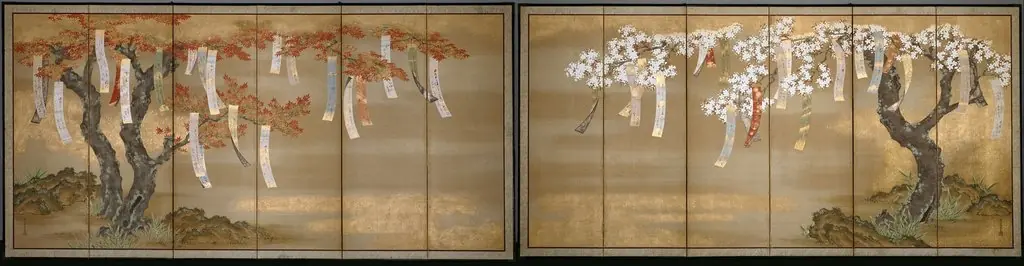
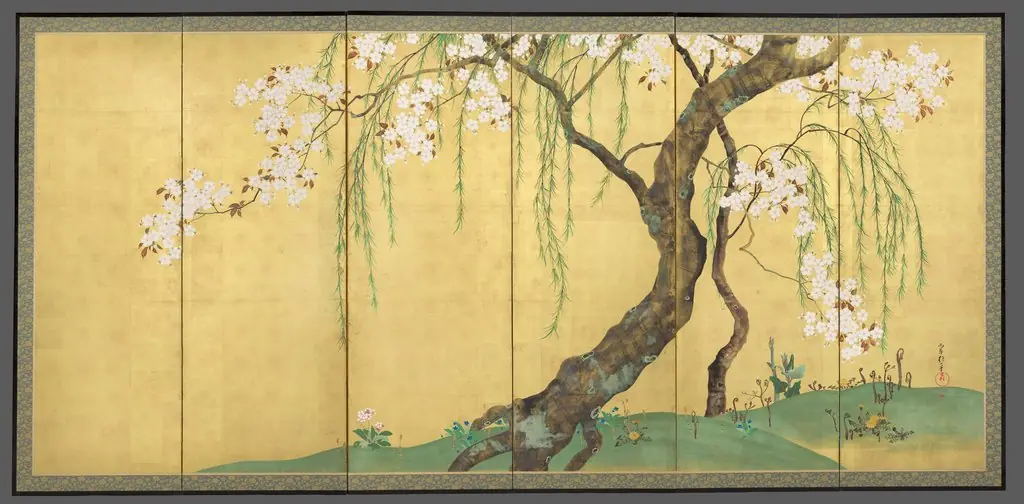 Cherry and Maple Trees
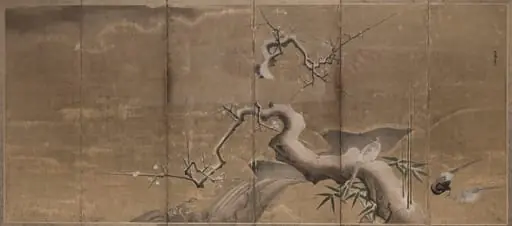 Winter Scene with Plum Trees and Pheasants (Birds Left)
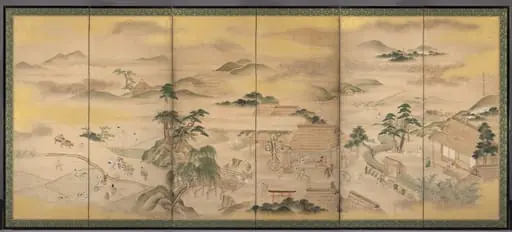 Spring and Autumn Farming (Spring)
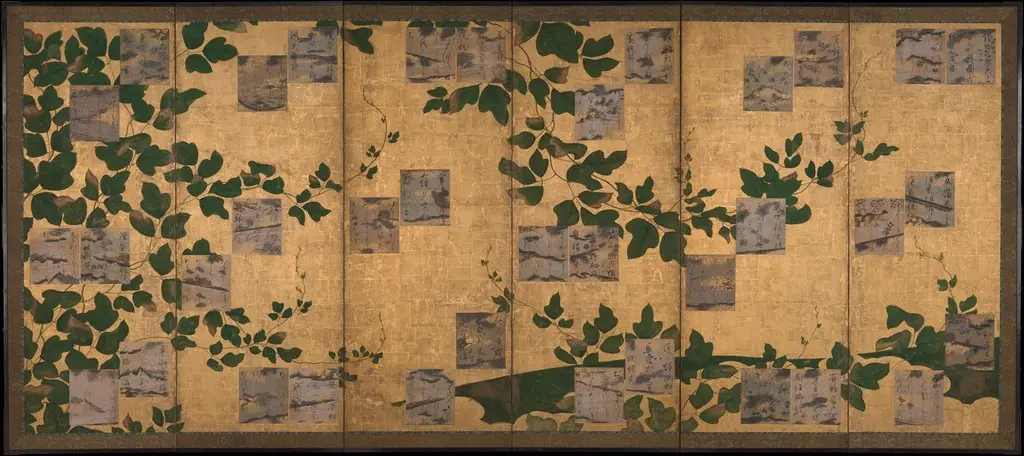 Anthology of Japanese and Chinese Poems (Wakan rōeishū) with Underpainting of Arrowroot Vines
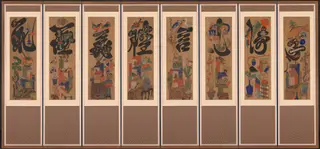 Munja-Chaekgeori Screen (Character-Books Screen)
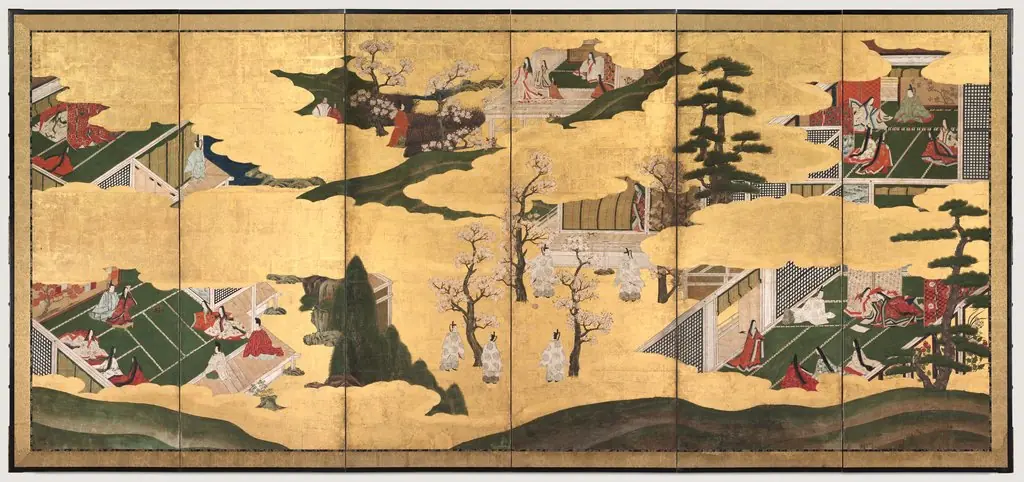 Scenes from the Tale of Genji
 Mountains and Rivers in Autumn
 Blue and White Wisteria on a Bamboo Trellis