Artwork
At the Varieties: Mlle. Lender et Brasseur (Aux variétiés: Mlle. Lender et Brasseur)
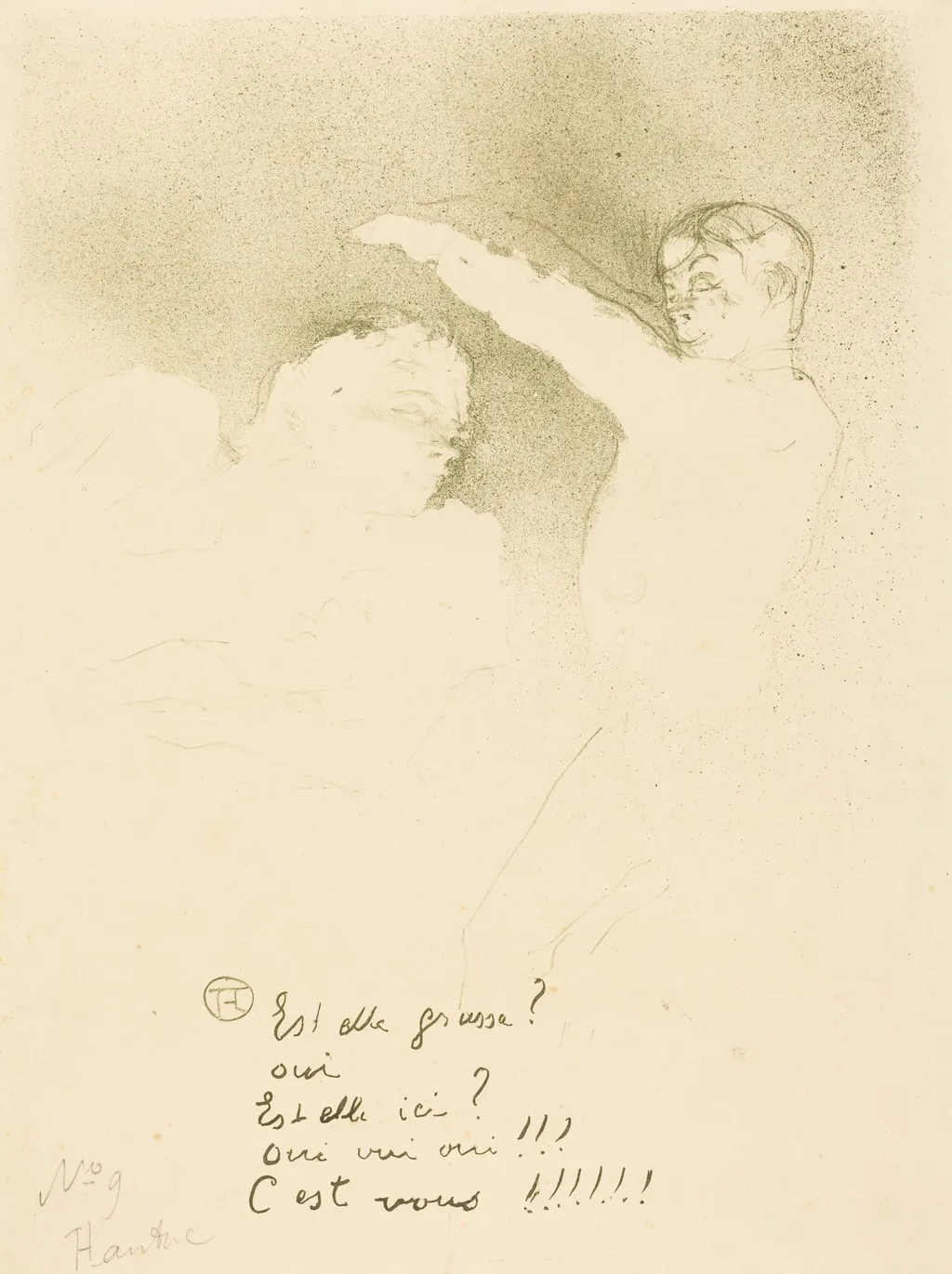
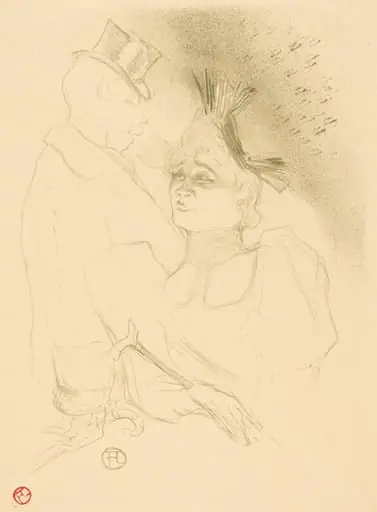
At the Varieties: Mlle. Lender et Brasseur (Aux variétiés: Mlle. Lender et Brasseur) is an ink print by the Impressionist artist Henri de Toulouse-Lautrec. It dates from 1893 and is held in the collection of the National Gallery of Art.
About this work
Overview
Created in 1893, this olive green lithograph by Henri de Toulouse-Lautrec captures two performers from a Parisian variety theater.
Created in 1893, this olive green lithograph by Henri de Toulouse-Lautrec captures two performers from a Parisian variety theater. Executed in a rapid, sketch-like manner, the work reflects his frequent engagement with the city’s theatrical underbelly. Unlike formal portraits, the image feels spontaneous, as if drawn during a backstage moment, revealing the artist’s interest in unguarded human interaction rather than staged performance.
Subject & Meaning
The figures, Mlle. Lender and Brasseur, are seated closely, their posture suggesting intimacy or gossip. One leans in with a whispered question, while the other averts her gaze, hands clasped. Below, the handwritten phrase 'Est-elle grosse?' adds a layer of irreverent humor, hinting at the casual, sometimes cruel observations common in theater circles. The scene is not celebratory but observational, exposing the private moments behind public personas.
Technique & Style
Toulouse-Lautrec employed lithography to achieve a fluid, immediate quality. The lines are loose and uneven, conveying motion and urgency rather than refinement. Olive green ink, used sparingly, enhances the somber, intimate mood.
The absence of detail in facial features and clothing focuses attention on gesture and expression, aligning with his broader practice of capturing fleeting, authentic moments over idealized forms.
History & Provenance
Produced during Toulouse-Lautrec’s most active period in Montmartre, the print likely originated as a personal study or private commission, not a public poster. Its survival suggests it was retained within his circle or collected by contemporaries drawn to his candid style. Unlike his commercial lithographs, this piece was never widely distributed, preserving its intimate, almost confidential character.
Context
In 1890s Paris, variety theaters offered a space where social boundaries blurred, performers, patrons, and artists mingled in a world of spectacle and secrecy. Toulouse-Lautrec, an outsider due to his physical condition and aristocratic background, found in these venues a subject matter free from academic constraints. His drawings from this time reflect both fascination and detachment, documenting a culture that thrived on transience and anonymity.
Legacy
This work exemplifies Toulouse-Lautrec’s contribution to modern printmaking: elevating the sketch to a finished art form grounded in observation rather than idealization. His unembellished depictions of performers and patrons influenced later artists seeking realism in everyday life. Though modest in scale, the lithograph endures as a quiet testament to his ability to reveal humanity in the margins of entertainment.
Own this work as a print
Artist & collection
Artist
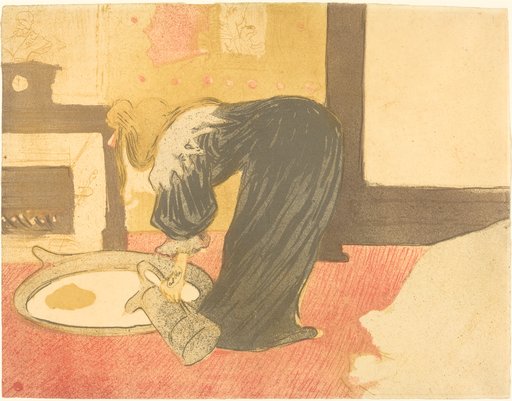
Comte Henri Marie Raymond de Toulouse-Lautrec-Montfa (24 November 1864 – 9 September 1901), known as Toulouse-Lautrec (French: ), was a French painter, printmaker, draughtsman, caricaturist, and illustrator.

![Sketch of a Couple Seated with Cloud Studies [verso], by Walter Crane](https://artifactworldgallery.com/img/walter-crane--sketch-of-a-couple-seated-with-cloud-studies-verso--bd0c5f7cb1d389b6-w320.webp)