Artwork
Seated Clowness (La Clownesse assise)
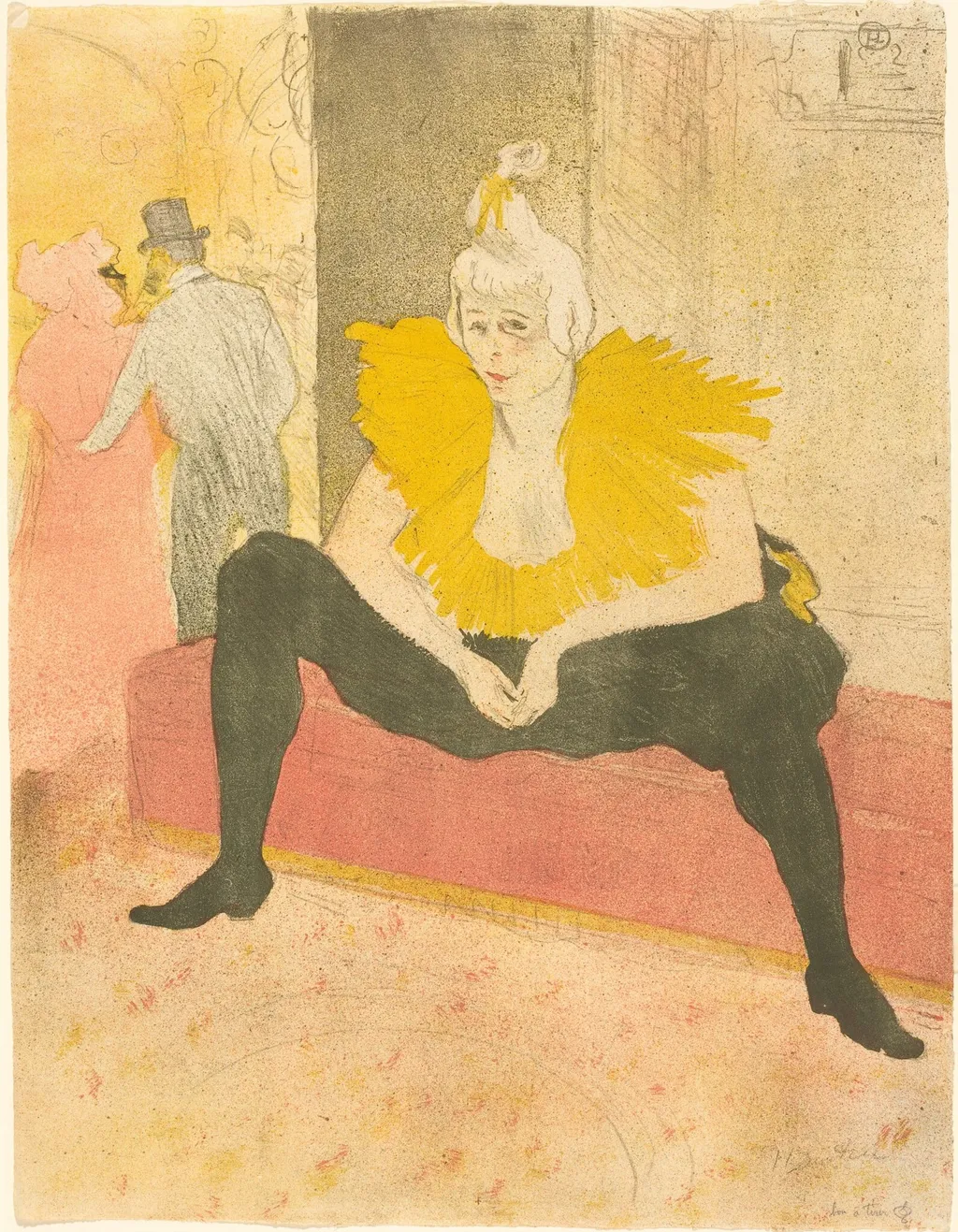
Seated Clowness (La Clownesse assise) is an ink print by the Impressionist artist Henri de Toulouse-Lautrec. It dates from 1896 and is held in the collection of the National Gallery of Art.
- Inscription
- Inscribed:lower right in plate: T Lautrec; lower right in graphite: bon a tirer; upper right in plate: II / c.2; lower right verso in graphite: 70469 / 200 / 400
About this work
Overview
Created in 1896, Seated Clowness (La Clownesse assise) is a color lithograph executed on wove paper. The work presents a woman in a relaxed seated pose, highlighted by a vivid yellow feathered collar, against a backdrop of flat pink walls and a textured surface. A suited man stands nearby, looking down, adding narrative tension to the scene.
Subject & Meaning
The central figure is a female performer, likely a circus or cabaret clown, captured in an informal, natural posture with one leg bent and hands resting on her lap. Her pale complexion and bright collar contrast with the darker tones of her surroundings, suggesting a blend of vulnerability and theatrical flamboyance typical of Toulouse‑Lautrec’s interest in marginal entertainers.
Technique & Style
Toulouse‑Lautrec employed the lithographic process to achieve bold, flat areas of color, pink walls, black stockings, and the striking yellow collar, while using quick, sketchy lines to convey movement and personality. The texture of the paper and the rough background enhance the immediacy of the image, reflecting the artist’s preference for expressive, economical drawing over meticulous detail.
History & Provenance
The lithograph was produced as a bon à tirer proof, the final impression approved by the artist for printing. Created during the artist’s most prolific period of depicting Parisian nightlife, the print reflects his personal connections to the theatrical world of Montmartre, where he regularly socialized with performers and bohemians.
Context
At the time of its creation, Toulouse‑Lautrec was immersed in the bohemian circles of late‑19th‑century Paris, frequenting cabarets, cafés, and brothels. His aristocratic background and physical disability placed him on the periphery of society, fostering a sympathetic eye toward entertainers and other marginalized figures, which he rendered with candid realism and vivid coloration.
Own this work as a print
Artist & collection
Artist
Comte Henri Marie Raymond de Toulouse-Lautrec-Montfa (24 November 1864 – 9 September 1901), known as Toulouse-Lautrec (French: ), was a French painter, printmaker, draughtsman, caricaturist, and illustrator.

- Elles: The Seated Clown, Mlle Cha-u-Ka-o
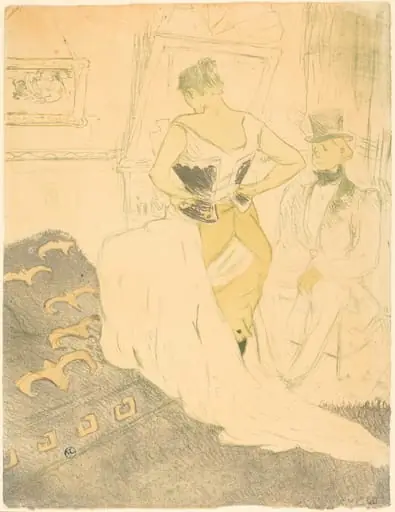 Woman in Corset (Femme en corset)
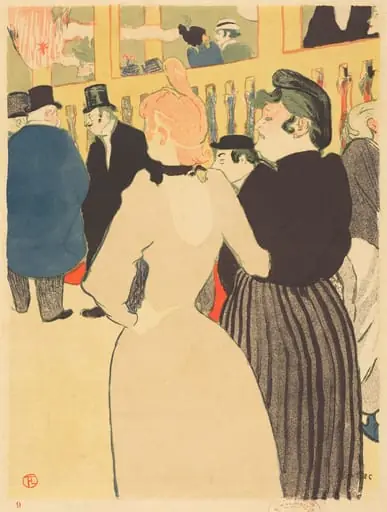 At the Moulin Rouge, la Goulue and Her Sister (Au Moulin Rouge, la Goulue et sa soeur))
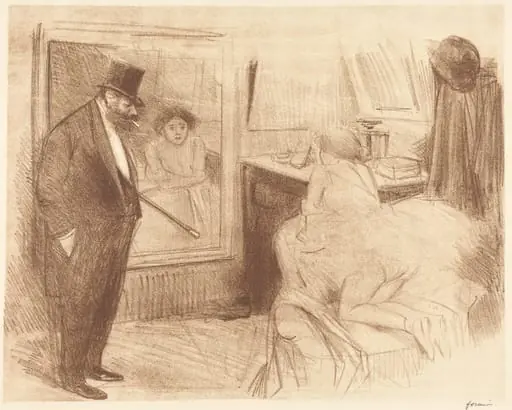 La loge de la danseuse (2e planche) (The Dancer's Dressing Room) (second plate)
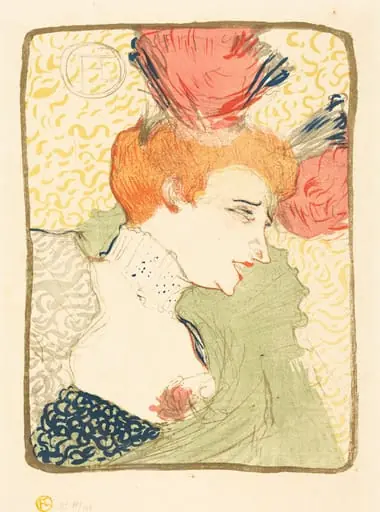 Bust of Mademoiselle Marcelle Lender (Mademoiselle Marcelle Lender, en buste)
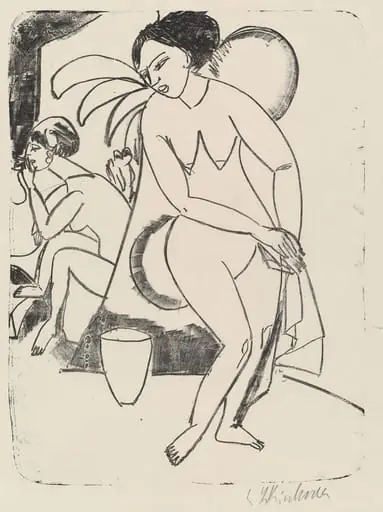 Naked Girls in the Studio (Nackte Mädchen im Atelier)
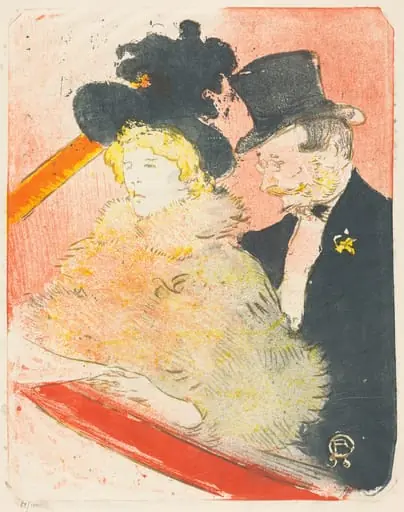 At the Concert (Au concert)
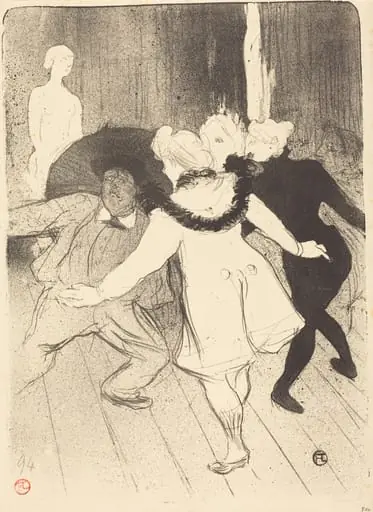 Folies-Bergere: The Censors of M. Prudhomme (Folies-Bergère: Les pudeurs de M. Prudhomme)
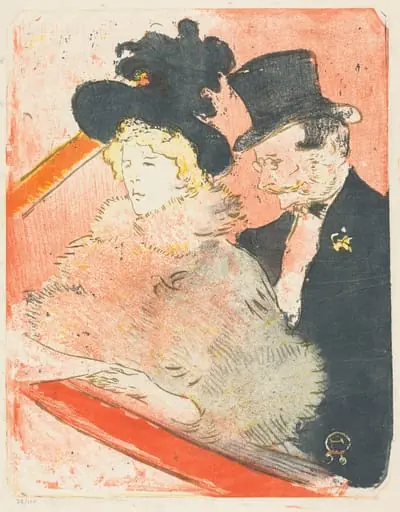 At the Concert (Au concert)
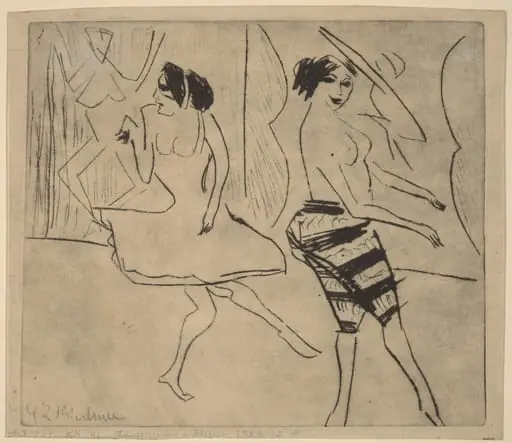 Dancers in Studio
 At La Gaiete Rochechouart: Nicolle (A La Gaieté Rochechouart: Nicolle)
 Man and Woman