Artwork
The Trap
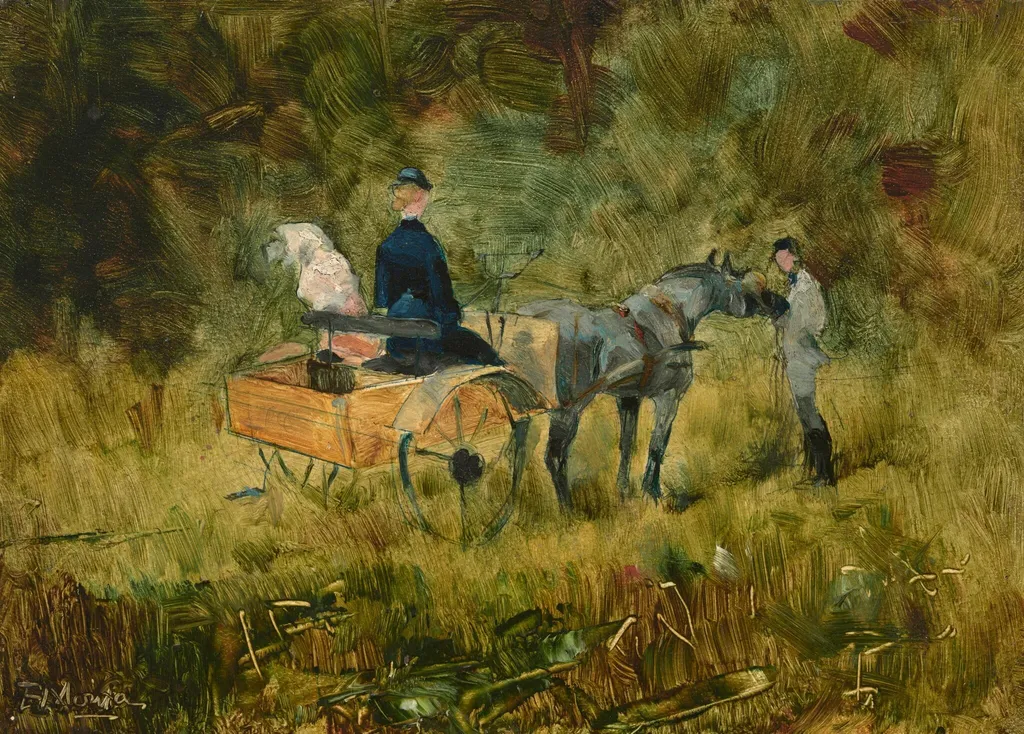
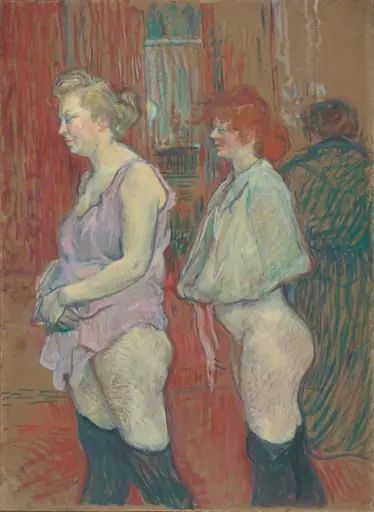
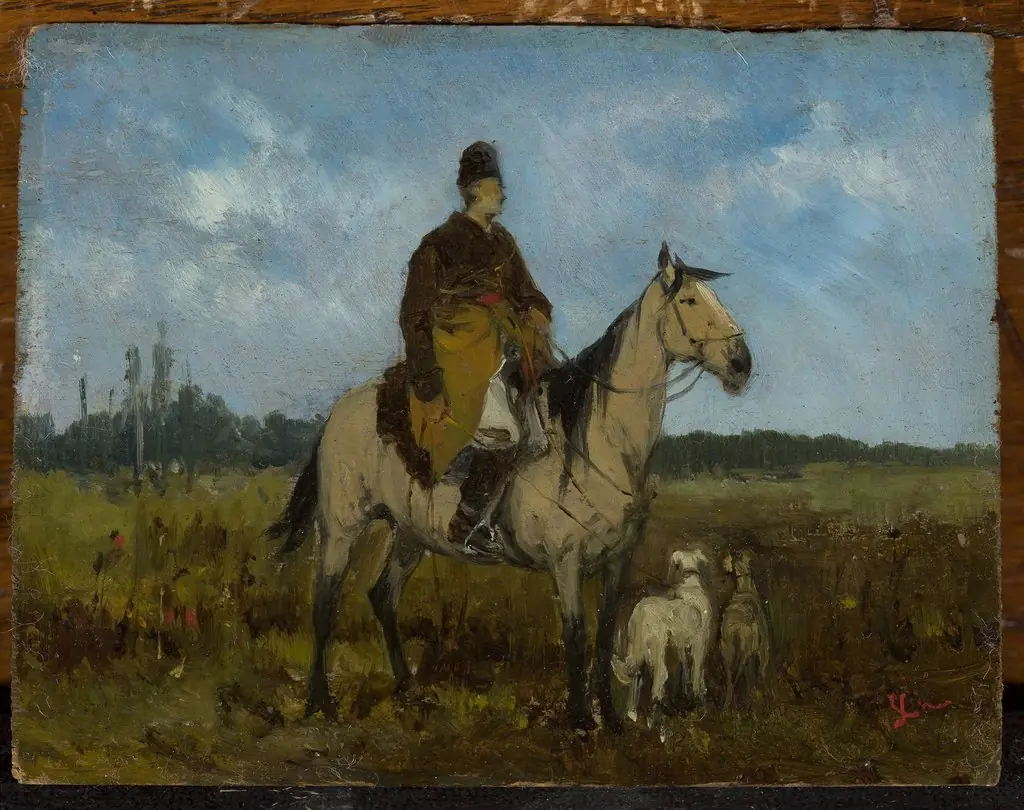
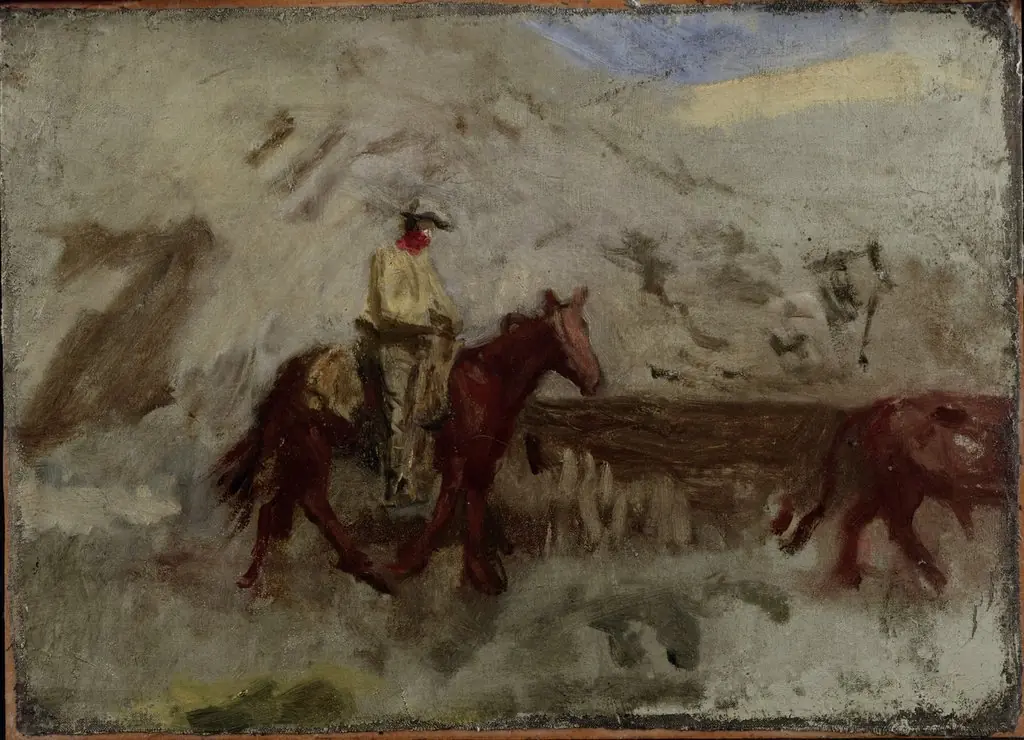
The Trap is an oil painting by the Impressionist artist Henri de Toulouse-Lautrec. It dates from 1880 and is held in the collection of the National Gallery of Art.
- Inscription
- Inscribed:lower left: HTL (in monogram) Monfa
About this work
Technique & Style
The handling combines fluid, linear draftsmanship with areas of thinly applied, translucent paint typical of Lautrec’s early manner.
Painted in 1880, The Trap is executed in oil on a wooden panel. The support measures 15.9 cm in height and 21.9 cm in width.
The handling combines fluid, linear draftsmanship with areas of thinly applied, translucent paint typical of Lautrec’s early manner. Subtle tonal modulations define forms, while the restricted palette and sketch-like finish suggest an intimate genre study rather than a fully resolved composition. The composition’s condensed format and rapid, calligraphic brushwork emphasize immediacy and spontaneity.
History & Provenance
The Trap was painted by Henri de Toulouse-Lautrec in 1880 as an oil on wood work. Its early ownership likely rested with R. Ellissen in Paris, a connection documented only by a label indicating the painting was lent to a 1947 Paris exhibition and referenced in a 1926 publication.[1] Subsequently, the artwork entered the collection of Mr. and Mrs. Paul Mellon in Upperville, Virginia, before being gifted to the National Gallery of Art in 1994, where it remains today.
The National Gallery of Art in Washington, D.C. currently holds the piece, which measures 15.9 cm in height and 21.9 cm in width.
The Trap is held by the National Gallery of Art in Washington, D.C. It was acquired through a gift from Mr. and Mrs. Paul Mellon in 1994 and previously belonged to R. Ellissen of Paris, likely until at least 1947. The work was exhibited in Paris in 1947, as documented by a label on the painting's reverse referencing Robert Ellissen. The National Gallery of Art is listed as its current collection and location.
The painting measures 15.9 cm in height and 21.9 cm in width, created in 1880 using oil on wood panel.
Legacy
The painting's inclusion in major exhibitions and its presence in a prominent public collection have contributed to its scholarly recognition. Its provenance from private hands in Paris to the National Gallery of Art in Washington, D.C., reflects a documented collecting history that underscores its significance. As part of the National Gallery's holdings, the work is frequently referenced in studies of late 19th-century French art, particularly in discussions of Lautrec's thematic exploration of urban life and performance culture. Its material composition and dimensions align with the artist's known techniques, reinforcing its authenticity and scholarly value.
Overview
Created in 1880, The Trap is an oil painting executed on a wooden panel. The work belongs to the post‑Impressionist period and reflects the artist’s interest in ordinary scenes rendered with a vivid sense of atmosphere. Its modest dimensions and panel support distinguish it from the larger canvas productions of the era.
Subject & Meaning
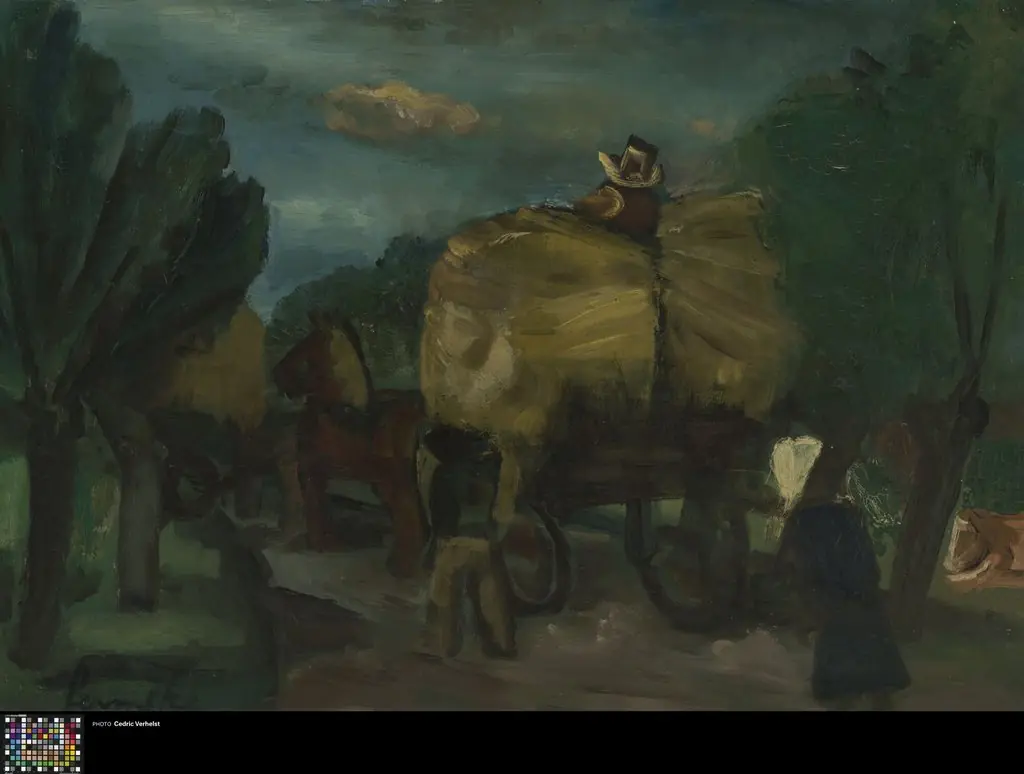
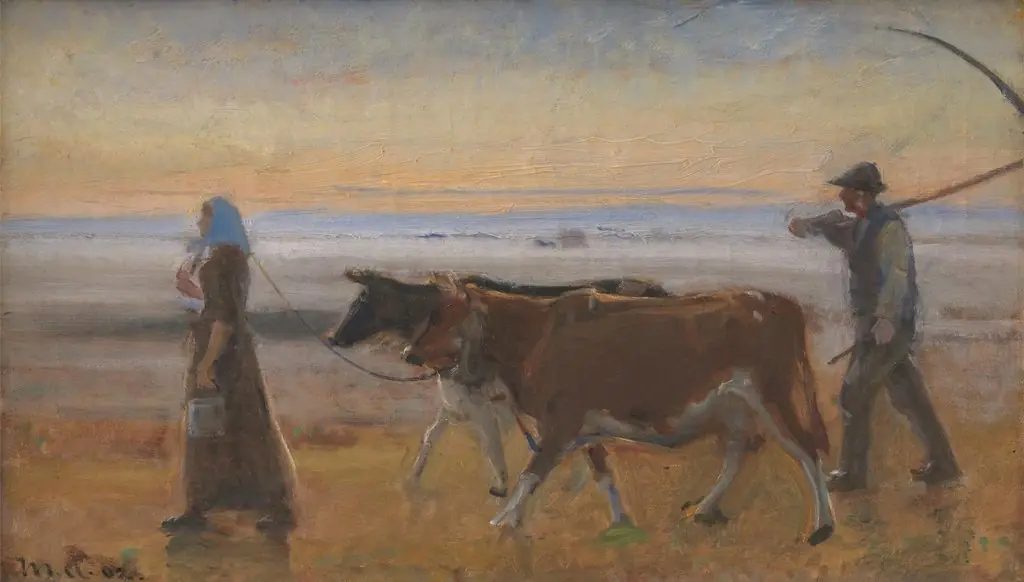
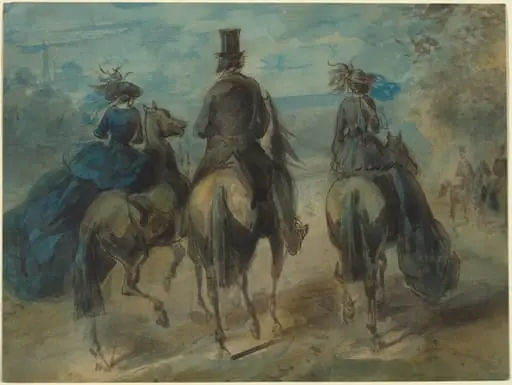
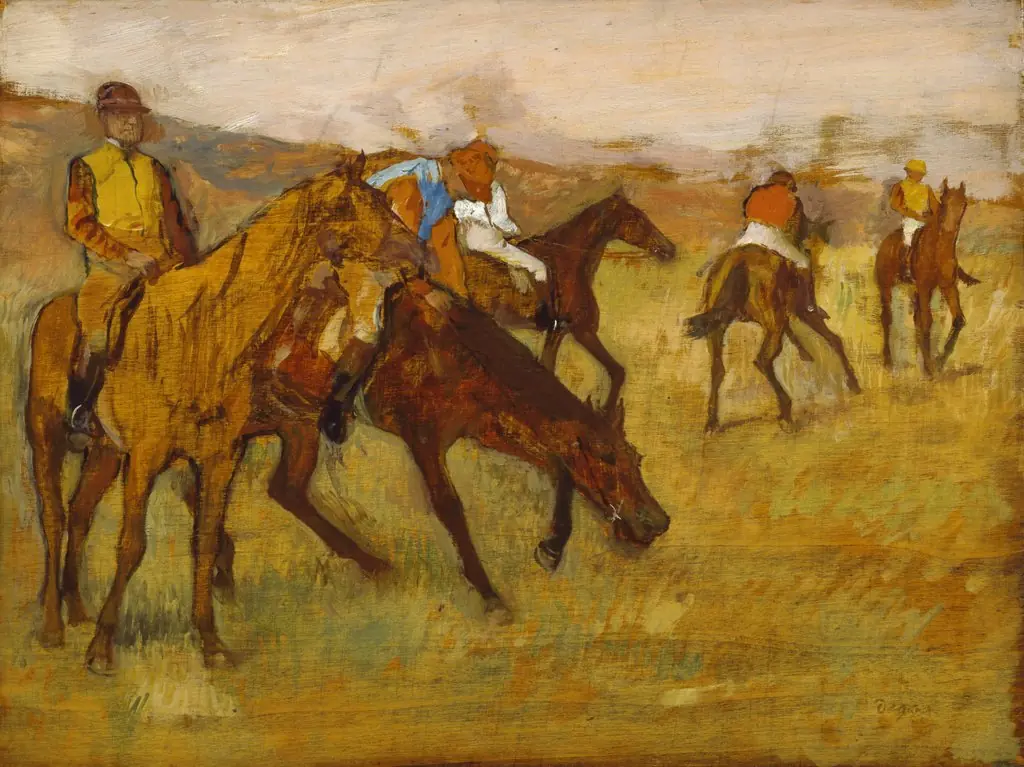
The composition depicts a gray horse pulling a brown carriage across an open field, accompanied by two passengers, one in a dark jacket, the other topped with a white hat. The tranquil countryside setting, punctuated by distant trees, suggests a moment of travel or leisure, inviting viewers to consider the everyday rhythms of rural life.
Own this work as a print
Artist & collection
Artist
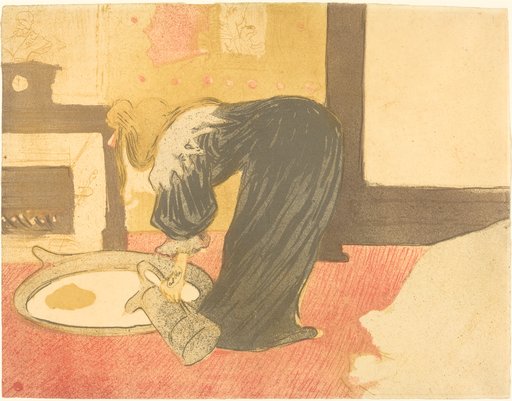
Comte Henri Marie Raymond de Toulouse-Lautrec-Montfa (24 November 1864 – 9 September 1901), known as Toulouse-Lautrec (French: ), was a French painter, printmaker, draughtsman, caricaturist, and illustrator.