Artwork
A Bridge over the Usk
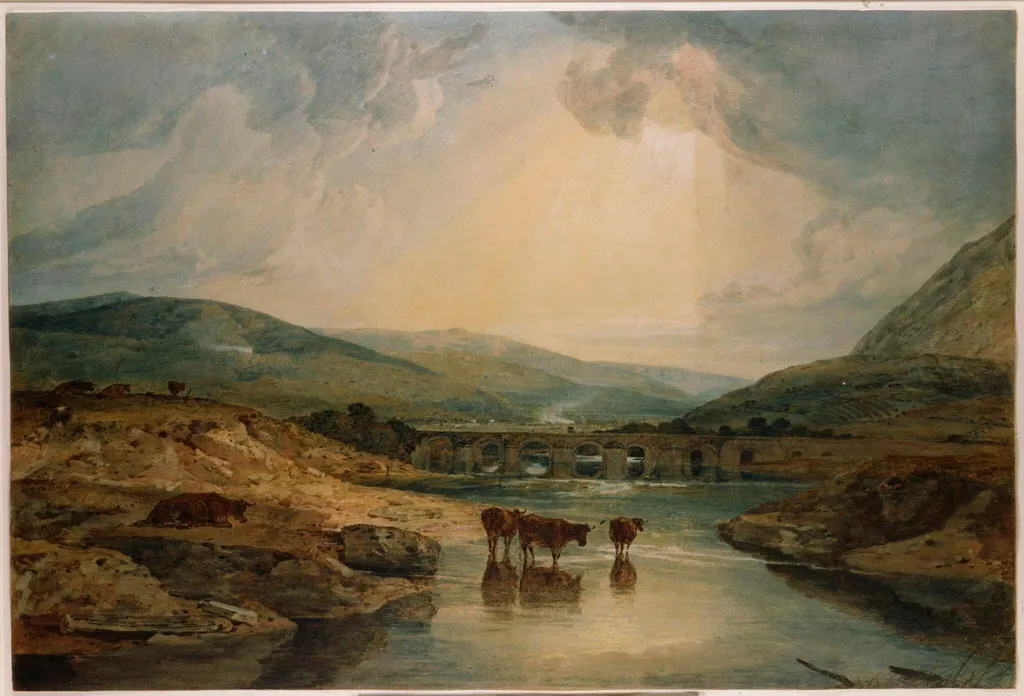
A Bridge over the Usk is a watercolor work on paper by the British Romanticist artist Joseph Mallord William Turner. It dates from 1794 and is held in the collection of the Victoria and Albert Museum. This 1794 watercolour by J.
About this work
Overview
Turner captures a quiet stretch of the River Usk in Wales, centered on a stone arch bridge.
This 1794 watercolour by J.M.W. Turner captures a quiet stretch of the River Usk in Wales, centered on a stone arch bridge. The composition is restrained, emphasizing natural elements over narrative. Cattle graze near the water’s edge, their presence grounding the scene in rural life.
The work exemplifies Turner’s early focus on topographical accuracy, rendered with delicate washes and precise detail, reflecting his training as a surveyor and draftsman before his later expressive style emerged.
Subject & Meaning
The painting presents a tranquil rural landscape without dramatic action or symbolic intent. The bridge, a functional structure, connects land and water, while the cattle suggest agricultural continuity. The stillness of the scene, enhanced by the quiet reflection of light on the river, conveys a sense of harmony between human infrastructure and the natural environment. There is no overt romantic idealization; instead, the work observes the quiet rhythms of the Welsh countryside.
Technique & Style
Turner employed transparent watercolour washes to build subtle tonal gradations, particularly in the sky and water. The shimmering effect on the river’s surface is achieved through careful left-over paper highlights and light glazes. The stone bridge is rendered with firm, linear detail, contrasting with the softer, blended hills in the distance.
This balance between precision and atmospheric softness characterizes his early landscape method, rooted in topographical tradition yet hinting at his evolving sensitivity to light.
History & Provenance
The work entered the museum’s collection in 1900 through the bequest of Henry Vaughan, a noted collector of Turner’s watercolours. Vaughan had acquired it from Mr. Harvey, though earlier ownership remains undocumented. It is tentatively linked to a work exhibited at the Royal Academy in 1799, as recorded in Andrew Wilton’s catalogue raisonné.
Its survival in private hands for over a century before public acquisition reflects its modest reception during Turner’s early career.
Context
Painted during Turner’s formative years, this piece aligns with the late 18th-century British tradition of topographical watercolour, popular among antiquarians and landowners. While Romanticism was emerging as a broader cultural movement, Turner’s approach here remains observational rather than emotional. The scene reflects the era’s interest in documenting the British landscape with accuracy, a practice Turner would later transform through expressive light and movement.
Legacy
Though not among Turner’s most celebrated works, this watercolour illustrates the foundation of his artistic development. Its quiet precision and sensitivity to natural light foreshadow the innovations he would later pursue. As part of Vaughan’s bequest, it contributes to the museum’s significant collection of Turner’s early watercolours, offering insight into the transition from topographical study to lyrical landscape expression in British art.
Own this work as a print
Artist & collection
Artist
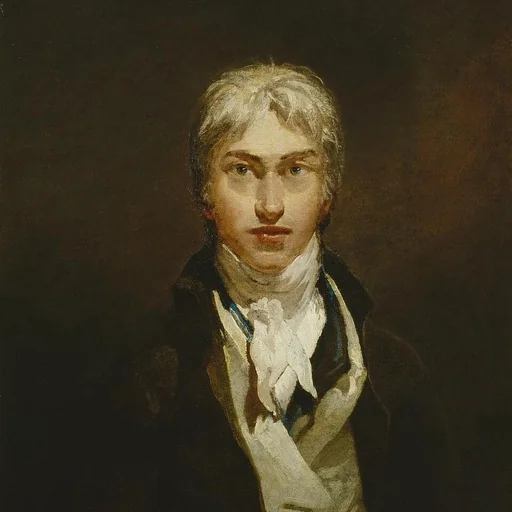
Joseph Mallord William Turner was born in 1775 at Maiden Lane, Covent Garden, where his father kept a barber and wig-making shop.

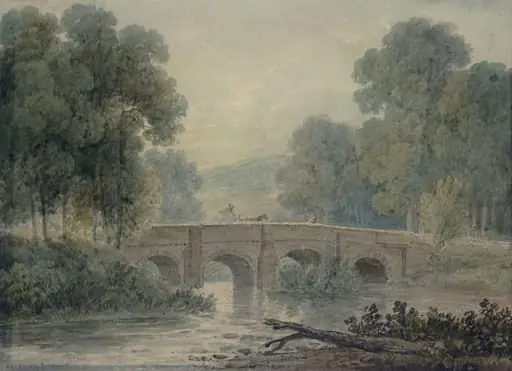
- Woody landscape
 Ethy, Cornwall
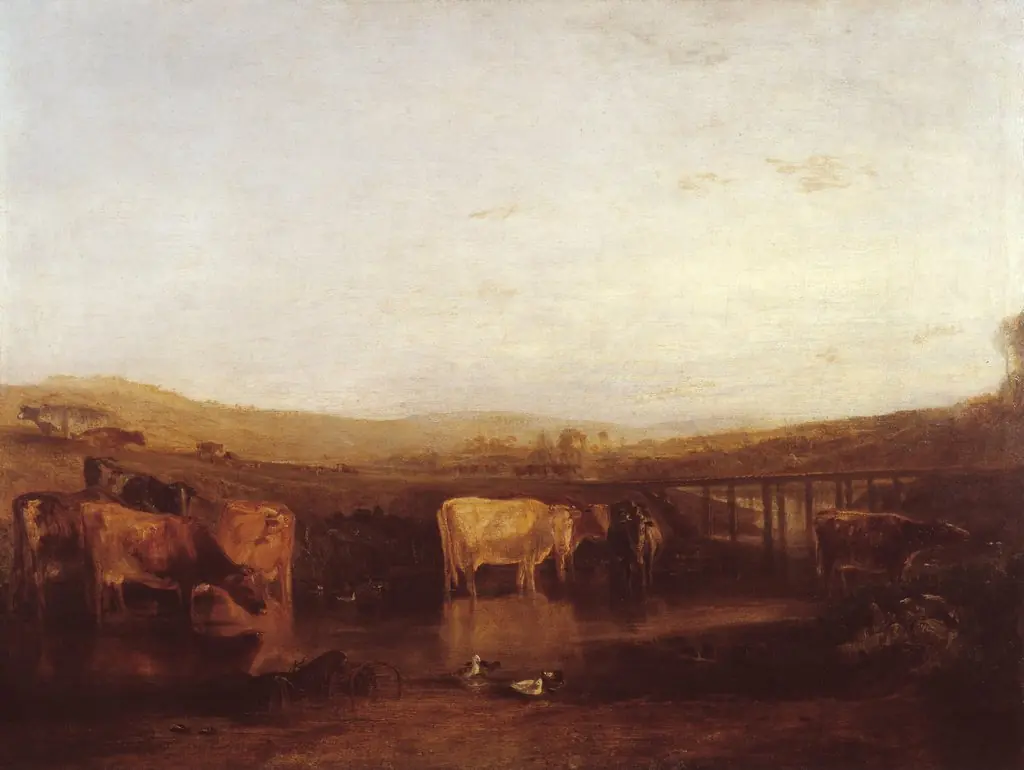 Union of the Thames and Isis
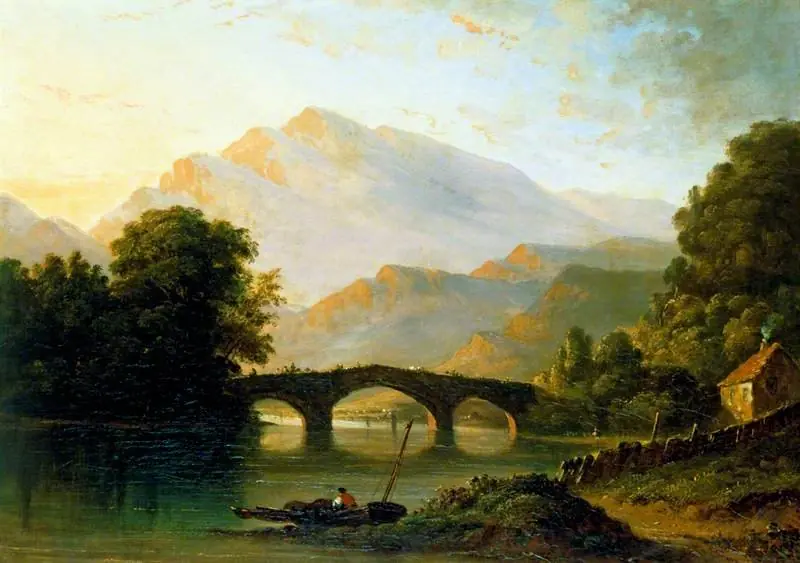 Callander Bridge, Perthshire
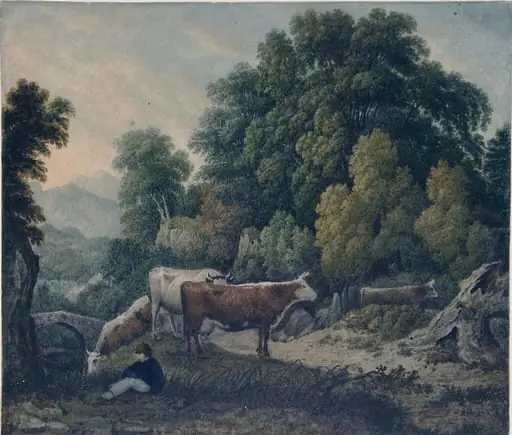 Trees and cattle
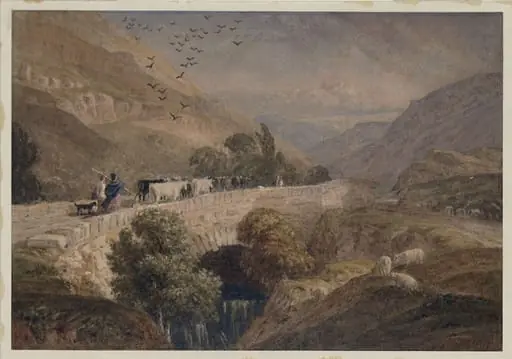 Landscape
 Italian Landscape
 On the Thames
 Ludlow Castle, overlooking the River Teme
 A View of Snow Hill, Windsor Great Park
 Landscape with river and mountains
 A bridge, perhaps the old bridge of Don, Aberdeen