Artwork
Approach to Venice
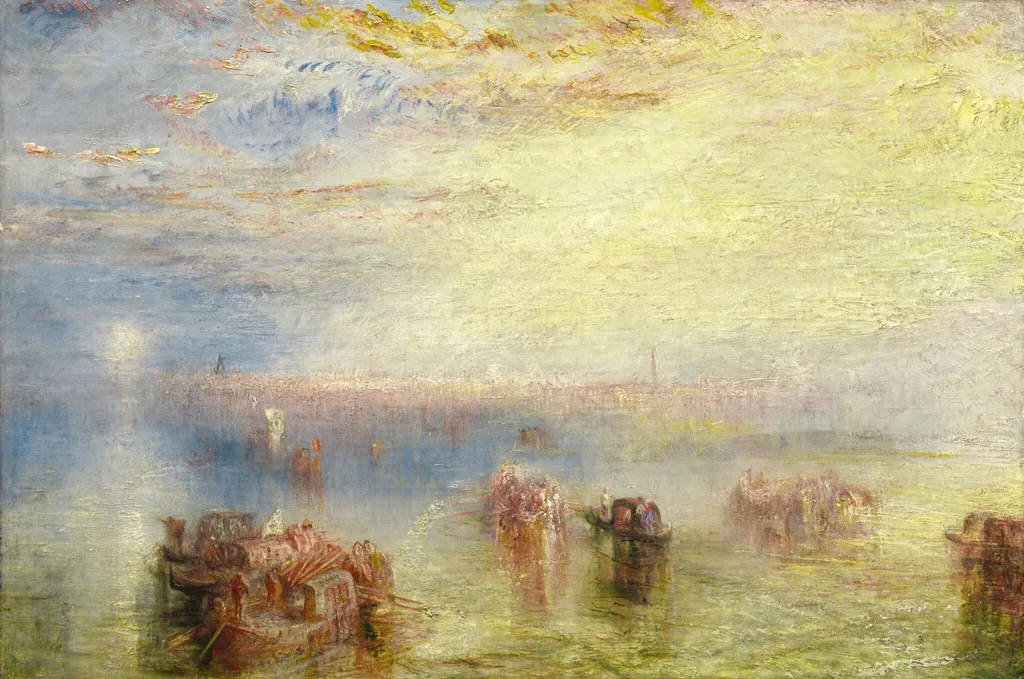
Approach to Venice is an oil painting by the Romanticist artist Joseph Mallord William Turner. It dates from 1844 and is held in the collection of the National Gallery of Art.
About this work
Subject & Meaning
Executed late in Turner's career, the work exemplifies his Romantic, pre-Impressionist style through its atmospheric handling of light and water.
Approach to Venice depicts a view of the city seen from the north across the lagoon. Executed late in Turner's career, the work exemplifies his Romantic, pre-Impressionist style through its atmospheric handling of light and water. When exhibited at the Royal Academy in 1844, the painting was accompanied by a couplet from Lord Byron's Childe Harold's Pilgrimage, linking the visual scene to literary themes of pilgrimage and historical reflection.
The critic John Ruskin later hailed the work as the most perfectly beautiful piece of color ever produced by human hands, emphasizing its significance within Turner's oeuvre for its mastery of chromatic harmony rather than strict topographical detail.
Technique & Style
Approach to Venice is an oil painting on canvas, measuring 62 by 94 cm. Classified as a marine work, it was produced in 1844 in a Romantic pre-Impressionist style, depicting a view of Venice from the north across the Lagoon. The painting was exhibited at the Royal Academy Exhibition of 1844, where it was paired with a couplet from Lord Byron's Childe Harold's Pilgrimage. John Ruskin described it as "the most perfectly beautiful piece of colour of all I have seen produced by human hands, by any means, or at any period."
History & Provenance
Turner painted Approach to Venice in 1844 as an oil on canvas marine genre work, initially owned by William Wethered of King's Lynn, Norfolk, and later passing through several collectors including Benjamin Godfrey Windus, Ernest Gambart, Charles Birch, and James Fallows before being acquired by Thos. Agnew & Sons in 1863. The painting changed hands multiple times through the late 19th and early 20th centuries, eventually being purchased by Andrew W. Mellon in November 1923.
Mellon subsequently gifted the work to the National Gallery of Art in Washington, D.C., in 1937 as part of his collection.
The provenance chain is well documented, tracing ownership from its early private collectors to its final acquisition by Mellon, with documented sales at Christie, Manson & Woods (1853) and other London houses. The work was created during Turner's late career, reflecting his Romantic pre-Impressionist style and interest in Venetian landscapes, and was exhibited at the Royal Academy in 1844.
The National Gallery of Art holds the painting today as part of the Andrew W. Mellon collection, having received it through the Mellon Educational and Charitable Trust in 1937.
Approach to Venice is held by the National Gallery of Art in Washington, D.C., where it has been part of the Andrew W. Mellon collection since 1937. The work entered the museum through a gift from the A.W. Mellon Educational and Charitable Trust in that year. It was previously owned by several collectors, including James Fallows, W. Moir, Mrs. Emma Moir, and Sir Charles Clow Tennant, before being acquired by Andrew W. Mellon.
The painting was exhibited at the Royal Academy in 1844 and is cataloged under accession or inventory numbers associated with the National Gallery of Art's collection. Its provenance includes transfers through Charles Carstairs and M. Knoedler & Co. prior to its purchase by Mellon.
Context
The painting was exhibited at the Royal Academy Exhibition of 1844 in London and was praised by John Ruskin as the most perfectly beautiful piece of colour ever produced by human hands. It is recognized as part of Turner's late career output, reflecting his Romantic pre-Impressionist style and his fascination with Venetian light and atmosphere, situating it within his broader exploration of maritime subjects and his influence on subsequent landscape painting. The work's provenance and acquisition by the National Gallery of Art in Washington, D.C., underscore its significance within the artist's legacy and the development of American art collecting practices.
Scholarly analysis highlights its role within Turner's body of work, particularly his marine genre, and its contribution to the historical discourse on Romanticism and the depiction of urban landscapes in the 19th century.
Legacy
Turner’s Approach to Venice was singled out by John Ruskin in the mid-nineteenth century as “the most perfectly beautiful piece of colour of all I have seen produced by human hands.” Its pairing with a Byron couplet when shown at the Royal Academy in 1844 anchored the painting’s Romantic reception. By the late nineteenth century the work had passed through key London dealers and collectors, most notably Sir Charles Clow Tennant, before entering the Andrew W. Mellon collection and ultimately the National Gallery of Art, Washington, in 1937, where it has remained in public view.
This trajectory helped secure its status as a canonical late Turner, emblematic of his Venetian oeuvre and Romantic colorism.
Overview
Approach to Venice, executed in oil on canvas in 1844, presents a panoramic view of the Venetian lagoon as seen from the north. The composition is dominated by a luminous, hazy atmosphere that merges sky and water, while diminutive vessels drift across the scene, their forms softened by the surrounding glow.
Own this work as a print
Artist & collection
Artist
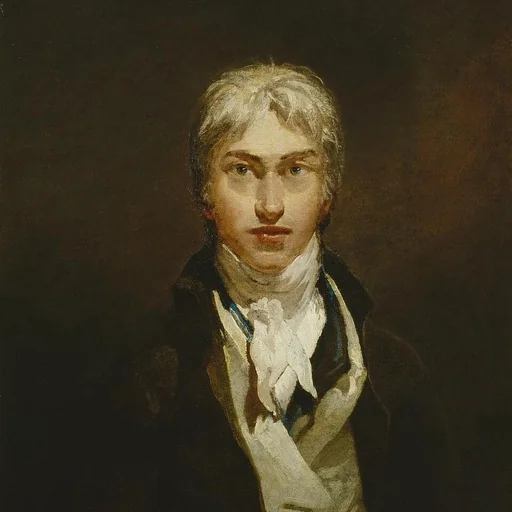
Joseph Mallord William Turner was born in 1775 at Maiden Lane, Covent Garden, where his father kept a barber and wig-making shop.

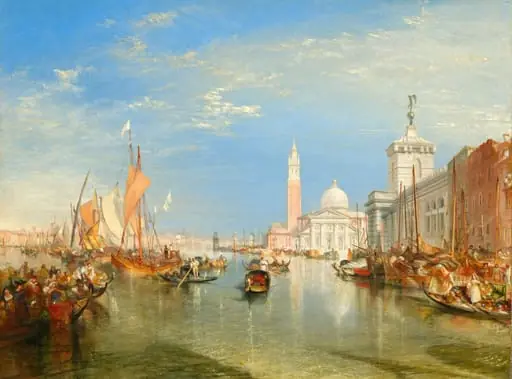
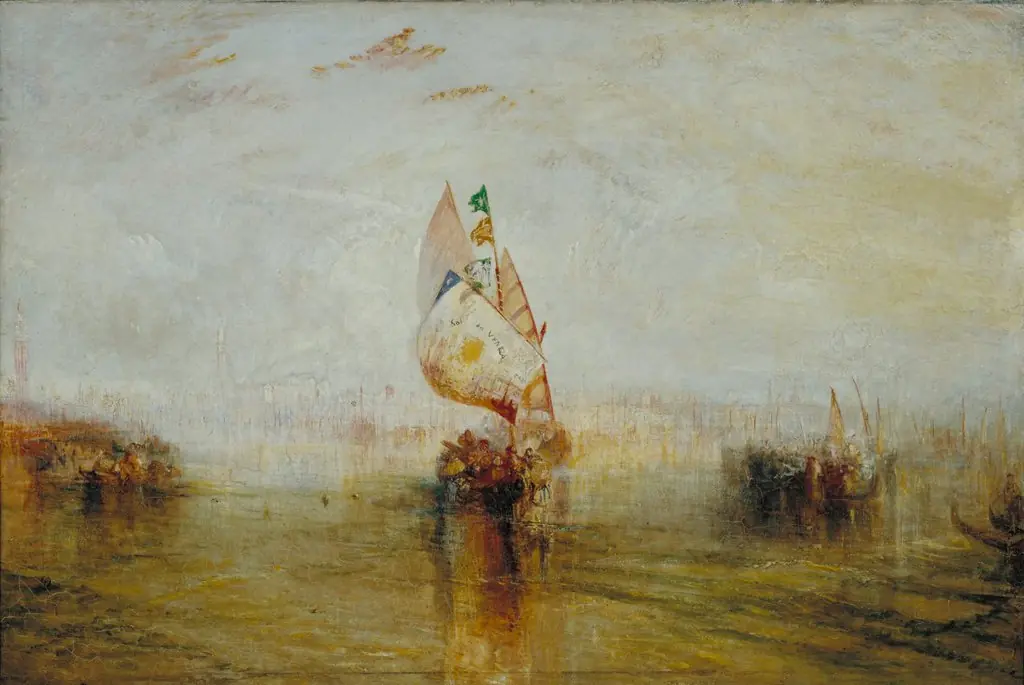 The Sun of Venice Going to Sea
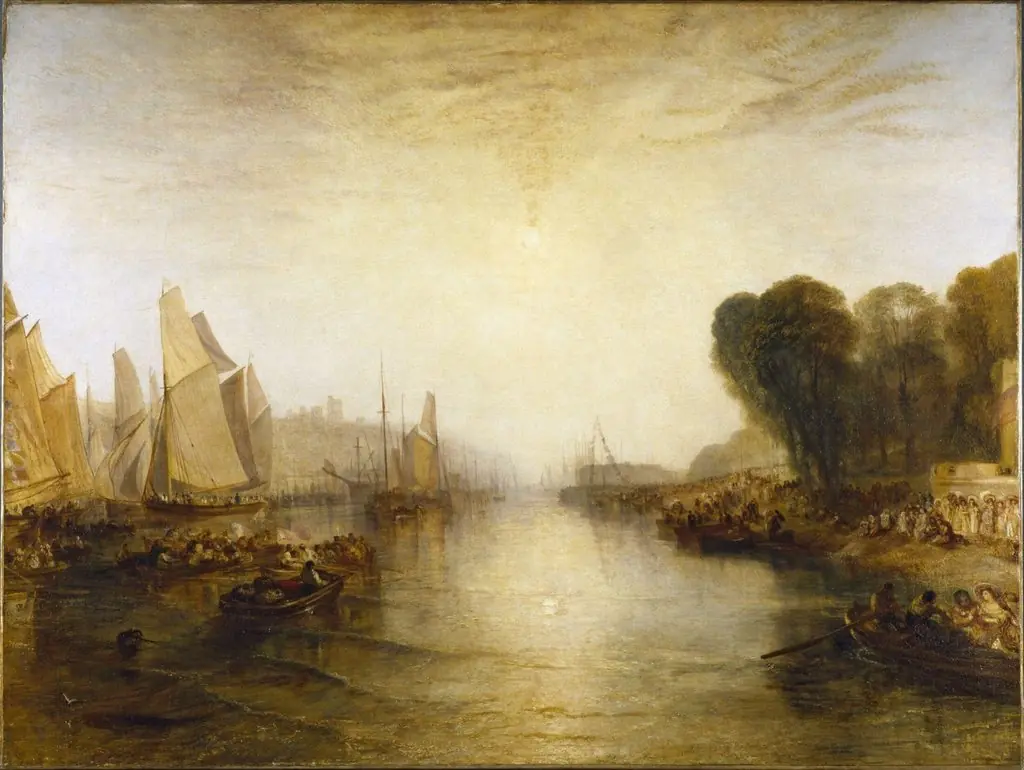 East Cowes Castle, the Seat of John Nash, Esq.; the Regatta Starting for their Moorings.
 East Cowes Castle
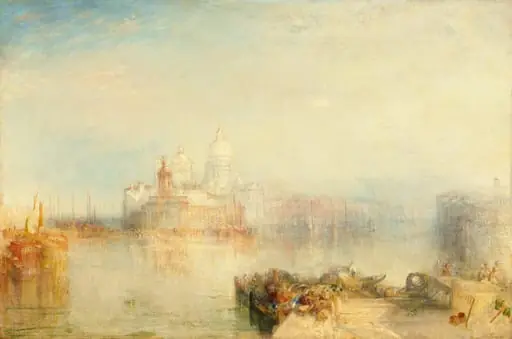
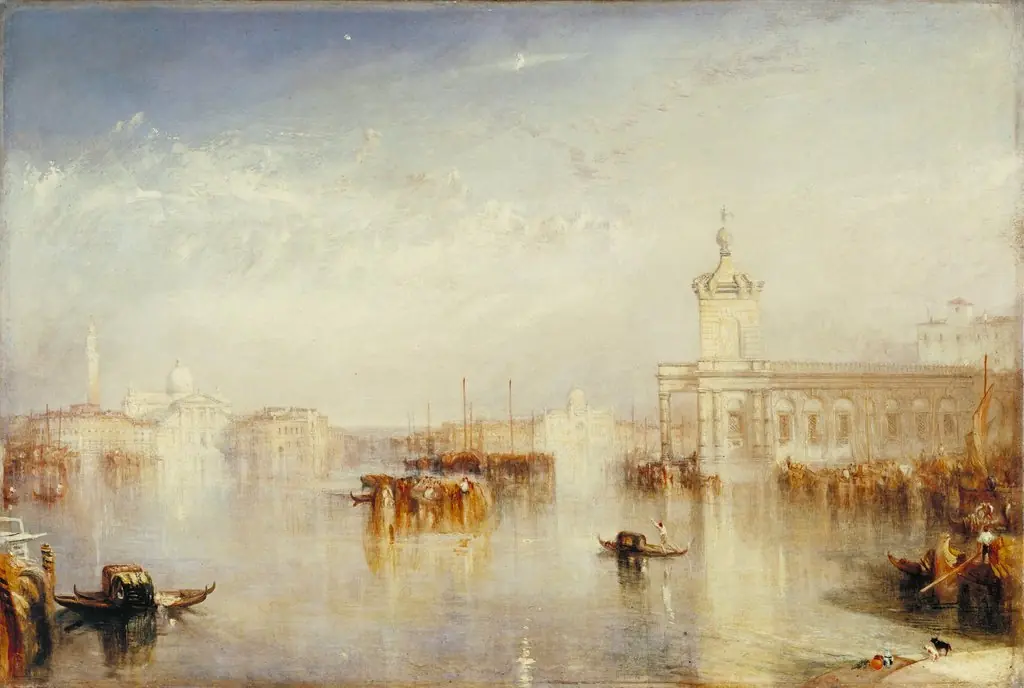 The Dogano, San Giorgio, Citella, from the Steps of the Europa
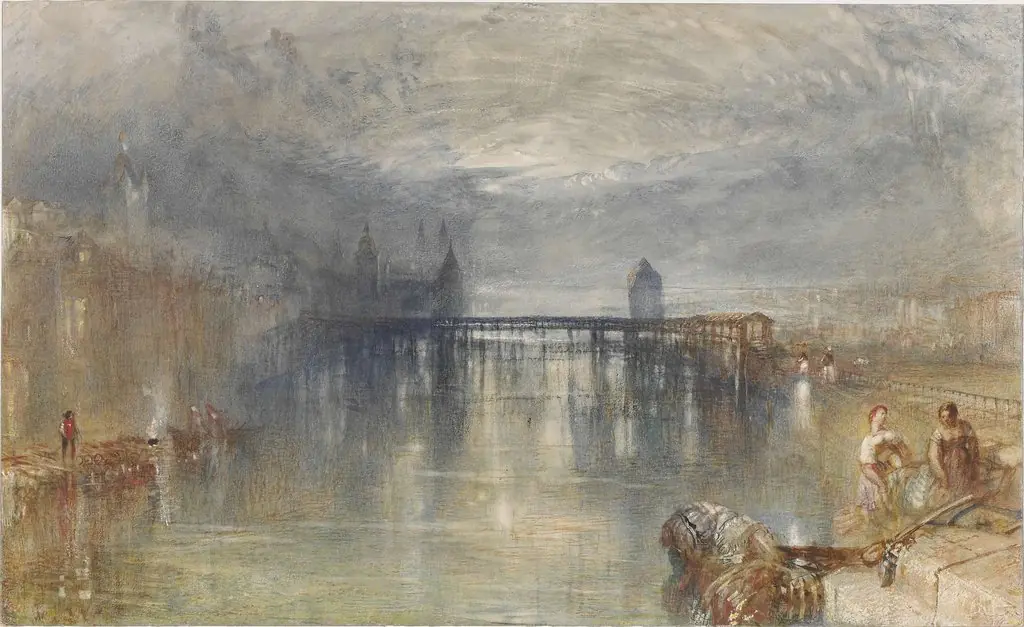 Lucerne: Moonlight
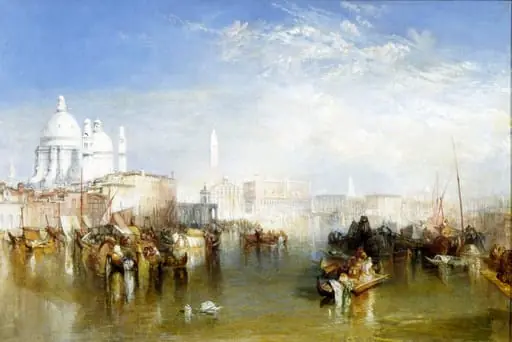 Venice from the Giudecca
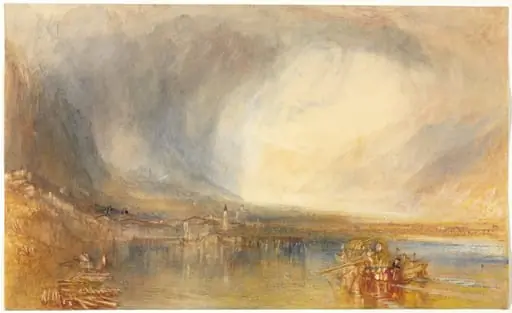 Flüelen, from the Lake of Lucerne
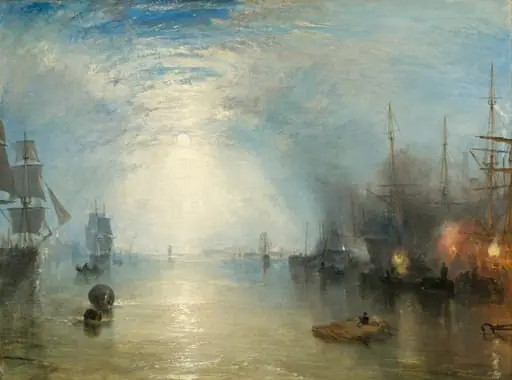 Keelmen Heaving in Coals by Moonlight