Artwork
East Cowes Castle, the Seat of John Nash, Esq.; the Regatta Starting for their Moorings.
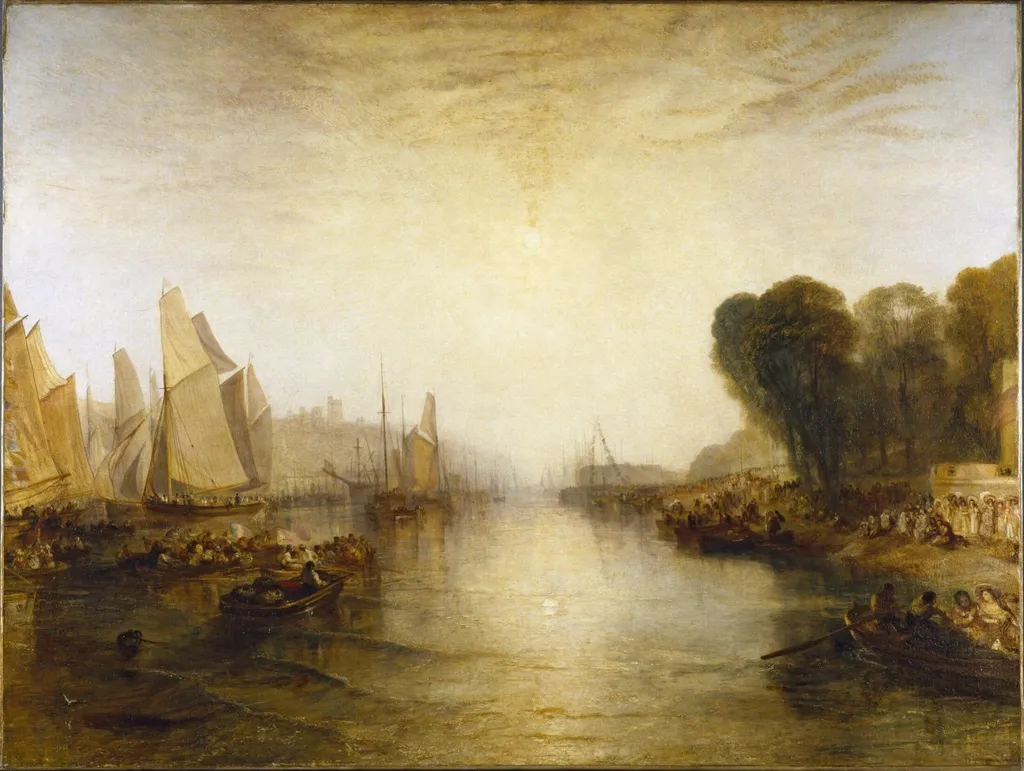
East Cowes Castle, the Seat of John Nash, Esq.; the Regatta Starting for their Moorings. is an oil painting by the British Romanticist artist Joseph Mallord William Turner. It dates from 1827 and is held in the collection of the Victoria and Albert Museum. East Cowes Castle, the Seat of John Nash, Esq.
About this work
This painting also has a companion piece called The Regatta Beating to Windward.
J.M.W. Turner painted East Cowes Castle, the Seat of John Nash, Esq.; the Regatta Starting for their Moorings in oil paint around 1827. It shows a busy regatta on the water near East Cowes Castle. The scene captures boats and flags in motion.
Turner often painted lively scenes like this. He liked to show nature’s power and human activity together. This painting also has a companion piece called The Regatta Beating to Windward.
Look up the technique called impasto next.
Overview
East Cowes Castle, the Seat of John Nash, Esq.; the Regatta Starting for their Moorings is an 1827 landscape and marine painting by the British artist J. M. W. Turner. Created using oil paint on canvas, the work measures 91.4 by 123.2 centimeters. It depicts the annual Cowes Regatta as observed from the Isle of Wight, capturing the bustling nautical event and the residence of the architect John Nash. The painting was commissioned by Nash following Turner's visit in 1827 and was exhibited at the Royal Academy's Summer Exhibition in 1828. It is currently held in the Victoria and Albert Museum, having entered the collection through the John Sheepshanks Gift in 1857.
Subject & Meaning
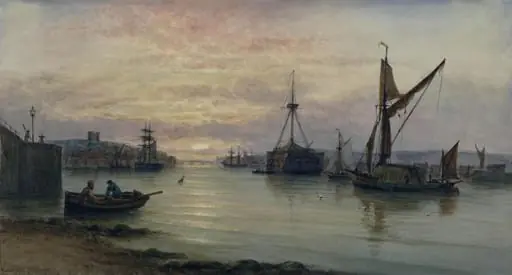
The artwork captures the moment the regatta vessels start for their moorings, a subject sometimes used to distinguish this piece from its companion painting, The Regatta Beating to Windward. The composition stretches horizontally across the canvas, featuring multiple sailing vessels with cream-colored sails occupying the left middle ground, while numerous small rowboats filled with figures cluster along both riverbanks. Dense crowds gather beneath dark, rounded trees on the right shore, with distant, hazy buildings and additional masts dissolving into the background. The scene commemorates the second year the Royal Yacht Club held races at Cowes, emphasizing the lively intersection of Regency era leisure and maritime activity around Nash's East Cowes Castle.
Technique & Style
Turner employed a laborious technique to produce the finished picture, beginning with seventy drawings and eight oil sketches made from vantage points on shore and aboard a man-of-war moored in the English Channel. The final painting features a palette of warm golds, muted browns, soft grays, and pale yellows, contrasted by darker greens and browns in the foliage. The sky occupies roughly two-thirds of the composition, rendered with loose, layered brushwork that creates atmospheric diffusion. Broad, horizontal strokes with scattered highlights define the water, while forms become increasingly indistinct toward the horizon, suggesting mist or atmospheric haze. The atmospheric clarity and complex composition derive from Turner's study of seventeenth century Dutch seascapes, which he sought to improve upon through his bravura brushwork. Paint application varies from thin, washed areas in the sky to slightly thicker passages in the boats and figures.
History & Provenance
In the summer of 1827, Turner visited East Cowes Castle on the Isle of Wight, his first visit to the island in over three decades. During his stay, he witnessed the Royal Yacht Club regatta and produced numerous sketches. John Nash subsequently commissioned two works from Turner inspired by the event. Both finished paintings were displayed at the Royal Academy's Summer Exhibition at Somerset House in 1828. Following Nash's death, the painting was sold at Christie's London on July 11, 1835, where the dealer Tiffin purchased it, almost certainly acting on behalf of the art collector John Sheepshanks. Sheepshanks gifted the painting to the South Kensington Museum, now the Victoria and Albert Museum, in 1857, where it holds the accession number FA.210[O].
Context
The painting was widely praised by critics upon its exhibition in 1828, and the prominent art critic John Ruskin later wrote it was, to his mind, one of the highest pieces of intellectual art existing. However, some contemporary reviewers criticized the nautical accuracy of the scene; the Repository of Art for June 1828 noted that carrying such a spread of canvas in the channel in the like breeze would upset some of these yachts, but conceded that the width of the sheet was necessary for pictorial effect. The Morning Herald on May 26, 1828, was altogether critical, describing the composition as having a cold grey character throughout, with a sea more like marble dust than any living waters, and cutters quite out of drawing and just proportion. Despite these critiques, the work solidified Turner's reputation as the finest marine painter of his day.
Legacy
The painting remains a significant example of Turner's mature marine art and his ability to synthesize atmospheric effects with complex compositional structures. Its transition from a private commission by a leading Regency architect to a public museum collection via the Sheepshanks Gift helped establish the framework for the study and appreciation of British landscape painting in institutional settings. The work continues to be referenced in scholarship regarding Turner's methods and his relationship with Dutch maritime traditions, maintaining its status as a critical work in the history of British art.
Own this work as a print
Artist & collection
Artist
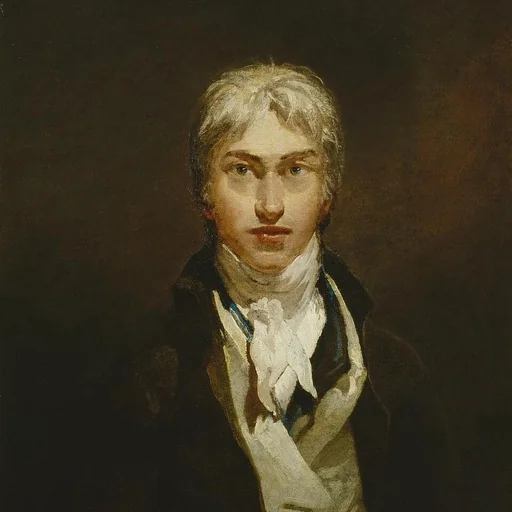
Joseph Mallord William Turner was born in 1775 at Maiden Lane, Covent Garden, where his father kept a barber and wig-making shop.

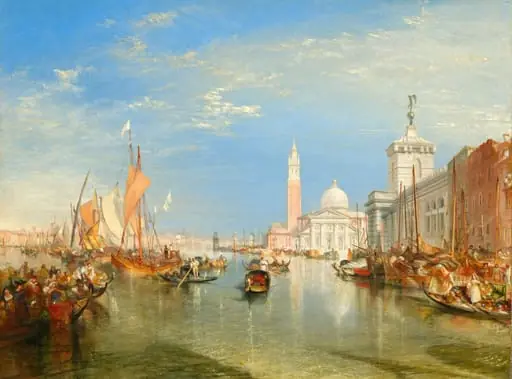
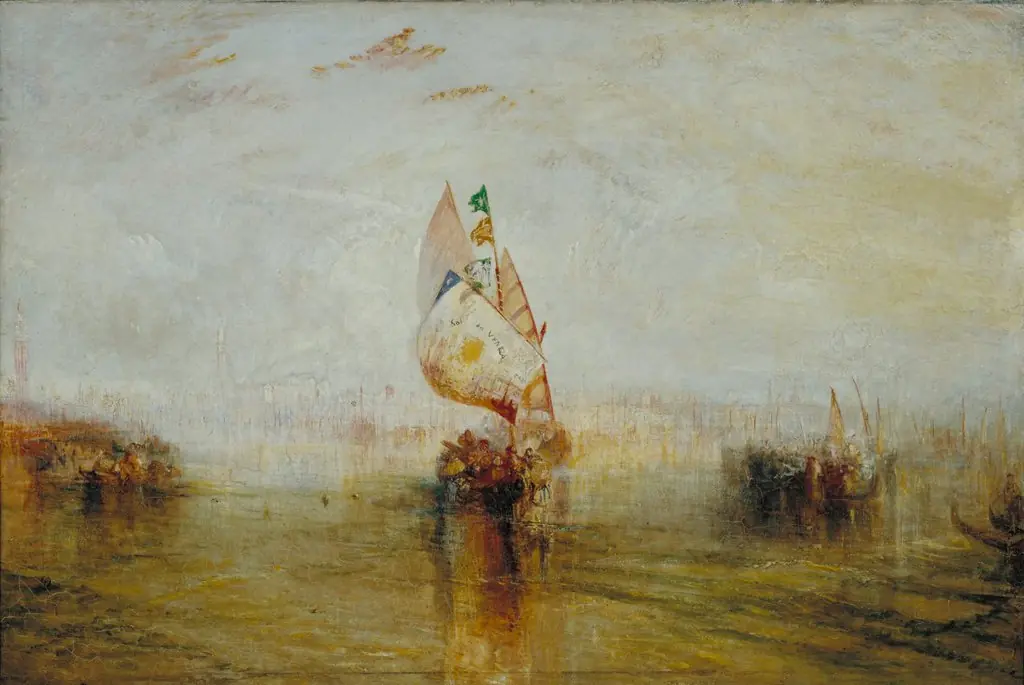 The Sun of Venice Going to Sea
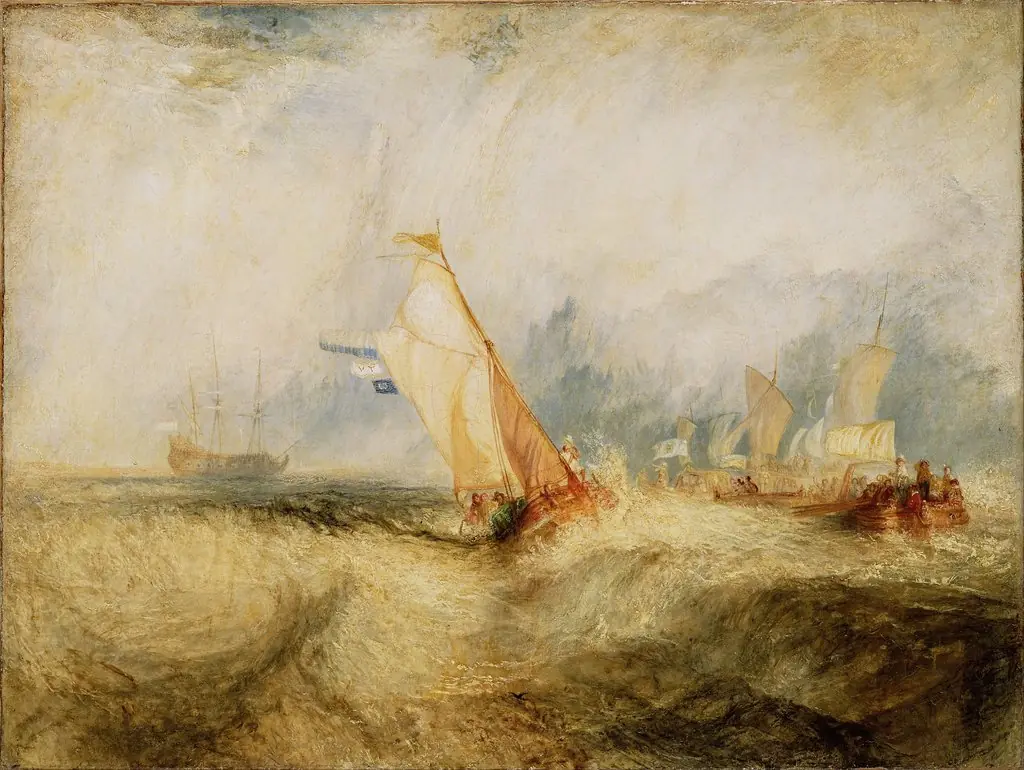 Van Tromp
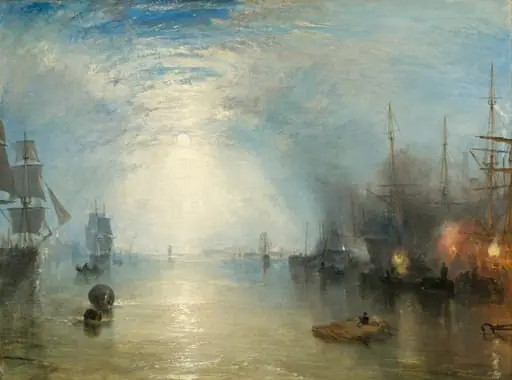 Keelmen Heaving in Coals by Moonlight
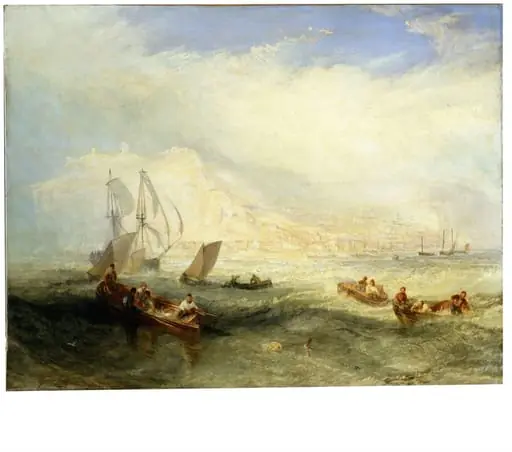 Line Fishing, Off Hastings
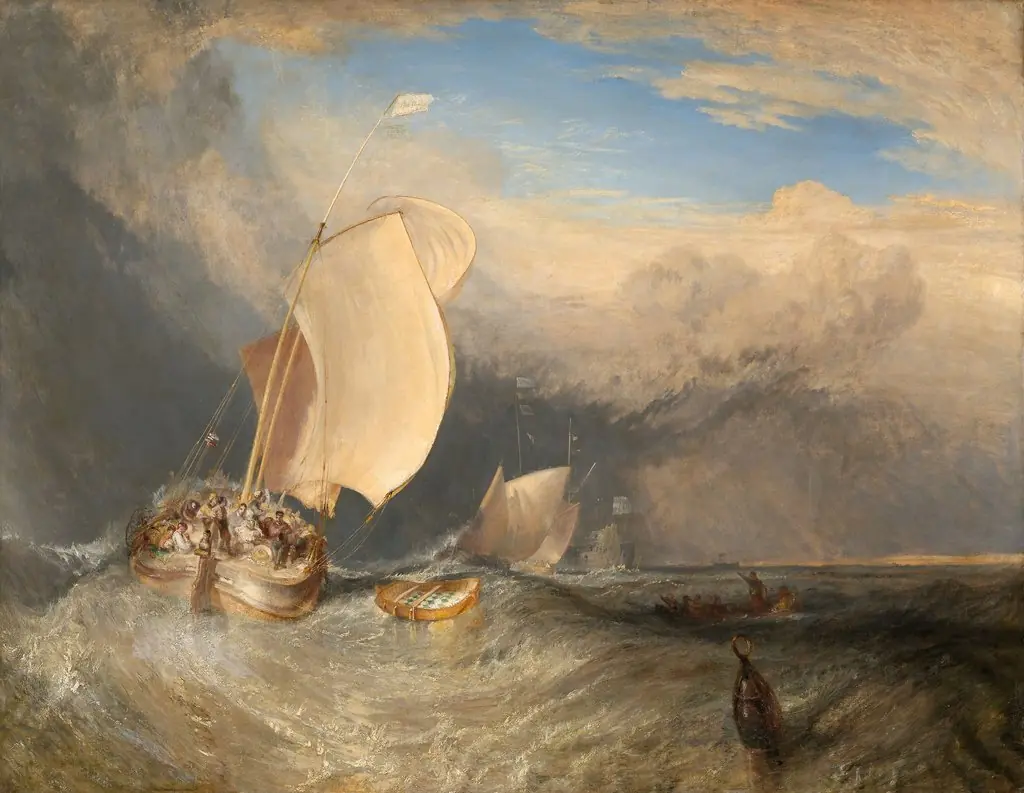 Fishing Boats with Hucksters Bargaining for Fish
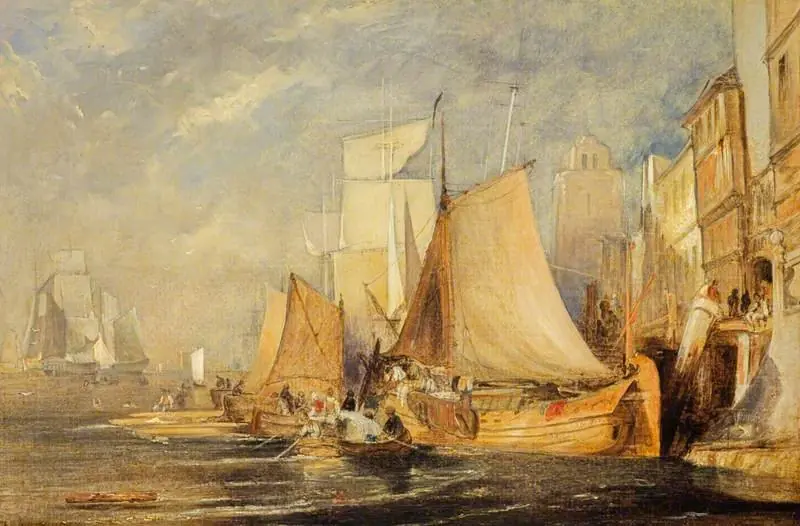 A Harbour Scene with Shipping
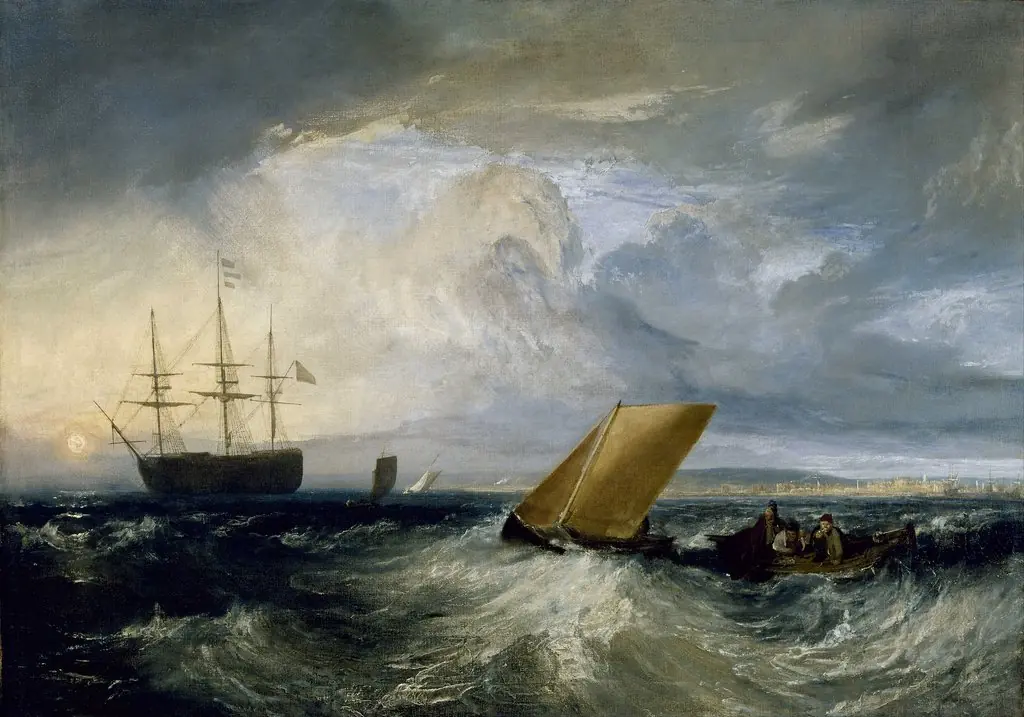 Sheerness as seen from the Nore
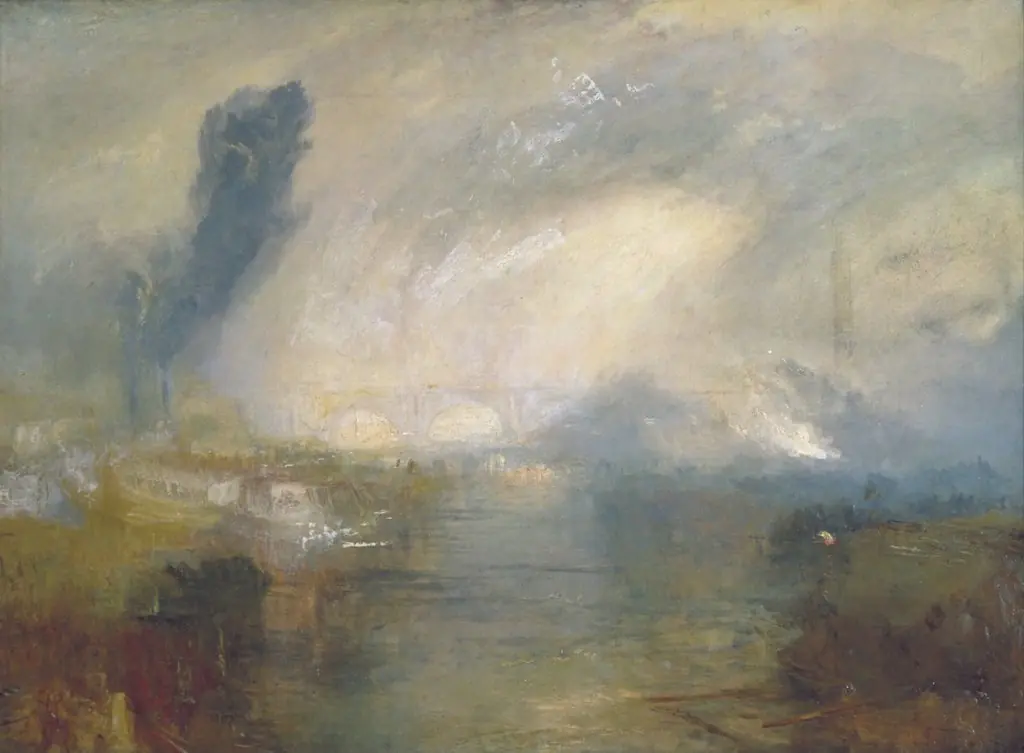 The Thames above Waterloo Bridge
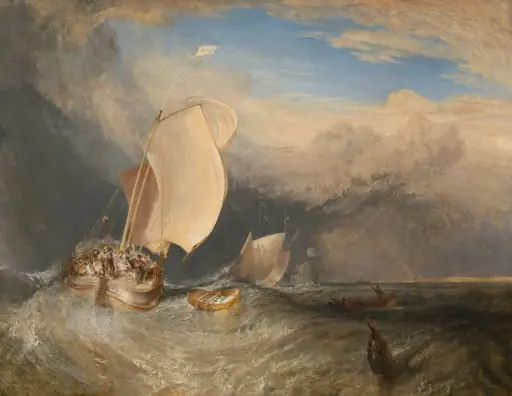 Fishing Boats with Hucksters Bargaining for Fish
 Rochester
- East Cowes Castle