Artwork
극락에서 설법하는 아미타불 조선|阿彌陀極樂會圖 朝鮮|Amitabha Buddha’s assembly in the Western Paradise
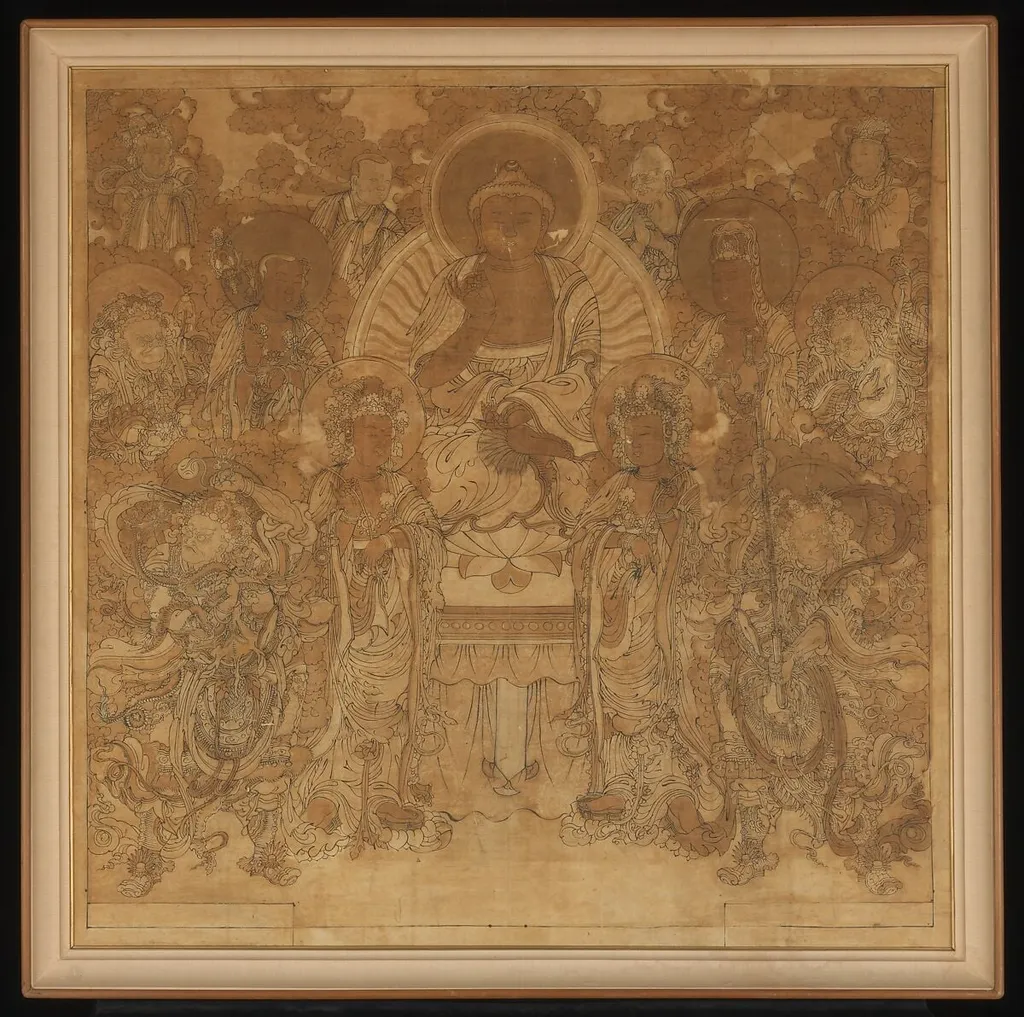
극락에서 설법하는 아미타불 조선|阿彌陀極樂會圖 朝鮮|Amitabha Buddha’s assembly in the Western Paradise is an ink painting. It dates from 1800 and is held in the collection of the Metropolitan Museum of Art. This painting, titled Amitabha Buddha’s assembly in the Western Paradise, originates from Korea during the Joseon Dynasty.
About this work
Subject & Meaning
The composition features the Buddha flanked by bodhisattvas, specifically including Avalokiteśvara, representing the divine court of the Pure Land.
The work depicts the assembly of Amitabha Buddha preaching in the Western Paradise, a central scene in Pure Land Buddhism. The composition features the Buddha flanked by bodhisattvas, specifically including Avalokiteśvara, representing the divine court of the Pure Land. As a religious painting created in 1800, the image serves to visualize the ideal realm of rebirth promised by Amitabha's vows.
The inclusion of these specific figures underscores the soteriological function of the artwork, guiding devotees toward the aspiration of reaching this blissful destination. The iconography relies on established Buddhist traditions to portray the spiritual hierarchy and the serene atmosphere of the paradise, making the invisible realm of the Western Pure Land tangible for worshipers.
Technique & Style
The work is executed in ink with traces of color on paper support. The sheet measures approximately 151.1 cm in height and width, indicating a nearly square format. While the sources do not detail the artist's handling, brushwork, or current condition, the ink-based technique suggests a delicate line quality supplemented by subtle pigment accents. The painting depicts Amitabha Buddha accompanied by Avalokiteśvara and other bodhisattvas, reflecting the Western Paradise assembly theme.
History & Provenance
Created in 1800, this painting depicting Amitabha Buddha's assembly in the Western Paradise was executed by an anonymous artist. The work is rendered in ink with traces of color on paper. While specific details regarding its original commission or early ownership history are not recorded in the available sources, the piece is currently held in the collection of the Metropolitan Museum of Art, where it remains located. The artwork measures approximately 151.1 centimeters in both height and width.
Overview
This painting, titled Amitabha Buddha’s assembly in the Western Paradise, originates from Korea during the Joseon Dynasty. Executed with ink and subtle traces of color on paper, it depicts a serene vision of the Pure Land. The artwork centers on Amitabha Buddha, surrounded by a celestial retinue, offering a glimpse into the devotional practices and artistic traditions of its period.
Context
As an example of Joseon Dynasty Buddhist painting, this work illustrates the enduring religious artistic traditions of Korea. Such devotional images served as focal points for contemplation and worship, guiding adherents towards an understanding of the Pure Land teachings. The painting contributes to the broader narrative of East Asian Buddhist art, demonstrating regional stylistic interpretations.
Artist & collection

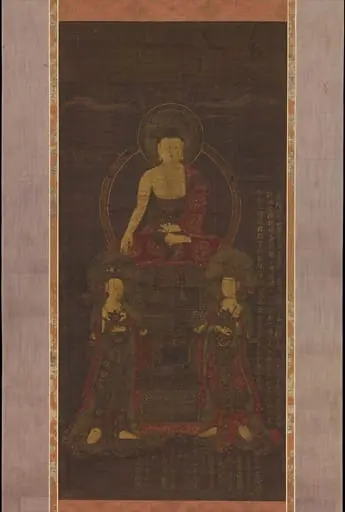 석가삼존도 조선|釋迦三尊圖 朝鮮|Shakyamuni triad
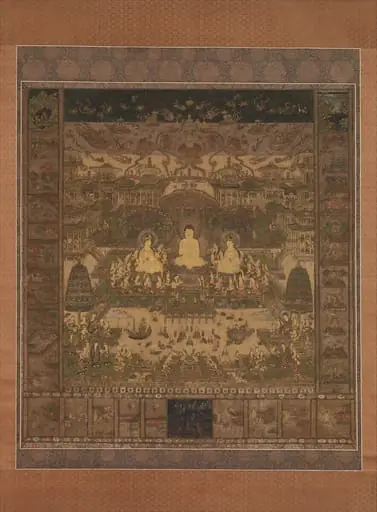 當麻曼荼羅図 |Taima Mandala
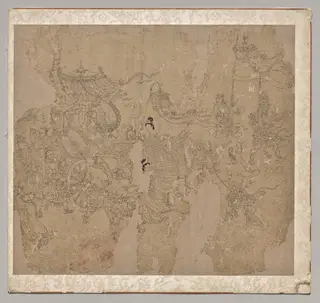 Album of Daoist and Buddhist Themes: Procession of Daoist Deities: Leaf 3
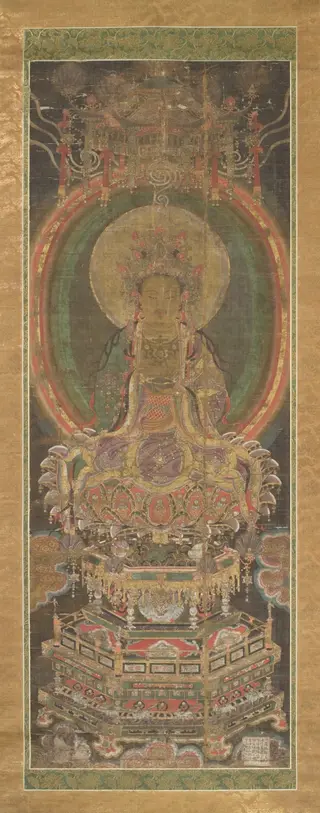 Avalokiteshvara (Guanyin), the Bodhisattva of Compassion
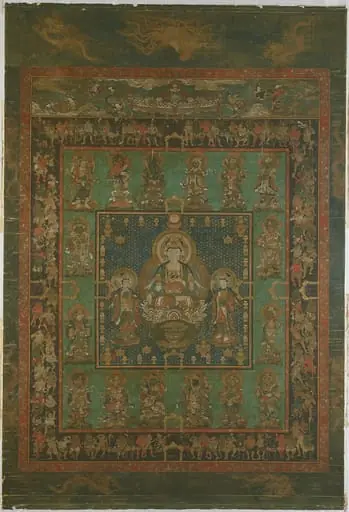 般若菩薩曼荼羅図|Mandala of the Bodhisattva Hannya (Prajnaparamita)
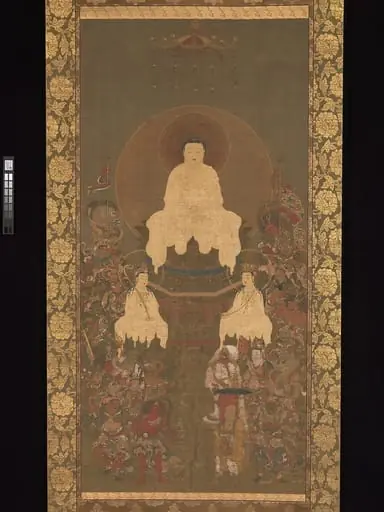 釈迦三尊十六善神像|Shaka (Shakyamuni), the Historical Buddha, with Two Attendant Bodhisattvas and Sixteen Benevolent Deities
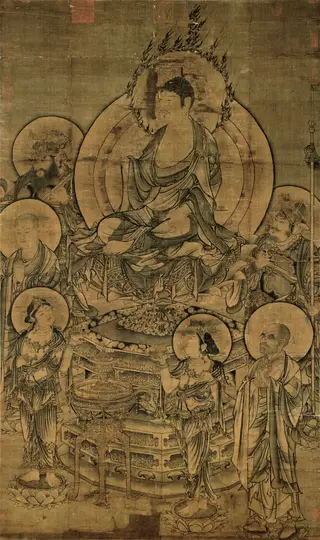 The Buddha Preaching the Law
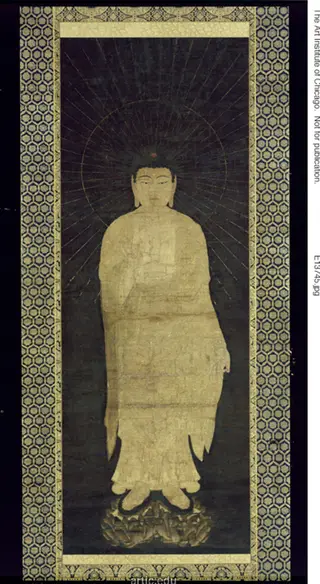 The Buddha Amida, from the triptych Approach of the Amida Trinity
 地蔵菩薩来迎図|Welcoming Descent of the Bodhisattva Jizō