Artwork
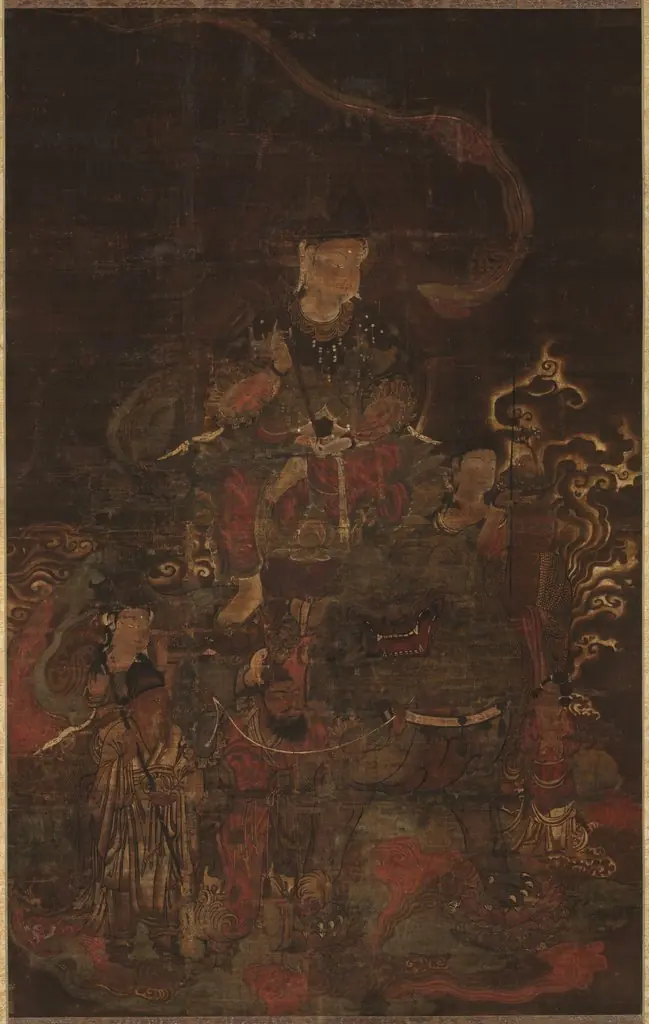
明 佚名 送子觀音圖 軸|Guanyin the Bringer of Sons
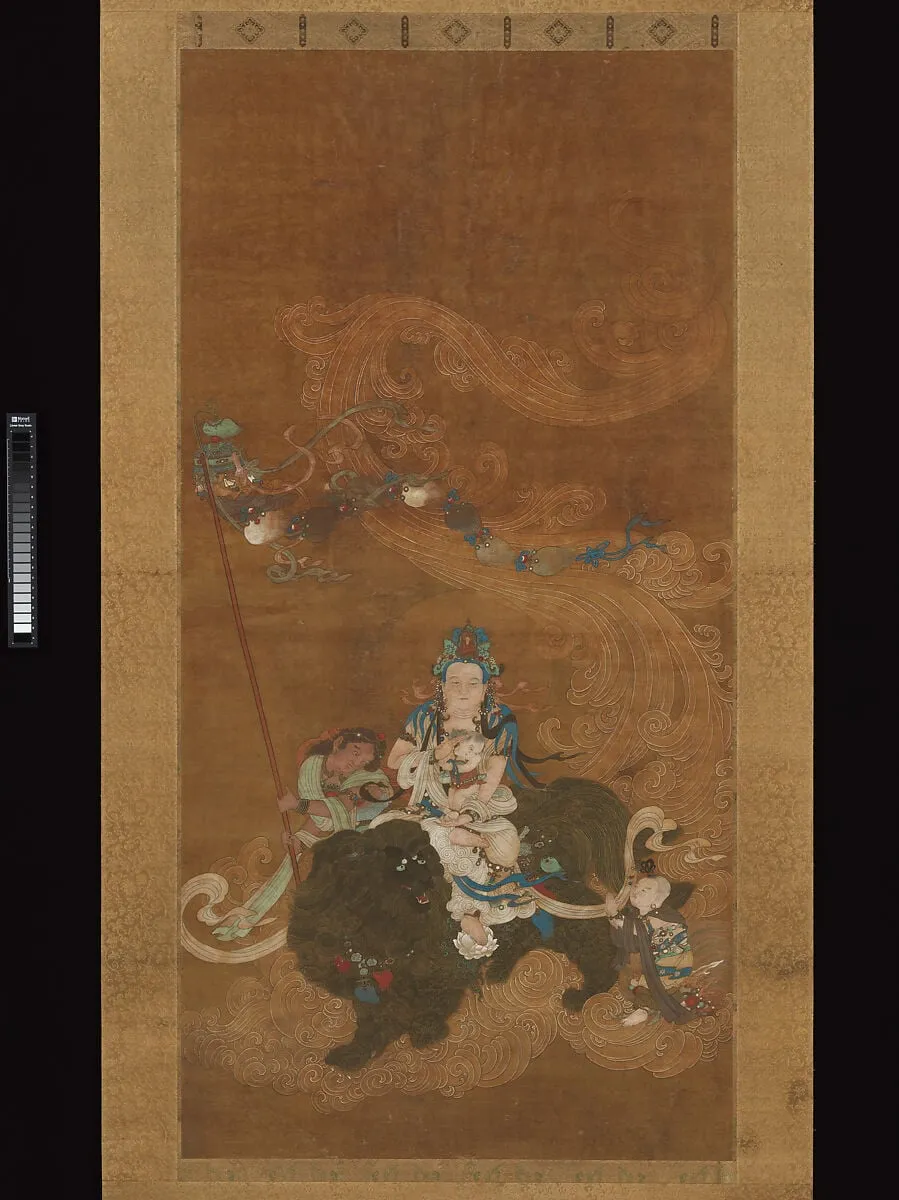
明 佚名 送子觀音圖 軸|Guanyin the Bringer of Sons is an ink painting. It dates from 1583 and is held in the collection of the Metropolitan Museum of Art. This hanging scroll, titled Guanyin the Bringer of Sons, dates to the Ming dynasty and is attributed to an unidentified artist.
About this work
Technique & Style
The work is executed as a hanging scroll using ink, polychrome pigments and applied gold leaf on silk, a support typical of Ming‑dynasty devotional paintings.
The work is executed as a hanging scroll using ink, polychrome pigments and applied gold leaf on silk, a support typical of Ming‑dynasty devotional paintings. The composition follows a conventional iconography in which the bodhisattva Guanyin, identified by her lion mount, tenderly presents a child, a motif associated with fertility and filial devotion. The brushwork combines delicate line work with subtle washes of color, while the gilt accents heighten the sacred atmosphere.
As a museum‑held piece in the Metropolitan Museum of Art, the scroll retains its original mounting and shows no significant structural damage, preserving its visual integrity.
History & Provenance
The work is a hanging scroll dated 1583, executed by an anonymous Chinese painter in ink, color, and gold on silk. It portrays the Bodhisattva Guanyin accompanied by a boy, an infant, and a lion, illustrating the theme of the Bringer of Sons, and is classified as a religious painting. The painting was made in China and is presently housed in the Metropolitan Museum of Art in New York.
Information regarding its original commission, earlier owners, or any subsequent provenance prior to its entry into the Met collection is not recorded in the available sources.
The hanging scroll titled 'Guanyin the Bringer of Sons,' created in 1583 by an unknown artist, is held in the collection of the Metropolitan Museum of Art. Located at the museum, this work on silk utilizes ink, color, and gold to depict the Bodhisattva with an infant and a lion. While the piece is cataloged within the museum's holdings as a religious painting from China, the provided records do not specify a unique accession number or detail any specific exhibitions in which the scroll has been displayed.
Overview
This hanging scroll, titled Guanyin the Bringer of Sons, dates to the Ming dynasty and is attributed to an unidentified artist. Executed with ink, color, and gold on silk, the painting depicts the bodhisattva Guanyin amidst a scene populated by children and lions. The work serves as an example of devotional Buddhist art from the period, emphasizing Guanyin's compassionate role.
Subject & Meaning
The central figure is Guanyin, a bodhisattva revered in East Asian Buddhism for compassion. Here, Guanyin is presented in a specific manifestation as a "bringer of sons," a role that became popular in China, particularly among those seeking male heirs. The presence of children surrounding the deity, along with guardian lions, reinforces this benevolent aspect and the protective qualities associated with the bodhisattva.
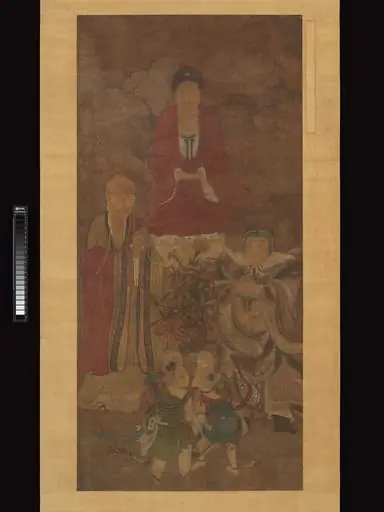
Artist & collection

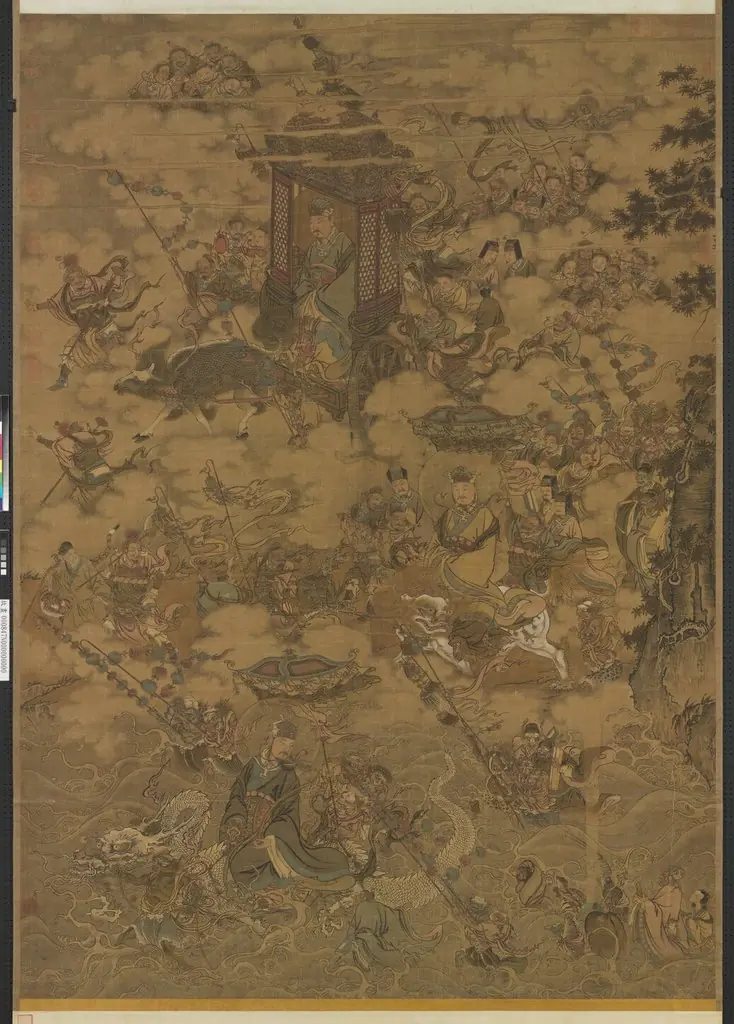 宋馬麟三官出巡圖 軸
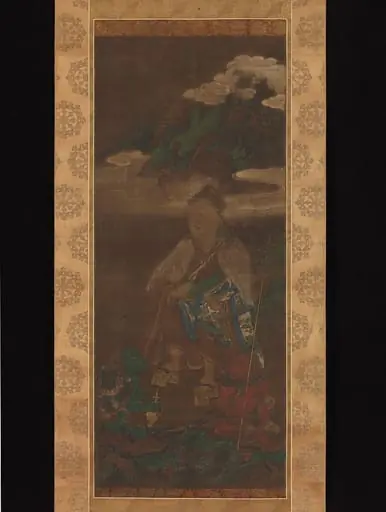 Untitled
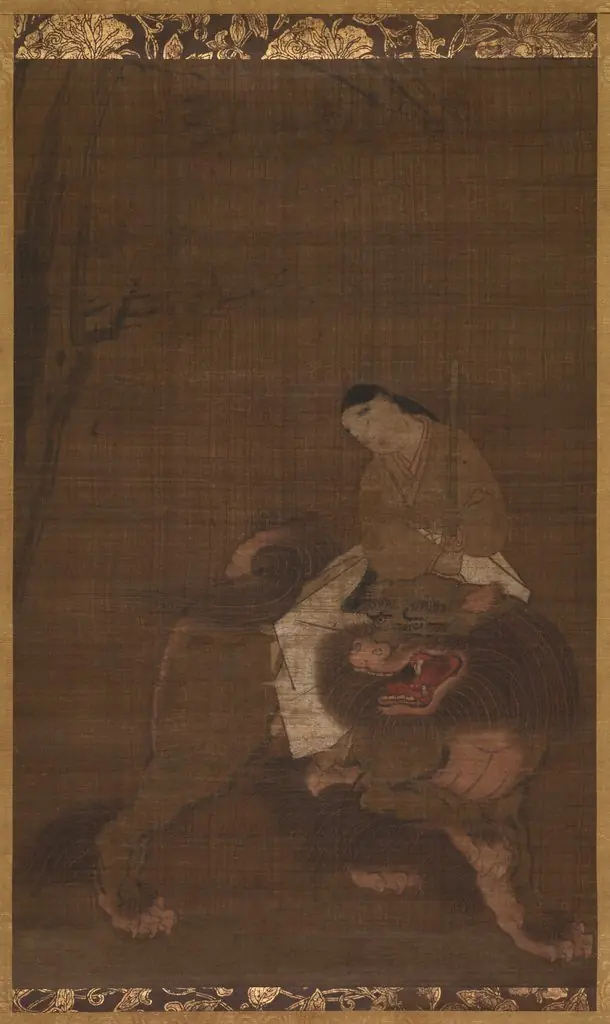 Monju as a Child
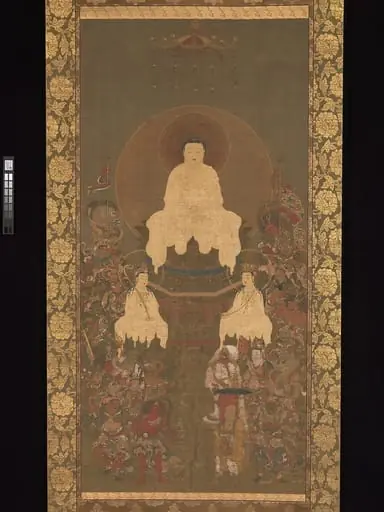 釈迦三尊十六善神像|Shaka (Shakyamuni), the Historical Buddha, with Two Attendant Bodhisattvas and Sixteen Benevolent Deities
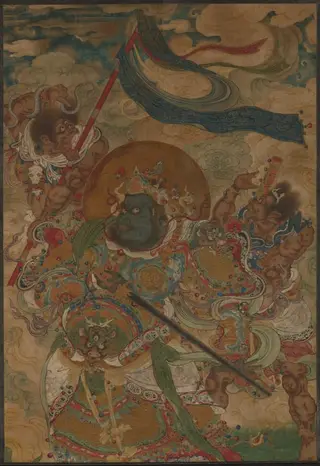 Heavenly King Virudhaka
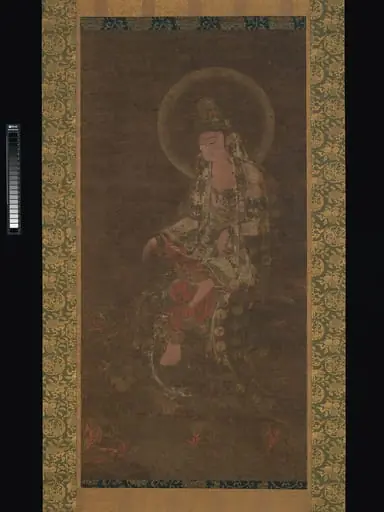 작자미상 수월관음도 고려|作者未詳 水月觀音圖 高麗|Water-Moon Avalokiteshvara
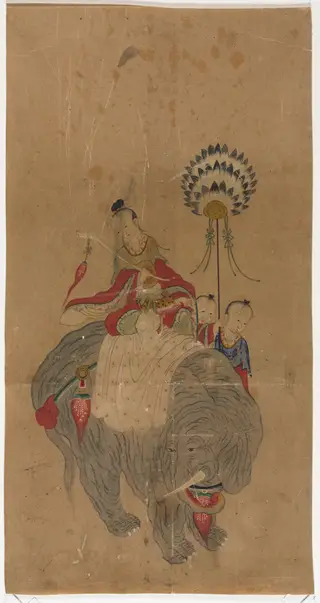 Samantabhadra on an Elephant with Two Attendants
 Monju Riding Lion with Attendants