Artwork
清 佚名 監門關聖帝君圖 軸|Guan Yu
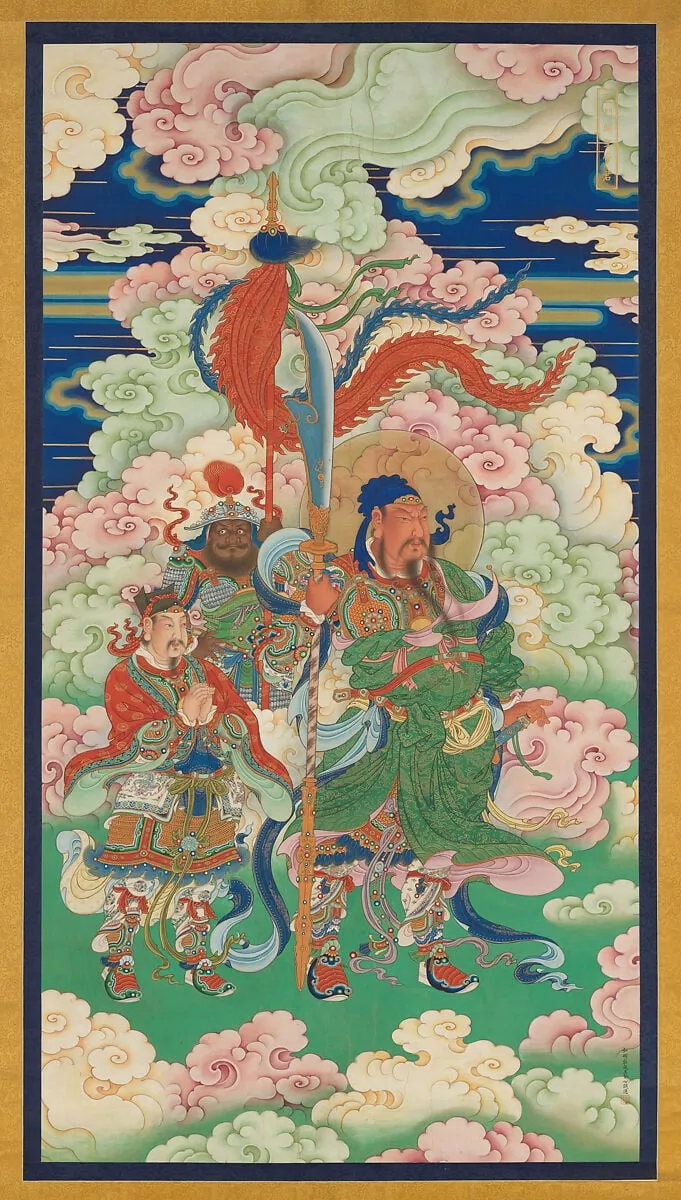
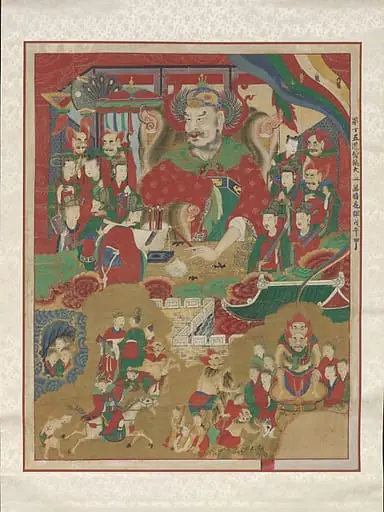
清 佚名 監門關聖帝君圖 軸|Guan Yu is an ink painting. It dates from 1700 and is held in the collection of the Metropolitan Museum of Art. The work is an anonymous hanging scroll portraying Guan Yu, a celebrated figure from Chinese history.
About this work
Technique & Style
The hanging scroll employs ink, mineral and organic pigments, and gold on silk, reflecting Qing atelier practices for devotional images.
The hanging scroll employs ink, mineral and organic pigments, and gold on silk, reflecting Qing atelier practices for devotional images. The anonymous painter applied opaque mineral colors in flat, local tones over a dilute ink underdrawing, reserving gold for the deity’s armor and halo to signal sanctity. Silk fibers remain visible in areas of thin wash, guiding the layered application of pigments and gold leaf.
The composition is organized symmetrically around the enthroned figure, whose volumetric modeling is conveyed through graded ink washes rather than linear contour alone. Drapery folds and musculature are indicated sparingly, with emphasis on frontality and hieratic scale to convey divine authority.
History & Provenance
The hanging scroll depicting Guan Yu was created in the early eighteenth century in China and entered the collection of the Metropolitan Museum of Art. It was produced by an anonymous painter working under the Qing dynasty, reflecting the religious genre of the period. The work’s date of 1700 aligns with its documented inception, and its medium of ink, color, and gold on silk underscores its technical execution.
The painting’s provenance traces its ownership to the Metropolitan Museum of Art, where it remains on display.
The hanging scroll depicting Guan Yu was created in China around 1700 and is part of the Metropolitan Museum of Art's collection. It has been exhibited in the museum's Asian art galleries as part of displays focused on Chinese religious art.
Legacy
The hanging scroll attributed to an anonymous Qing‑dynasty hand, rendered in ink, color and gold on silk, entered the Metropolitan Museum of Art collection and has been cited as an early example of how later scholars and collectors have reinterpretted the figure of Guan Yu as a moral exemplar. Its inclusion in museum inventories and subsequent scholarly discussions has contributed to a broader understanding of Qing‑era religious painting, influencing later artistic representations and academic studies of the genre.
Overview
The work is an anonymous hanging scroll portraying Guan Yu, a celebrated figure from Chinese history. Executed on silk, the composition combines ink, pigments and gold leaf, reflecting the luxurious materials typically reserved for high‑status artworks in traditional Chinese painting.
Subject & Meaning
Guan Yu, depicted in formal court attire, embodies loyalty and martial virtue, qualities that have elevated him to near‑deified status in Chinese culture. The portrayal underscores his role as a guardian figure, reinforcing ideals of fidelity and righteousness.
Context
In the broader tradition of Chinese hanging scrolls, depictions of Guan Yu served both devotional and decorative purposes, often placed in ancestral halls or shrines. The use of gold aligns with the practice of emphasizing sacred or heroic subjects through precious materials.
Artist & collection

- The Eight Hosts of Deva, Naga, and Yakshi
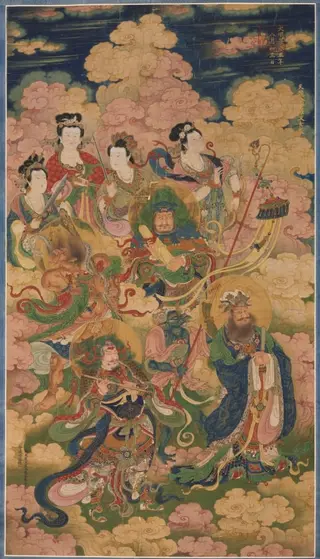 The Eight Hosts of Deva, Naga, and Yakshi
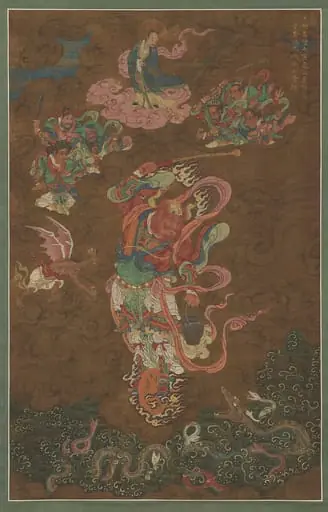 明嘉靖 佚名 王元帥圖 軸|Marshal Wang
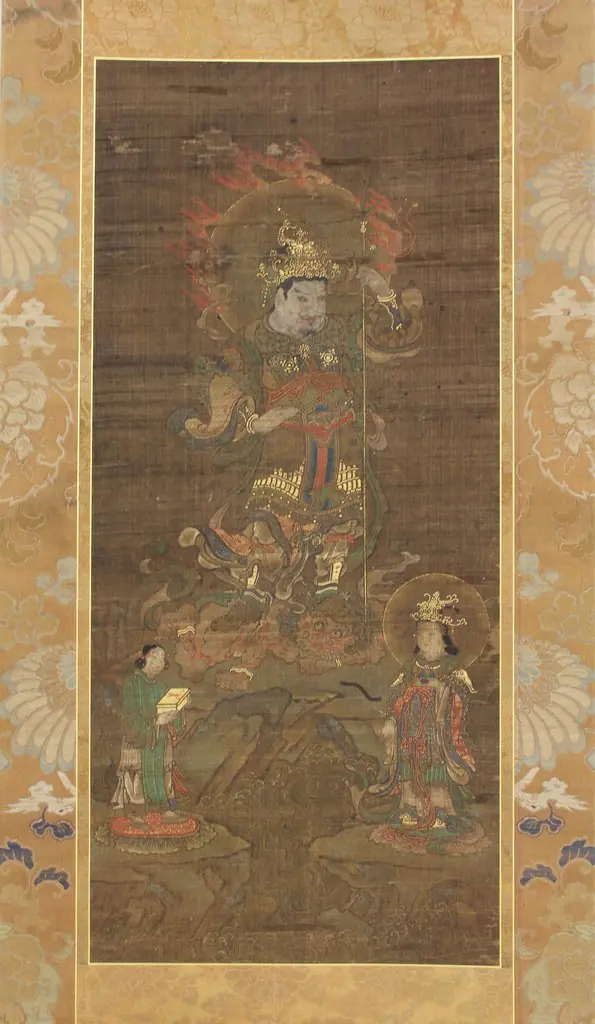 Mount Kurama Mandala: Bishamonten Triad (Kuramayama mandara: Bishamonten sanzonzō)
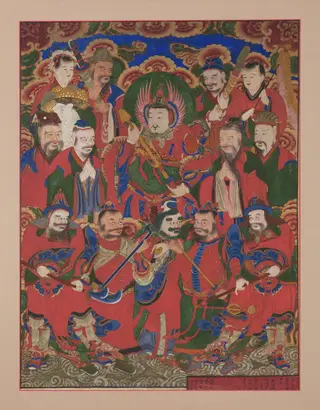 The Heavenly Dragon General with Attendants
 Untitled
 明孝宗坐像 軸
 明世宗坐像 軸
 Daoist Official of Heaven with Seven Stars and Jade Maidens
 Two Chinese Daoist Immortals, Zhongli Quan (Jongni Gwon) and Liu Hai (Yu Hae)
 Shakyamuni with two attendants
 The Five Guardian Generals (O Bang Jang Kun)