Artwork
Monju as a Child
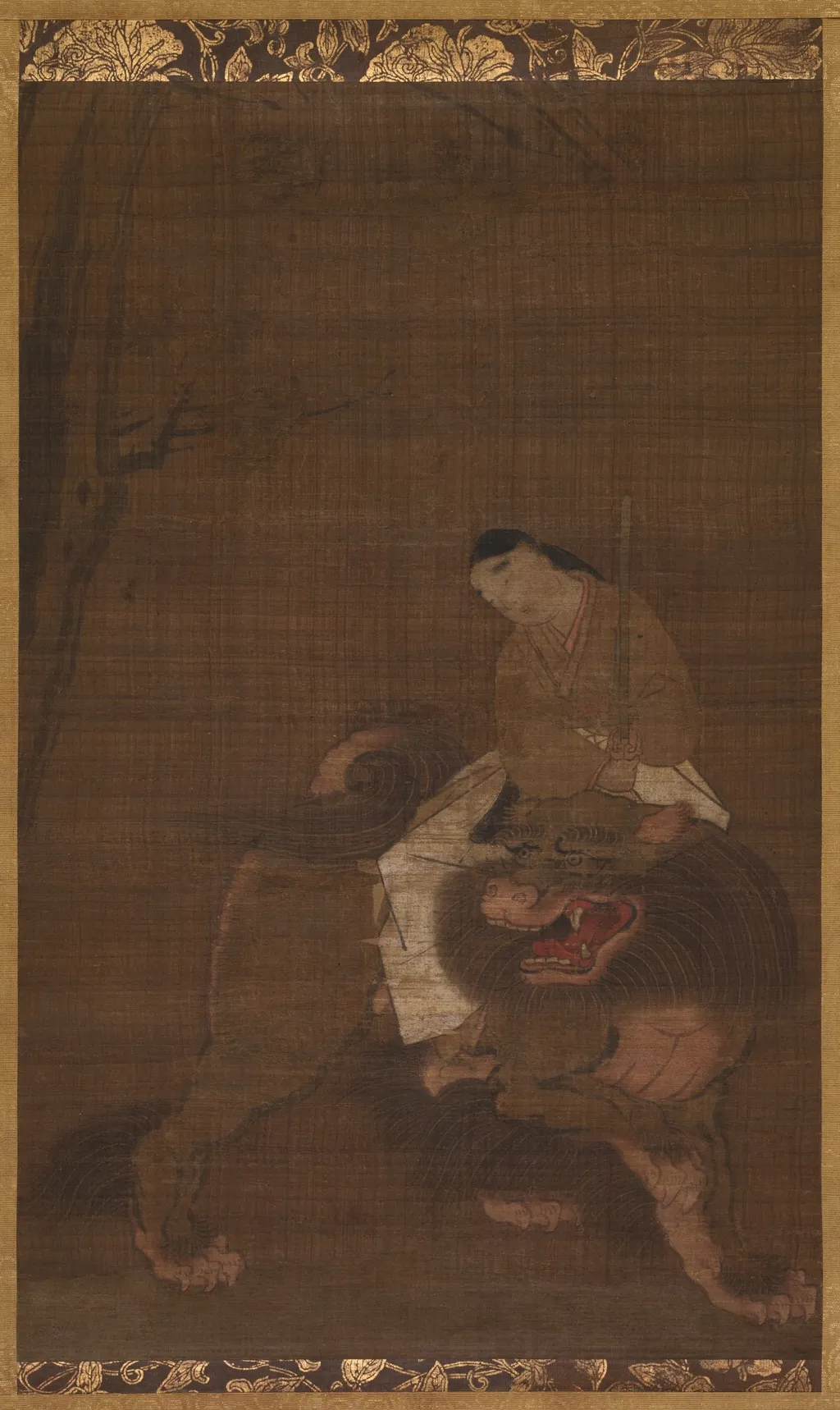
Monju as a Child is an unspecified painting. It dates from 1492 and is held in the collection of the Cleveland Museum of Art.
About this work
Technique & Style
Stylistically, the piece represents a tradition of Japanese religious art from the late fifteenth century, depicting the bodhisattva Monju in child form.
Created in 1482, Monju as a Child is a Japanese painting housed in the collection of the Cleveland Museum of Art. The work is classified as a painting, though the specific materials, support, and technical handling employed by the unknown artist are not detailed in the available records. Stylistically, the piece represents a tradition of Japanese religious art from the late fifteenth century, depicting the bodhisattva Monju in child form. No further information regarding the condition, dimensions, or specific stylistic attributes is provided in the current sources.
History & Provenance
The painting Monju as a Child was created in 1482 in Japan and is attributed to an unknown artist. It entered the collection of the Cleveland Museum of Art, where it remains on view today. Its provenance traces back to its creation in the late 15th century, with the work later documented in the museum's holdings. The piece was accessioned under the identifier 1992.385 and is classified as a painting.
The painting Monju as a Child is held by the Cleveland Museum of Art. It entered the collection under accession number 1992.385. The work has been part of exhibitions at the Cleveland Museum of Art, including the exhibition titled "Japanese Painting: 14th–17th Century," which took place in 1992.
Context
Monju as a Child is a 1482 painting attributed to an unknown Japanese artist, now held in the Cleveland Museum of Art collection. The work entered the museum's holdings as part of their Asian art holdings and is recognized as an example of Muromachi period religious imagery. Its depiction of the young Buddhist monk Monju draws on contemporary Kamakura period devotional practices, situating it within the broader context of Japanese Buddhist painting traditions.
The painting's attribution remains subject to scholarly discussion, with limited documentation available regarding its original patronage and early exhibition history.
Overview
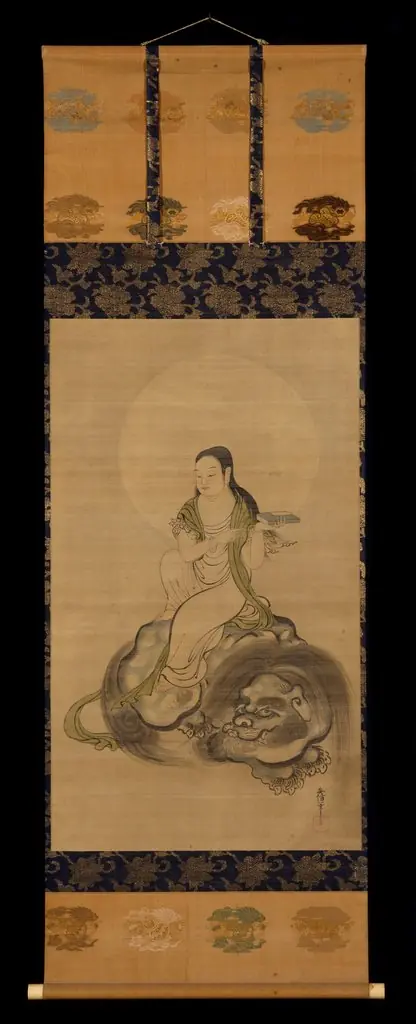
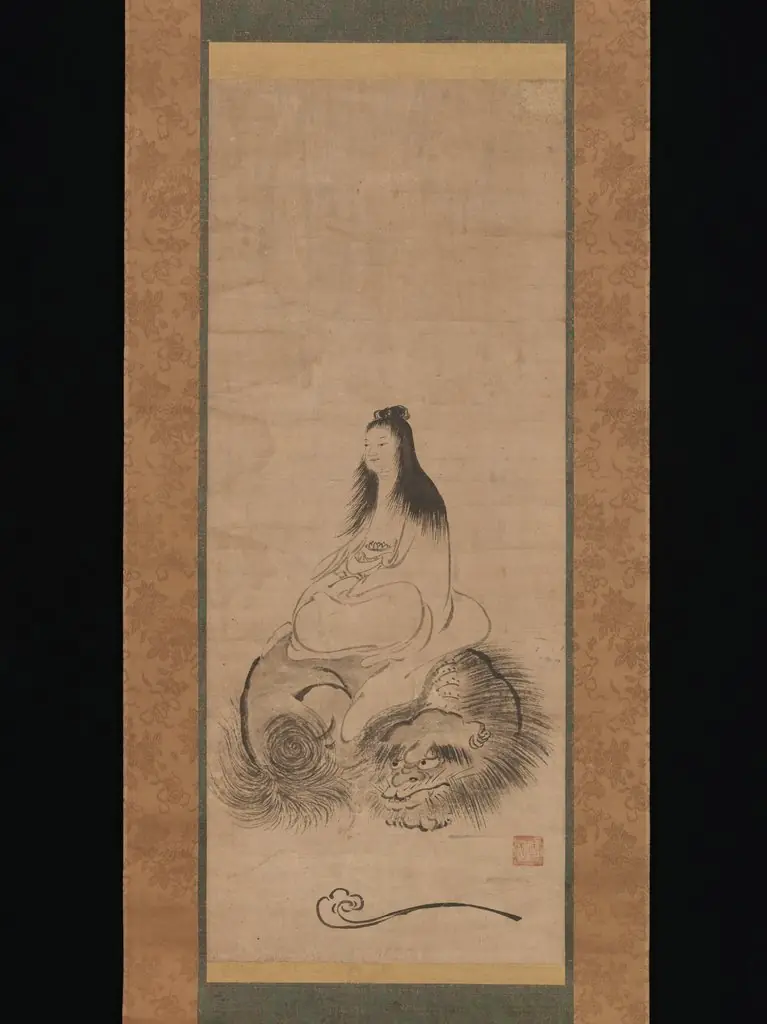
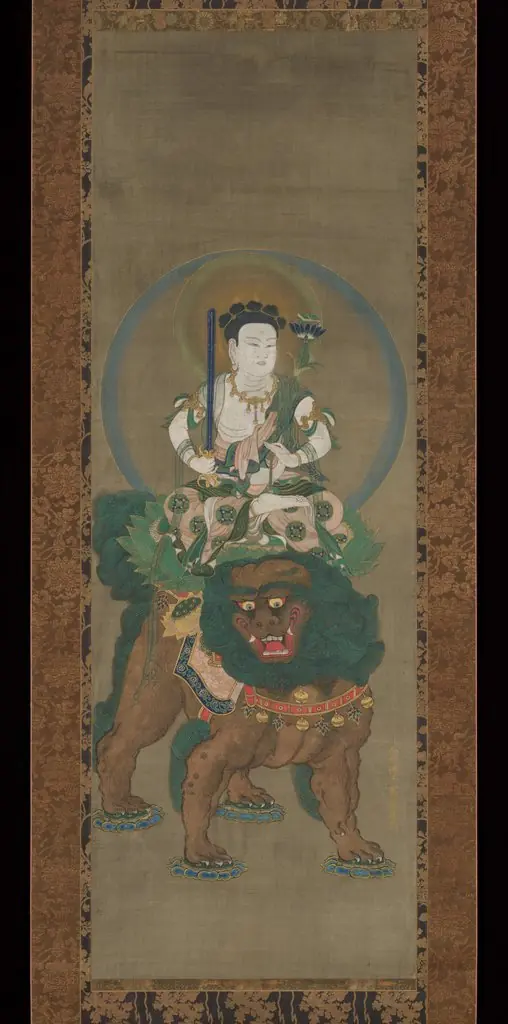
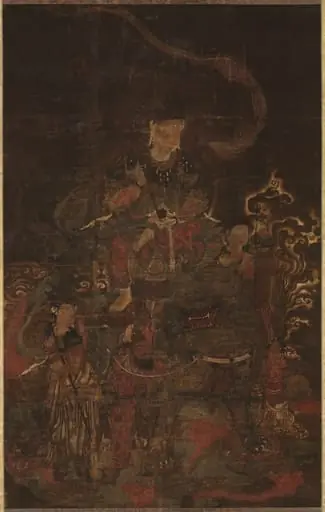
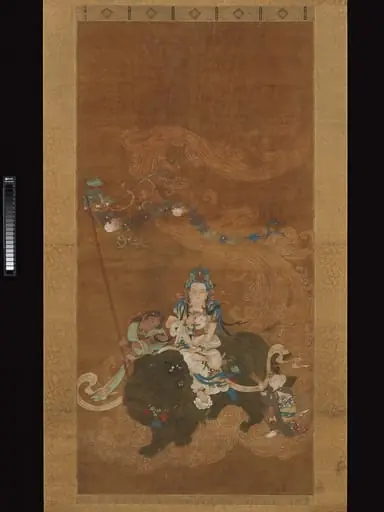
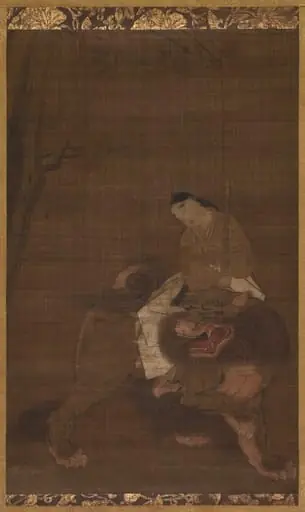
The work titled “Monju as a Child” depicts a youthful figure seated upon a roaring lion. The child is dressed in modest robes, holds a staff, and maintains a composed demeanor despite the animal’s fierce expression. Gold framing at the top and bottom of the panel emphasizes the significance of the scene.
Subject & Meaning
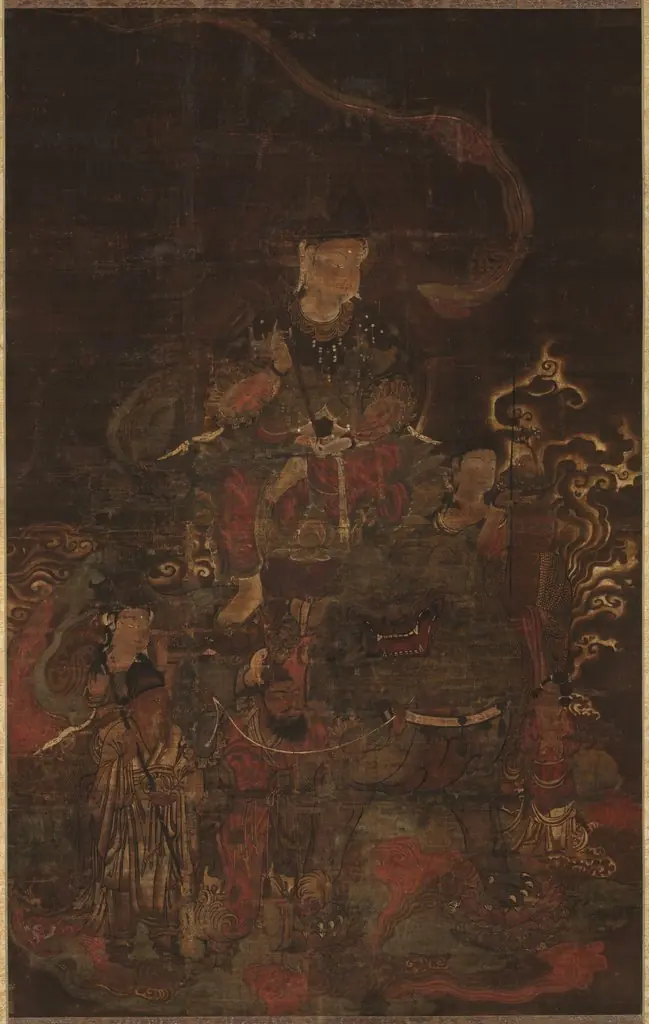
The figure represents the bodhisattva Monju, traditionally associated with wisdom in Buddhist iconography. The juxtaposition of the calm, enlightened child against the untamed lion conveys the triumph of spiritual insight over raw power, a motif common in Asian religious art.
Artist & collection