Artwork
熊野曼茶羅図|Mandala of Kumano Shrine
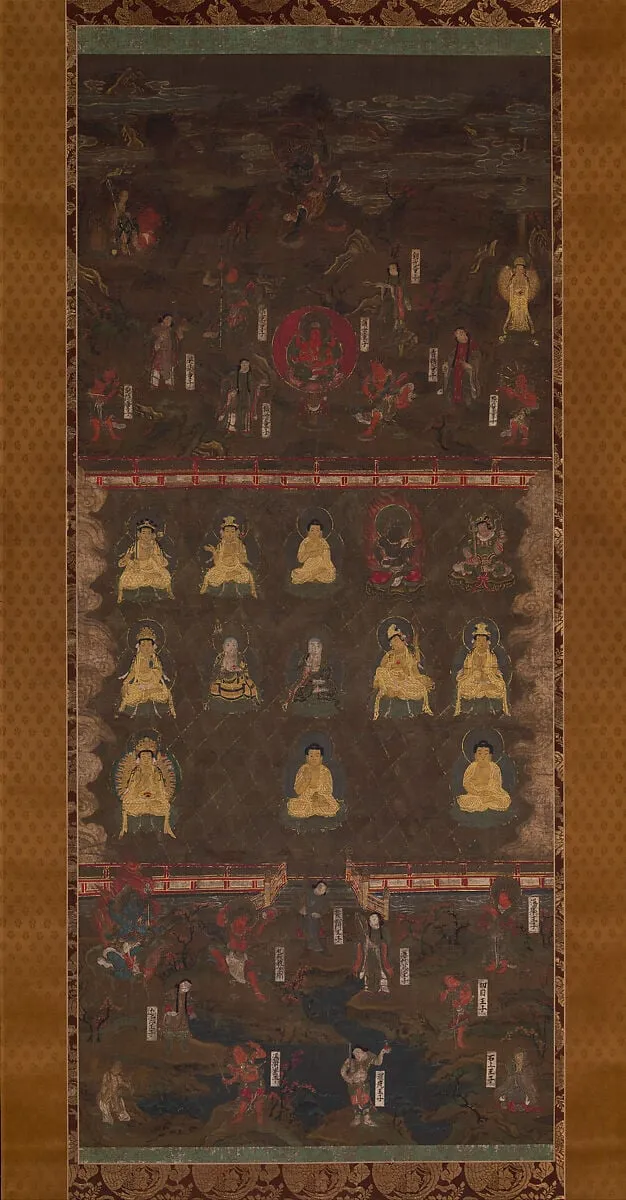
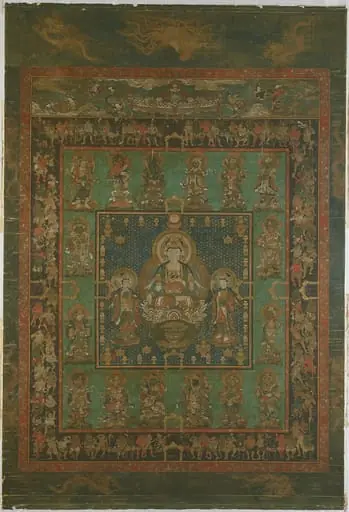
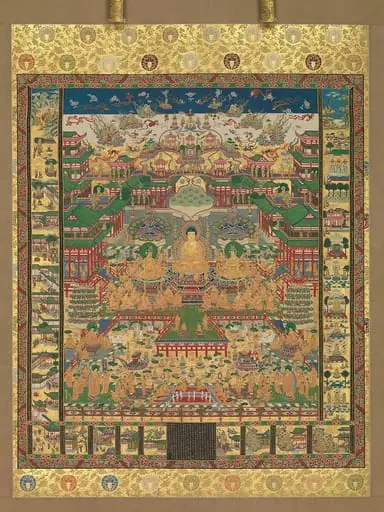
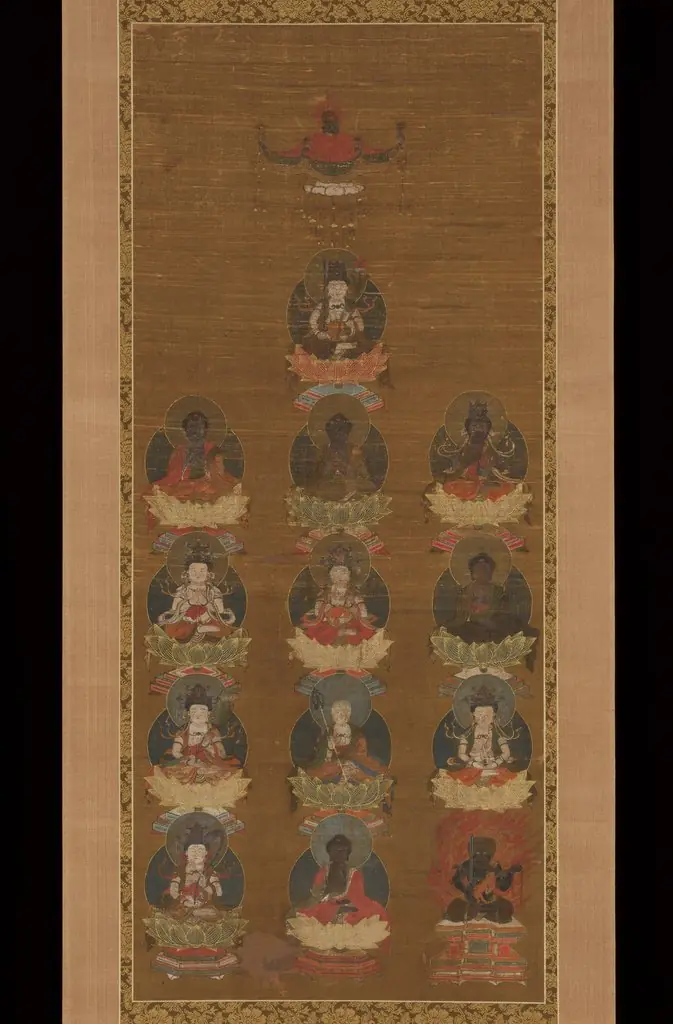
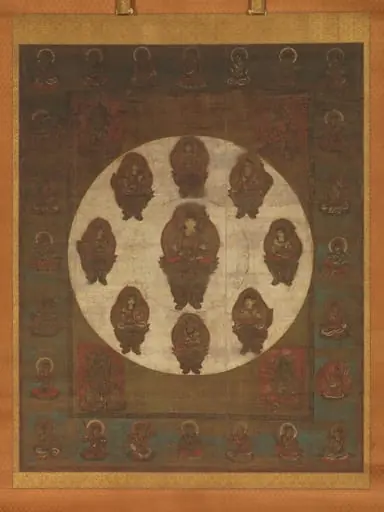
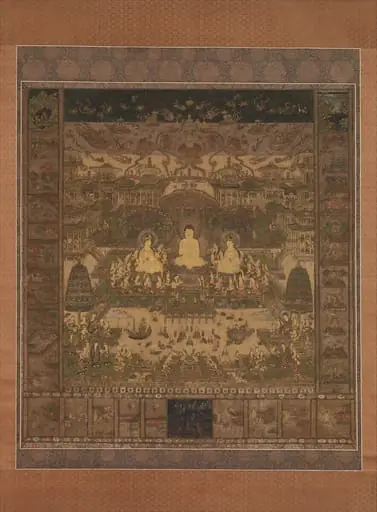
熊野曼茶羅図|Mandala of Kumano Shrine is an ink painting. It dates from 1334 and is held in the collection of the Metropolitan Museum of Art. The work titled "Mandala of Kumano Shrine" is a hanging scroll painting created with ink, color, and gold on silk.
About this work
Subject & Meaning
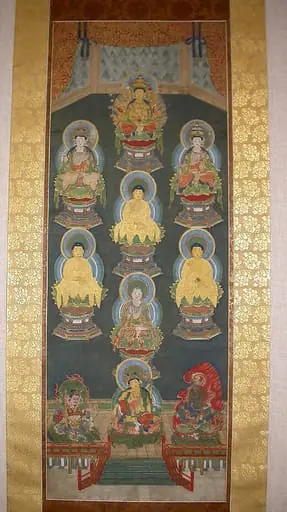
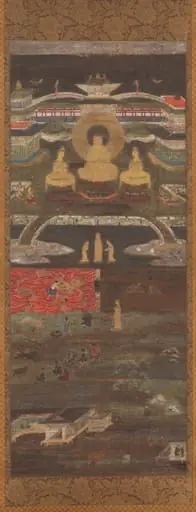
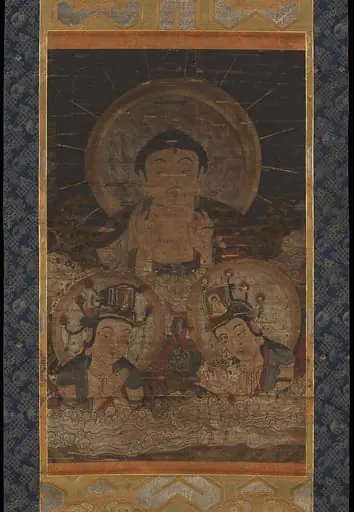
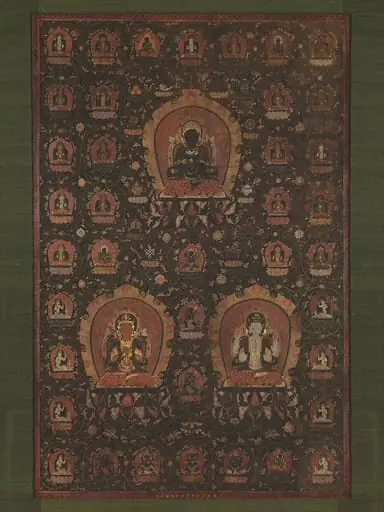
The Kumano Mandala portrays a composite vision of the Kumano sacred landscape, integrating Buddhist and Shinto iconography.
The Kumano Mandala portrays a composite vision of the Kumano sacred landscape, integrating Buddhist and Shinto iconography. Central figures include buddhas and bodhisattvas flanked by Shinto deities, reflecting the honji suijaku theory that local kami are manifestations of Buddhist divinities. The arrangement of these divine beings within a mandala format symbolizes the cosmic order of the Kumano pilgrimage routes and the spiritual unity of the region’s religious traditions.
By juxtaposing Buddhist enlightened beings with indigenous deities, the work visually articulates the syncretic belief system that characterized medieval Kumano worship.
Technique & Style
The Mandala of Kumano Shrine is executed as a hanging scroll combining mineral pigments, ink, and gold on silk. The composition employs delicate linework in ink to delineate figures and architectural elements, over which opaque colors are applied in thin, layered washes to model forms. Gold is used both for linear accents and as a background wash, creating a luminous field that unifies the composition.
The handling favors flat, decorative patterning in the drapery and architectural motifs, while the faces and hands receive subtler, more naturalistic modeling. The silk support is finely woven, allowing the pigments and gold to adhere with a subtle sheen, and the overall condition appears stable with no significant losses noted in the record.
History & Provenance
The Mandala of Kumano Shrine is a 14th‑century Japanese hanging scroll dated 1334, executed in ink, color and gold on silk. The work is attributed to an anonymous painter and belongs to the religious painting genre, depicting Buddhist and Shinto deities. It is part of the Metropolitan Museum of Art’s collection, listed in the museum’s records as originating in Japan.
No documentation of earlier owners or a documented commission survives; the only traceable element of its history is its inclusion in the Met’s holdings, where it has been catalogued since its acquisition.
The Mandala of Kumano Shrine is held in the collection of the Metropolitan Museum of Art in New York. Its accession number is 1990.288. The painting was acquired by the museum in 1990. The work has not been included in any documented exhibitions, as no exhibition history is recorded in the provided sources.
Overview
The work titled "Mandala of Kumano Shrine" is a hanging scroll painting created with ink, color, and gold on silk. This intricate piece presents a complex visual narrative, characterized by its detailed composition and the rich interplay of various figures. It serves as a significant example of religious art, distinguished by its unique blend of spiritual traditions.
Artist & collection