Artwork
明/清 佚名 仙山樓閣圖 團扇頁|Palace
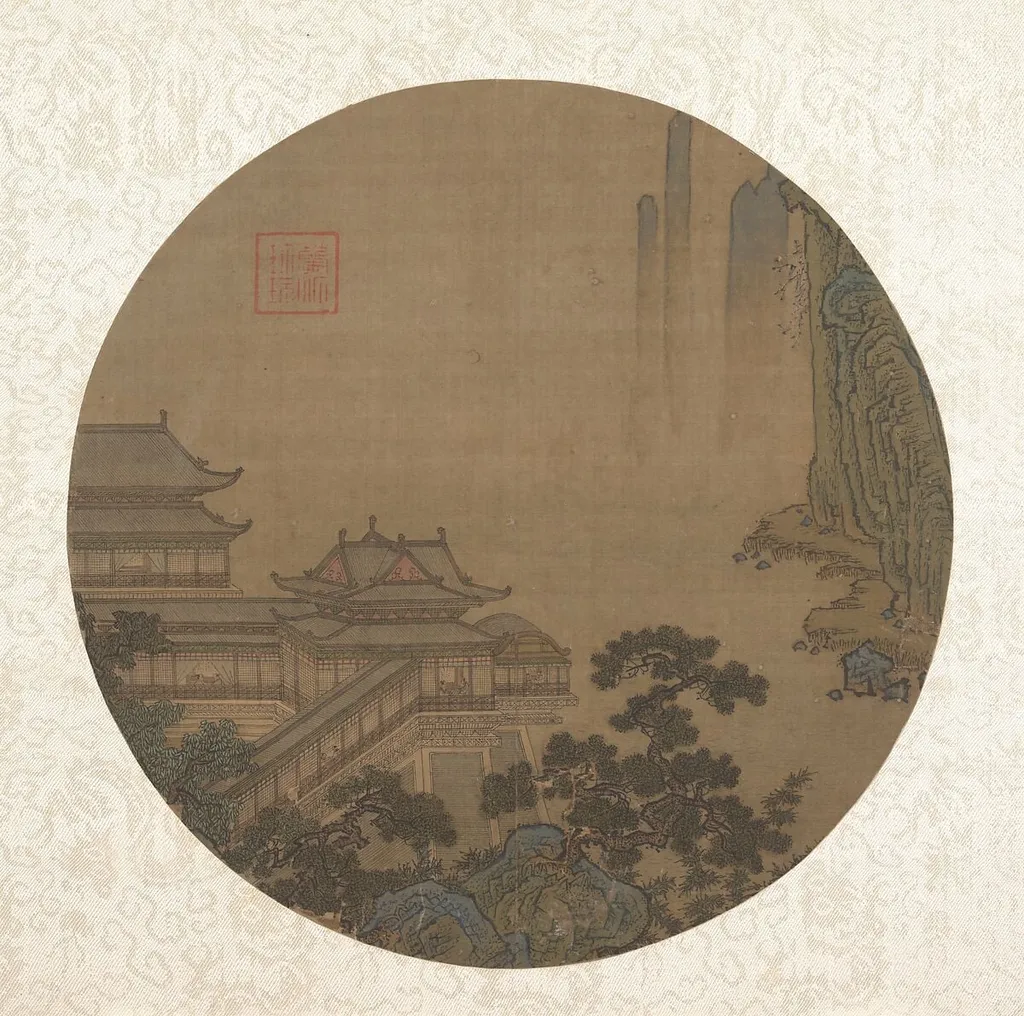
明/清 佚名 仙山樓閣圖 團扇頁|Palace is an ink painting. It dates from 1639 and is held in the collection of the Metropolitan Museum of Art. This painting, titled Palace, is an anonymous work from the Ming or Qing dynasty, executed with ink and color on silk.
About this work
Subject & Meaning
These celestial pavilions symbolize a realm beyond the mortal world, embodying aspirations for longevity and spiritual transcendence.
Created in 1639 by an anonymous artist, this ink and color painting on silk depicts a palace situated within a landscape. The work's title, translated as 'Immortal Mountain and Pavilions,' combined with the visual representation of a palace, suggests an iconography rooted in Daoist mythology. The subject likely represents the mythical abodes of immortals, a recurring theme in Chinese art where elaborate architectural structures are nestled in fantastical, mountainous terrain.
These celestial pavilions symbolize a realm beyond the mortal world, embodying aspirations for longevity and spiritual transcendence. As a landscape genre piece, the artwork functions not merely as a topographical record but as a visual metaphor for the idealized, otherworldly paradise sought in traditional Chinese philosophical and religious thought.
History & Provenance
The work, titled Xianshan Louge Tu (Immortal Mountains and Pavilions), is a fan leaf mounted as an album page created in 1639. Attributed to an anonymous artist, the piece was produced in China using ink and color on silk. While the specific commissioning patron and the immediate chain of custody prior to modern times are not detailed in the available records, the work is currently held in the collection of the Metropolitan Museum of Art.
The museum accession number is 13.100.121, confirming its status as part of their permanent holdings. The artwork depicts a landscape featuring palatial architecture, consistent with the genre of landscape painting prevalent in the region during that era.
The painting 明/清 佚名 仙山樓閣圖 團扇頁|Palace is housed in the Metropolitan Museum of Art in New York, where it is catalogued under accession number 13.100.121. The work, dated 1639, was produced in China as a fan leaf mounted as an album leaf, employing ink and polychrome on silk. Its genre is recorded as a landscape depicting a palace.
The object is listed in the museum’s collection and has been referenced in the institution’s catalogue entries, though the available documentation does not specify a detailed exhibition record.
Overview
This painting, titled Palace, is an anonymous work from the Ming or Qing dynasty, executed with ink and color on silk. Originally a fan, it has since been mounted as an album leaf. The composition depicts an elaborate architectural complex nestled within a serene mountain setting, characteristic of traditional Chinese landscape painting. Its creation reflects the artistic practices prevalent during a significant period in Chinese art history.
Technique & Style
Rendered with ink and color on a silk ground, this painting exemplifies a common medium for Chinese artworks of its era. The artist employed a refined approach, utilizing simple lines and a subtle palette to delineate the forms and create an illusion of spatial depth and distance within the landscape. This method allowed for both intricate detail in the architecture and a sense of expansive atmosphere in the surrounding environment.
Artist & collection

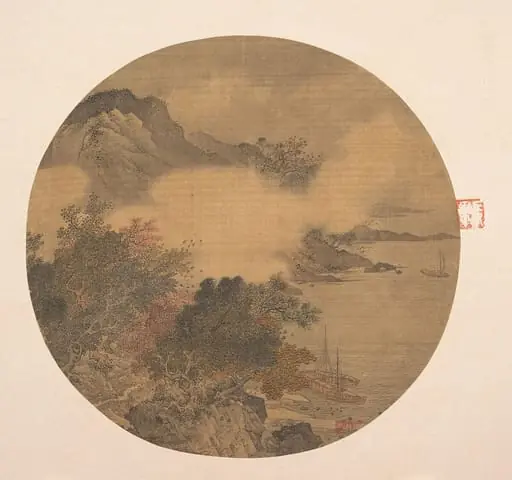
- 明 佚名 風雨艤舟圖 團扇|Misty Landscape
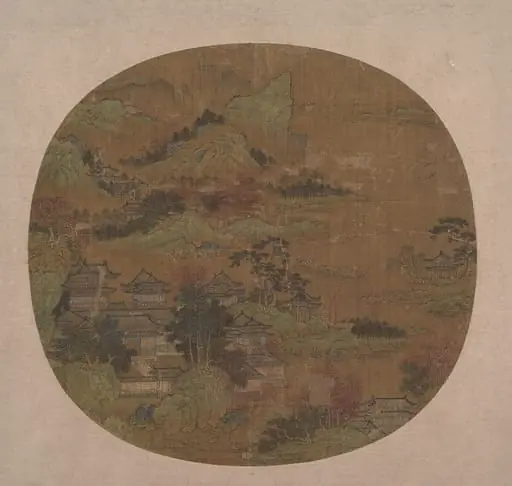 明 佚名 樓觀松風圖 團扇|Palaces among Autumn Mountains
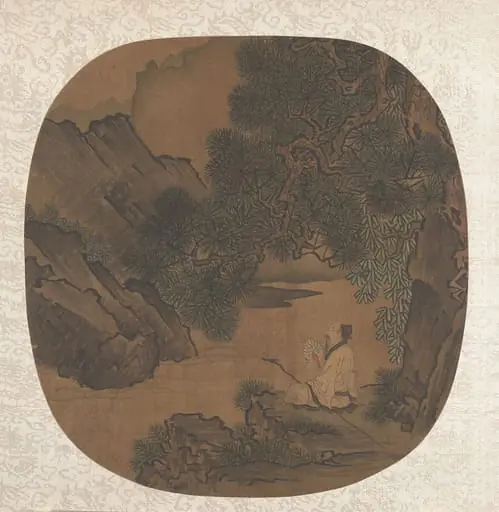 Untitled
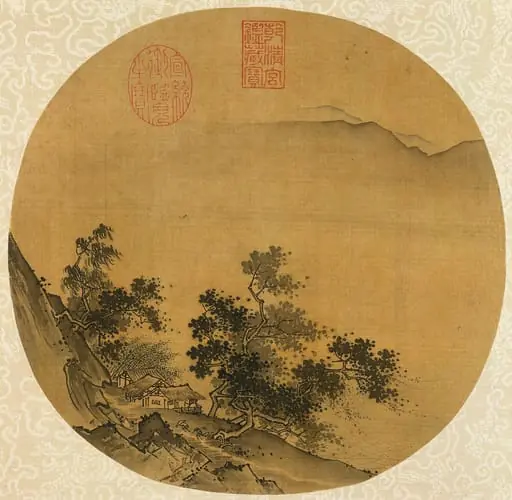 南宋 佚名 倣夏珪 冒雨尋莊圖 團扇|Returning Home in a Driving Rain
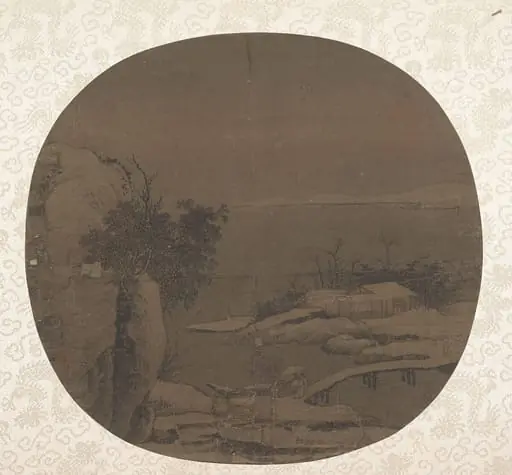 明? 佚名 舊傳燕文貴 雪橋送別 扇|Bridge in Snow
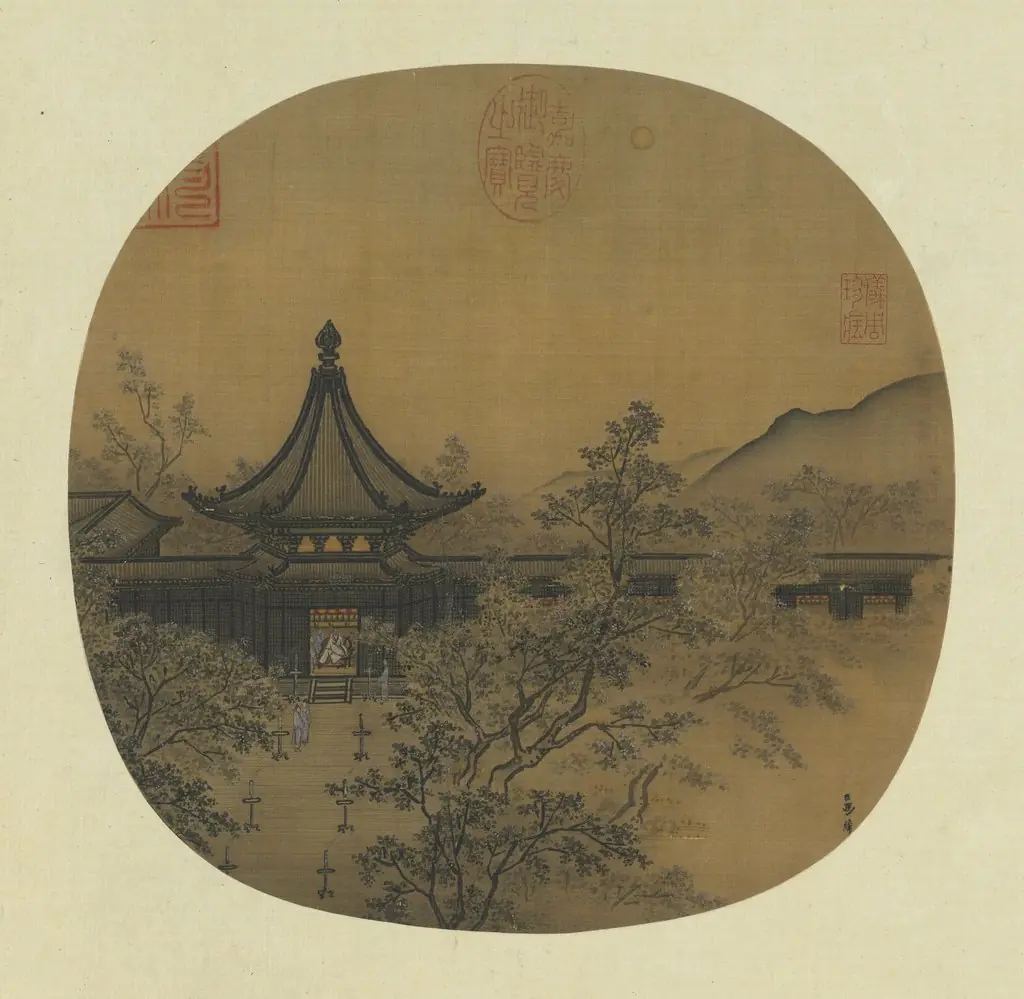 Waiting for Guests by Lamplight
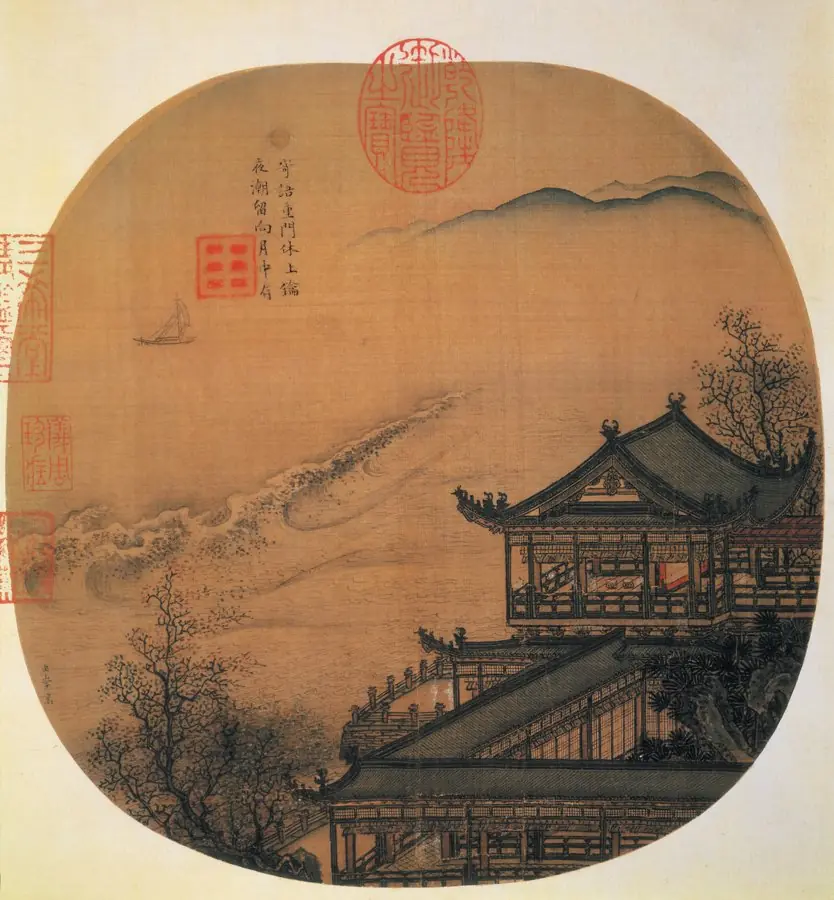 The Hangchow Tidal Bore by Moonlight
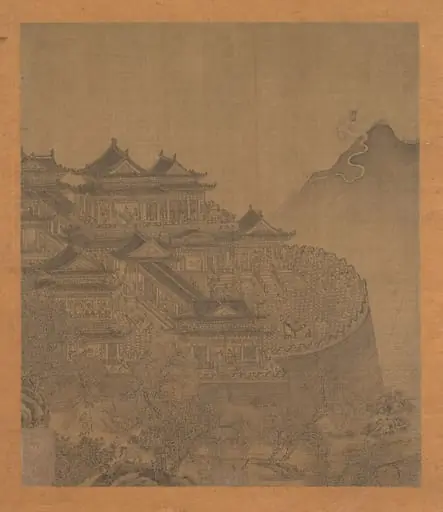 元 佚名 倣夏永 呂洞賓過岳陽樓 冊頁|明 佚名 呂洞賓過岳陽樓圖 冊頁|The Immortal Lü Dongbin Appearing over the Yueyang Pavilion
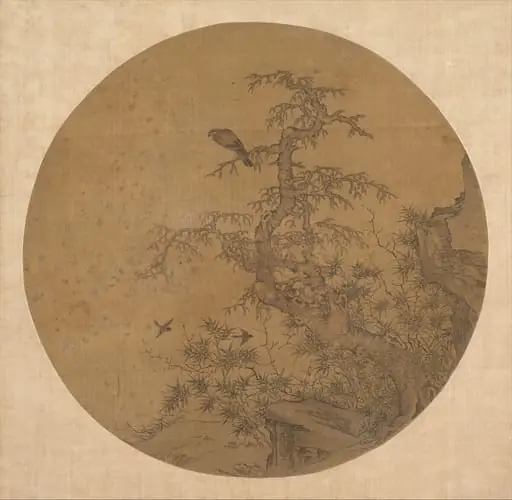 元/明 佚名 古木竹禽圖 團扇|Old Tree, Bamboo, and Birds
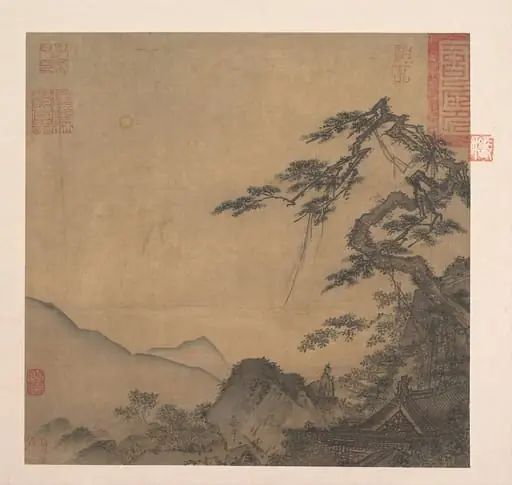 南宋 馬麟 松下高士圖 冊頁 絹本|Landscape with great pine
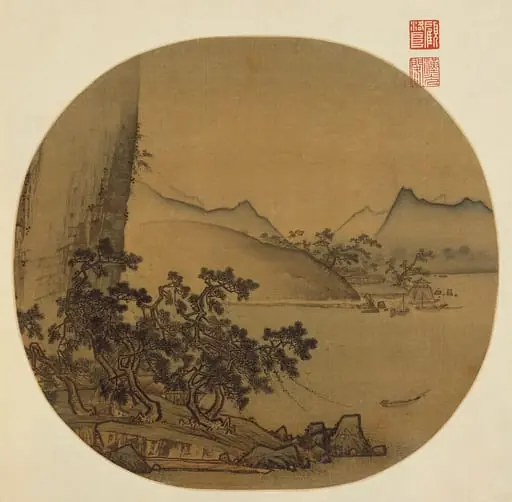 南宋 佚名 舊傳閻次于 風雨維舟圖 團扇|Boats Moored in Wind and Rain
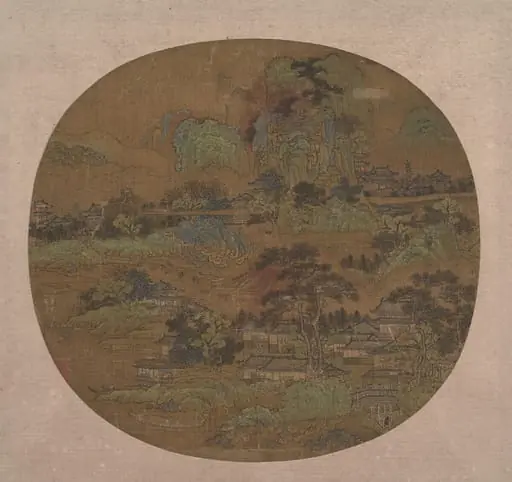 明 佚名 樓閣江帆圖 團扇|Village and Temples in Jiangnan