Artwork
수월관음도 고려|水月觀音圖 高麗|Water-moon Avalokiteshvara
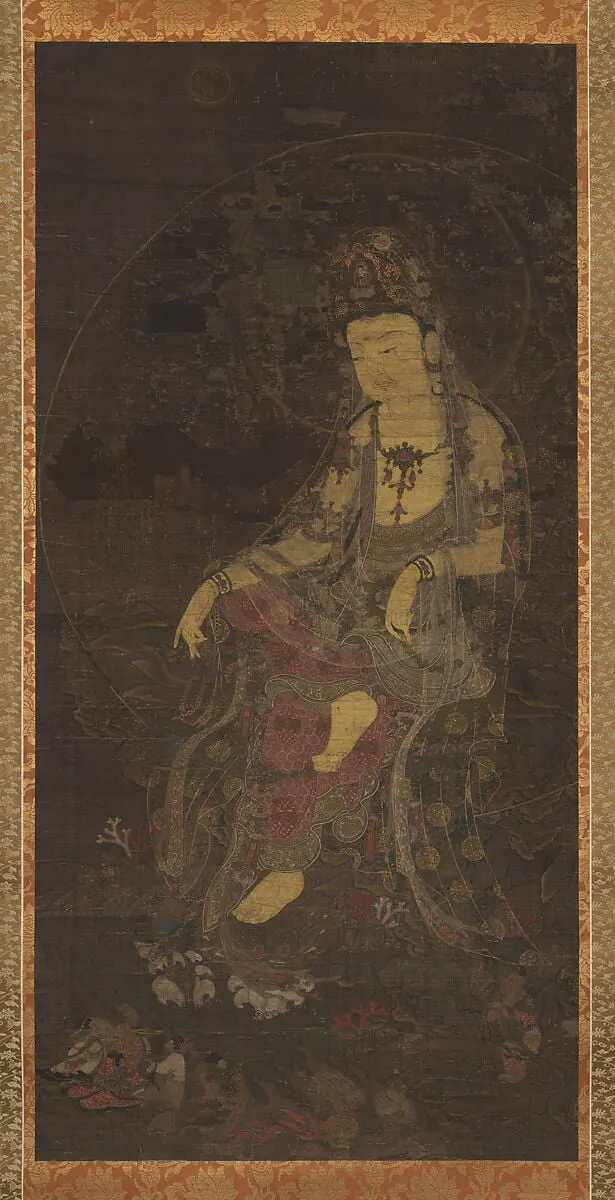
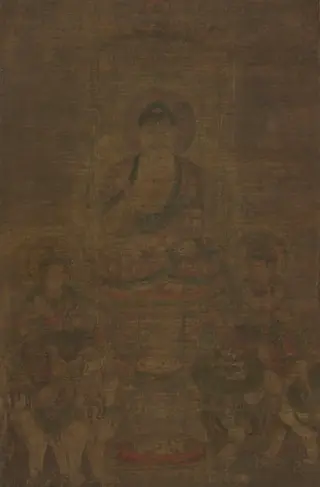
수월관음도 고려|水月觀音圖 高麗|Water-moon Avalokiteshvara is an ink painting. It dates from 1324 and is held in the collection of the Metropolitan Museum of Art. The "Water-moon Avalokiteshvara" is a 14th-century Korean hanging scroll, rendered in ink and color on silk.
About this work
Subject & Meaning
The painting, dated 1324 and executed in ink and colour on silk, was created in Goryeo Korea and is classified as a religious Buddhist painting.
The work portrays Avalokiteśvara, the Buddhist bodhisattva of compassion, in the specific guise known as the water-moon form. In this iconography the deity is shown seated on a lotus amid a moon reflected on still water, symbolising the union of wisdom and compassion and the ability to manifest in any realm. The painting, dated 1324 and executed in ink and colour on silk, was created in Goryeo Korea and is classified as a religious Buddhist painting.
Its depiction emphasizes the bodhisattva's role as a guide who can appear in diverse manifestations to aid sentient beings.
Technique & Style
The work is executed as a hanging scroll painted in ink with subtle color washes on silk, a format typical of Goryeo-period Buddhist art. The silk support provides a smooth, slightly translucent surface that allows the delicate brushwork to retain a soft, luminous quality. The figure of Avalokiteśvara is rendered with fine, flowing lines and restrained palette, emphasizing the serene expression and flowing drapery that characterize contemporary Korean religious painting.
The composition incorporates the iconic water-moon motif, suggesting a harmonious blend of iconography and stylistic refinement. The scroll's dimensions (approximately 114.5 cm × 55.6 cm) indicate a vertical format suited for contemplative viewing.
History & Provenance
The Water-moon Avalokiteshvara painting was created in 1324 by an anonymous artist. Executed as a hanging scroll using ink and color on silk, the work falls within the religious genre of Buddhism, specifically depicting the Bodhisattva Avalokiteśvara. While the specific details of its original commission and early ownership chain remain unrecorded in the available sources, the work's inception is firmly dated to 1324.
The painting is currently housed in the collection of the Metropolitan Museum of Art in New York, classified under the museum's Korean painting holdings.
Overview
The "Water-moon Avalokiteshvara" is a 14th-century Korean hanging scroll, rendered in ink and color on silk. It depicts a bodhisattva seated on a rocky outcrop, with one leg bent and the other gently extended over a moonlit pond. The figure holds a willow branch and is adorned in flowing robes, which feature later additions of gold leaf. This painting exemplifies a significant devotional image from the Goryeo dynasty.
Context
As a depiction of a bodhisattva, this work belongs to a rich tradition within Mahayana Buddhism, where such enlightened beings defer their own nirvana to assist others on their spiritual path. Images like the Water-moon Avalokiteshvara served as focal points for devotion and meditation, reflecting the profound spiritual practices prevalent in Goryeo-era Korea and offering a visual representation of compassion and wisdom.
Artist & collection

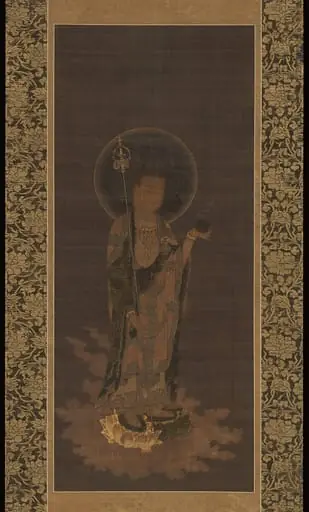 地蔵菩薩来迎図|Welcoming Descent of the Bodhisattva Jizō
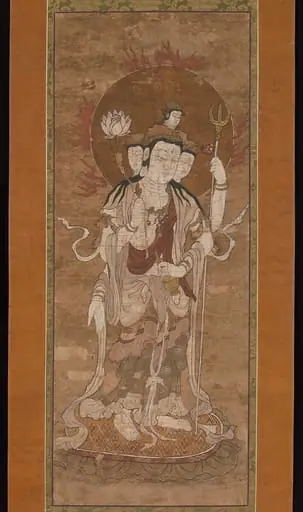 十二天像(梵天)|One of the Twelve Devas: Bonten
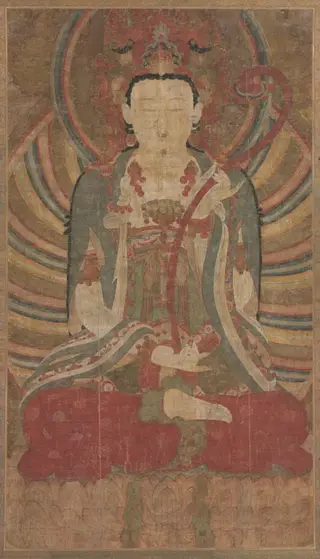 Seated Manjusri
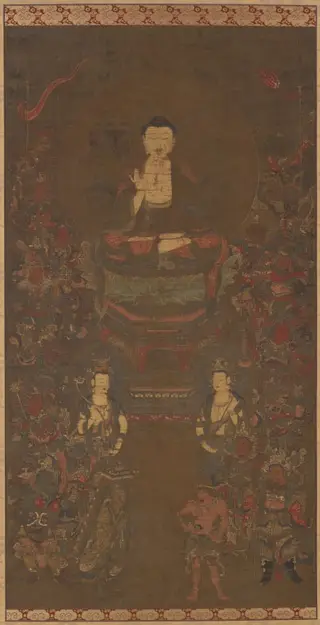 Shakyamuni with the Sixteen Benevolent Deities
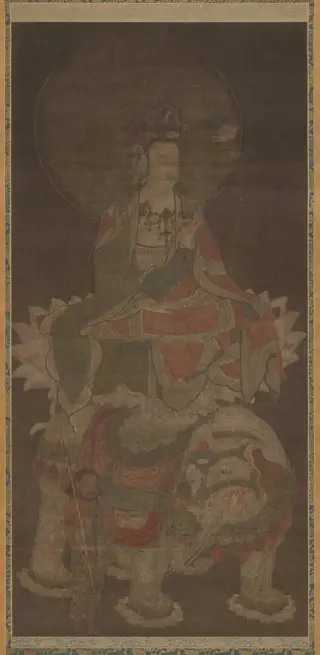 Samantabhadra
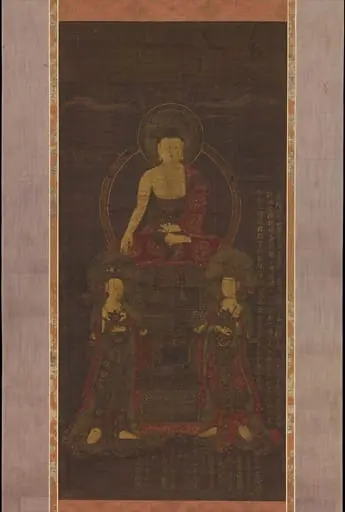 석가삼존도 조선|釋迦三尊圖 朝鮮|Shakyamuni triad
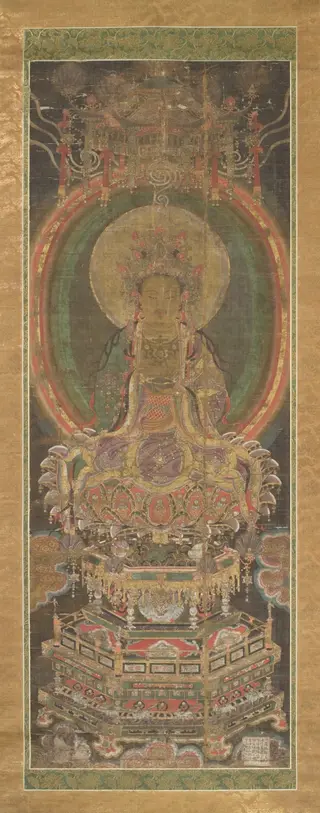 Avalokiteshvara (Guanyin), the Bodhisattva of Compassion
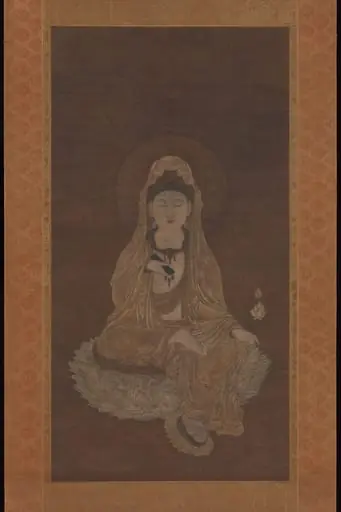 白衣観音図|White-Robed Kannon
 Shakyamuni Triad: Buddha Attended by Manjushri and Samantabhadra