Artwork
Samantabhadra
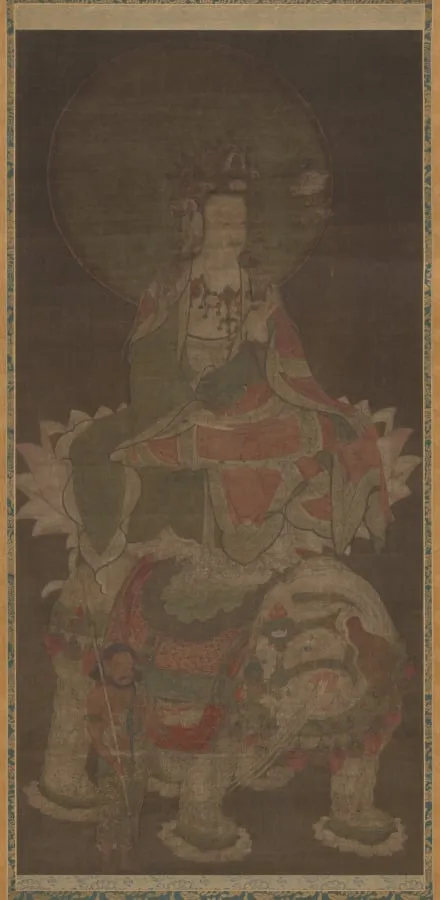
Samantabhadra is an unspecified painting by Unknown. It dates from 1104 and is held in the collection of the Cleveland Museum of Art.
- Accession no.
- 1962.161
- Credit line
- Mr. and Mrs. William H. Marlatt Fund
About this work
Look up more works from the subject: china, southern song dynasty (1127-1279) to see how other artists painted these scenes.
You see a blue-skinned figure riding a white elephant with six tusks against a plain gold background. The rider holds a lotus flower and wears flowing robes.
This painting shows Samantabhadra, a Buddhist protector who appears in the Lotus Sutra. Most images pair him with another figure, but here he’s alone, likely part of a three-panel set. The gold leaf makes the figure glow, a common trick in temple art to suggest holiness.
Look up more works from the subject: china, southern song dynasty (1127-1279) to see how other artists painted these scenes.
Overview
The painting depicts the bodhisattva Samantabhadra astride a six‑tusked white elephant, set against a uniform gold background. The figure, rendered with blue skin, holds a lotus and wears draped robes, emphasizing his divine status. The work is likely the left-hand panel of a three‑part composition that originally displayed a group of Buddhist deities.
Subject & Meaning
Samantabhadra is celebrated in the Lotus Sutra as a protector of devotees, proclaiming his vow to support practitioners. While he is often shown alongside Manjusri as attendants of Shakyamuni, this image isolates him, underscoring his individual role as a guardian and emphasizing the symbolism of the lotus and the elephant as vehicles of spiritual perseverance.
Technique & Style
The artist employed gold leaf to create a luminous field, a technique common in temple paintings to evoke sanctity. The figure’s blue pigment and the delicate rendering of the elephant’s six tusks reflect a refined brushwork typical of Chinese Buddhist art, while the flat background focuses attention on the central deity without narrative distraction.
History & Provenance
The work is presumed to be the left panel of a triptych, suggesting it once formed part of a larger altar screen. Although the precise origin is uncertain, its stylistic traits align with Southern Song period conventions (1127‑1279), indicating it may have been produced for a monastic setting during that era.
Artist & collection









- Samantabhadra
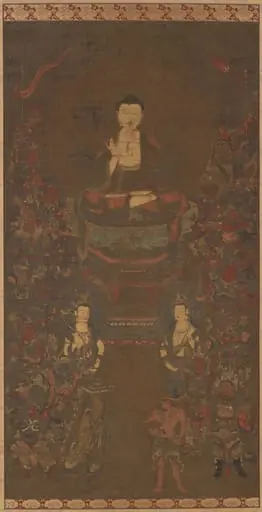 Shakyamuni with the Sixteen Benevolent Deities
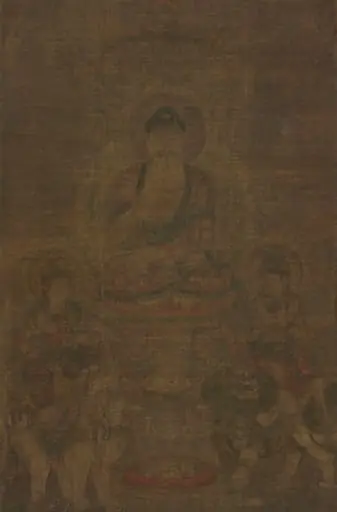 Shakyamuni Triad: Buddha Attended by Manjushri and Samantabhadra
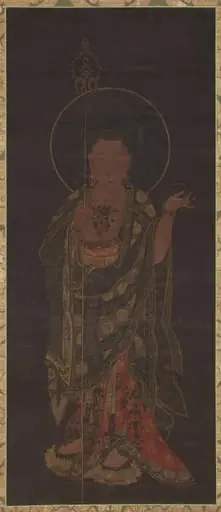 Standing Ksitigarbha
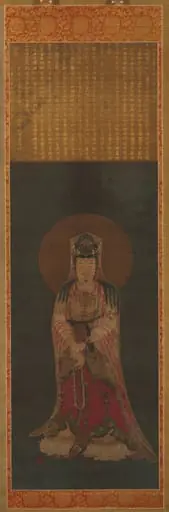 Kannon
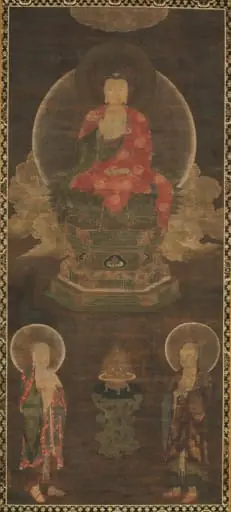 Shakyamuni Triad: Buddha Attended by Manjushri and Samantabhadra (Buddha)
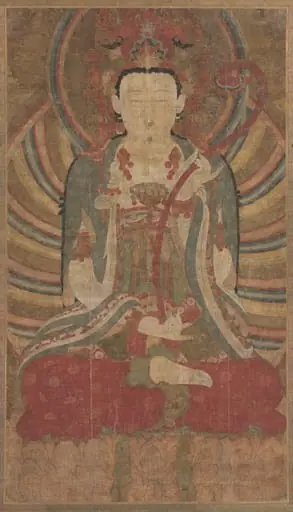 Seated Manjusri
 Amitābha Triad
 Shakyamuni Triad: Buddha Attended by Manjushri and Samantabhadra (Bodhisattva with Lion)
 釈迦三尊十大弟子像|Shaka (Shakyamuni), the Historical Buddha, with Two Attendant Bodhisattvas and the Ten Great Disciples
 Miroku (Maitreya)