Artwork
“A Branch of Sacred Evergreen” (Sakaki), from the Phantom Genji Scrolls (Maboroshi no Genji monogatari emaki)
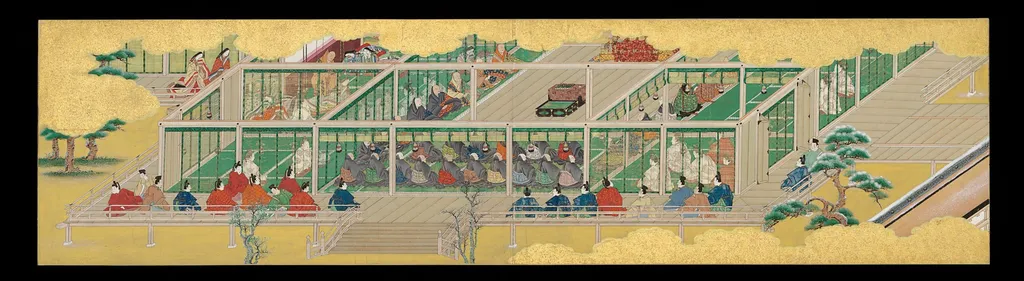
“A Branch of Sacred Evergreen” (Sakaki), from the Phantom Genji Scrolls (Maboroshi no Genji monogatari emaki) is an unspecified painting. It dates from 1650 and is held in the collection of the Metropolitan Museum of Art.
About this work
Subject & Meaning
Within the scroll's broader iconography, the sakaki may also reference courtly rituals described in The Tale of Genji, where such offerings feature prominently.
The painting depicts a sprig of sakaki (Cleyera japonica), a sacred evergreen tree in Shinto tradition. As an offering, the sakaki branch symbolizes purity, divine presence, and the connection between the human and spiritual realms. Its inclusion in the Phantom Genji Scrolls alludes to themes of impermanence and reverence, grounding the narrative in a ritualistic context.
Within the scroll's broader iconography, the sakaki may also reference courtly rituals described in The Tale of Genji, where such offerings feature prominently. The branch's minimalist depiction underscores its symbolic weight, evoking both devotion and the fleeting nature of worldly attachments.
History & Provenance
The single-leaf painting is held by the Metropolitan Museum of Art, New York, where it is recorded as part of the museum's permanent collection.
It has been exhibited publicly at least once, appearing in the 2019 presentation “The Tale of Genji: A Japanese Classic Illuminated” held at the Metropolitan Museum of Art.
Overview
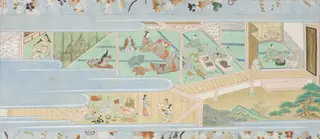
This painting, titled "A Branch of Sacred Evergreen" (Sakaki), is a component of the larger "Phantom Genji Scrolls" (Maboroshi no Genji monogatari emaki). It depicts a two-story architectural interior teeming with figures engaged in various activities. The scene is rendered with a distinct visual clarity, presenting a slice of life within a grand structure, hinting at a narrative origin while maintaining an observational quality.
Technique & Style
The painting employs a distinctive aesthetic characterized by flat, vibrant colors
including reds, blues, and greens
applied without the use of deep shadows, which contributes to a two-dimensional effect. The architectural elements are rendered with clean, unadorned lines, emphasizing the building's structure rather than intricate ornamentation. Figures are arranged in groups across both levels of the long building, creating a sense of activity within a clearly defined, yet simplified, spatial environment.
Artist & collection

 Untitled
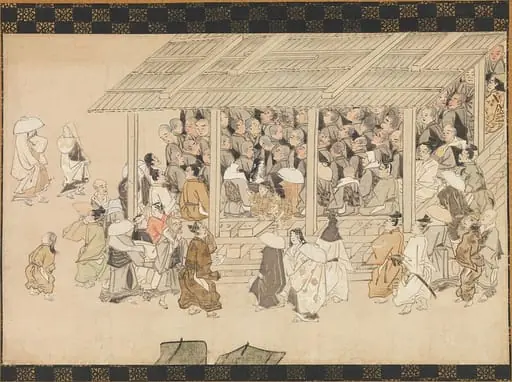 一遍上人絵伝「遊行上人縁起絵」 断簡|A Nenbutsu Gathering at Ichiya, Kyoto, from the Illustrated Biography of the Monk Ippen and His Disciple Ta'a (Yugyō Shōnin engi-e)
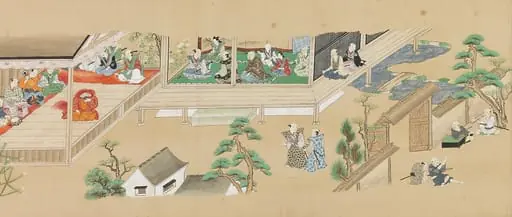 能楽風俗図絵巻|Six Noh Performances in Scenes from Daily Life
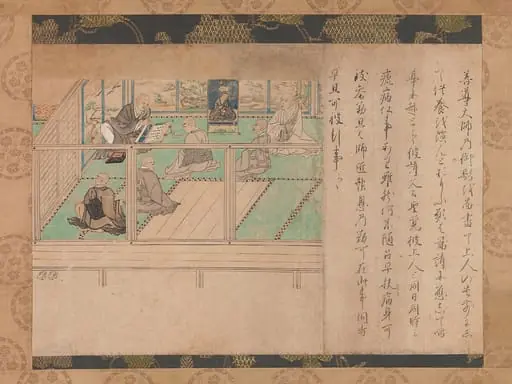 拾遺古徳伝絵断簡|Illustrated Biography of Hōnen (Shūikotokūden-e)
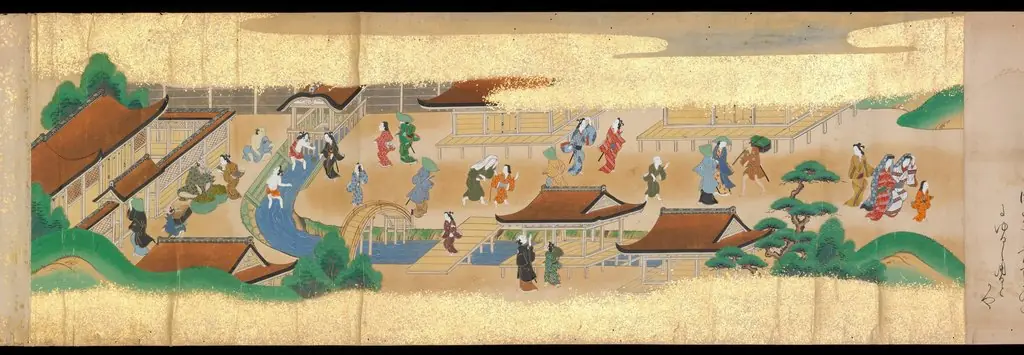 Festivities of the Twelve Months: “Sannō Hiyoshi Festivals Held on the Day of the Monkey in the Mid-Fourth Month”; Festivities of the Twelve Months: “Sumō Wrestling at Matsuno’o Shrine during the Hass
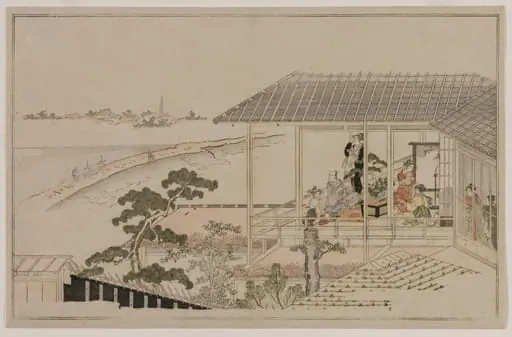 Moonrise Over the Nihon Embankment and the Yoshiwara
 Preparations for a Court Wedding
 Untitled
 Untitled
 Untitled
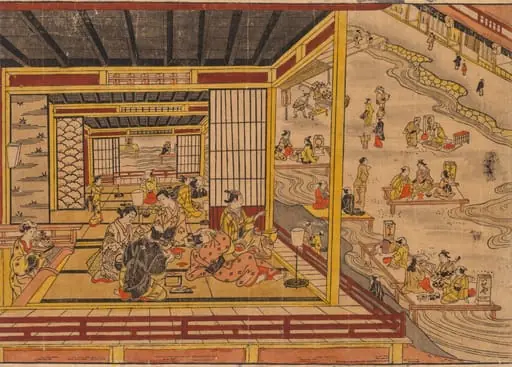 Tea House Beside the Kamo River in Kyoto
- 源氏物語画帖「玉鬘」|“A Lovely Garland” (Tamakazura), from The Tale of Genji