Artwork
A Sperm Whale Washed up on the Beach at Noordwijk, 28 December 1614
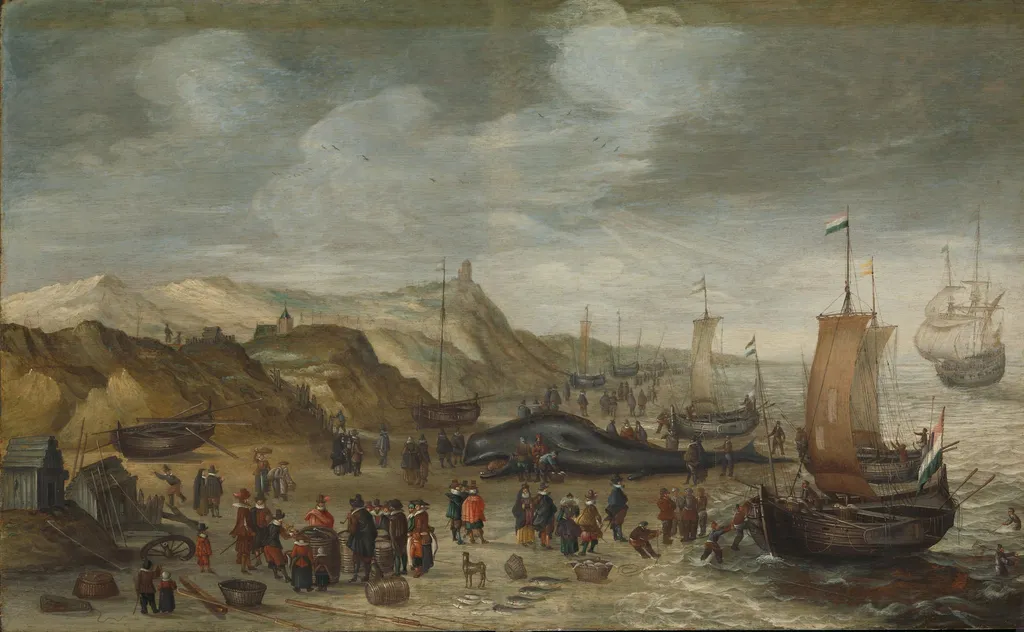
A Sperm Whale Washed up on the Beach at Noordwijk, 28 December 1614 is an unspecified painting by the Dutch Golden Age artist Unknown. It dates from 1620 and is held in the collection of the Rijksmuseum. Painted in late December 1614, this work captures a sperm whale stranded on the shore near Noordwijk, Netherlands.
About this work
It was made just days after the real event, so it feels like a news photo from 1614.
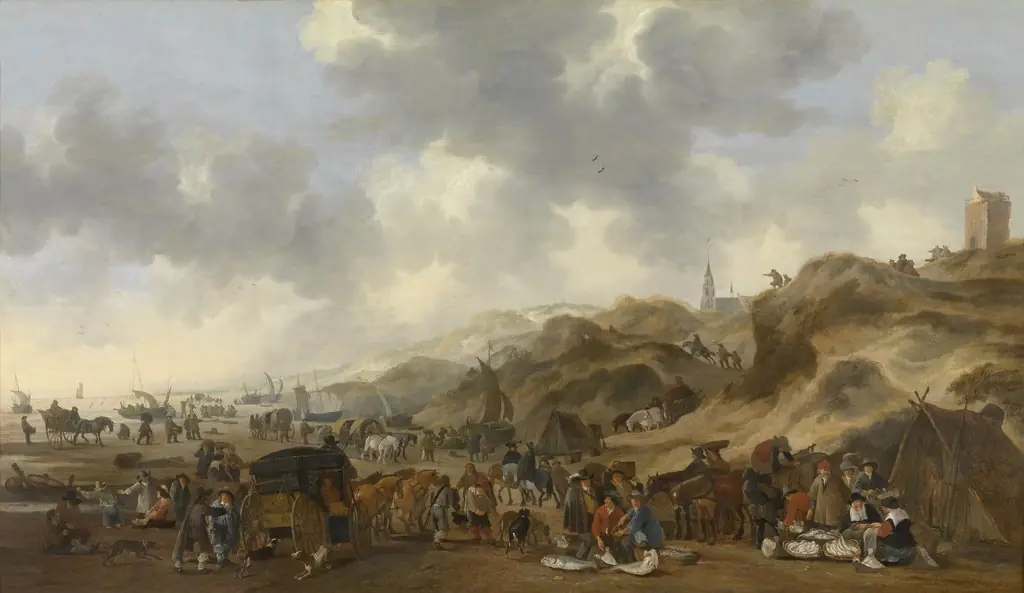
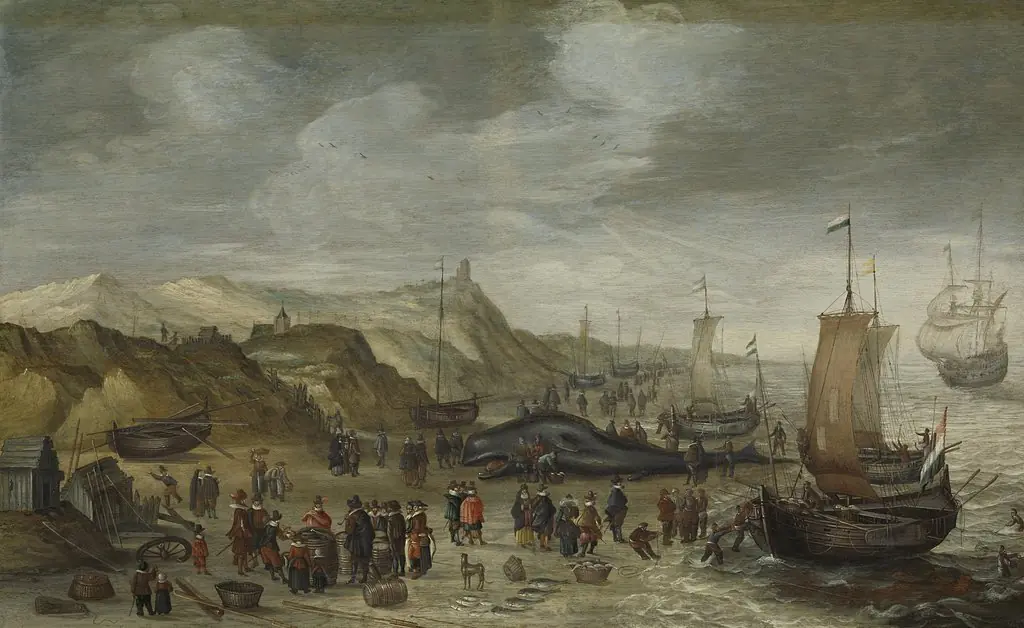
You see a huge dead whale lying on a sandy beach while people crowd around it. Boats bob in the water, and fishermen sort fish into barrels near the dunes.
This painting is one of the earliest known pictures of a beached whale. It was made just days after the real event, so it feels like a news photo from 1614. The artist even signed the date on the sand.
To see more old Dutch beach scenes like this, visit the Rijksmuseum.
Overview
Painted in late December 1614, this work captures a sperm whale stranded on the shore near Noordwijk, Netherlands. The artist recorded the event shortly after it occurred, embedding the date directly into the sand of the scene. Its immediacy and specificity make it one of the earliest known depictions of a beached cetacean in European art, functioning as a visual record rather than a mythic or allegorical image.
Subject & Meaning
The painting documents a rare natural occurrence that drew public attention: a massive whale washed ashore during winter. Crowds of onlookers gather along the dunes, while fishermen attend to their daily work nearby, sorting catches into barrels. The coexistence of spectacle and routine suggests the whale was treated as both an anomaly and a part of the coastal economy, not a divine omen or curiosity alone.
Technique & Style
Rendered with precise, observational detail, the scene employs a low horizon and broad horizontal plane to emphasize the whale’s scale against the flat coastal landscape. Figures are small but distinct, their activities clearly legible. The artist used muted earth tones and careful linear perspective to ground the event in tangible reality, avoiding dramatic embellishment in favor of documentary clarity.
History & Provenance
Created within days of the whale’s stranding, the painting was likely commissioned by a local patron or civic authority interested in preserving the event. Its survival is unusual for works of this type, which were often ephemeral or utilitarian. The signed date and specific location suggest it was intended as a verifiable record, possibly for public display or private collection in the Dutch Republic.
Context
In early 17th-century Holland, coastal communities frequently encountered stranded marine mammals, often harvesting them for oil and meat. This painting reflects a society attuned to the sea’s rhythms, where natural events were observed, recorded, and integrated into daily life. Unlike later romanticized depictions, this image presents the whale without symbolism, as a physical presence in a working landscape.
Legacy
As one of the first known paintings to depict a beached whale with topographical accuracy, it stands as an early example of observational art responding to contemporary events. Its preservation offers insight into how Dutch artists engaged with the natural world as it occurred, laying groundwork for later scientific illustration and coastal documentation in Northern European art.
Artist & collection