Artwork
Altar frontal from Durro (detail of martyrdom of St. Quiricus)
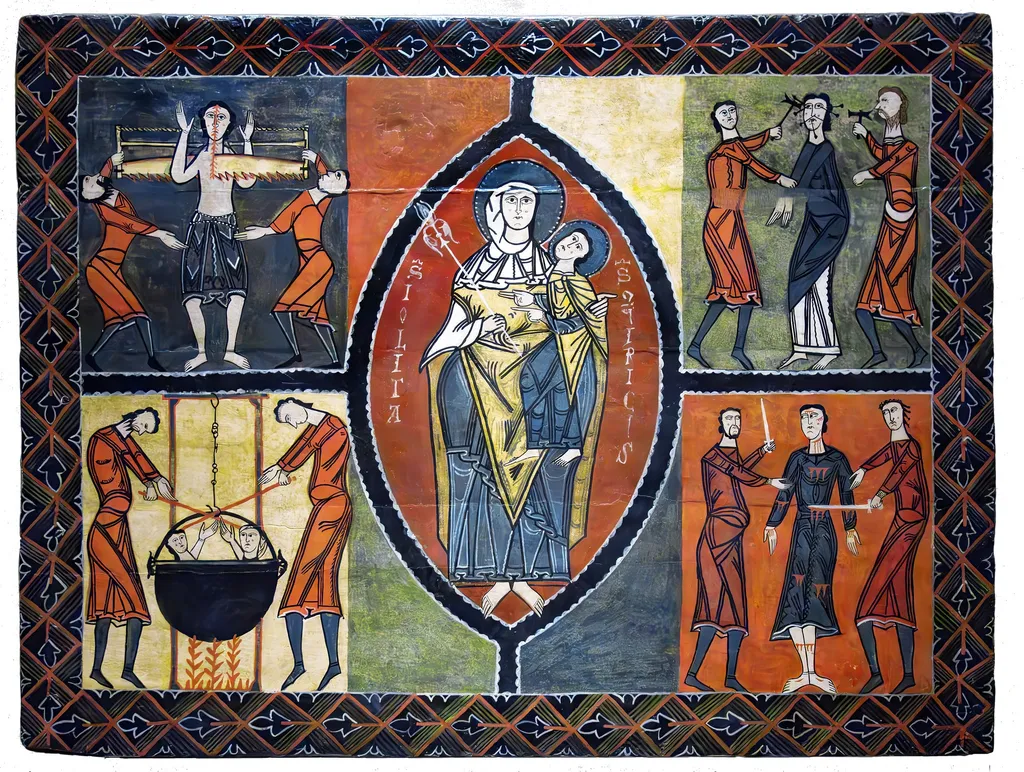
Altar frontal from Durro (detail of martyrdom of St. Quiricus) is a tempera painting by the Romanesque artist Unknown. It dates from 1150 and is held in the collection of the Museu Nacional d'Art de Catalunya. This tempera painting is a fragment from an altar frontal originally created for a church in Durro, a small settlement in the Pyrenees.
About this work
Overview
It dates to the late 11th or early 12th century and was part of a larger devotional ensemble designed to adorn the altar during liturgical services.
This tempera painting is a fragment from an altar frontal originally created for a church in Durro, a small settlement in the Pyrenees. It dates to the late 11th or early 12th century and was part of a larger devotional ensemble designed to adorn the altar during liturgical services. The work reflects the regional Romanesque tradition of northern Catalonia, where religious imagery served both decorative and didactic purposes.
Subject & Meaning
The scene depicts the martyrdom of Saint Quiricus, a child saint traditionally said to have been executed alongside his mother, Julitta, under Roman persecution. His portrayal in the act of suffering underscores themes of innocence, faith under duress, and divine reward. Such imagery was intended to inspire devotion and reinforce the value of steadfastness in the face of adversity for medieval congregations.
Technique & Style
Executed in tempera on wood, the painting employs flat, stylized forms and limited spatial depth, characteristic of Romanesque art. Figures are outlined with bold lines, and color is applied in flat, opaque washes without shading. The composition is hierarchical, with the saint centrally placed to emphasize his spiritual significance over naturalistic representation.
History & Provenance
The frontal originated in the church of Sant Quirze de Durro, a rural parish in the Catalan Pyrenees. It was likely removed during the 19th or early 20th century, possibly due to ecclesiastical reforms or deterioration. The fragment entered a museum collection in the 1930s, where it was identified as part of a larger liturgical panel now dispersed across several institutions.
Context
Created during a period of monastic expansion and pilgrimage growth in the Pyrenees, the frontal reflects the influence of nearby monasteries such as Sant Miquel de Cuixà. Local artisans, trained in Byzantine and Carolingian traditions, adapted these styles to regional tastes. The depiction of child martyrs was especially popular in areas with strong cults of early Christian saints.
Legacy
The Durro frontal remains one of the few surviving examples of Romanesque tempera painting from rural Catalonia. Its preservation offers insight into the visual culture of small parishes, where artistic production was modest but theologically precise. It contributes to scholarly understanding of how devotional imagery functioned beyond urban centers in medieval Europe.
Artist & collection









- Altar frontal from Tavèrnoles
 Altar frontal of the Archangels
 Altar frontal from Esquius
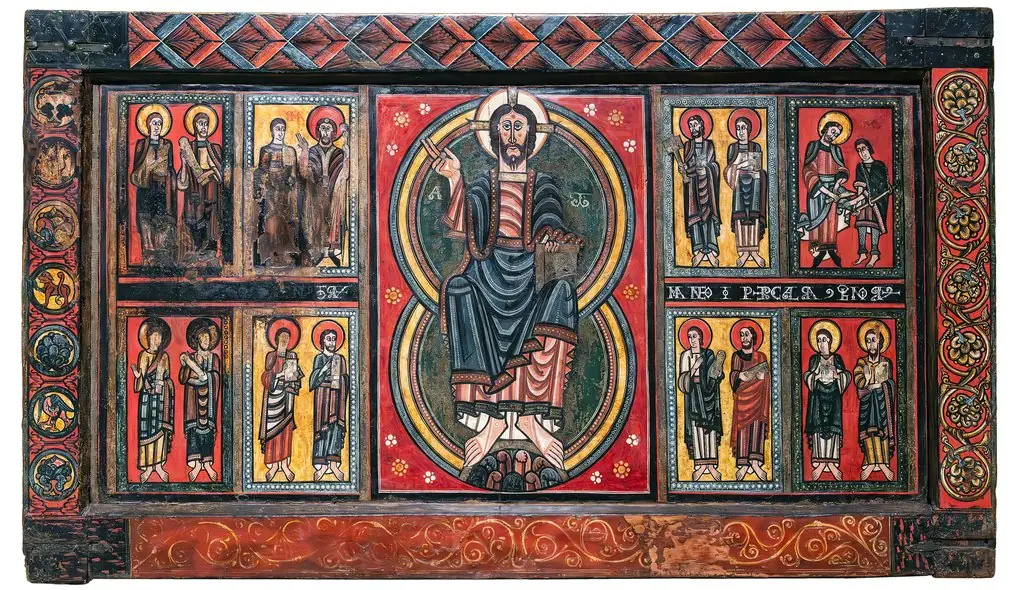 Altar frontal from Ix
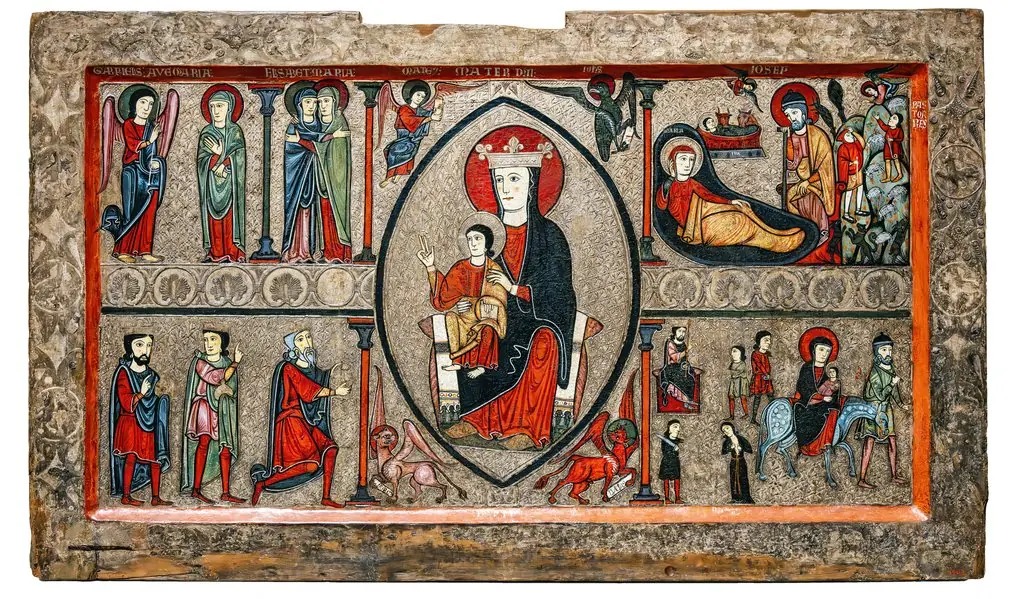 Altar frontal from Cardet
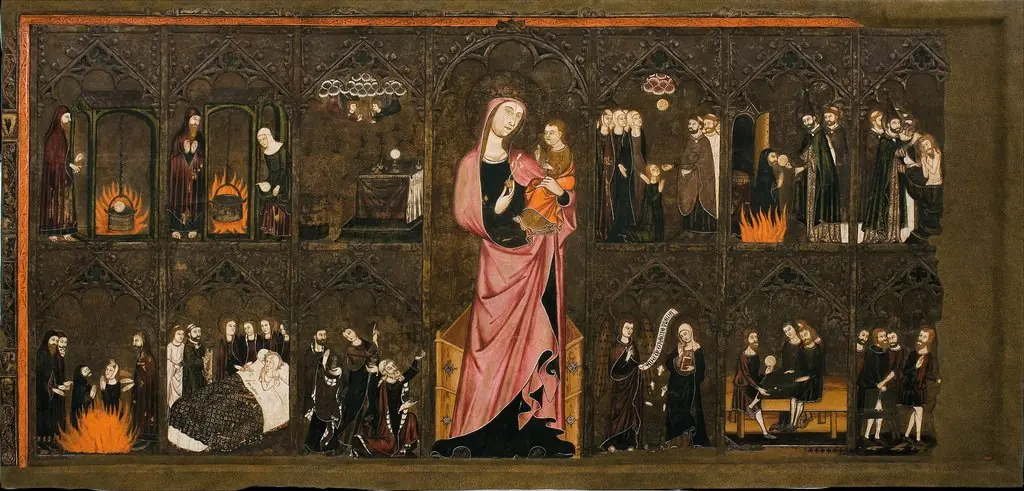 Altar frontal of the Corpus Christi
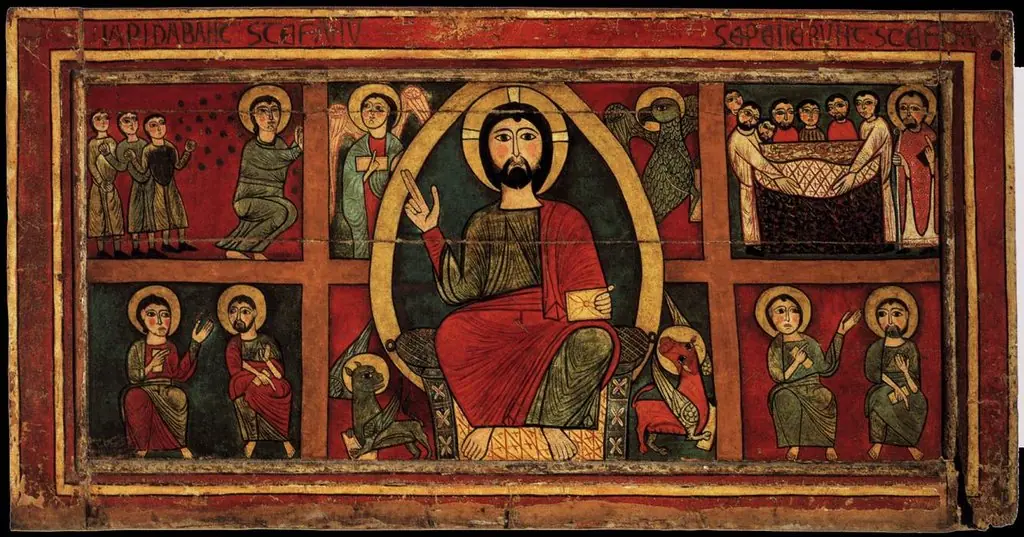 Altar frontal
 Altar frontal from Avià
 Altar frontal from Esterri de Cardós
 Altar frontal from Sant Romà de Vila
 Altar frontal from Sant Climent de Taüll