Artwork
Aurangzeb
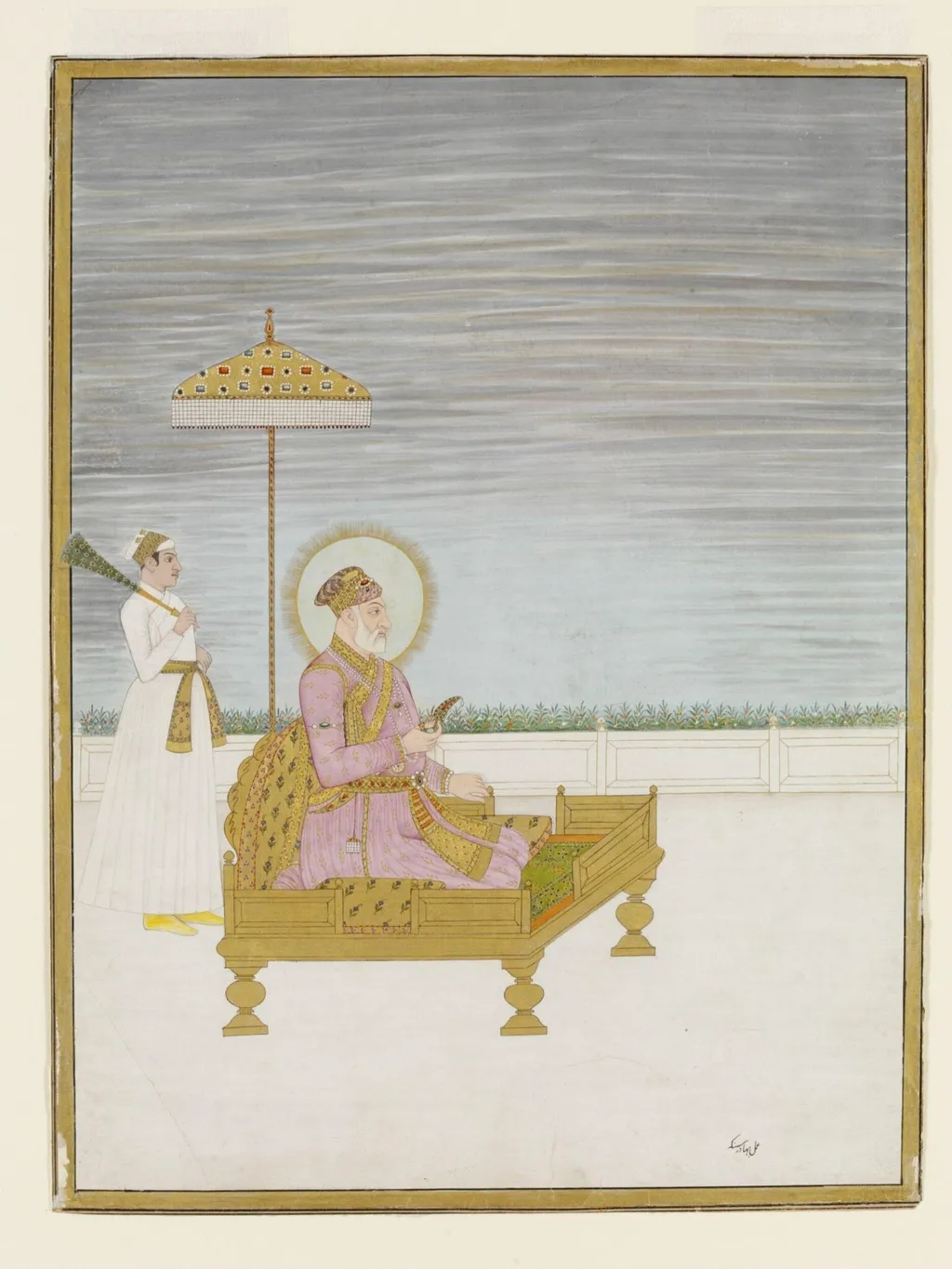
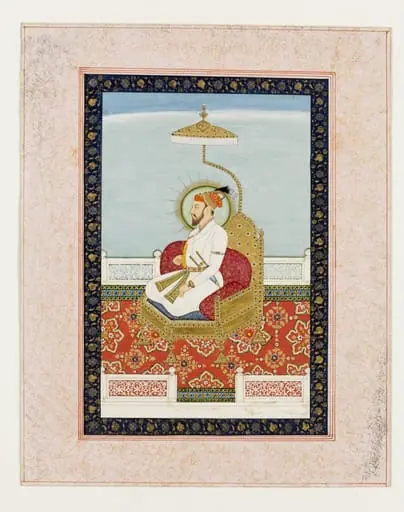
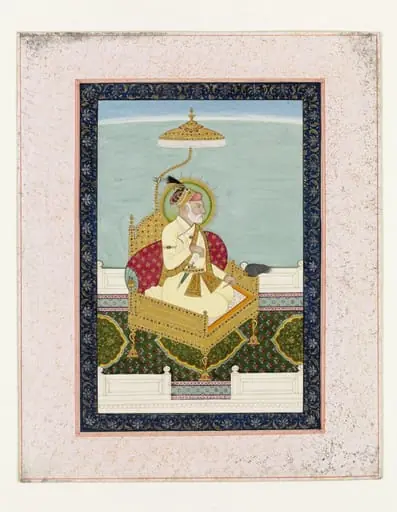
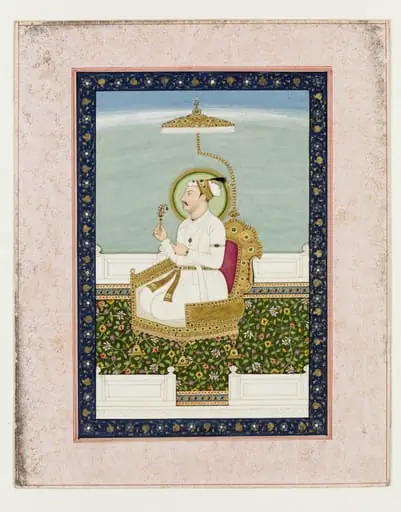
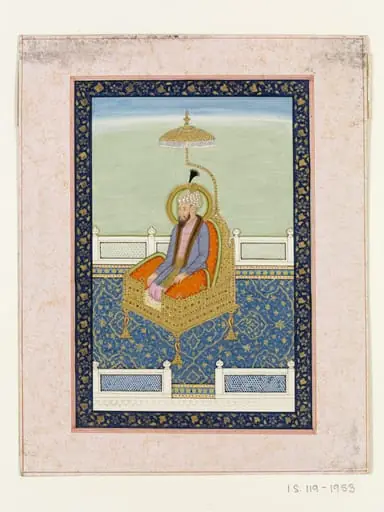
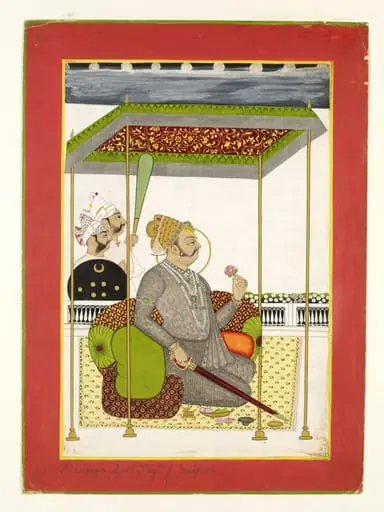
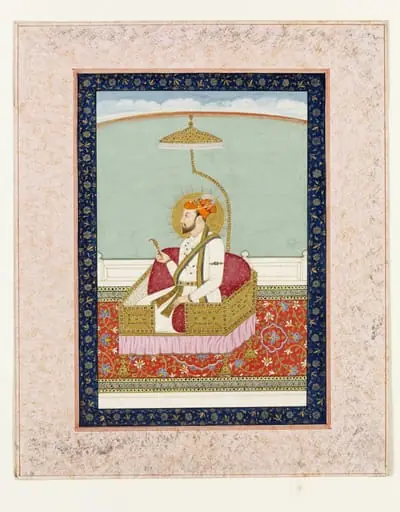
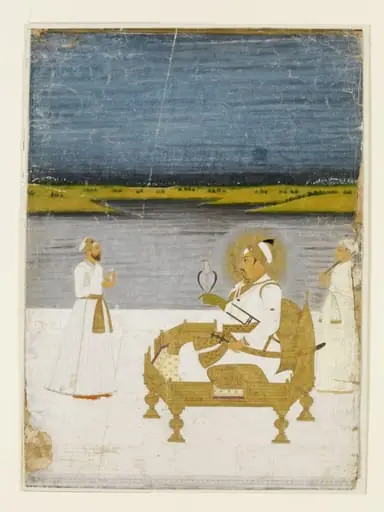
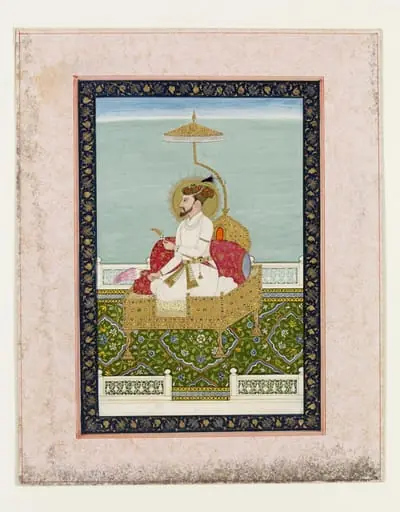
Aurangzeb is a paint painting by the Rococo painting artist Unknown. It dates from 1770 and is held in the collection of the Victoria and Albert Museum. This work portrays the Mughal ruler Aurângzeb seated upon a raised throne on a terrace, executed in opaque watercolour and gold on paper.
About this work
Overview
This work portrays the Mughal ruler Aurângzeb seated upon a raised throne on a terrace, executed in opaque watercolour and gold on paper. The composition dates to 1770 and is attributed to an unidentified artist. It now belongs to the Victoria and Albert Museum collection, catalogued under reference RP 51/2237.
Subject & Meaning
The emperor is shown in vivid pink and gold garments, holding a fan, with a golden halo surrounding his head, emphasizing his regal authority. A servant in white stands behind him, bearing a parasol with a decorative canopy, suggesting courtly protocol and the hierarchical structure of the Mughal court.
Technique & Style
The painting employs opaque watercolour combined with gold leaf, producing flat, saturated colours without gradated shading. The background features a light blue sky rendered in broad brushstrokes, a simple fence, and sparse vegetation, while the figures are delineated with clear outlines rather than subtle modeling.
History & Provenance
Created in the late eighteenth century, the piece was originally part of the Department of Engraving, Illustration & Design before being transferred to the museum's main collection. Its provenance traces back to the V&A's internal reallocation, where it received its current catalogue number.
Artist & collection