Artwork
Aurangzeb
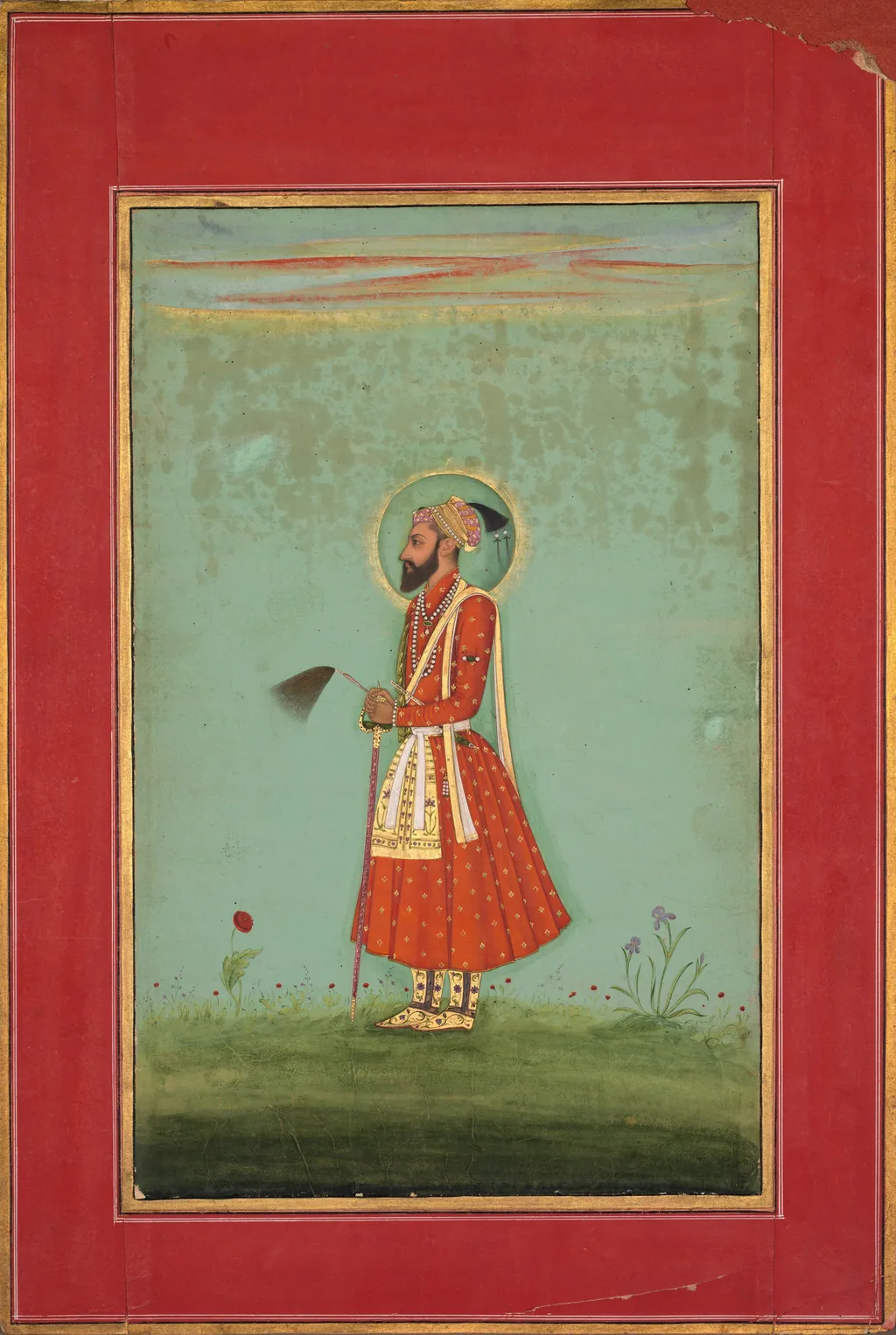
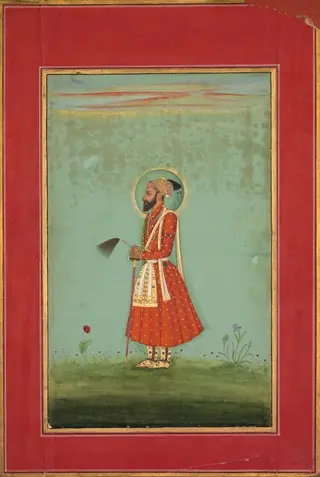
Aurangzeb is an unspecified painting. It dates from 1770 and is held in the collection of the Cleveland Museum of Art.
About this work
History & Provenance
No information is available regarding the circumstances of its commission or the identity of the patron who may have ordered the work.
Aurangzeb is a painting dated to 1770, produced within the Mughal Empire. The work is held in the collection of the Cleveland Museum of Art, where it is recorded under the accession number 1920.1968. The artist is not identified in the available records.
The painting's creation is situated in 1770, a period corresponding to the late Mughal era. No information is available regarding the circumstances of its commission or the identity of the patron who may have ordered the work. Likewise, the sources do not document the chain of ownership between its creation and its acquisition by the Cleveland Museum of Art, leaving the intervening provenance history unrecorded.
Aurangzeb is held in the collection of the Cleveland Museum of Art, where it is listed under inventory number 1920.1968. The work was created in 1770 within the Mughal Empire and has been part of the museum's holdings since its acquisition.
Overview
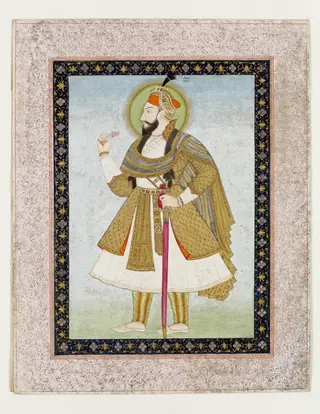
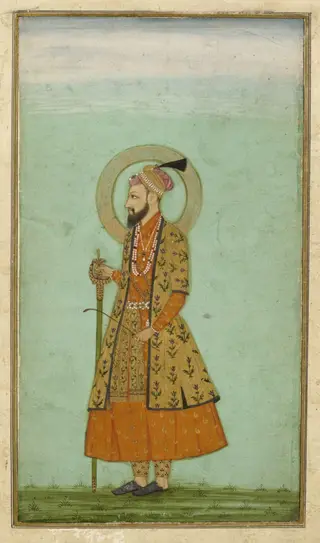
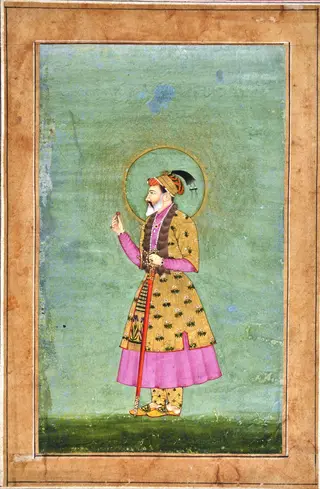
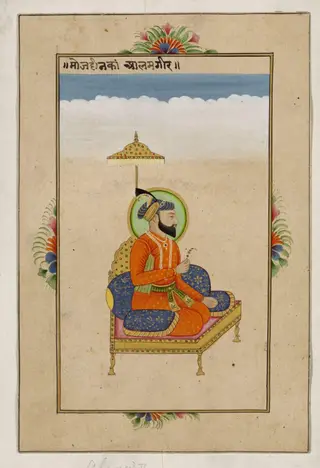
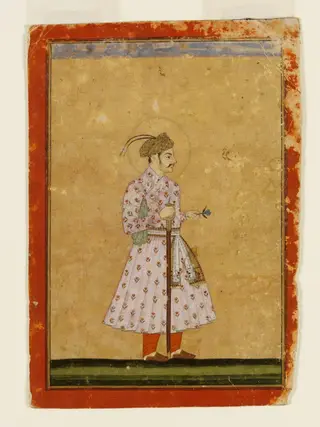
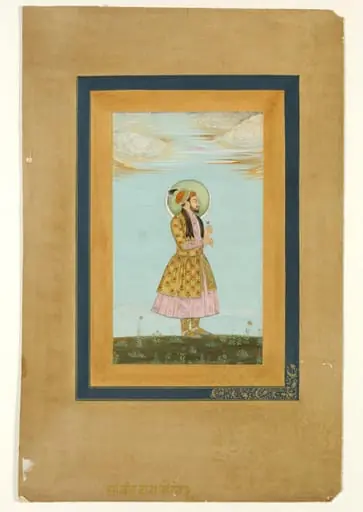
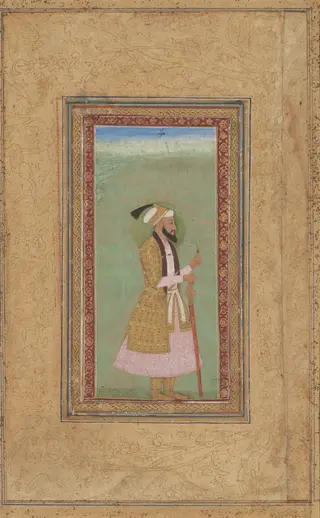
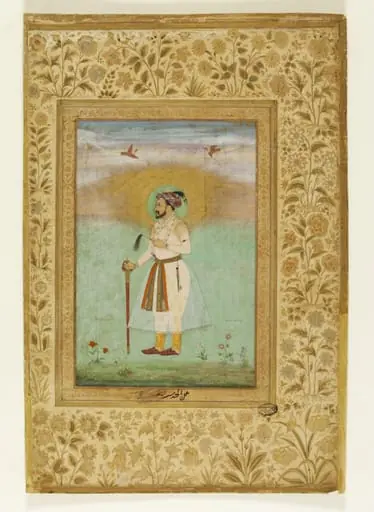
The work is a small-scale portrait depicting a seated figure dressed in vivid red garments edged with gold, standing on a patch of green grass. He holds a fan in one hand and a staff in the other, while a tall, jeweled turban crowns his head. The background consists of a pale blue sky with scattered clouds and modest floral accents at his feet.
Subject & Meaning
The attire and accessories, richly colored robes, gold trim, jeweled turban, fan, and staff, suggest the sitter held a position of authority or high status within a courtly setting. The composition’s simplicity and lack of narrative elements focus attention on the individual’s regal bearing rather than a specific historical episode.
Technique & Style
Executed in a flat, two-dimensional manner, the painting relies on bold color contrasts rather than chiaroscuro to model form. The brushwork is smooth, and the red border framing the image shows signs of wear, indicating frequent handling. The overall aesthetic aligns with court portraiture that emphasizes surface decoration over spatial depth.
Context
Portraits of this type were common in South Asian courts, where officials and royalty were often depicted in elaborate dress to convey rank. The use of red and gold, together with a jeweled turban, reflects traditional visual cues of power and prestige in that cultural milieu.
Artist & collection