Artwork
Bagala
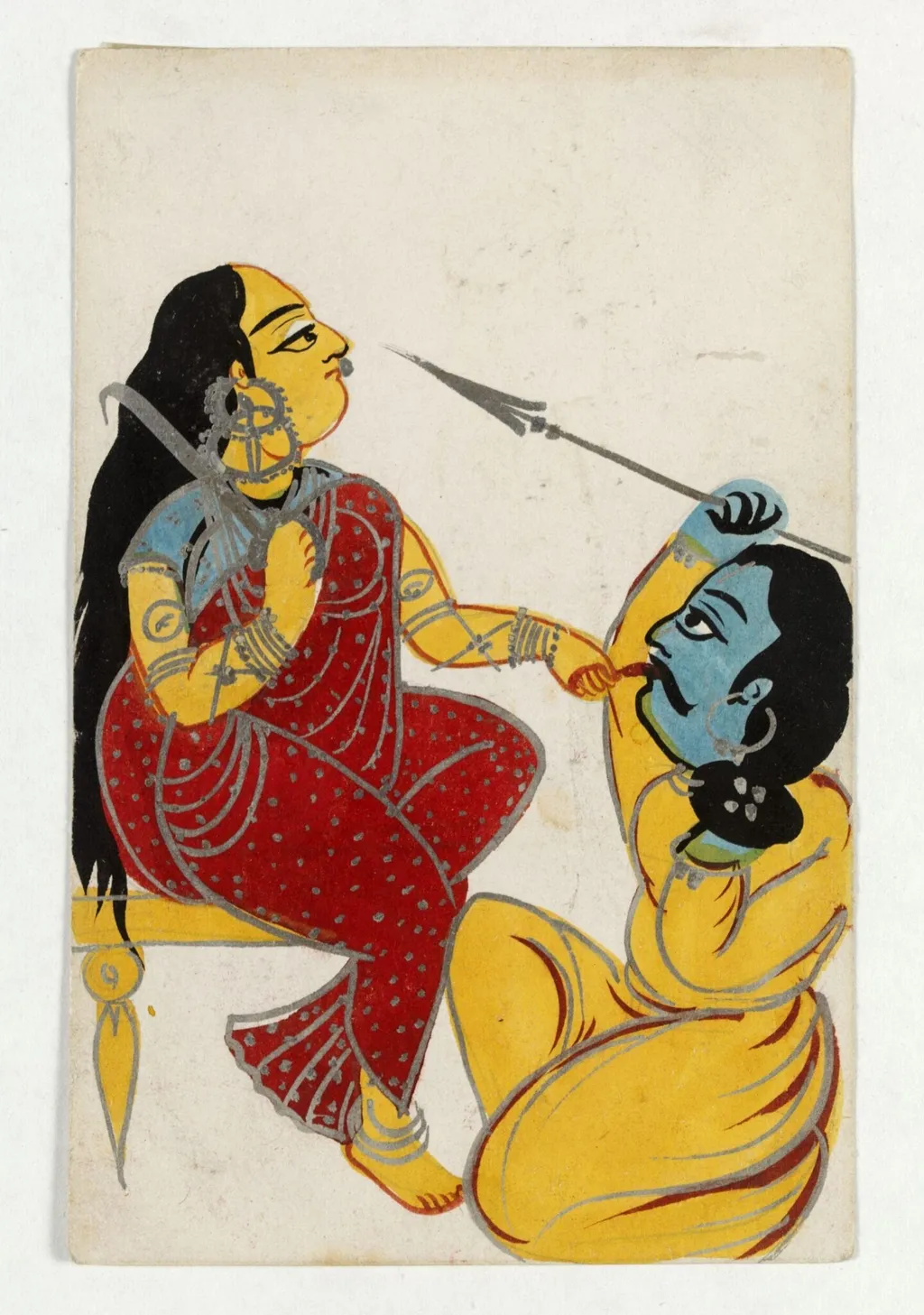
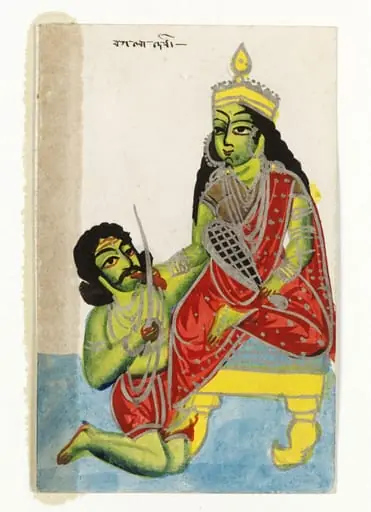
Bagala is a paint painting by the Impressionist artist Unknown. It dates from 1890 and is held in the collection of the Victoria and Albert Museum.
About this work
Overview
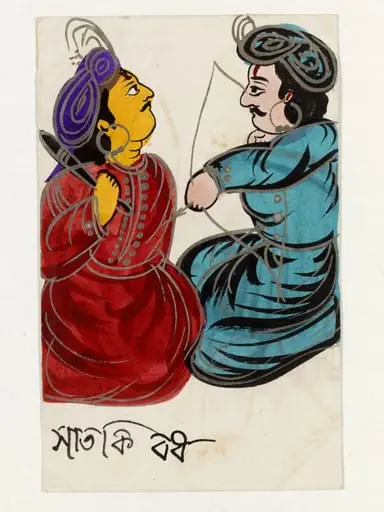
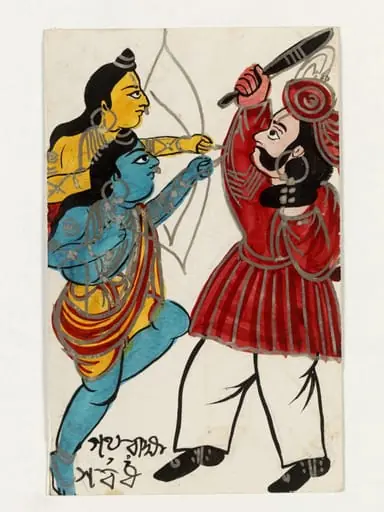
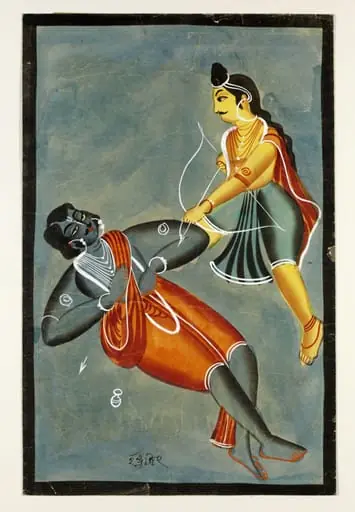
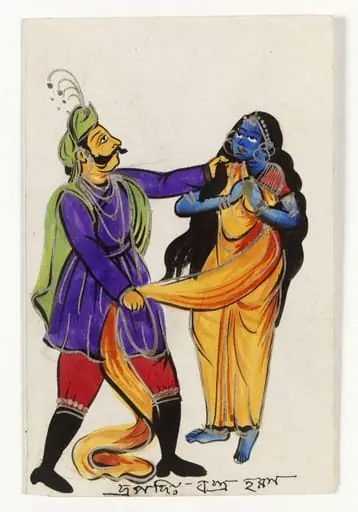
The work presents a scene from Hindu mythology featuring the goddess Bagala, one of the ten manifestations of the goddess Devi, engaged in the defeat of a demon. Executed with watercolour and tin alloy on a cardboard support, the composition relies on vivid, flat areas of colour and strong contour lines rather than modelling or chiaroscuro.
Subject & Meaning
Bagala is shown in a dynamic pose, her red garment and yellow sleeves contrasting with dark hair, while she draws a bow and arrow, suggesting an active role in vanquishing evil. Opposite her stands a figure with blue skin and yellow legs, whose relaxed gesture of touching her hand may symbolize assistance or reverence within the mythic narrative.
Technique & Style
The artist employs watercolour washes combined with tin alloy accents, creating a glossy surface on the cardboard base. The palette is limited to bright, saturated hues, and the outlines are rendered in bold, unmodulated lines, giving the image a graphic, almost sketch‑like quality without any attempt at three‑dimensional shading.
History & Provenance
The piece is identified as a representation of Bagala, a deity associated with the broader Devi tradition, though specific details of its creation date, artist, or collection history are not documented in the available sources.
Context
Within Hindu iconography, Bagala belongs to a group of ten forms of the goddess, each embodying distinct attributes and stories. The depiction of a goddess confronting a demon aligns with common themes of divine triumph over chaos found throughout Indian religious art.
Artist & collection