Artwork
Base for a Statuette
Base for a Statuette is an unspecified painting. It dates from 1475 and is held in the collection of the Metropolitan Museum of Art.
About this work
Subject & Meaning
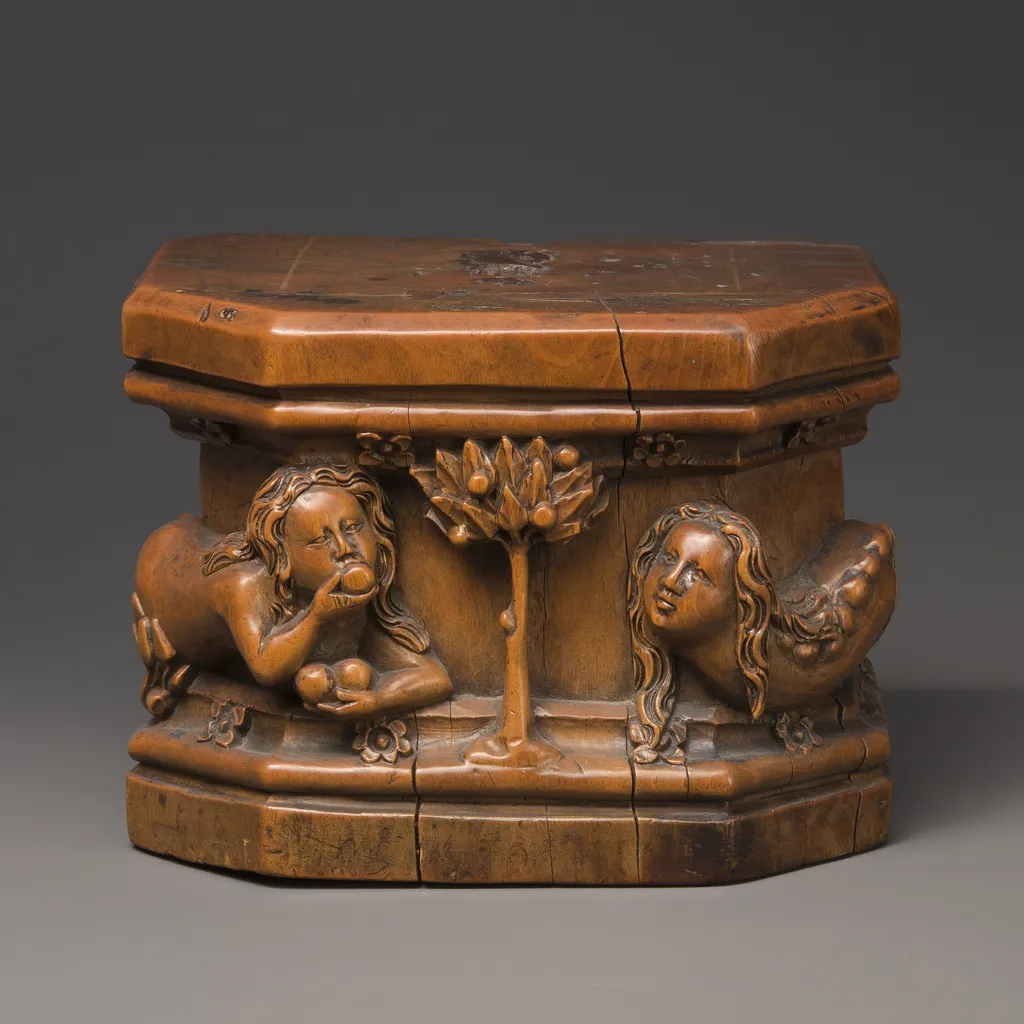
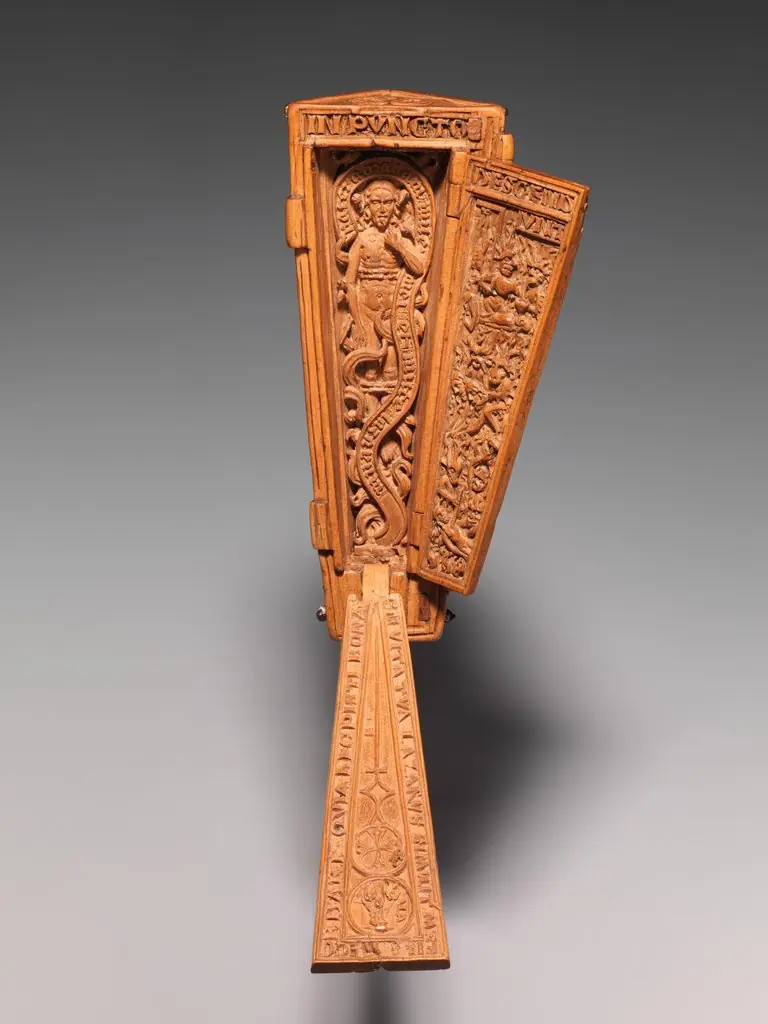
According to the Wikidata record, it depicts fruit, a snake, and Eve, elements that together signal the Eden narrative.
Dated 1475, the work carries iconography associated with the Fall of Man. According to the Wikidata record, it depicts fruit, a snake, and Eve, elements that together signal the Eden narrative. The serpent and the fruit-bearing branch are a standard late-medieval shorthand for temptation, while the inclusion of Eve identifies the moment of transgression rather than a generic paradise scene. The available record does not describe the figure that the base would have supported.
History & Provenance
The Base for a Statuette is an anonymous work dated to 1475, recorded in the collection of the Metropolitan Museum of Art. No ownership chain prior to the museum, commission details, accession number, or exhibition history is documented in the available sources.
Context
Created in 1475, the Base for a Statuette is an anonymous work held at the Metropolitan Museum of Art, depicting fruit, a snake, and Eve. Although its title suggests a sculptural support, it is catalogued as a painting; its attribution to a specific master remains unidentified in the available records. It stands as a late-fifteenth-century example of how the Eden narrative was rendered on a small-scale object.
Overview
This carved wooden object, titled "Base for a Statuette," serves as a small, altar-like pedestal. Its surface, rendered in a warm brown, is intricately detailed with figural and botanical elements. The piece demonstrates a focus on the artisan's skill in woodcarving, creating a supportive structure that also incorporates symbolic imagery, suggesting a narrative without explicitly illustrating one.
Technique & Style
Crafted from wood, the object possesses a rich, warm brown luminosity. Its edges are embellished with finely carved flowers and swirling motifs, highlighting the meticulous detail applied to the piece. The overall aesthetic prioritizes the inherent qualities of the wood and the precision of the carving technique, underscoring the object's artisanal nature and decorative function.
Artist & collection

- Memento Mori: Dives in Hell
 Snuffbox
 Snuffbox
 Snuffbox
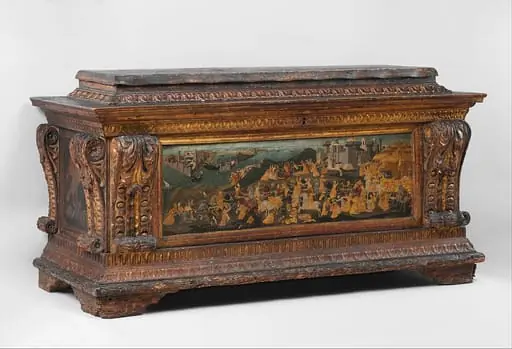 Cassone with painted front panel depicting the Conquest of Trebizond
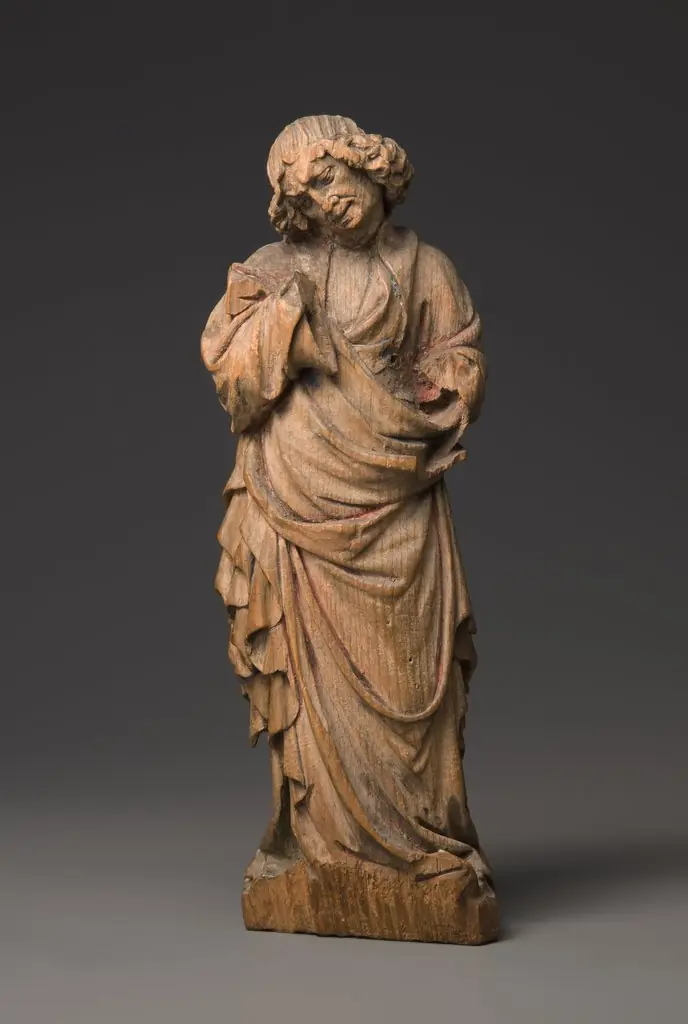 St. John the Evangelist, probably from a Crucifixion Group
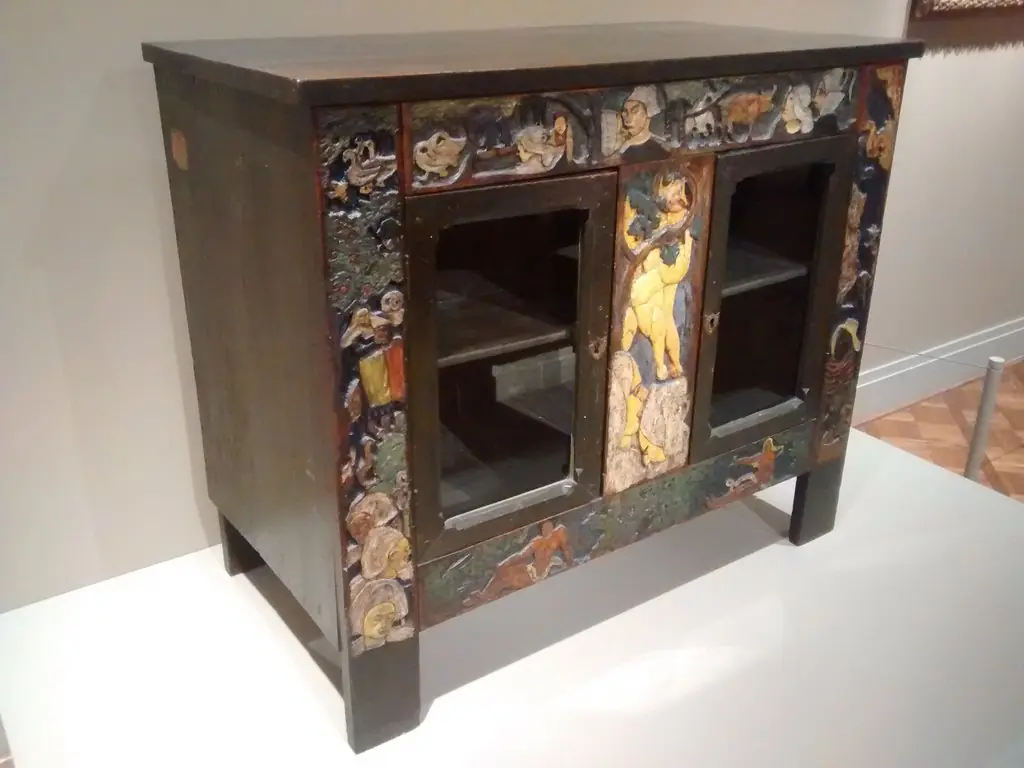 Earthly Paradise
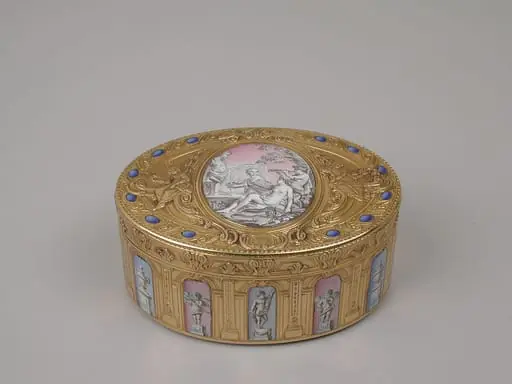 Snuffbox with grisaille decoration of Cupid and Venus
 sideboard
 Cup and Cover Supported by an Enchained Turk
 Cassone
 Scourging of Christ and the Crucifixion