Artwork
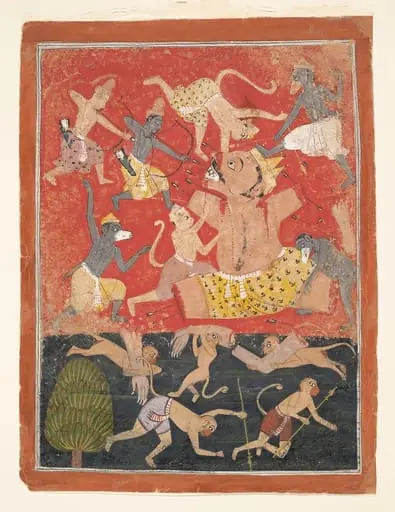
Battle between monkeys and demons, from the “Shangri” Ramayana
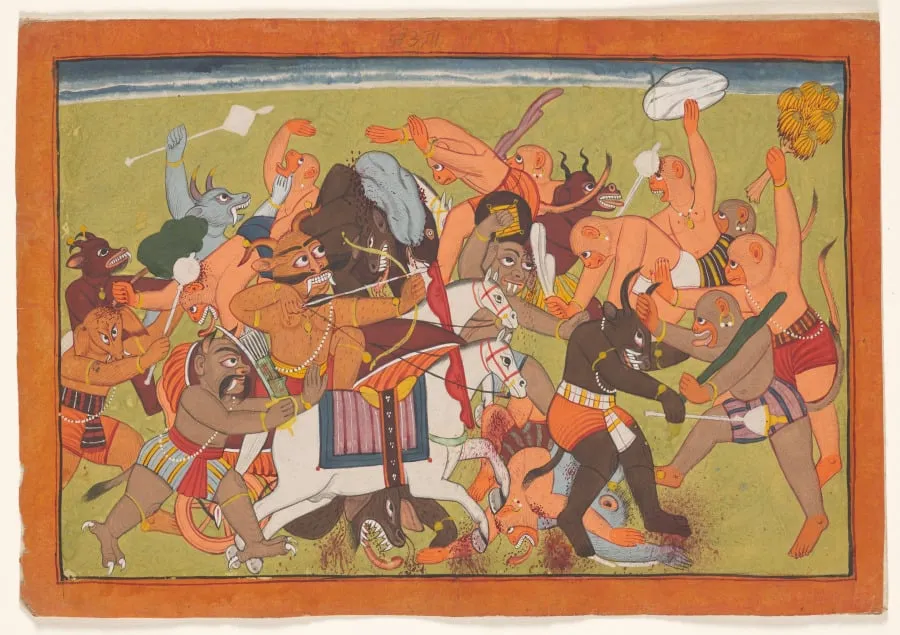
Battle between monkeys and demons, from the “Shangri” Ramayana is an unspecified painting by the Baroque artist Unknown. It dates from 1700 and is held in the collection of the Cleveland Museum of Art. This painting is part of a handwritten illustrated manuscript of the Ramayana, produced in the Pahari region of northern India.
- Accession no.
- 2025.9
- Credit line
- Sundry Art - Miscellaneous Fund
About this work
Overview
This painting is part of a handwritten illustrated manuscript of the Ramayana, produced in the Pahari region of northern India.
This painting is part of a handwritten illustrated manuscript of the Ramayana, produced in the Pahari region of northern India. It depicts a pivotal moment in the epic when Rama’s monkey allies engage in battle against Ravana’s demon forces. The composition is dense and dynamic, filled with overlapping figures and vivid pigments that convey the intensity of the conflict without relying on perspective or spatial depth.
Subject & Meaning
The scene illustrates the divine struggle between righteousness and arrogance, as Rama’s monkey warriors, led by Hanuman, fight to rescue Sita from Ravana’s captivity. The monkeys are not mere animals but sacred allies, embodying devotion and strength. Their battle symbolizes the cosmic order being restored through loyalty and courage, central themes in the Ramayana’s moral framework.
Technique & Style
The artist employs bold, flat areas of color and intricate linear detail to render the chaos of combat. Figures are stylized with exaggerated limbs and expressive gestures, while rocks and trees become weapons and barriers. The lack of background space intensifies the sense of claustrophobic action, typical of Pahari miniature painting, where narrative energy overrides naturalistic representation.
History & Provenance
Created in the late 17th or early 18th century, this work originates from a royal Pahari atelier, likely commissioned by a local ruler with a devotion to Hindu epics. Such manuscripts were treasured objects, passed through aristocratic collections. Its survival reflects the enduring cultural value placed on illustrated religious texts in the Himalayan foothills during the Mughal era.
Context
Pahari painting flourished in small hill kingdoms where artists blended Mughal precision with local devotional themes. The Ramayana was a favored subject, especially in regions with strong Vaishnavite traditions. This painting’s emphasis on movement and emotional intensity aligns with regional tastes for dramatic storytelling, distinct from the more restrained courtly styles of the plains.
Legacy
Works like this helped preserve and disseminate the Ramayana’s narratives across generations in pre-modern India. They influenced later regional styles and remain key references for understanding how sacred texts were visually interpreted in pre-colonial India. Today, they are studied for their artistic innovation and their role in sustaining religious and cultural identity.
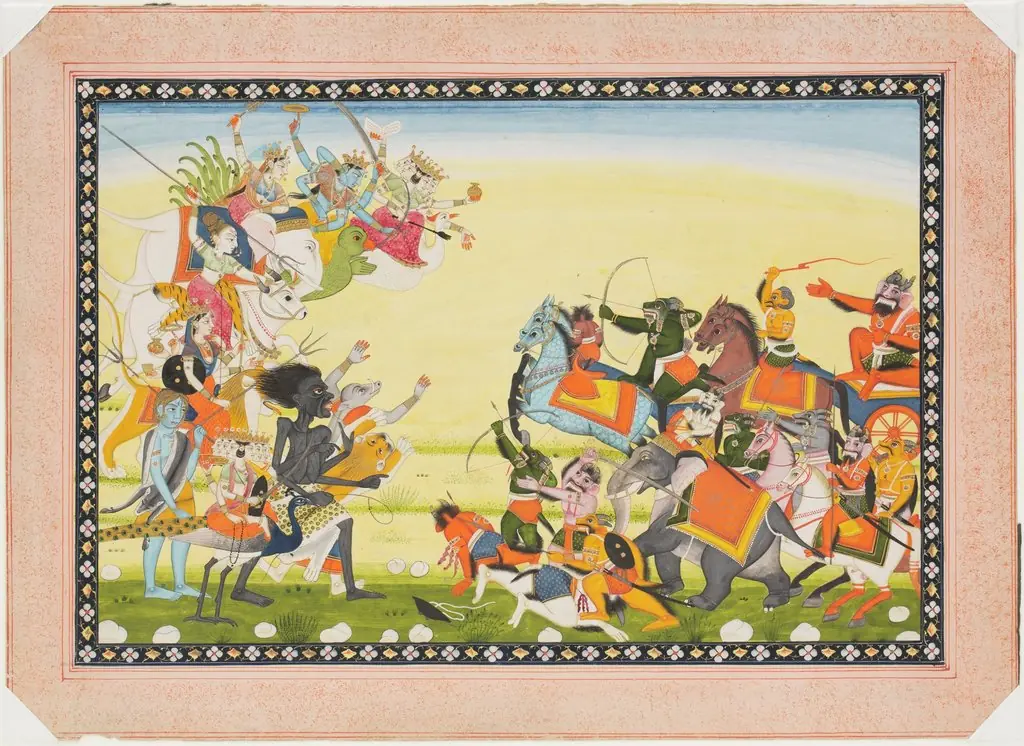
Artist & collection









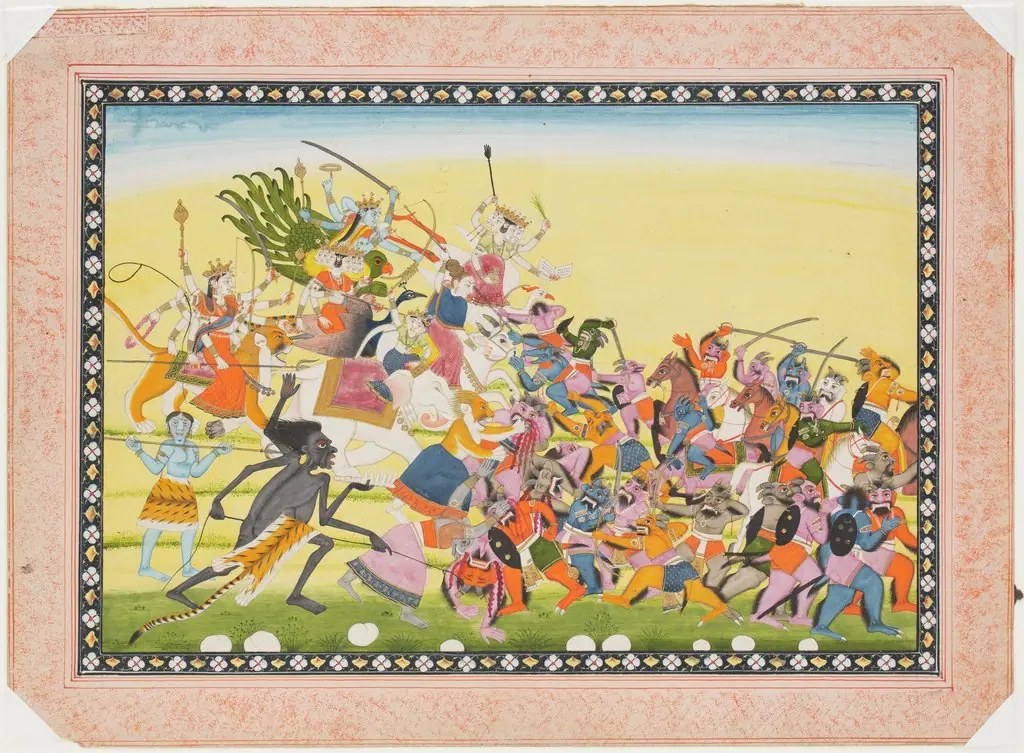 Godesses in Combat with Demons
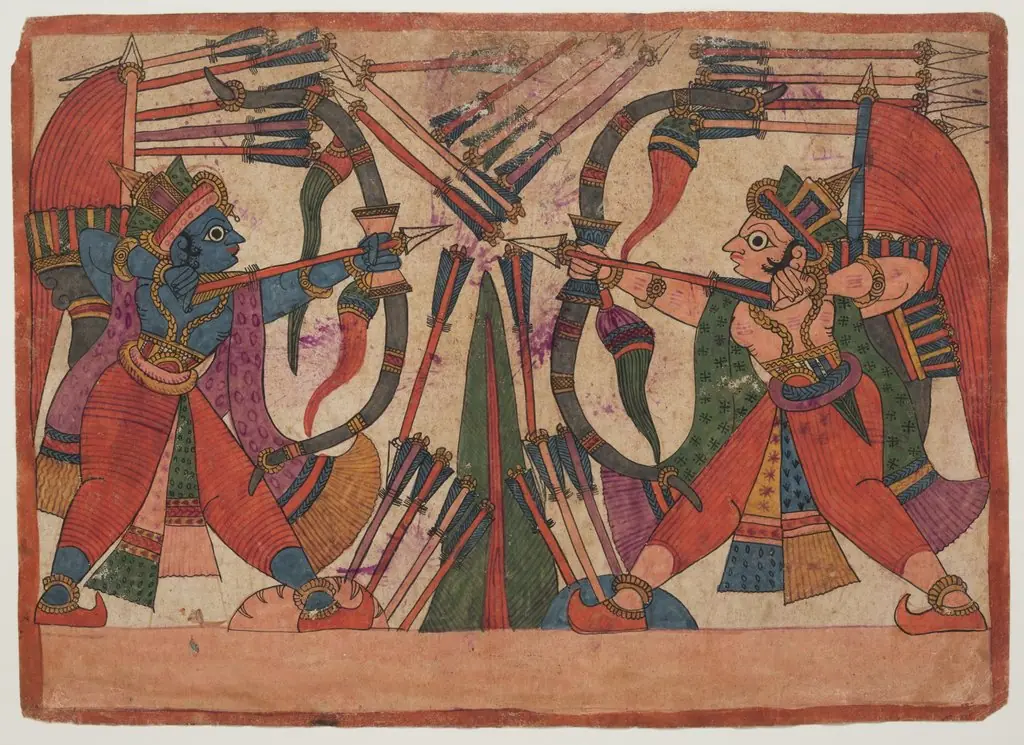 Scene from the Ramayana
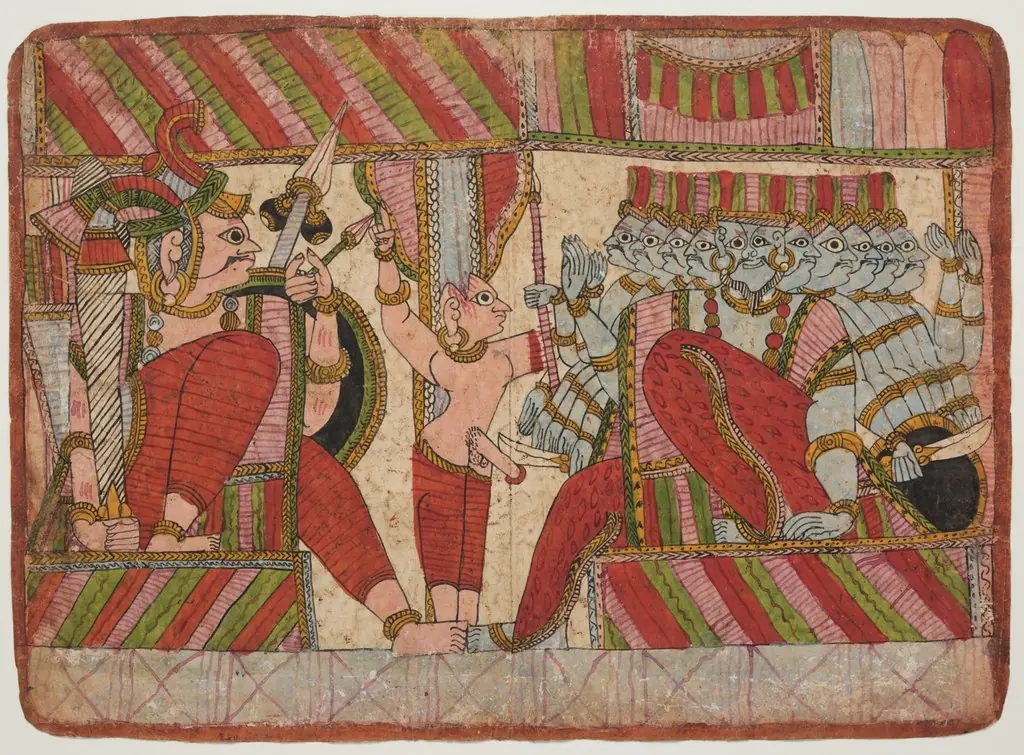 Scene from the Ramayana
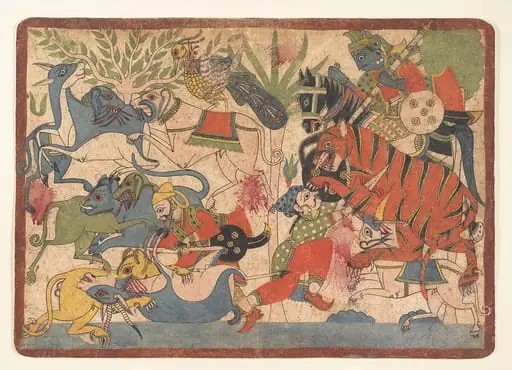 Untitled
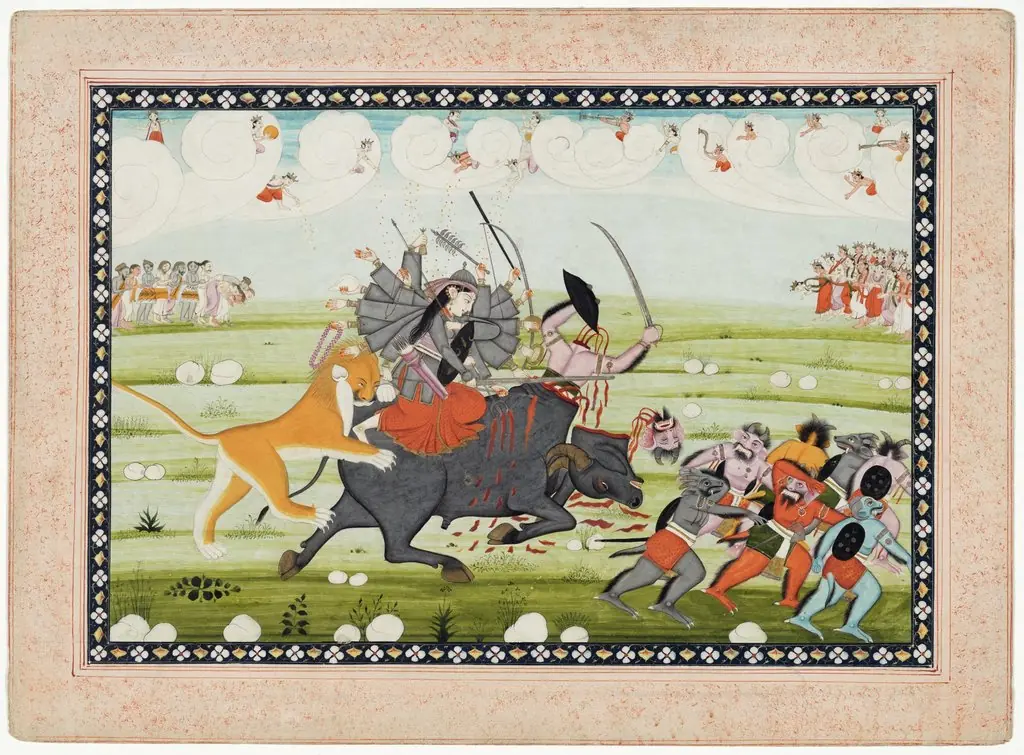 Durga, Having Decapitated Bull and Mahishasura Within, Drives off Remaining Demons while Gods in Clouds Applaud
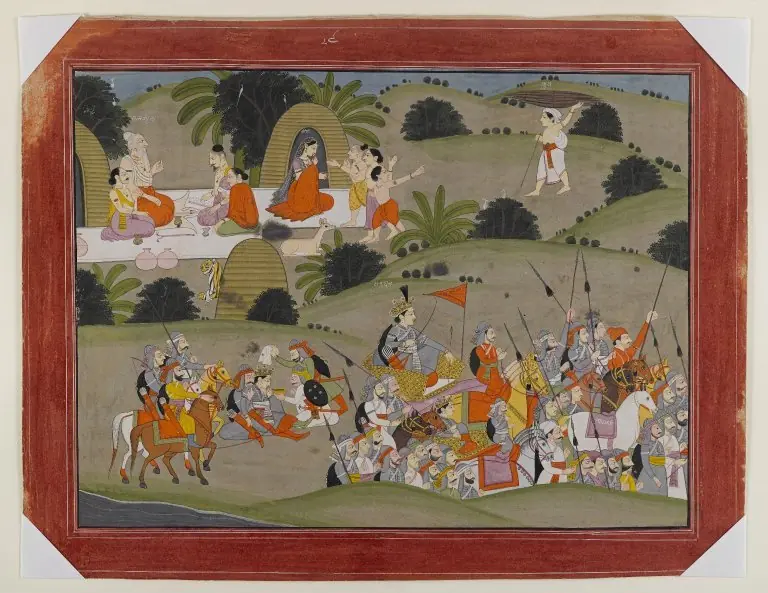 Battle between Lava and Rama's brother, Shatrughna, near the hermitage of Valmiki
 Untitled
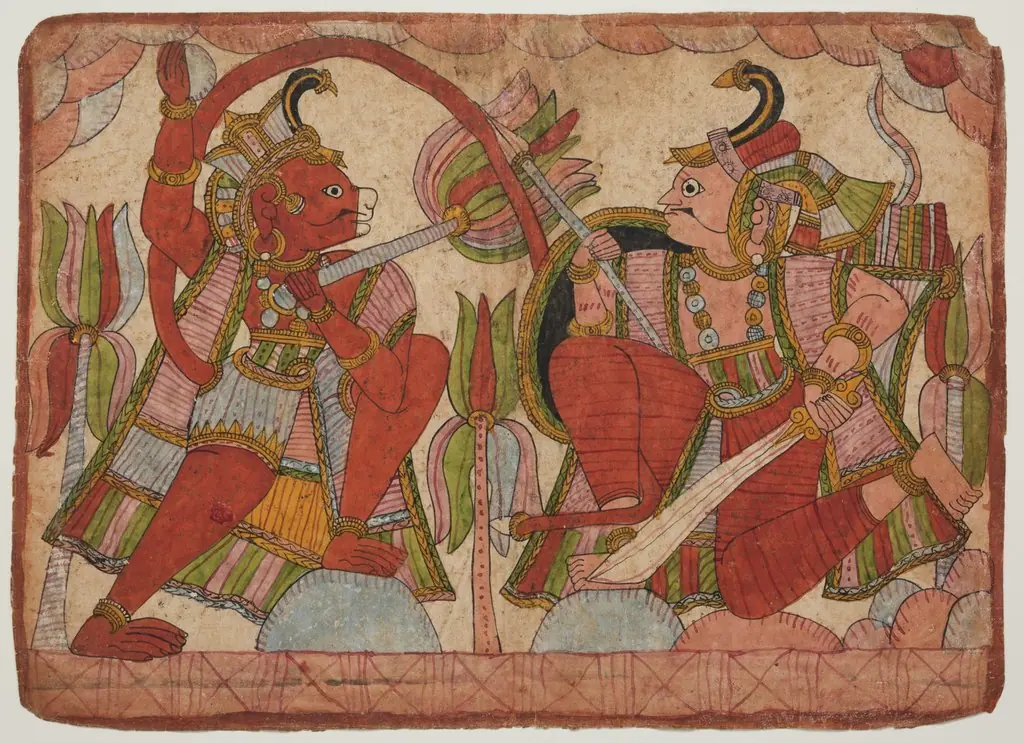 Scene from the Ramayana
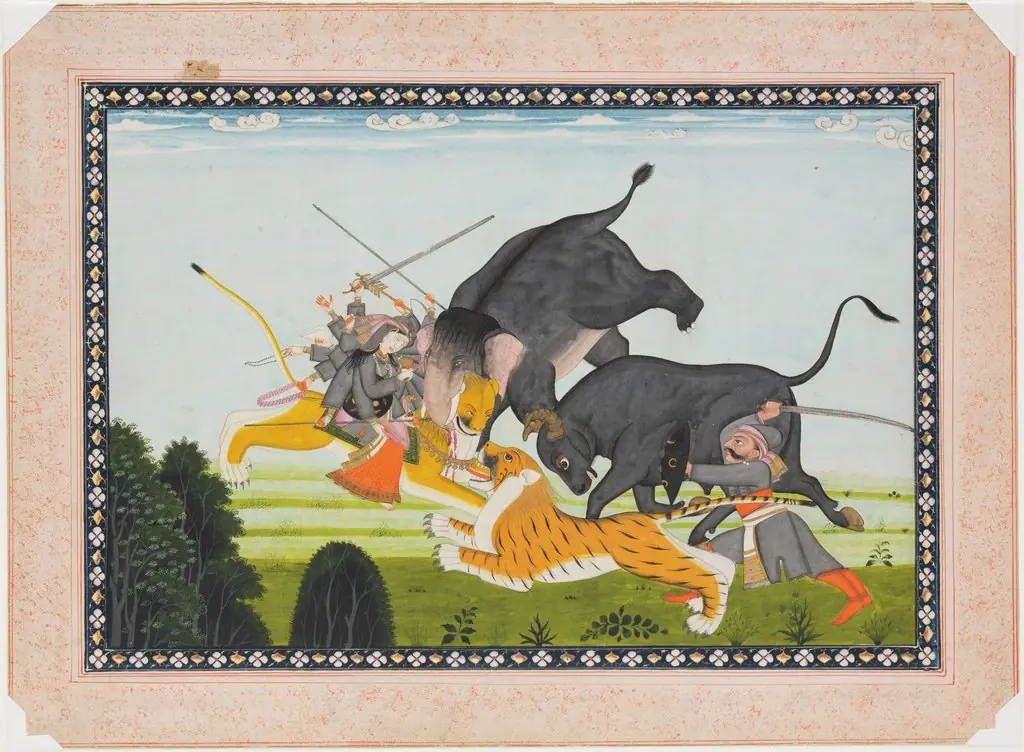 Durga Fighting an Elephant, Bull and Tiger