Artwork
Biga de la Passió. MNAC 15833

Biga de la Passió. MNAC 15833 is an unspecified painting by the Romanesque artist Unknown. It dates from 1220 and is held in the collection of the Museu Nacional d'Art de Catalunya. Biga de la Passió is a long, horizontal panel painting depicting the Passion of Christ through a sequence of narrative scenes.
About this work
Overview
Biga de la Passió is a long, horizontal panel painting depicting the Passion of Christ through a sequence of narrative scenes.
Biga de la Passió is a long, horizontal panel painting depicting the Passion of Christ through a sequence of narrative scenes. Its narrow format guides the viewer’s eye along a continuous story, with figures arranged in distinct episodes. The palette is dominated by muted earth tones, accented by selective use of red and gold. Each segment captures a moment from the biblical narrative, rendered with careful attention to gesture and costume.
Subject & Meaning
The painting illustrates key events from Christ’s final hours, including his trial, carrying of the cross, and crucifixion. Figures such as soldiers, mourners, and disciples are shown in varied postures, conveying emotional and physical tension. Halos identify sacred persons, reinforcing the spiritual gravity of the scenes. The work functions as a devotional aid, inviting contemplation of Christ’s suffering through sequential imagery.
Technique & Style
Executed in tempera on wood, the painting features fine linear detail and intricate patterning in robes and backgrounds. Figures are stylized rather than naturalistic, with elongated proportions and expressive gestures. Textures are suggested through delicate brushwork, and spatial depth is minimized in favor of narrative clarity. The composition reflects the conventions of late medieval Catalan panel painting, prioritizing symbolic meaning over perspective.
History & Provenance
Created in the late 13th or early 14th century, the panel likely originated in a Catalan church or monastery. It was later acquired by the Museu Nacional d'Art de Catalunya, where it remains part of the medieval collection. Its survival suggests it was valued for liturgical use before being preserved as a cultural artifact. No records of earlier ownership are definitively documented.
Context
This work belongs to a tradition of Catalan devotional panels that narrated sacred stories for congregations with limited literacy. Similar sequences appear in altarpieces across the region, often commissioned by religious institutions. The style aligns with Byzantine influences transmitted through Mediterranean trade, adapted into local artistic practices during the Romanesque and early Gothic periods.
Legacy
Biga de la Passió contributes to the understanding of how religious narratives were visually structured in medieval Catalonia. It exemplifies the transition from rigid Byzantine forms toward more expressive, narrative-driven compositions. Today, it serves as a key reference for scholars studying the evolution of Catalan religious art and its role in communal worship.
Artist & collection









- Dubl al
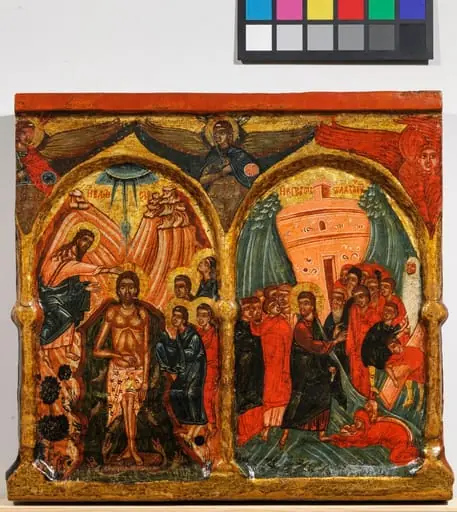 Botezul/Învierea lui Lazăr
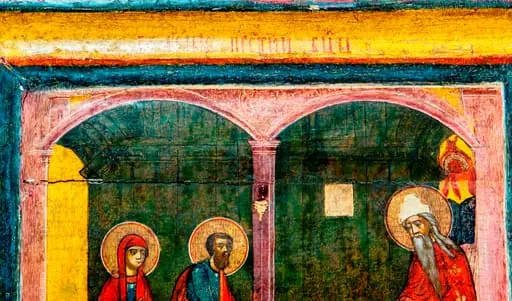 Intru co
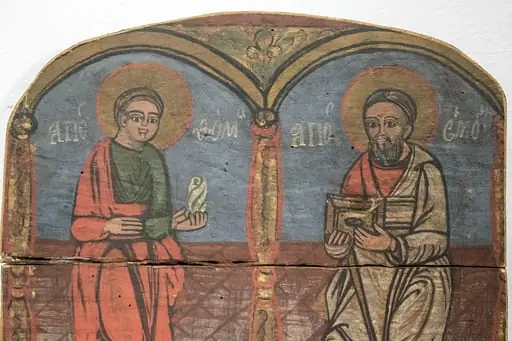 Cei doi apostoli sunt redați într-o manieră naivă, populară. Apostolul Toma(stânga) și apostolul Simion sub încadrați de câte un portal semicircular cu decor fitomorf, cadrele fiind separate de stâlpii fusiformi decorați cu motivul funiei. Ambii apostoli sunt desculți, înveșmântați simplu(Toma chiton verde, himation roșu, Simon chiton roșu, himation alb). Apostolul Toma este redat tânăr, fără barbă, ținând în mână un rotulus, Simon cu barbă căruntă, în mână cu o carte. Fețele expresive, carnația roz, proporțiile respectate, dar se observă stângăcii. Fond: în partea de jos, pardoseala din dale de piatră, sus albastru de Prusia, inscripții prescurtate cu majuscule de culoare albă.
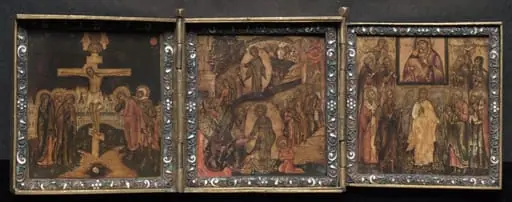 Portable Triptych Icon
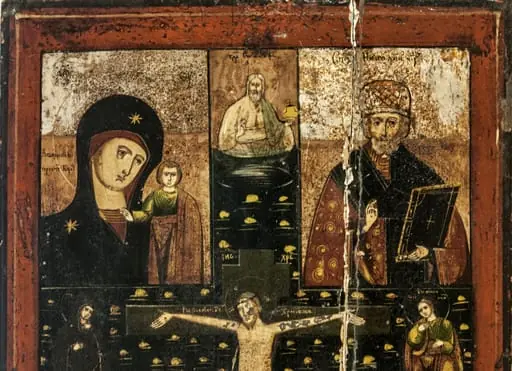 Răstce c
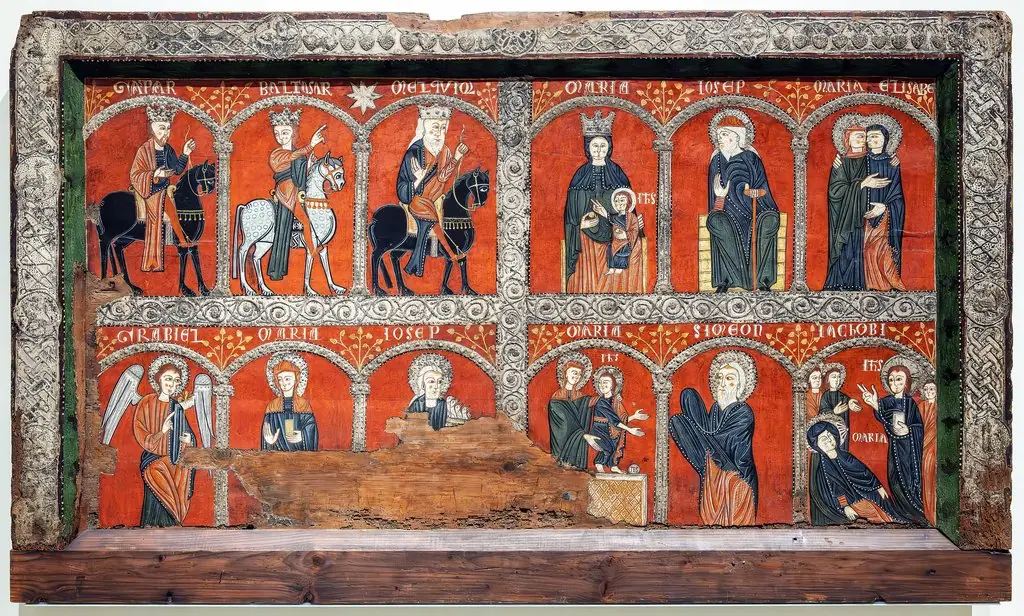 Altar frontal from Mosoll
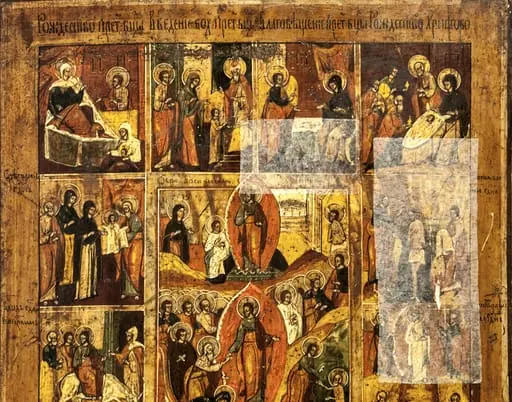 Compe.
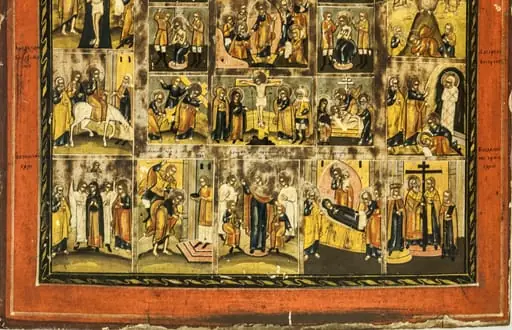
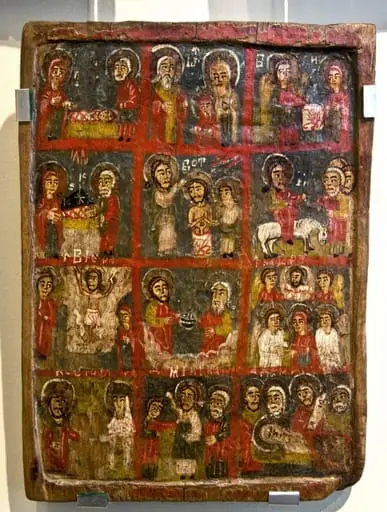 Prăznicar – Scene din Viața lui Iisus; Dodekaortion
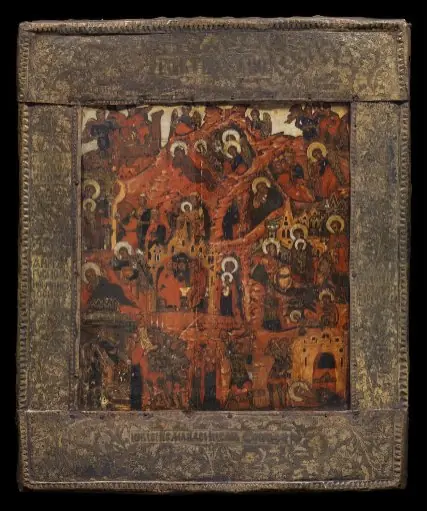 The Nativity of Jesus Christ
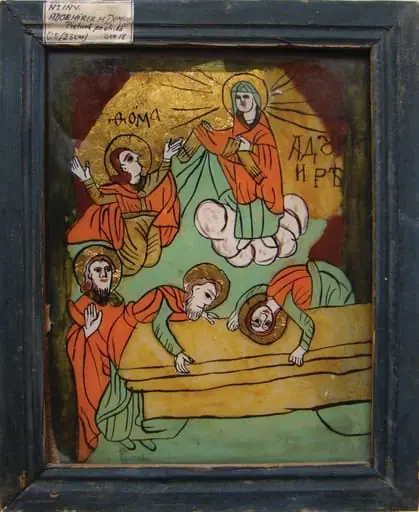 Înălțarea la cer a Maicii Domnului
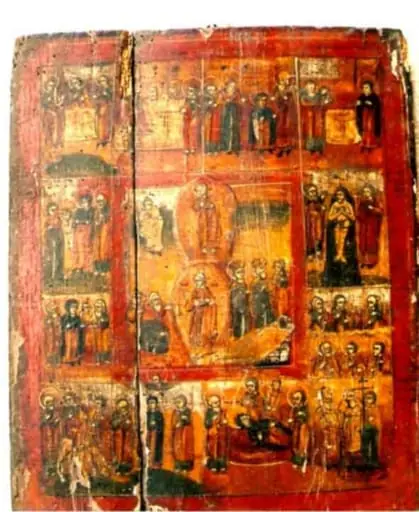 Coborârea în iad