Artwork
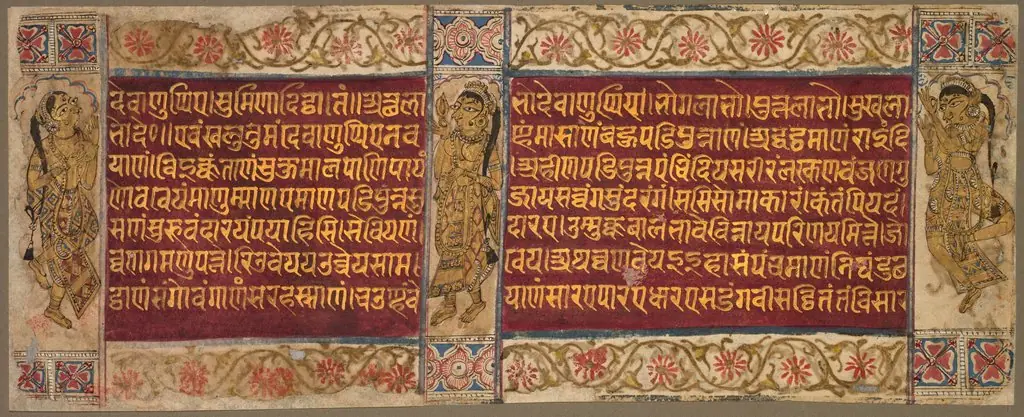
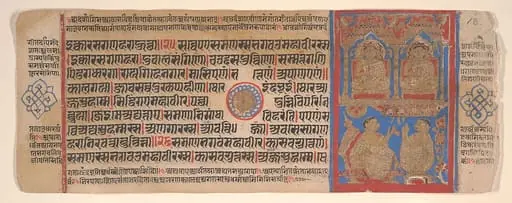
Celestial Dancers, folio 5 (recto), from Brahman Rishabhadatta's speech, from a Kalpa-sutra
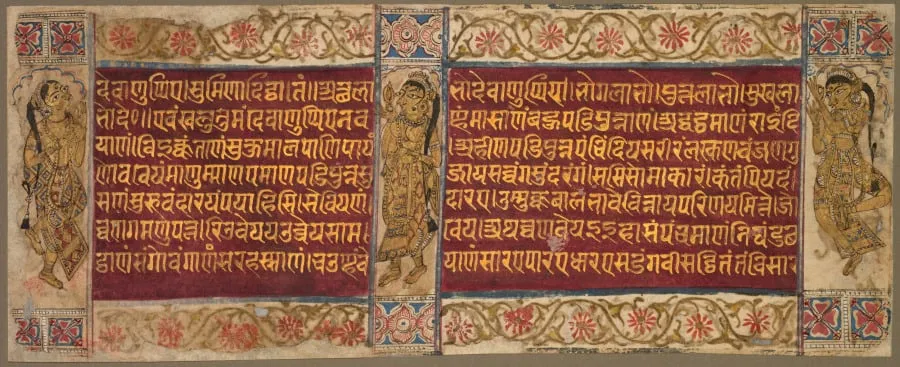
Celestial Dancers, folio 5 (recto), from Brahman Rishabhadatta's speech, from a Kalpa-sutra is an unspecified painting by the Mughal Painting artist Unknown. It dates from 1488 and is held in the collection of the Cleveland Museum of Art. Celestial Dancers, folio 5 (recto), is a painting from a Kalpa-sutra manuscript, a sacred Jain text.
- Accession no.
- 1979.23.a
- Credit line
- Gift in memory of Herbert F. Leisy
About this work
Overview
Celestial Dancers, folio 5 (recto), is a painting from a Kalpa-sutra manuscript, a sacred Jain text. This illustrated page features heavenly dancers under cusped arches, embodying the beautification and celebration of Jain doctrine.
Subject & Meaning
The gold-skinned celestial dancers, adorned in vibrant attire and adorning accessories, symbolize heavenly beings honoring the sacred text. Their depiction signifies the divine approval and joy associated with the Kalpa-sutra's teachings.
Technique & Style
Characterized by intricate details, the painting showcases dancers with lotus-petal-shaped hands and ankle bells, set against pointed arches. The use of gold, red, and green underscores the manuscript's ceremonial and aesthetic value.
History & Provenance
Originating from Western India, specifically Gujarat, this manuscript page reflects the region's Jain manuscript illumination traditions. The exact provenance is unclear, but its style aligns with Gujarat's medieval artistic practices.
Context
Commissioned by wealthy patrons seeking to atone for past wrongdoing through a meritorious act, the manuscript's production also served as a display of the donor's piety and social status within the Jain community.
Legacy
As part of a Kalpa-sutra, this page contributes to the preservation and dissemination of Jain teachings, while its artwork exemplifies the blending of religious devotion with aesthetic expression in medieval Indian manuscripts.
Artist & collection









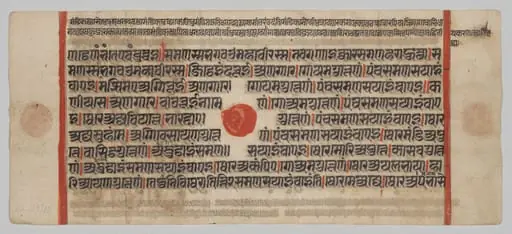 Text, Folio 58 (recto), from a Kalpa-sutra
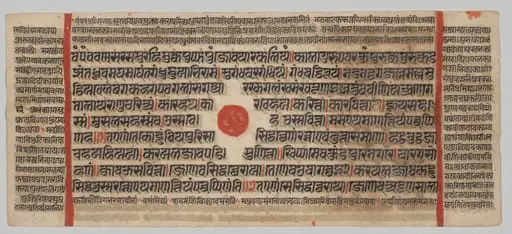 Text, Folio 32 (recto), from a Kalpa-sutra
 Brahman Rishabhadatta's speech, folio 5 from a Kalpa-sutra
 Untitled
 Untitled
 The Fourteen Dreams of Queen Trishala, folio 14 (recto), from a Kalpa-sutra
 Untitled
 Untitled
 Seated Jina Rishabha Enshrined, from a Jain Manuscript: Kalpa-Sutra