Artwork
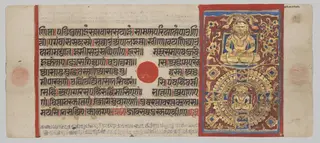
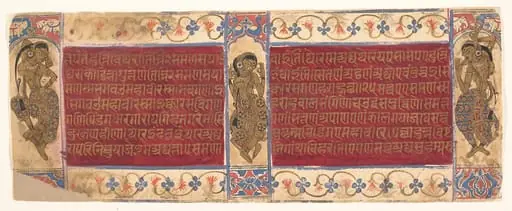
Text, folio 5 (verso), from Brahman Rishabhadatta's speech, from a Kalpa-sutra
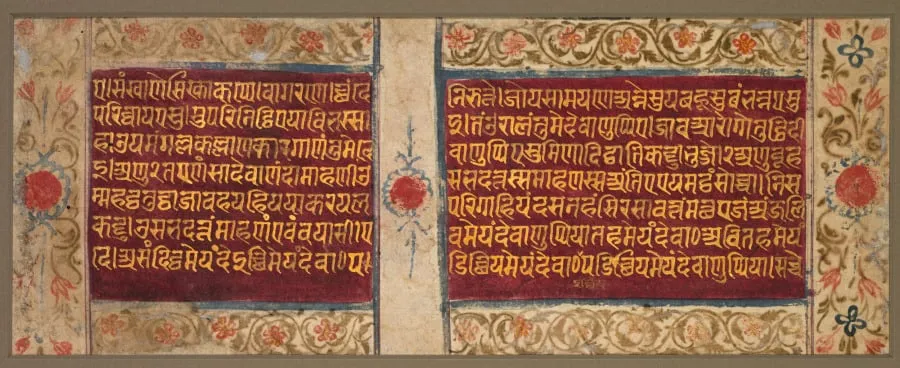
Text, folio 5 (verso), from Brahman Rishabhadatta's speech, from a Kalpa-sutra is an unspecified painting by the Indian Miniature artist Unknown. It dates from 1488 and is held in the collection of the Cleveland Museum of Art. This folio comes from a handwritten copy of the Kalpa-sutra, a sacred Jain text detailing the lives of the Tirthankaras.
- Accession no.
- 1979.23.b
- Credit line
- Gift in memory of Herbert F. Leisy
About this work
Overview
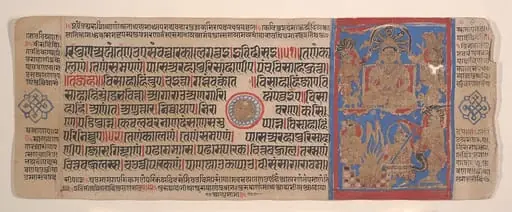
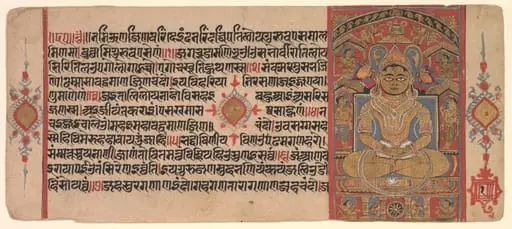
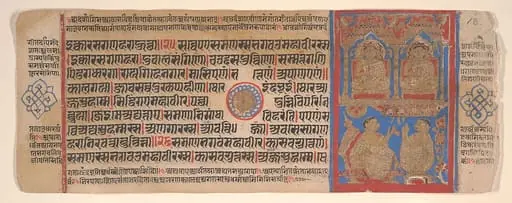
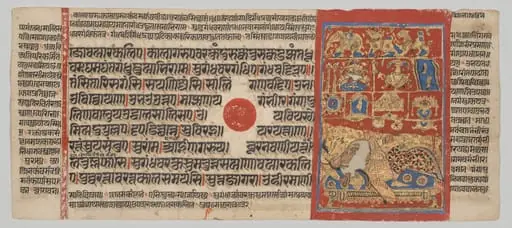
This folio comes from a handwritten copy of the Kalpa-sutra, a sacred Jain text detailing the lives of the Tirthankaras. Produced in western India, likely Gujarat, it features intricate miniature paintings alongside meticulously penned script. The page’s vivid pigments and ornate architecture reflect its devotional purpose, transforming the manuscript into a ritual object rather than a mere text.
Subject & Meaning
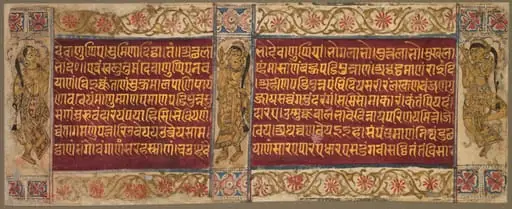
The scene depicts celestial dancers beneath cusped arches, symbolizing heavenly beings honoring the sacred words below. These figures, along with monks and deities, reinforce the belief that such manuscripts are not only doctrinal records but also divine offerings. Their presence suggests the text’s spiritual potency, elevating its status beyond human use to a celestial celebration.
Technique & Style
The painting employs mineral pigments in rich reds, blues, and gold leaf, applied with fine brushwork typical of western Indian manuscript traditions. Figures are rendered with precise detail, set within architectural frames that structure the composition. The script, written in Jain Prakrit, flows in orderly lines around the imagery, integrating text and image as a unified sacred whole.
History & Provenance
Commissioned by wealthy Jain patrons in the 15th or 16th century, this manuscript was part of a tradition where costly book production served as an act of merit-making. Such manuscripts were often kept in temple libraries or used in ritual recitations. The artist, Brahman Rishabhadatta, is named in the colophon, a rare acknowledgment reflecting the artisan’s esteemed role in religious culture.
Context
In Jain communities, the physical creation of sacred texts was considered an act of spiritual purification. Manuscripts like this were displayed during festivals and handled with ritual care. Their production mirrored the Jain emphasis on non-violence and discipline, as every stroke of the brush and pen was performed with mindfulness and reverence.
Legacy
This folio exemplifies the enduring Jain commitment to preserving doctrine through art. Similar manuscripts from Gujarat remain key to understanding regional artistic practices and religious devotion. Though no longer in active use, such works continue to inform scholarly study and cultural preservation efforts within Jain communities and beyond.
Artist & collection