Artwork
The Fourteen Dreams of Queen Trishala, folio 14 (recto), from a Kalpa-sutra
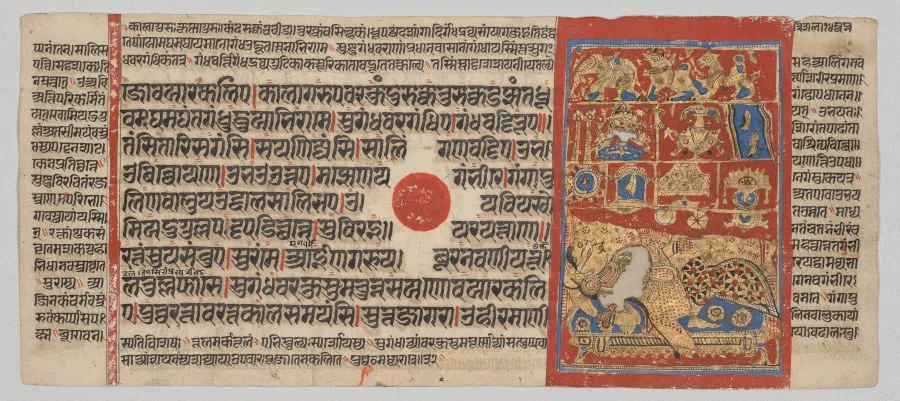
The Fourteen Dreams of Queen Trishala, folio 14 (recto), from a Kalpa-sutra is an unspecified painting by the Mughal Painting artist Unknown. It dates from 1488 and is held in the collection of the Cleveland Museum of Art.
- Accession no.
- 1932.119.14.a
- Credit line
- Edward L. Whittemore Fund
About this work
Overview
The folio, part of a Jain Kalpa‑sutra manuscript, presents a series of fourteen miniature scenes arranged in a grid on a vivid red background. Each vignette depicts Queen Trishala experiencing a distinct dream, ranging from a white elephant to a lion and a moon, symbols traditionally interpreted as auspicious signs preceding the birth of the Tirthankara Mahavira.
Subject & Meaning
In Jain tradition, the queen’s dreams are prophetic omens foretelling the arrival of Mahavira, the 24th Tirthankara who would later articulate the path to liberation. The sequence of animal and celestial motifs conveys the spiritual significance of his conception, emphasizing the divine intervention believed to have placed his soul within the royal womb.
Technique & Style
The artist employs a limited yet striking palette of deep reds, whites, and golds, giving the images an otherworldly sheen. Forms are rendered with simplified outlines and flat color fields rather than naturalistic detail, allowing each emblematic figure to be instantly recognizable within the compact square format.
History & Provenance
The manuscript originates from western India, most likely Gujarat, a historic center of Jain manuscript production. Though the precise date of the folio is uncertain, its style aligns with the richly colored courtly manuscripts created for Jain patrons between the 12th and 15th centuries.
Context
Jain cosmology holds that liberated souls, or kevalins, remain eternally in a meditative state without further rebirth. The depiction of Trishala’s fourteen dreams reflects this belief system, linking the earthly narrative of Mahavira’s birth to the broader theological framework of eternal liberation.
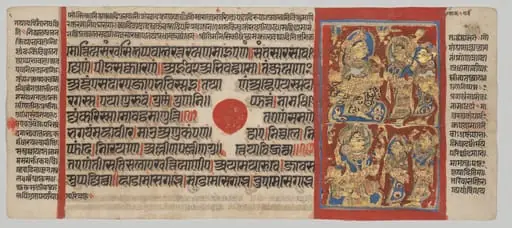
Artist & collection









- Queen Trishala's Grief and Happiness, Folio 29 (recto), from a Kalpa-sutra
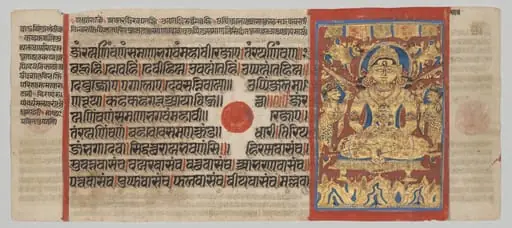 Ritual Bath of Mahavira, Folio 31 (recto), from a Kalpa-sutra
 Text, Folio 29 (verso), from a Kalpa-sutra
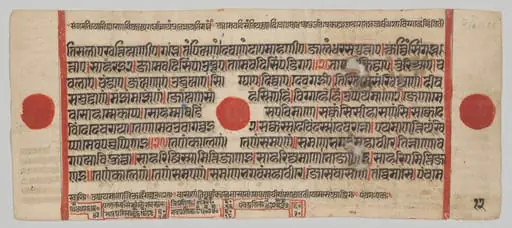 Text, folio 12 (verso), from a Kalpa-sutra
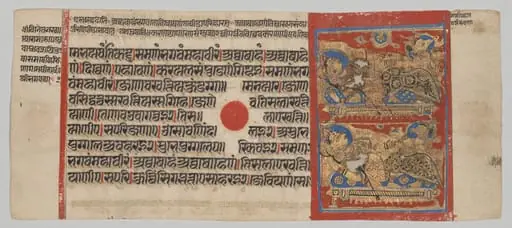 Transfer of the Embryo of Mahavira, Folio 12 (recto), from a Kalpa-sutra
 Text, Folio 31 (verso), from a Kalpa-sutra
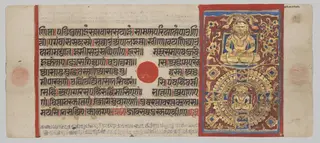 Nemi's Omniscience and First Teaching (below) and Nemi in the Realm of Liberation (above), Folio 51 (recto), from a Kalpa-sutra
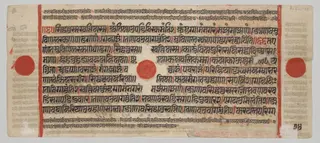 Text, folio 24 (verso), from a Kalpa-sutra
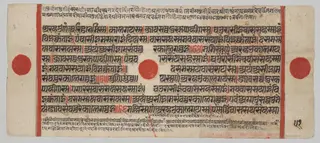 Text, Folio 51 (verso), from a Kalpa-sutra