Artwork
源氏物語絵巻 「澪標」|“Channel Markers” (Miotsukushi)
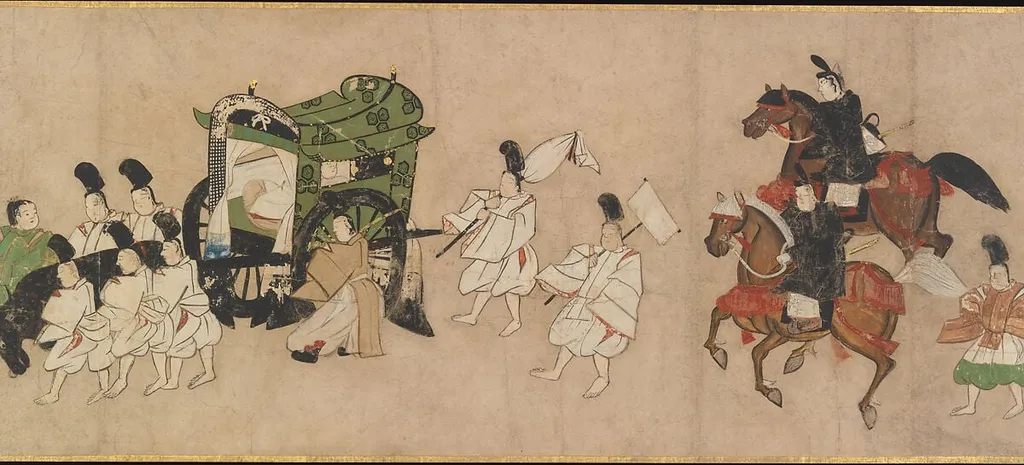
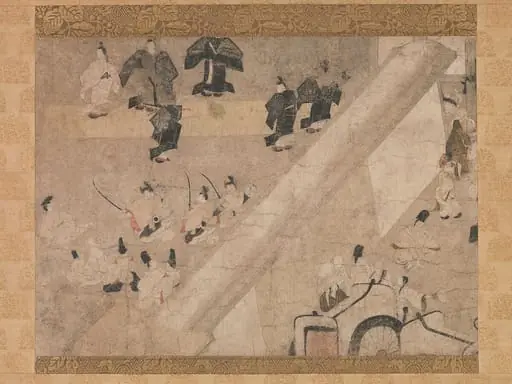
源氏物語絵巻 「澪標」|“Channel Markers” (Miotsukushi) is an ink painting. It dates from 1400 and is held in the collection of the Metropolitan Museum of Art. This handscroll, titled "Channel Markers" (Miotsukushi), is a painting executed with ink and color on paper.
About this work
Technique & Style
The work is executed as a handscroll using ink and color on paper, a traditional format for narrative painting in Japan.
The work is executed as a handscroll using ink and color on paper, a traditional format for narrative painting in Japan. According to the Met's cataloguing, the scroll measures roughly 31 cm in height and extends to about 447 cm in width, proportions consistent with a horizontal handscroll designed to be unrolled section by section. The imagery centers on figures, a carriage, and an equestrian scene, rendered with the brushwork conventions of early-fifteenth-century Yamato-e handscroll production, in which ink underdrawing is combined with mineral and vegetal pigments applied in flat, decorative passages over the paper support.
History & Provenance
The handscroll titled "Miotsukushi" (Channel Markers), part of the Tale of Genji picture scrolls, was created in Japan around 1400. Attributed to an anonymous painter, the work is executed in ink and color on paper. It currently resides in the collection of the Metropolitan Museum of Art, where it is catalogued with dimensions of 31 centimeters in height and 447 centimeters in width.
The scroll depicts scenes involving a carriage, horses, and men engaged in equestrian activities. The specific commissioning patron and the precise chain of ownership prior to the museum's acquisition are not detailed in the available records.
Overview
This handscroll, titled "Channel Markers" (Miotsukushi), is a painting executed with ink and color on paper. It depicts a scene from The Tale of Genji, an influential Japanese narrative from approximately a millennium ago. The artwork captures two figures in a horse-drawn carriage, accompanied by a third individual on foot, illustrating a moment from the celebrated literary work.
Subject & Meaning
The scroll illustrates a specific episode from The Tale of Genji, a foundational work of Japanese literature. Within this segment, two men, distinguished by their tall black hats, are shown traveling in an open carriage pulled by a white horse. A third figure walks ahead, guiding their path. This particular scene, "Channel Markers," contributes to the broader narrative of the 1,000-year-old story.
Artist & collection

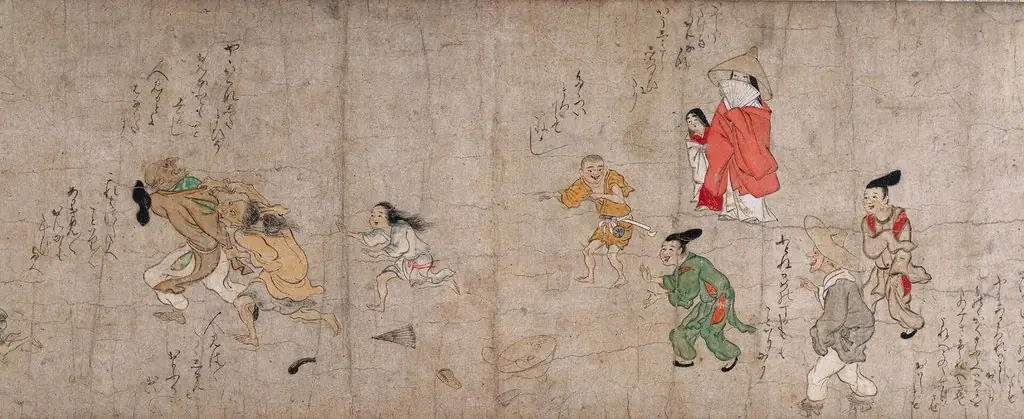 The Story of Fukutomi
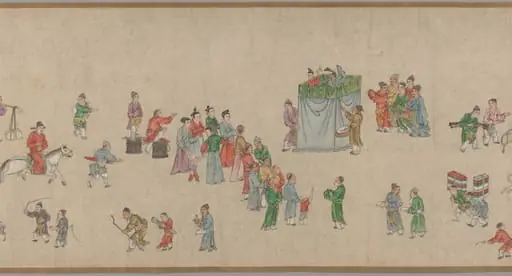 Street Scenes in Times of Peace 太平風會圖
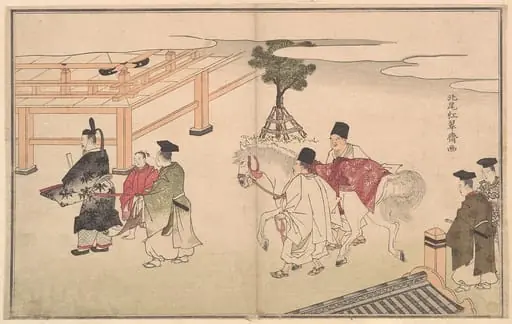 Untitled
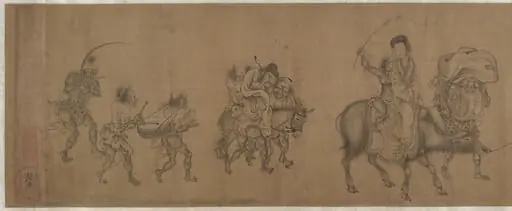 南宋/元 顏庚 鍾馗嫁妹圖 卷|The Demon Queller Zhong Kui Giving His Sister Away in Marriage
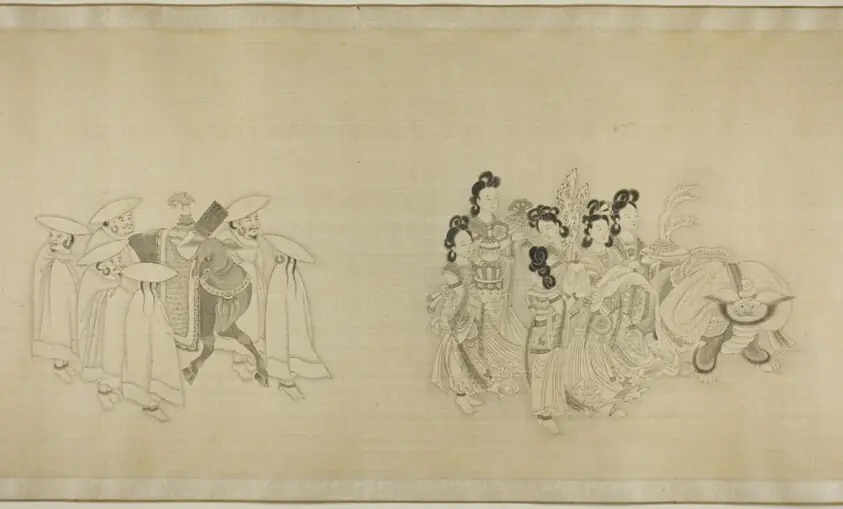 Barbarian Envoys Presenting Tribute
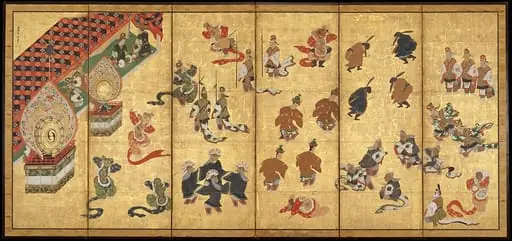 Untitled
 Untitled
 Untitled
 The Thirty-Six Poetic Immortals (Sanjūrokkasen)
 Untitled
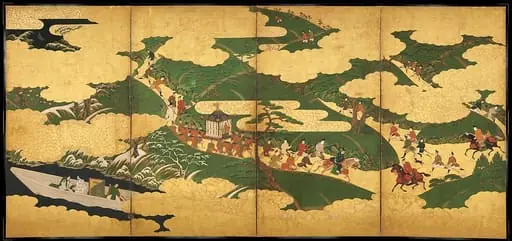
- 源氏物語図屏風「御幸」・「浮船」・「関谷」|“An Imperial Excursion” (Miyuki), “A Boat Cast Adrift” (Ukifune), and “The Barrier Gate” (Sekiya)
 「高陽院駒競行幸絵巻」『栄花物語』 断簡|"Imperial Visit to the Great Horse Race at the Kaya-no-in Mansion" from the Tale of Flowering Fortunes