Artwork
南宋/元 顏庚 鍾馗嫁妹圖 卷|The Demon Queller Zhong Kui Giving His Sister Away in Marriage
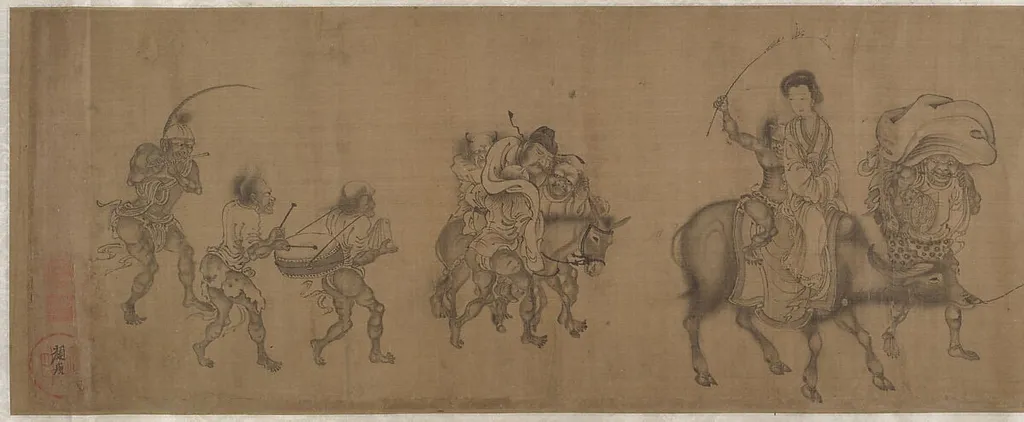
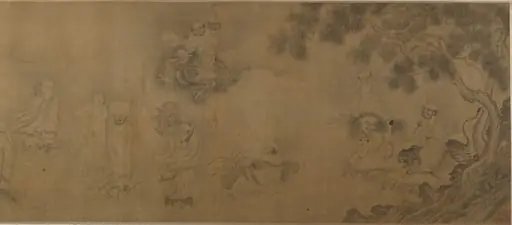
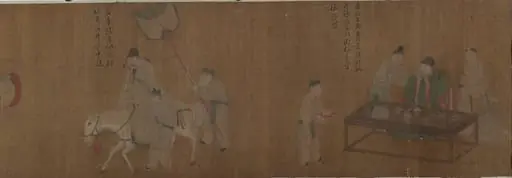
南宋/元 顏庚 鍾馗嫁妹圖 卷|The Demon Queller Zhong Kui Giving His Sister Away in Marriage is an ink painting by the Song dynasty painting artist Yan Geng. It dates from 1319 and is held in the collection of the Metropolitan Museum of Art.
About this work
Subject & Meaning
According to the legend, after Zhong Kui took his own life when denied the imperial examination, he became a spirit who vanquished demons and evil forces.
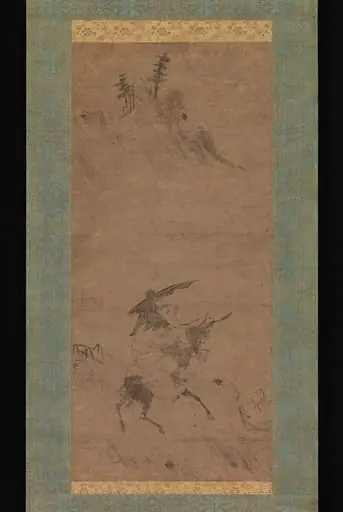
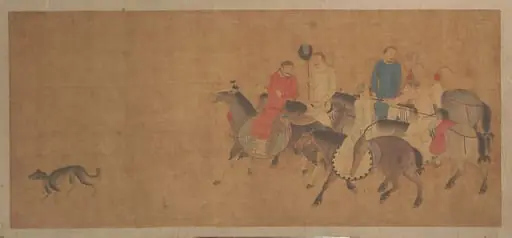
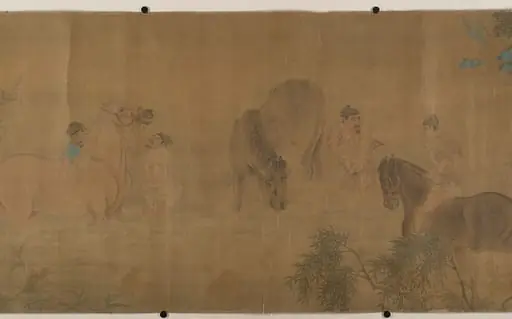
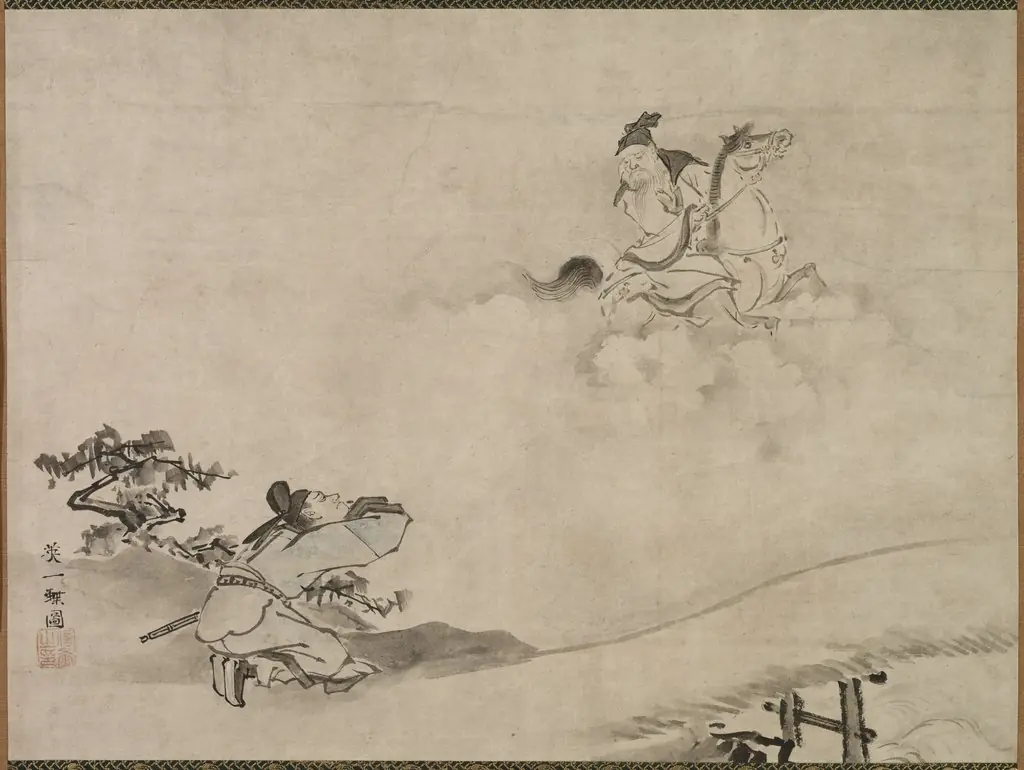
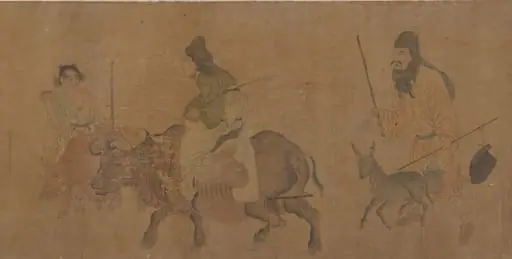
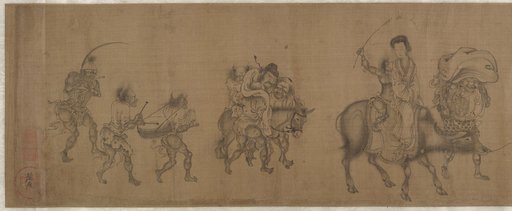
The handscroll depicts the legend of Zhong Kui, the demon queller, escorting his younger sister to be married. According to the legend, after Zhong Kui took his own life when denied the imperial examination, he became a spirit who vanquished demons and evil forces. In gratitude, he is said to bestow blessings on mortal families, including arranging a suitable marriage for his sister.
The painting visualizes this nuptial procession, populated by demons, women, a donkey, and a buffalo, and accompanied by musicians playing instruments, all of which are catalogued among the figures depicted. The procession imagery reflects the traditional role of Zhong Kui as both protector against malevolent spirits and benefactor of human prosperity, while the inclusion of bridal attendants, transport animals, and musical performers situates the supernatural narrative within the conventions of a Chinese wedding procession.
Technique & Style
The work is executed as a handscroll in ink on silk, a format and support typical of scholarly painting in the Yuan period. The brushwork combines fine, controlled lines with modulated ink washes to articulate textures - from the demon's shaggy fur to the silk garments of the female figures - while retaining a crisp, calligraphic linearity. Compositionally, the scene unfolds in a continuous narrative register, with Zhong Kui and his demon retinue advancing leftward, their postures and gestures rendered with understated exaggeration to convey comic or portentous weight.
The palette is restrained, relying on ink tones and subtle washes; color is limited to restrained accents in the figures' clothing. The scroll's flattened spatial recession and attenuated figural proportions reflect Southern Song academic figuration filtered through Yuan-period stylization.
History & Provenance
The handscroll titled The Demon Queller Zhong Kui Giving His Sister Away in Marriage was created in 1319 by the artist Yan Geng. Executed in ink on silk, the work originates from China and is currently held in the collection of the Metropolitan Museum of Art. The piece measures 24.4 cm in height and 253.4 cm in width.
While the specific circumstances of its commission are not detailed in the available records, the work is firmly dated to the early fourteenth century, reflecting the artistic output of the late Southern Song or early Yuan period. The scroll depicts mythological figures including a demon, a woman, a donkey, a buffalo, and a musical instrument, consistent with the narrative of Zhong Kui escorting his sister in marriage.
Context
The handscroll by Yan Geng, dated 1319, belongs to the mythology genre of Southern Song-Yuan painting and portrays the demon-queller Zhong Kui giving his sister away in marriage; its iconography includes a buffalo, demon, donkey, musical instrument, and a woman. Executed in ink on silk, the work measures 24.4 cm in height and 253.4 cm in width and was produced in China. It entered the collection of the Metropolitan Museum of Art, where its display and cataloguing reflect sustained academic interest in Zhong Kui imagery and the broader tradition of mythological handscrolls.
The painting thus occupies a notable position in the history of Chinese demon-queller art and illustrates the transmission of supernatural motifs into elite visual culture.
Legacy
The handscroll by Yan Geng, dated 1319, is part of the Metropolitan Museum of Art collection, a status that underscores its recognized significance in the study of Chinese mythological painting. Its depiction of the demon-queller Zhong Kui in a marital scene exemplifies Yuan-era narrative handscrolls and has been cited in scholarly discussions of the Zhong Kui motif's evolution, reinforcing the work's lasting reputation as a canonical image within the tradition. The piece's presence in a major museum has contributed to continued academic interest and to the broader legacy of Zhong Kui imagery in later Chinese art.
Overview
This ink-on-silk handscroll, attributed to Yan Geng during the Southern Song or Yuan dynasty, illustrates "The Demon Queller Zhong Kui Giving His Sister Away in Marriage." The painting unfolds a long, festive procession led by the red-faced demon queller, presenting a unique and early visual interpretation of this folk hero. It captures a moment of celebration, deviating from Zhong Kui's more common role as a fearsome protector.
Artist & collection
Artist
Working between the late Song and early Yuan dynasties, Yan Geng kept tradition alive in ink and silk.