Artwork
Charles de Cossé (1506–1563), Comte de Brissac
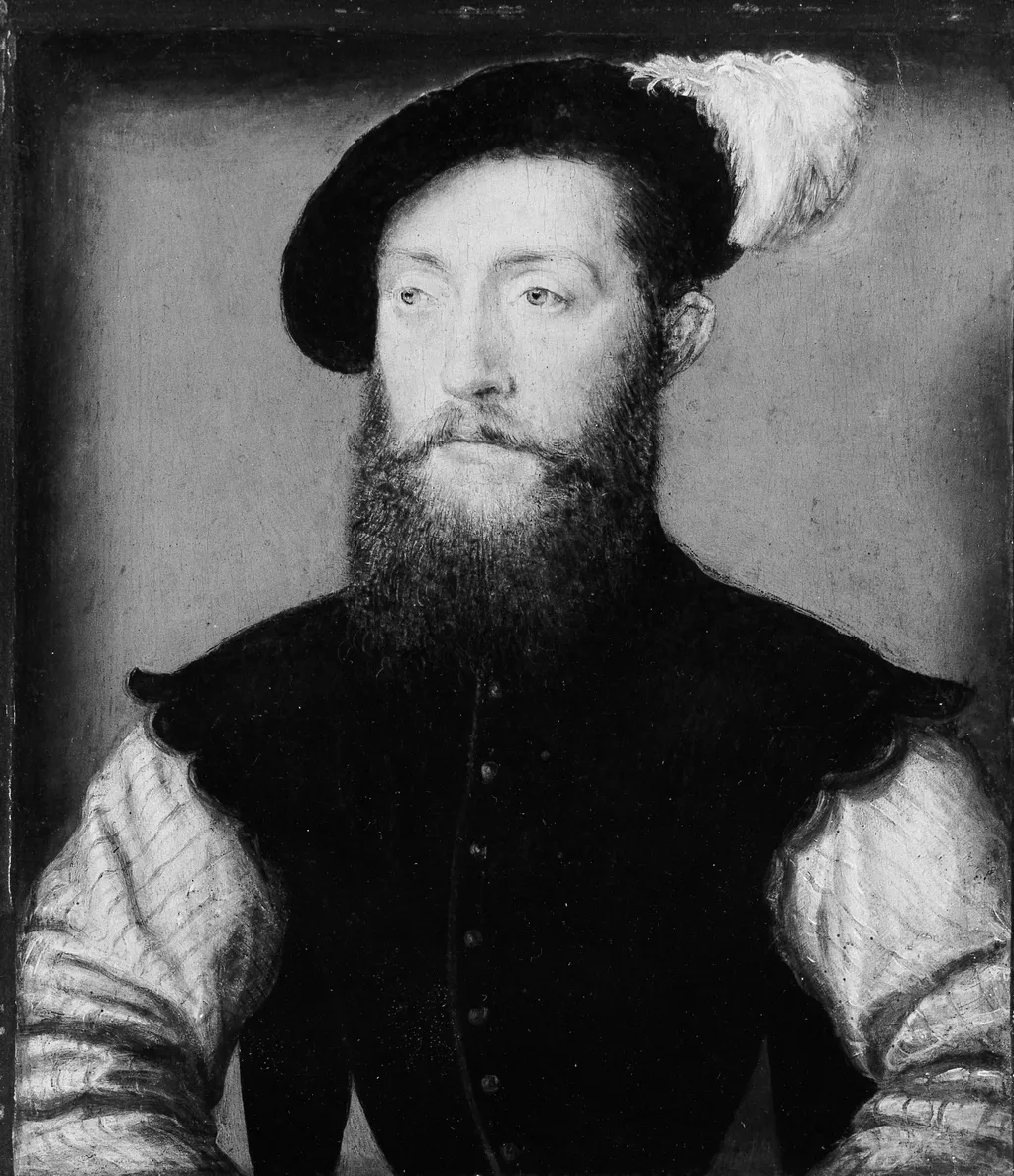
Charles de Cossé (1506–1563), Comte de Brissac is an oil painting. It dates from 1600 and is held in the collection of the Metropolitan Museum of Art. This oil painting presents a portrait of Charles de Cossé, Comte de Brissac, a figure from the 16th century.
About this work
Technique & Style
The work has been associated with the collection of Jules Bache and was previously included in the Loan Exhibition of French Primitives and Objects of Art.
The portrait of Charles de Cossé, Comte de Brissac, is executed in oil paint on a wooden panel support. Measuring 21.6 centimeters in height and 15.2 centimeters in width, the work reflects the small-scale format characteristic of its genre. Created around the year 1600, the painting depicts the sitter in a manner consistent with the style attributed to Corneille de Lyon.
The medium of oil on panel was typical for portable court portraits of this period, allowing for detailed rendering of facial features and attire within a compact frame. The work has been associated with the collection of Jules Bache and was previously included in the Loan Exhibition of French Primitives and Objects of Art.
History & Provenance
The portrait of Charles de Cossé, Comte de Brissac, is an oil on panel work dated to circa 1600, classified as a painting within the portrait genre. It is attributed to Corneille de Lyon and was owned by the collector Jules Bache before entering the Metropolitan Museum of Art, where it remains. Its documented exhibition history includes an appearance in the Loan Exhibition of French Primitives and Objects of Art.
Beyond its medium, date, attribution, and this prior ownership, no further commissioning details are noted in the sources.
Overview
This oil painting presents a portrait of Charles de Cossé, Comte de Brissac, a figure from the 16th century. The subject is depicted with a prominent beard and mustache, dressed in formal attire including a dark doublet and a feathered hat. The composition uses a simple background to direct attention to the sitter's countenance, emphasizing his presence.
Subject & Meaning
The painting captures Charles de Cossé, Comte de Brissac, a nobleman active during the 16th century. His formal dress, consisting of a dark doublet and a distinctive feathered hat, signifies his social standing. The artist renders his expression with a notable seriousness, conveying a sense of authority and gravity befitting a man of his historical position.
Artist & collection

- Portrait of a Man with a Black-Plumed Hat
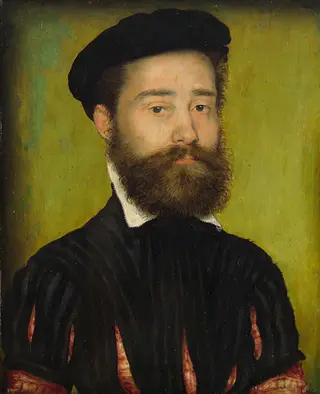 Bildnis eines bärtigen Mannes
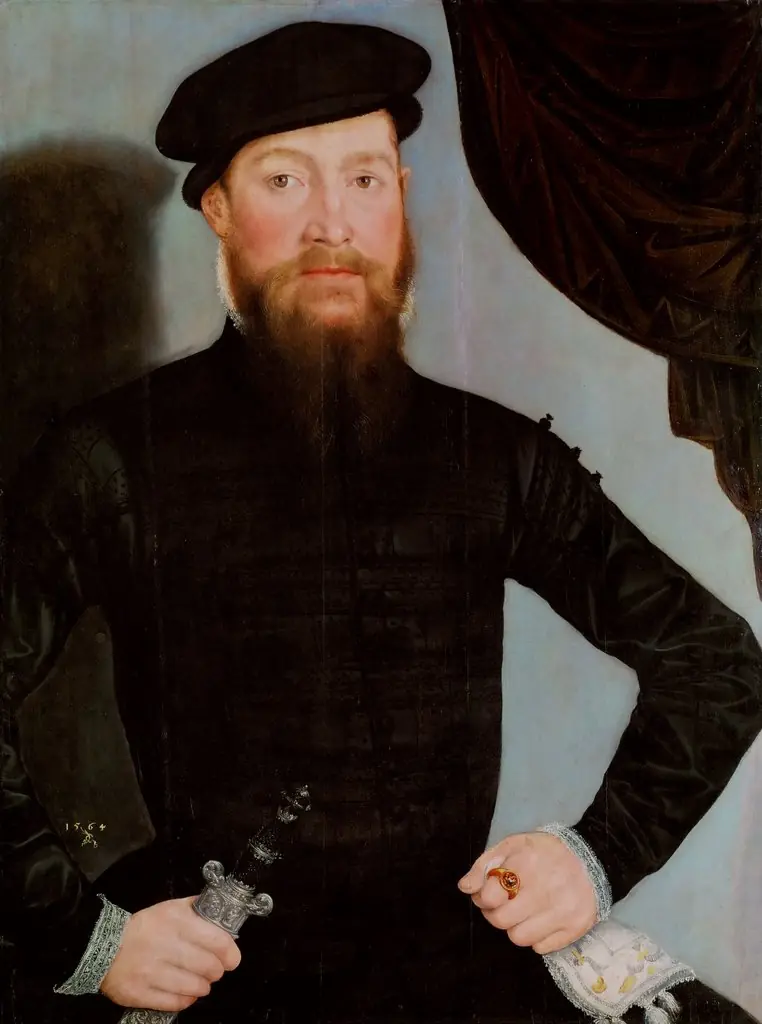 Male Portrait
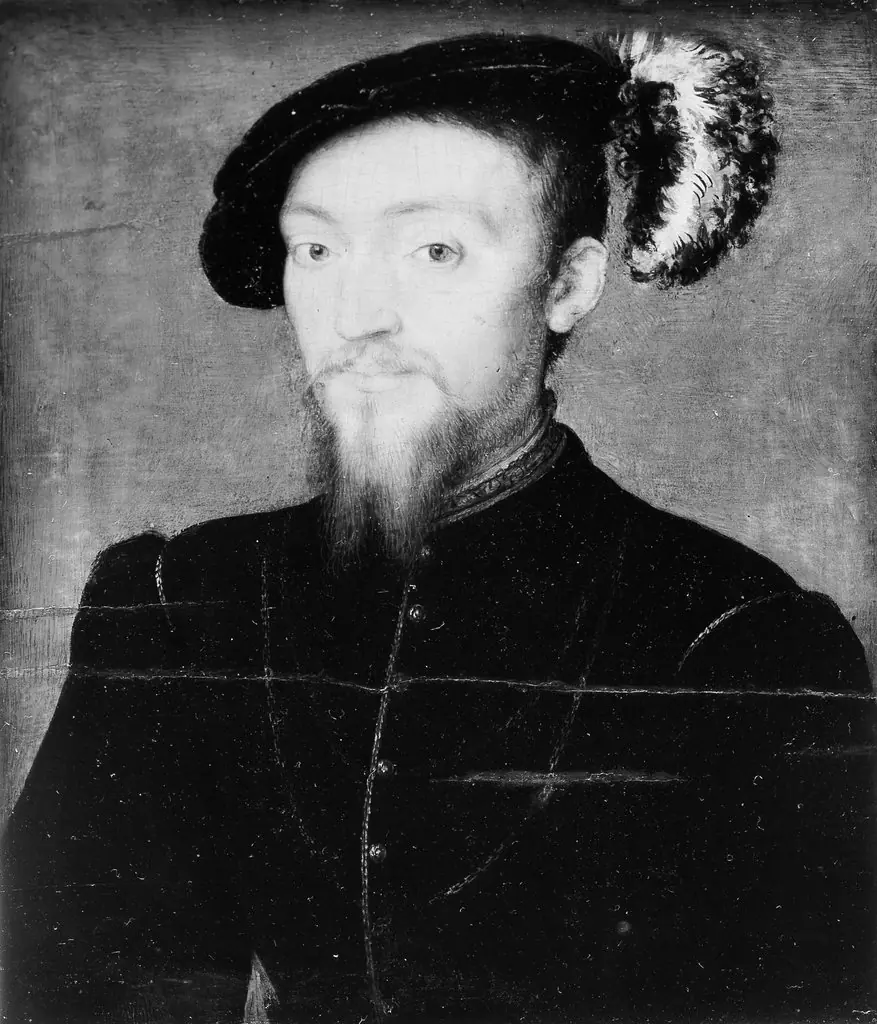 Portrait of a Man
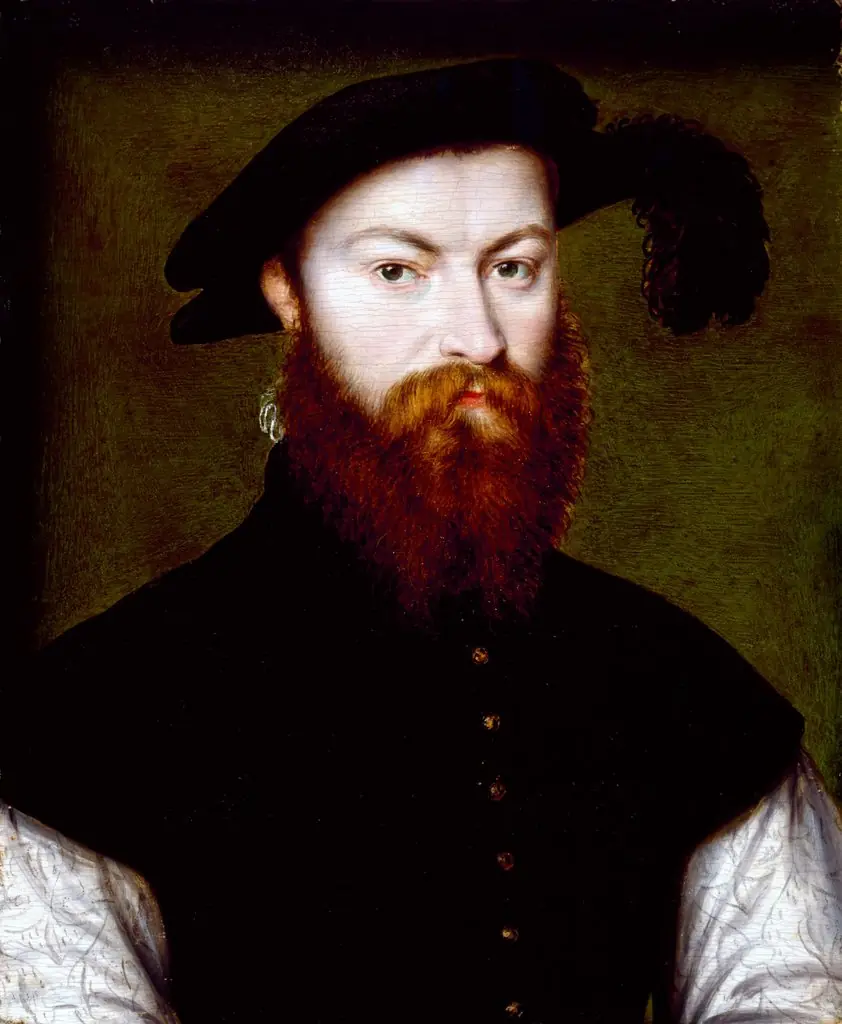 René de Batarnay, Comte du Bouchage
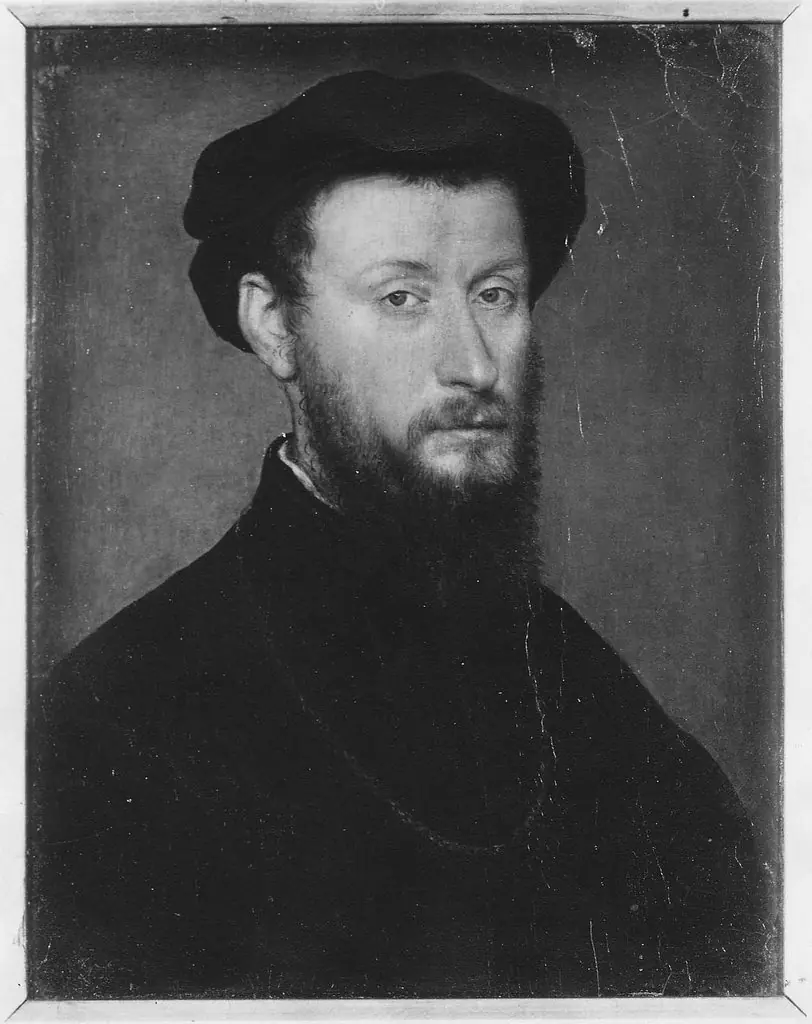 Portrait of a Bearded Man
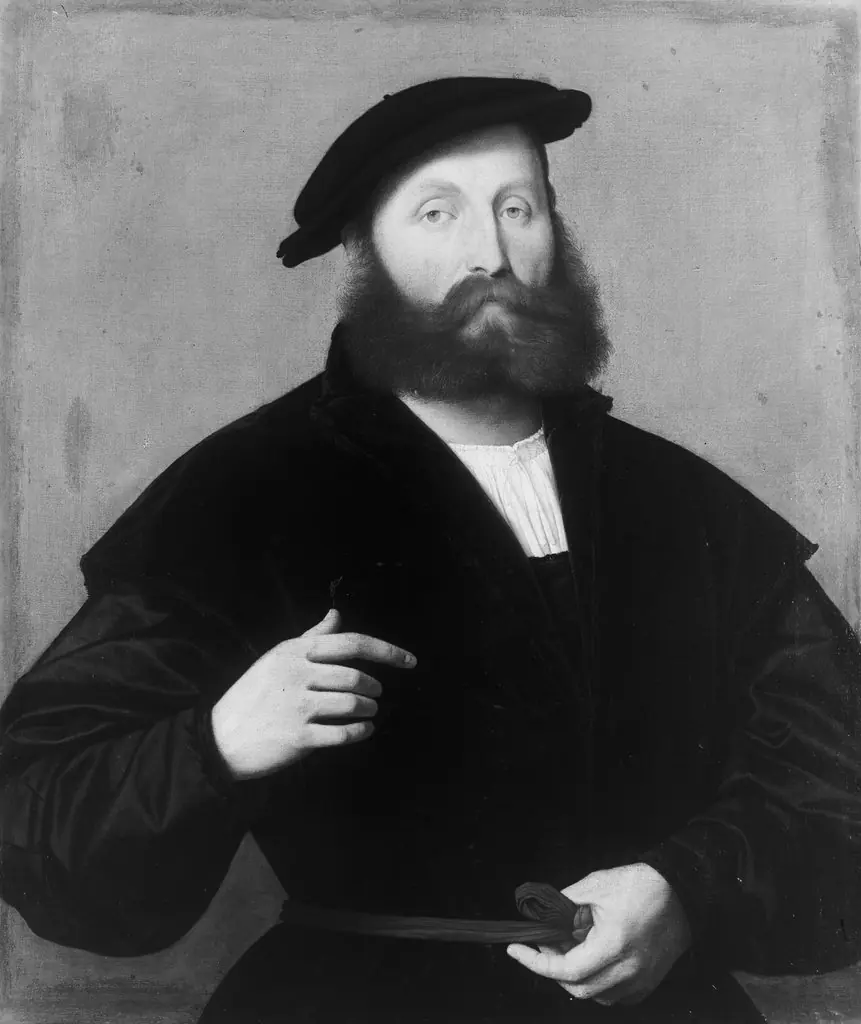 Portrait of Count Raimund Fugger
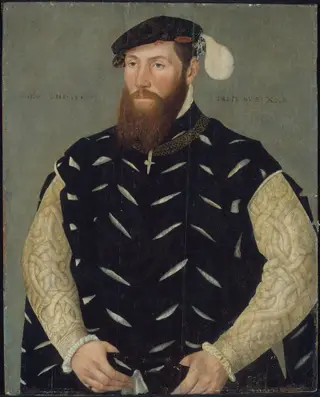 Sir William Butts
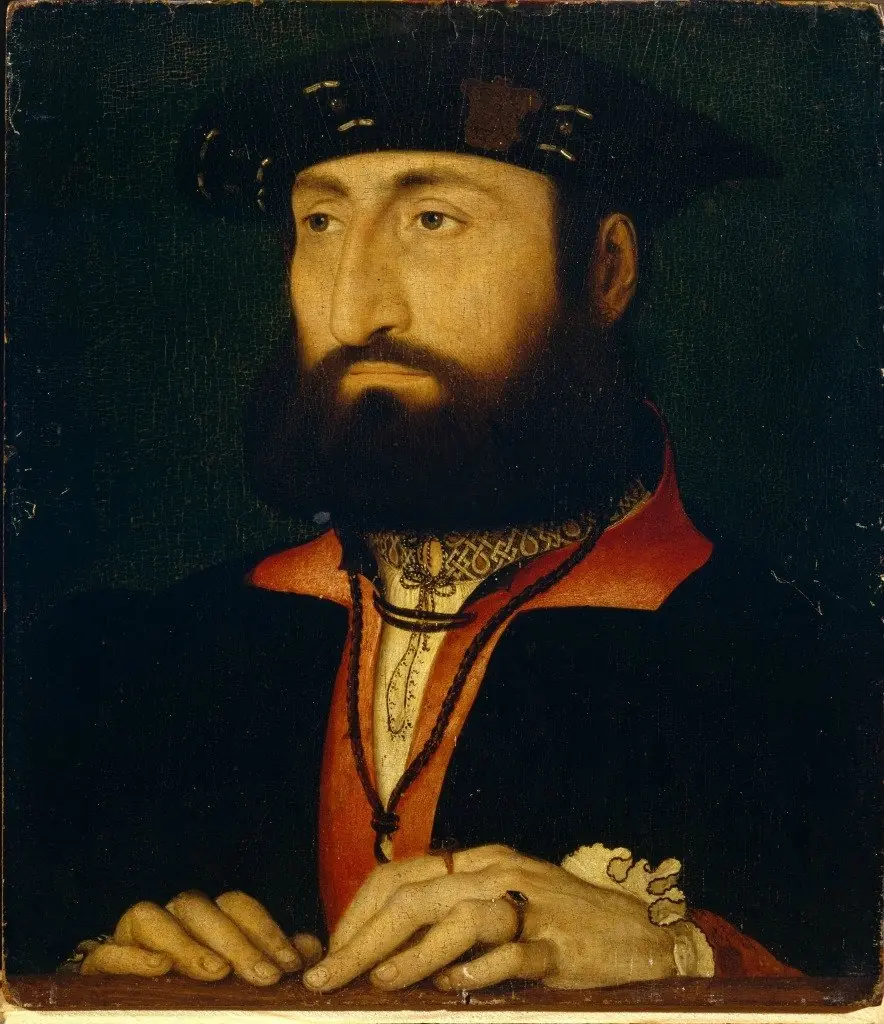 Portrait of Louis de Cleves
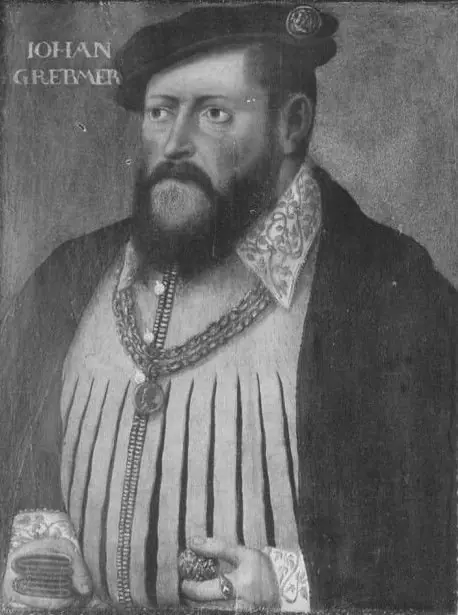 Bildnis des herzoglichen Kammerdieners Johann Grebmer zu Neuenhaus
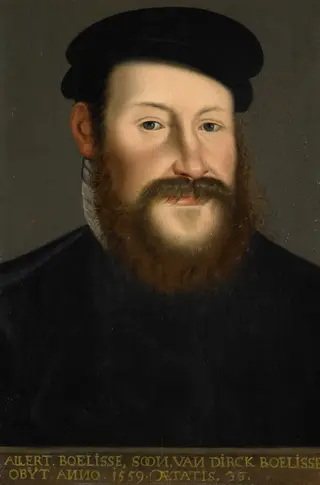 Allert Boelisse (1523-59)
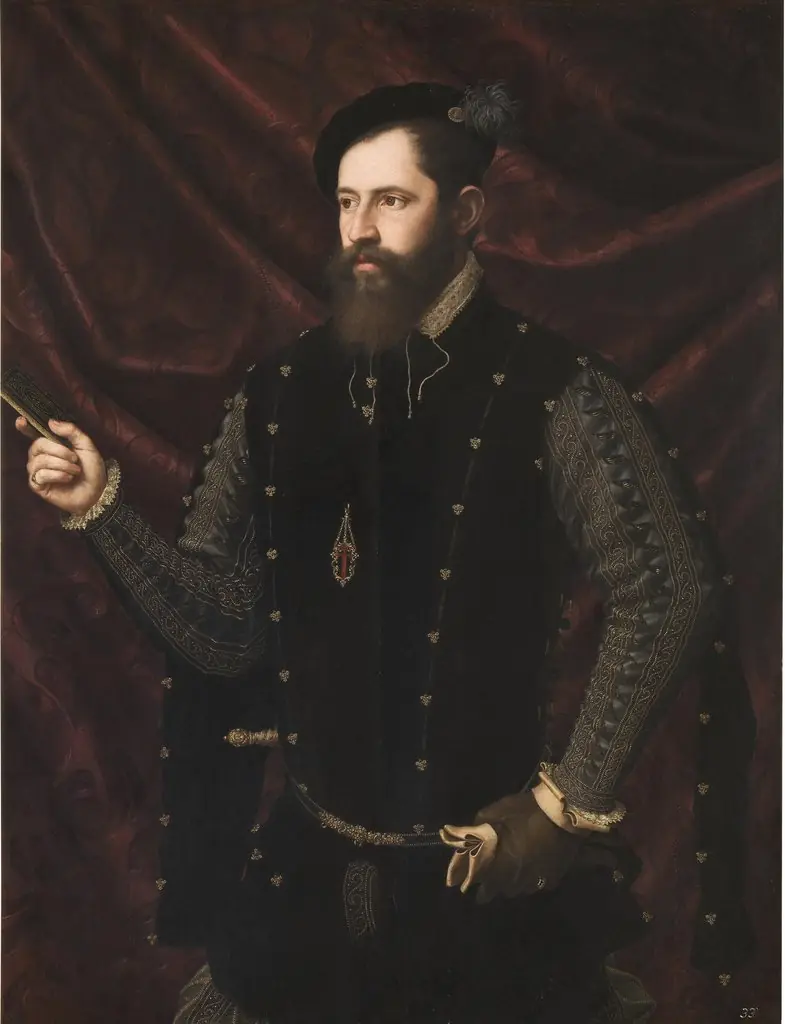 Portrait of a Knight of the Order of Santiago