Artwork
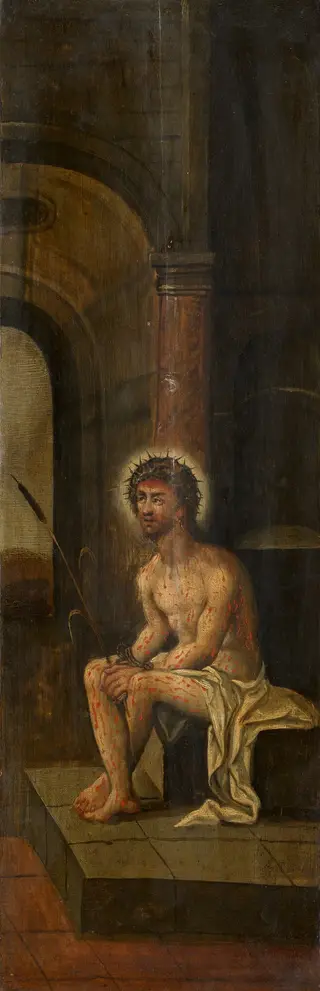
Christ seated on the cold stone
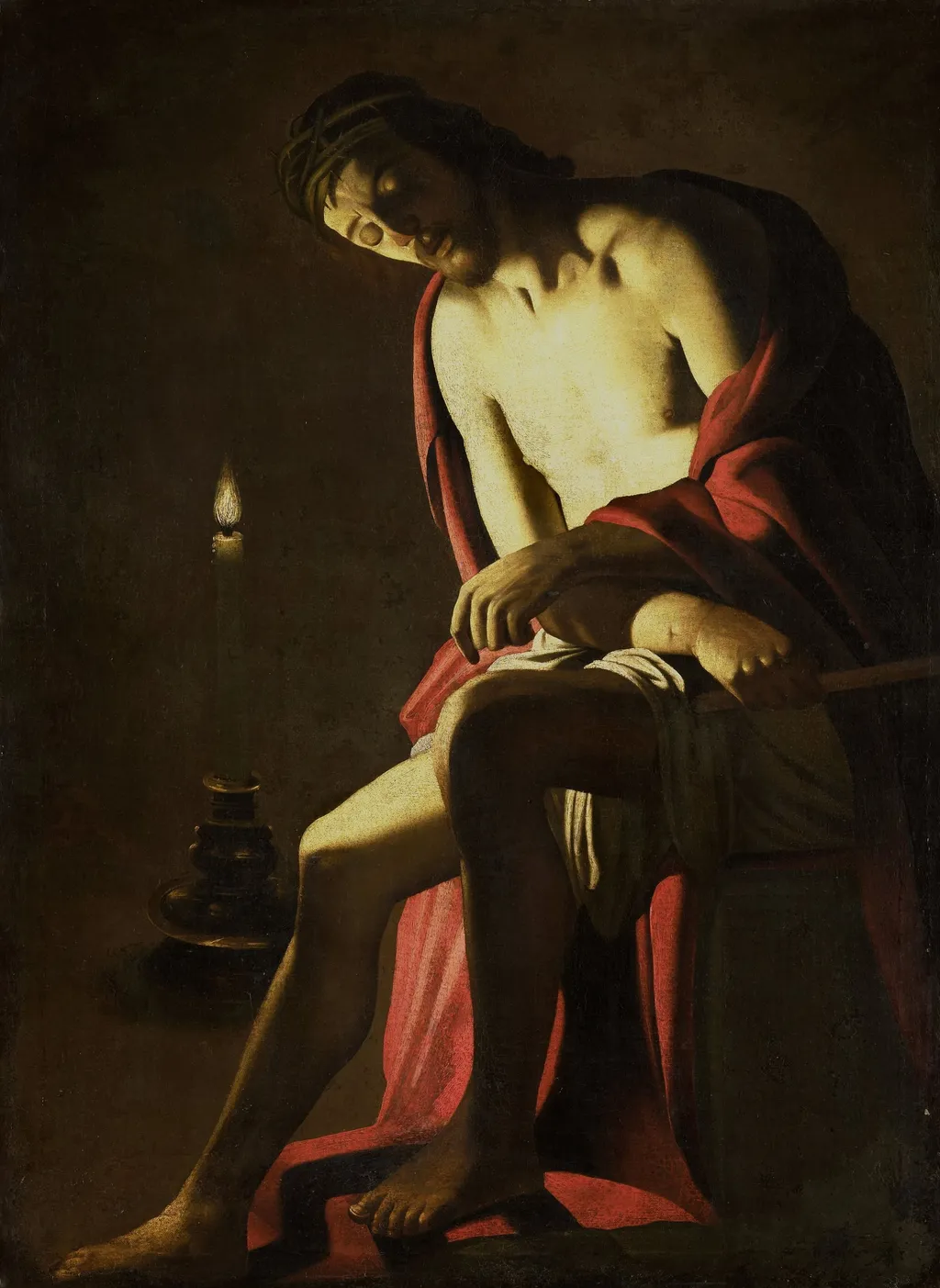
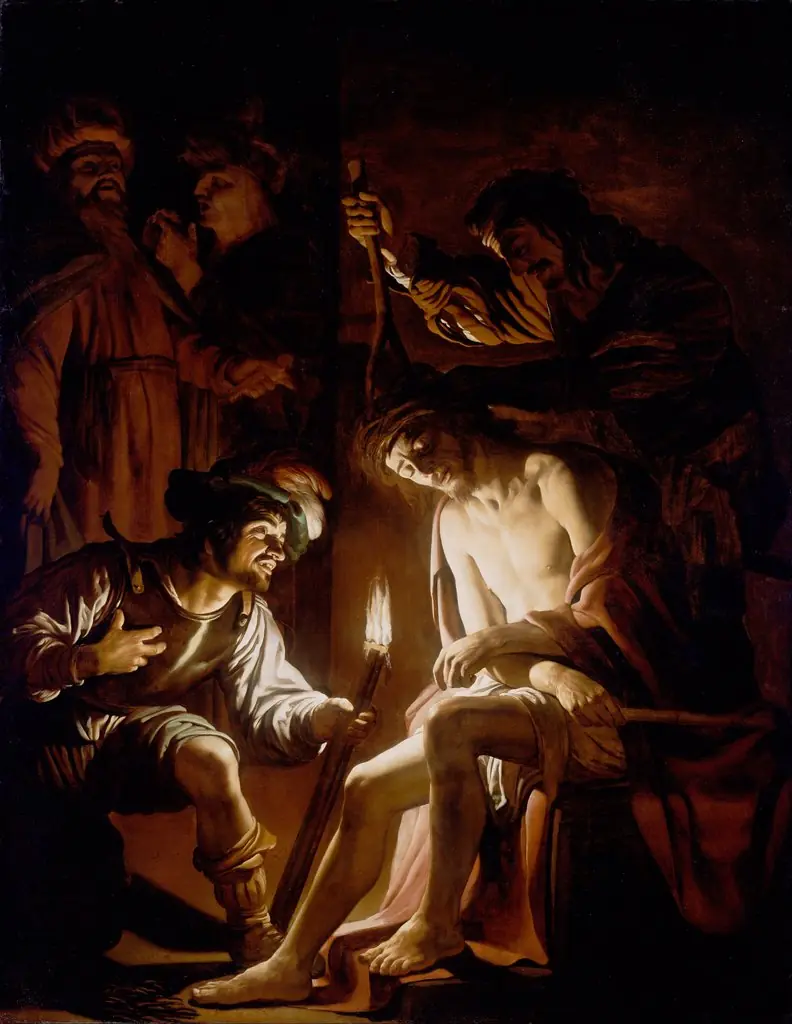
Christ seated on the cold stone is an oil painting. It dates from 1614 and is held in the collection of the Rijksmuseum.
About this work
Subject & Meaning
The image embodies the theme of melancholic meditation, inviting the viewer to share in Christ's sorrowful reflection on his suffering and sacrifice.
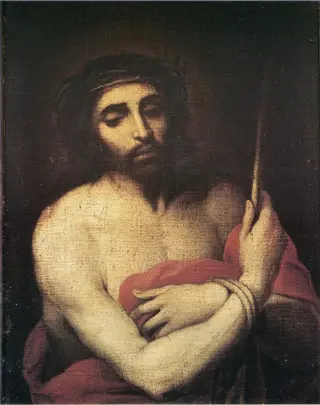
The painting depicts the Pensive Christ, a devotional subject in which the seated Christ contemplates his imminent Passion. The title "Christ seated on the cold stone" refers to the iconographic motif of Christ resting on a stone slab, traditionally understood as the cold stone of Calvary where, according to devotional tradition, his body would be placed after the Crucifixion. The image embodies the theme of melancholic meditation, inviting the viewer to share in Christ's sorrowful reflection on his suffering and sacrifice.
As a religious work, the painting belongs to a Counter-Reformation tradition of emotionally direct, contemplative imagery designed to provoke piety and introspection in the viewer.
Technique & Style
Created in 1614, this work is an oil painting executed on canvas. The piece functions as a copy after a composition by Gerard van Honthorst, depicting the Pensive Christ within the religious genre. Physically, the support measures 134.5 cm in height and 99.3 cm in width.
The application of oil paint on this fabric support aligns with standard practices for religious artworks of this period held in major collections like the Rijksmuseum.
History & Provenance
The work is a painted copy after Gerard van Honthorst executed in oil on canvas and dated to 1614. According to the Rijksmuseum’s records, the painting forms part of the museum’s collection, indicating that its provenance leads to that institution. It is classified as a religious painting depicting a pensive Christ.
No earlier owners, commissions, or specific creation circumstances are documented in the available sources, leaving the chain of ownership prior to its arrival at the Rijksmuseum unspecified.
The painting Christ seated on the cold stone, executed in oil on canvas in 1614, is held in the collection of the Rijksmuseum. The work is identified as a copy after Gerard van Honthorst and depicts the subject of Pensive Christ. While the museum location is confirmed, the provided sources do not specify a unique inventory or accession number for this item. Furthermore, no records regarding the artwork's exhibition history are available in the current documentation.
Overview
The oil painting titled Christ seated on the cold stone presents a dimly lit interior where two robed figures occupy the composition. The seated figure holds a second, illuminated individual whose form appears to emit a soft glow. A solitary candle on a nearby ledge provides the only visible source of light, extending elongated shadows across the stone floor.
Context
The composition aligns with a broader tradition of religious imagery that utilizes dramatic lighting to convey theological narratives. Similar approaches are evident in the works of Caravaggio and his followers, who explored the interplay of light and shadow to heighten spiritual drama.
Artist & collection