Artwork
Ecce Homo
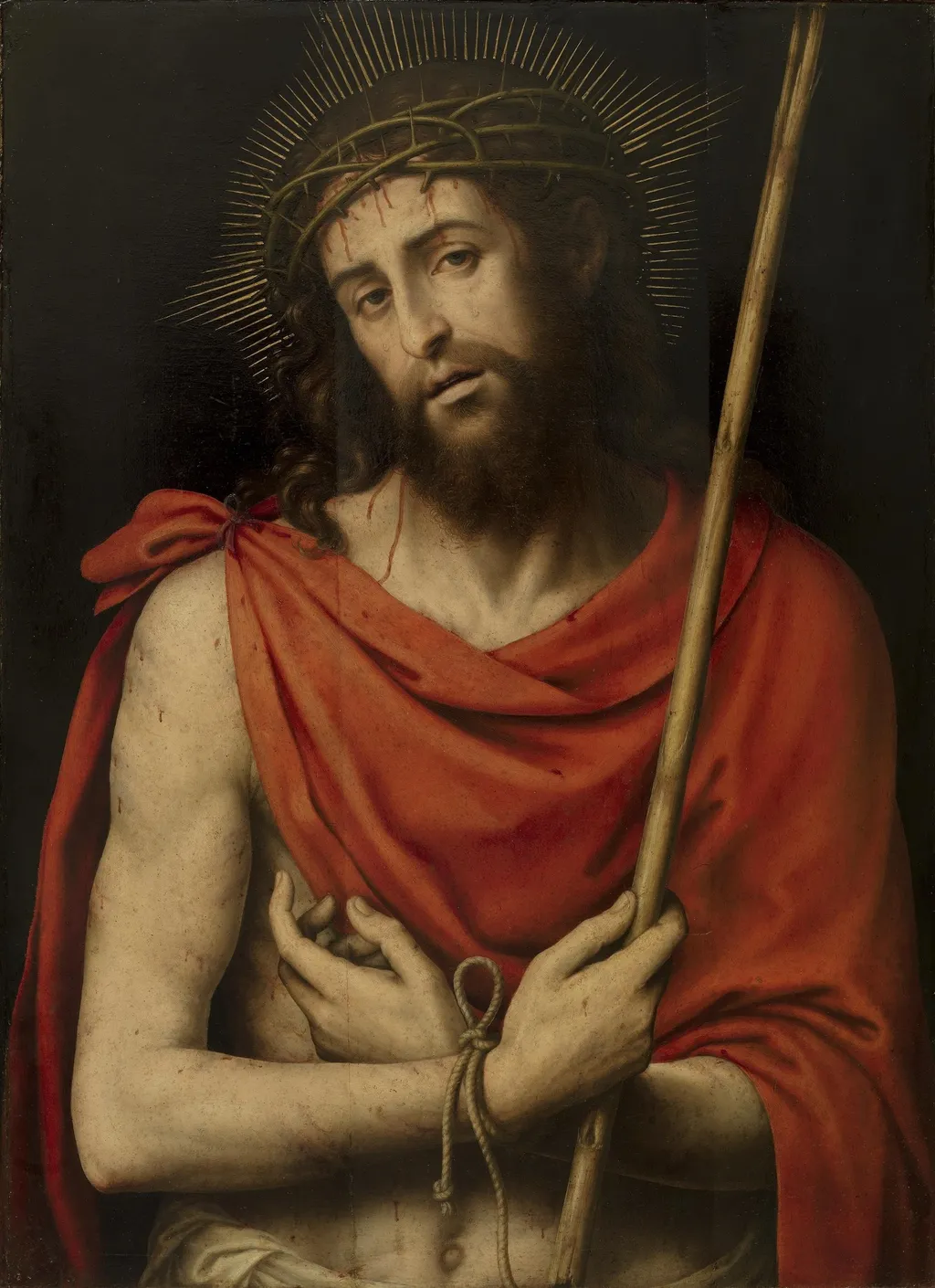
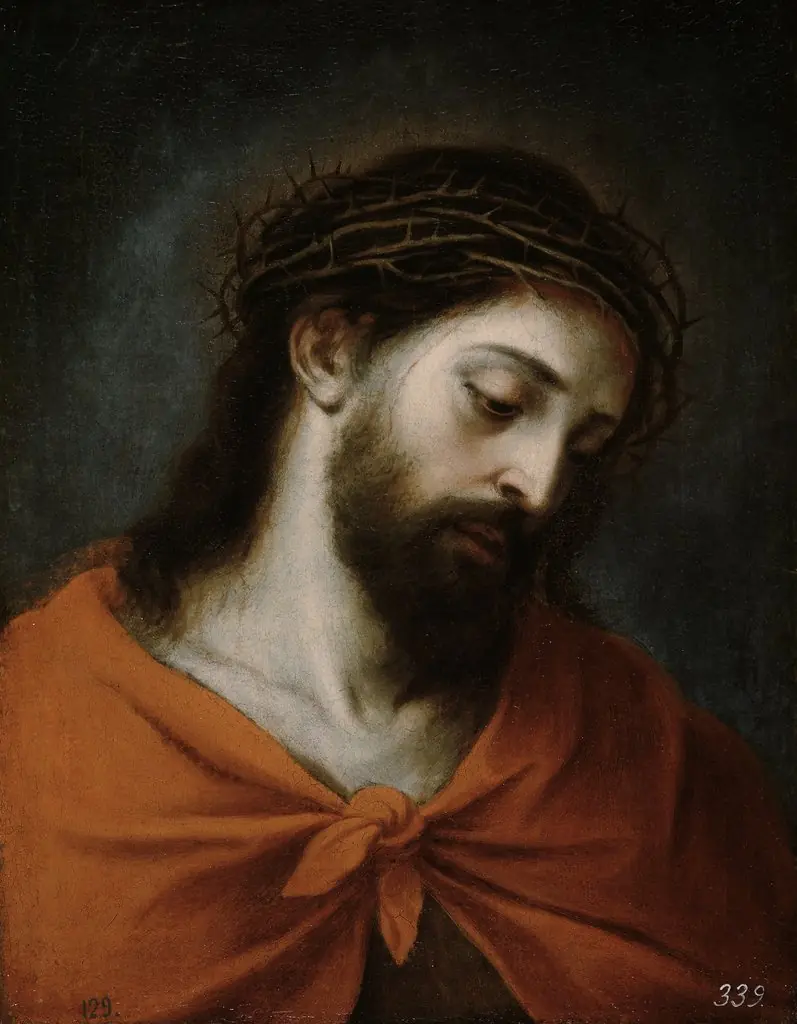
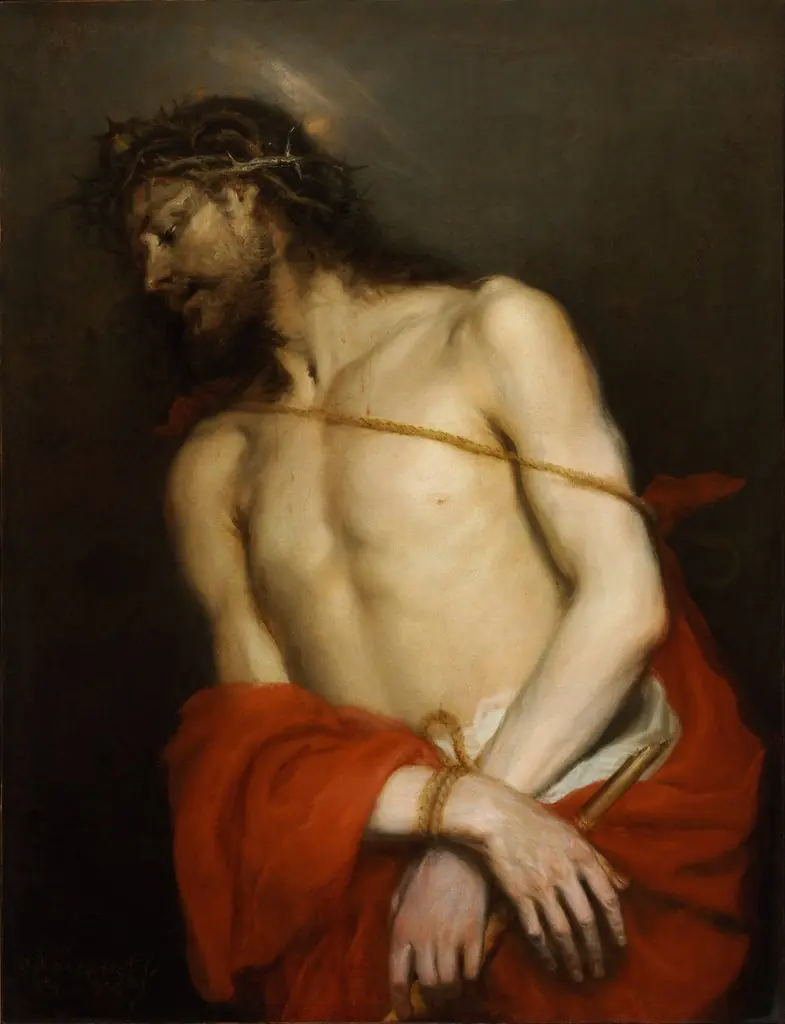
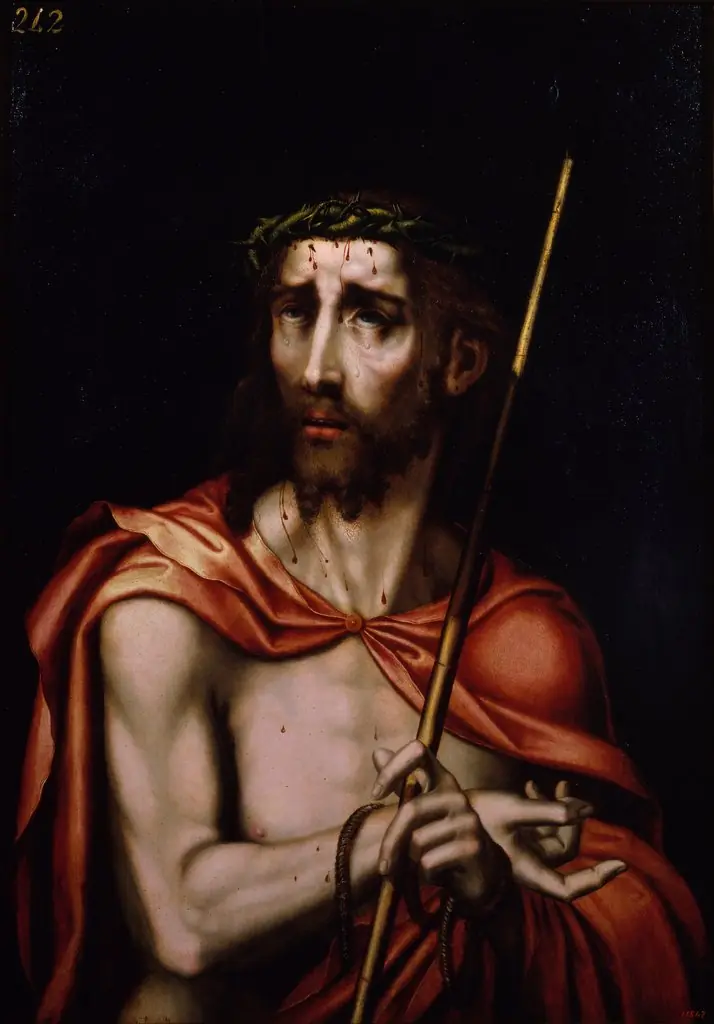
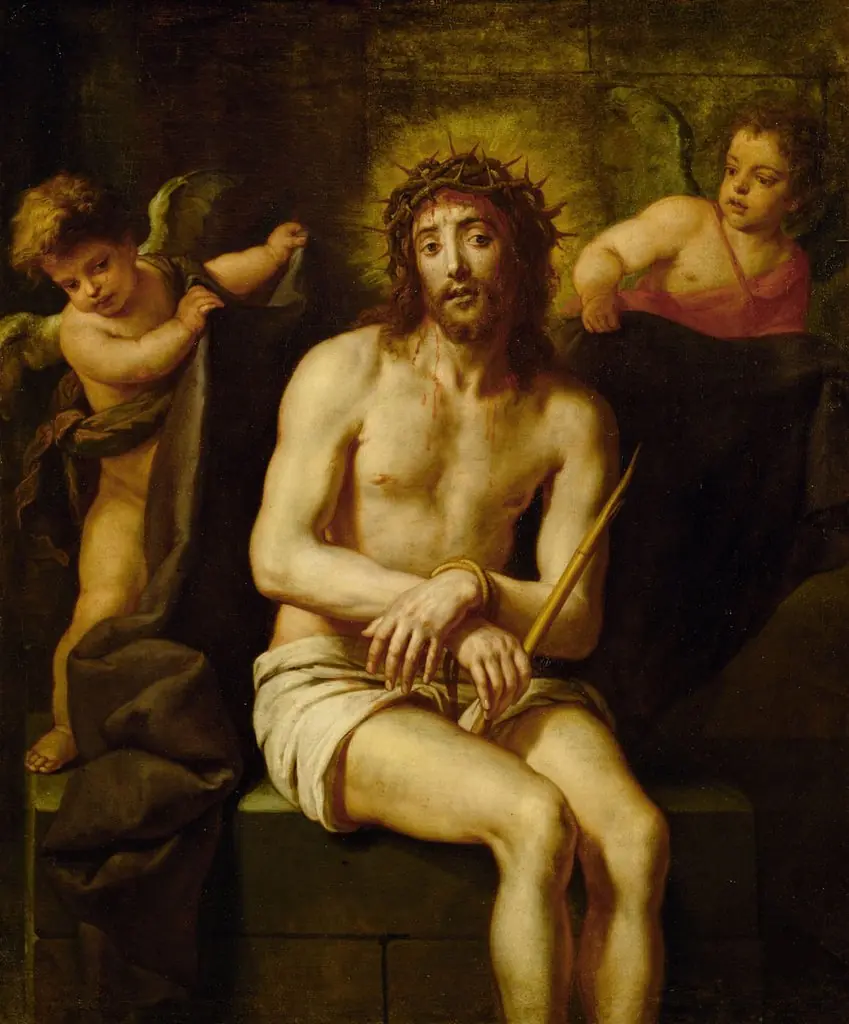
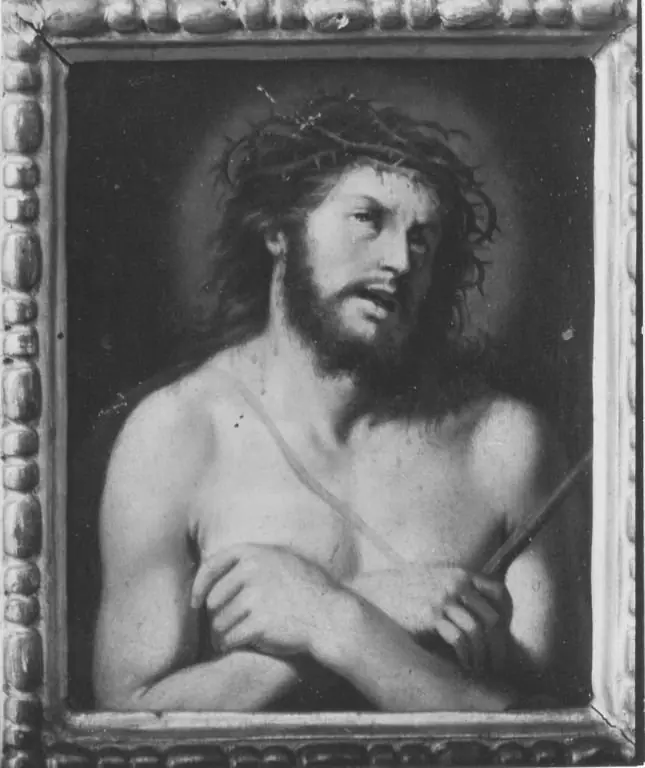
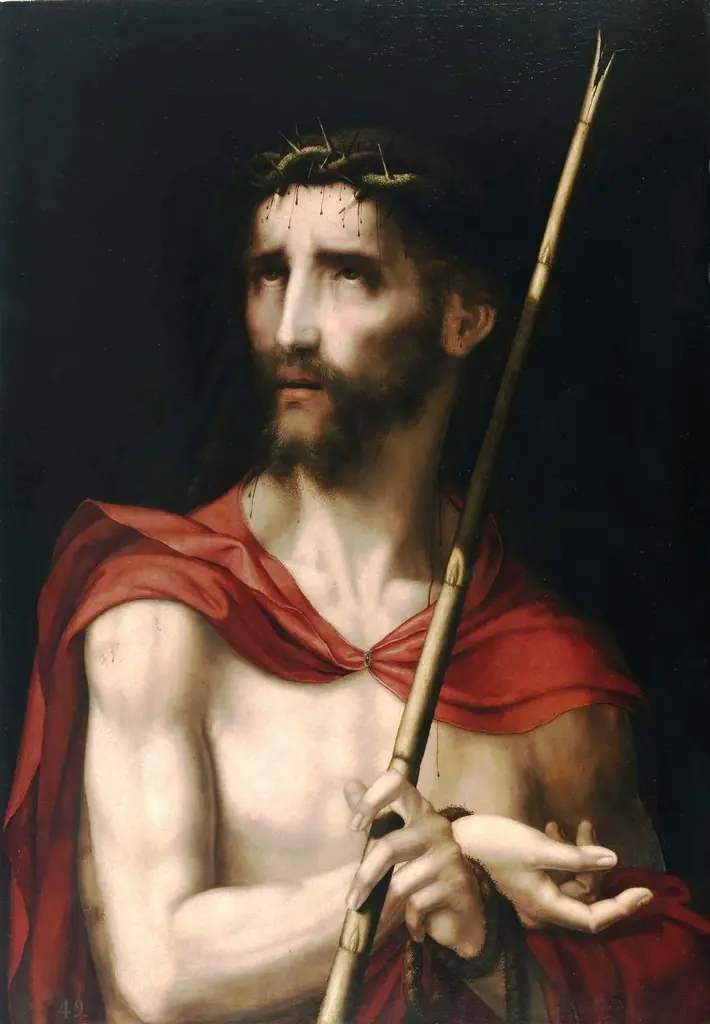
Ecce Homo is an oil painting by the Mannerist artist Juan de Juanes. It dates from 1570 and is held in the collection of the Museo del Prado.
About this work
Subject & Meaning
The composition serves as a devotional image, emphasizing the suffering and humanity of the subject within the context of Christian iconography.
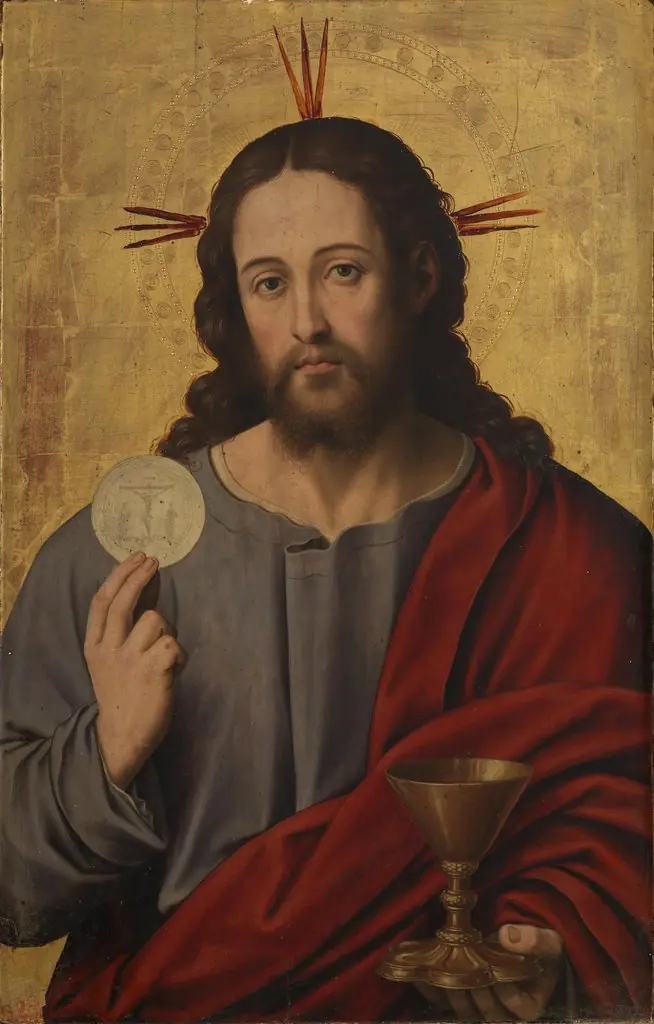
The painting depicts Jesus Christ as the central figure, illustrating the biblical scene known as Ecce Homo, or 'Behold the Man.' As a work of religious art created in 1570, the piece focuses on the moment Christ is presented to the crowd by Pontius Pilate. The composition serves as a devotional image, emphasizing the suffering and humanity of the subject within the context of Christian iconography.
The work is classified specifically under the genre of religious art, reflecting its purpose to inspire contemplation on the Passion.
Technique & Style
Juan de Juanes created the painting Ecce Homo in 1570 using oil paint applied to a wooden panel support. The work measures 83 cm in height and 62 cm in width. As a religious artwork depicting Jesus Christ, it adheres to the formal conventions of the genre through its medium and composition. The piece remains part of the collection at the Museo del Prado.
History & Provenance
The painting Ecce Homo was created by the Spanish artist Juan de Juanes in 1570. Executed in oil paint on a panel, the work measures 83 cm in height and 62 cm in width. Historical records indicate that the piece was once owned by Ferdinand VII of Spain.
It is currently held in the collection of the Museo del Prado, with specific placement noted at the Royal Palace of Aranjuez.
Juan de Juanes painted Ecce Homo in 1570, an oil on panel measuring 83 cm by 62 cm, depicting Jesus Christ in a religious scene. The work entered the Spanish royal collection under Ferdinand VII and remains in the Museo del Prado, where it has been displayed as part of the museum's permanent religious art holdings.
Context
Painted by Juan de Juanes in 1570, Ecce Homo stands as a significant example of Spanish religious art from the late Renaissance. The work depicts Jesus Christ and reflects the artist's engagement with devotional imagery prevalent in the period. Currently held in the collection of the Museo del Prado, the painting was historically owned by Ferdinand VII of Spain.
Executed in oil on panel, the piece measures 83 cm in height and 62 cm in width. Its preservation in a major national museum underscores its continued importance within the canon of Spanish art history.
Overview
Created in 1570, this oil painting titled Ecce Homo presents a solitary figure of Christ presented before the crowd. The composition centers on the suffering saint, whose bruised forehead and bloodied arm convey the physical torment of the Passion. The work resides in the Museo del Prado, where it forms part of the museum’s Spanish Renaissance holdings.
Own this work as a print
Artist & collection
Artist
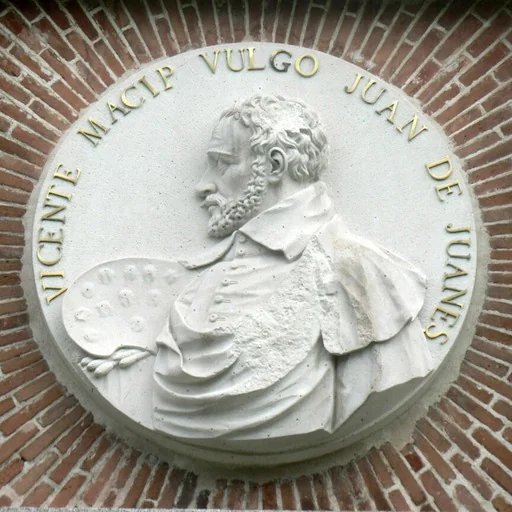
Vicente Juan Masip (also known as Joan de Joanes) (1507 – 1579) was a Spanish painter of the Renaissance period.