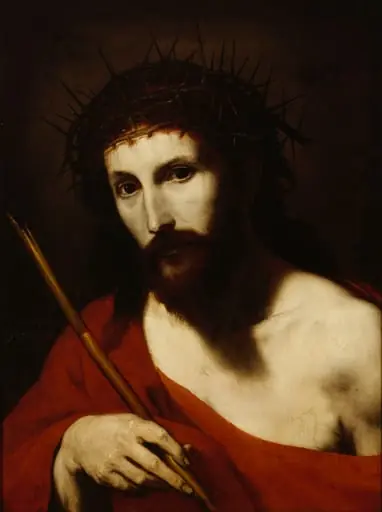
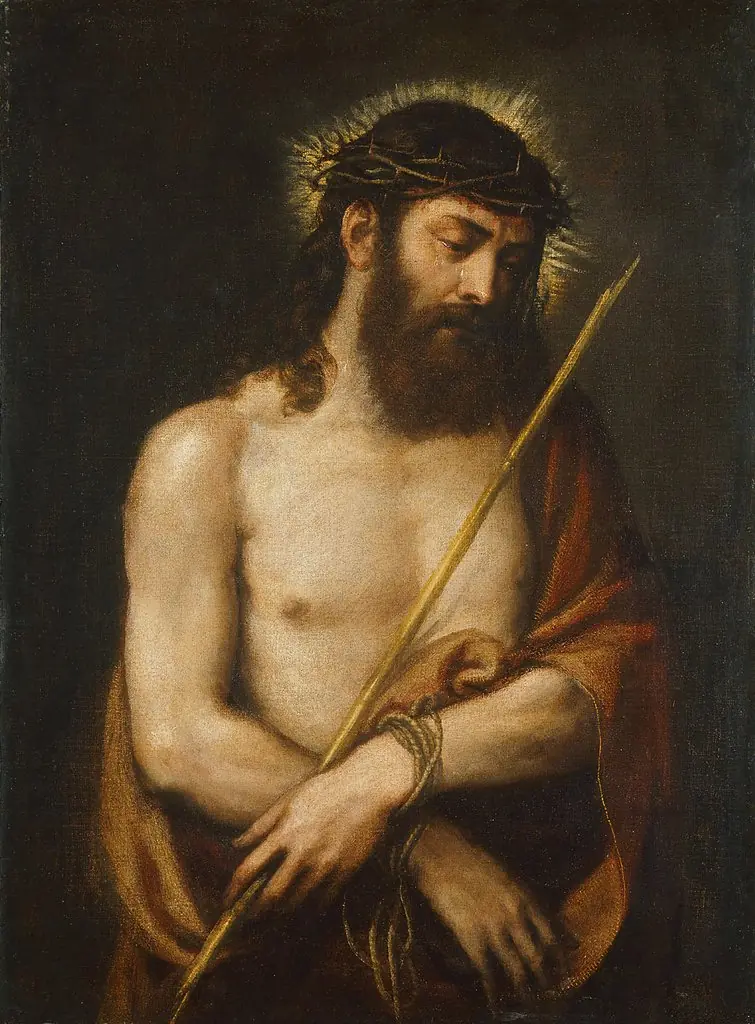
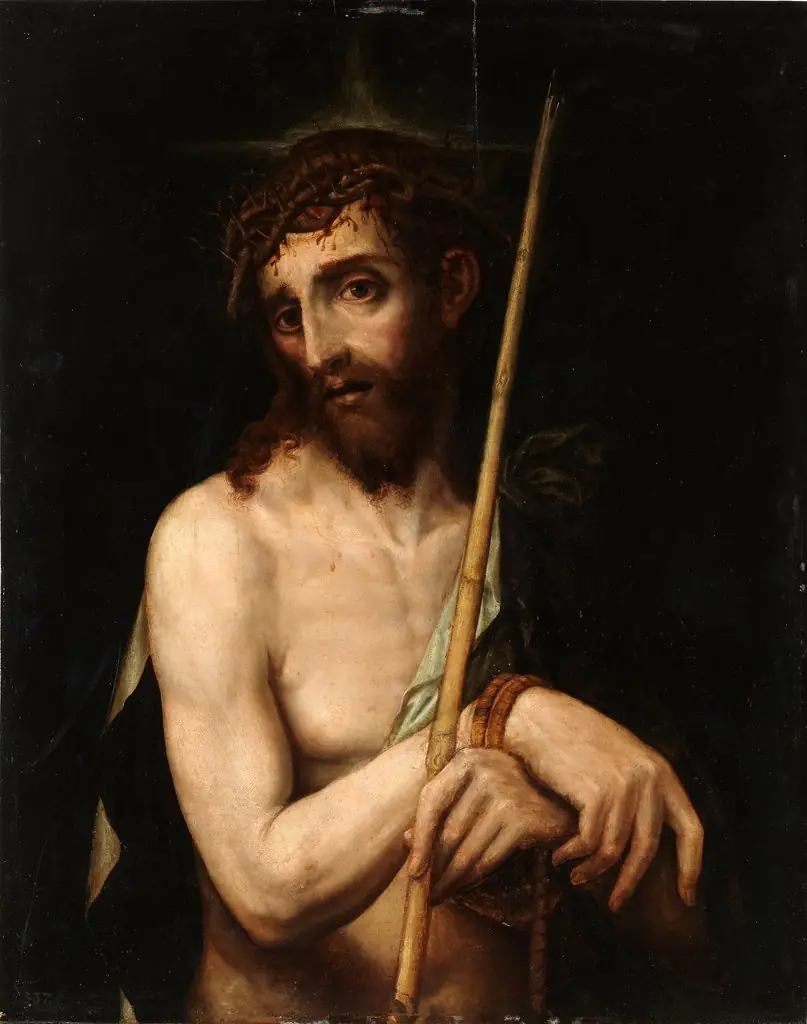
Artwork
Ecce Homo
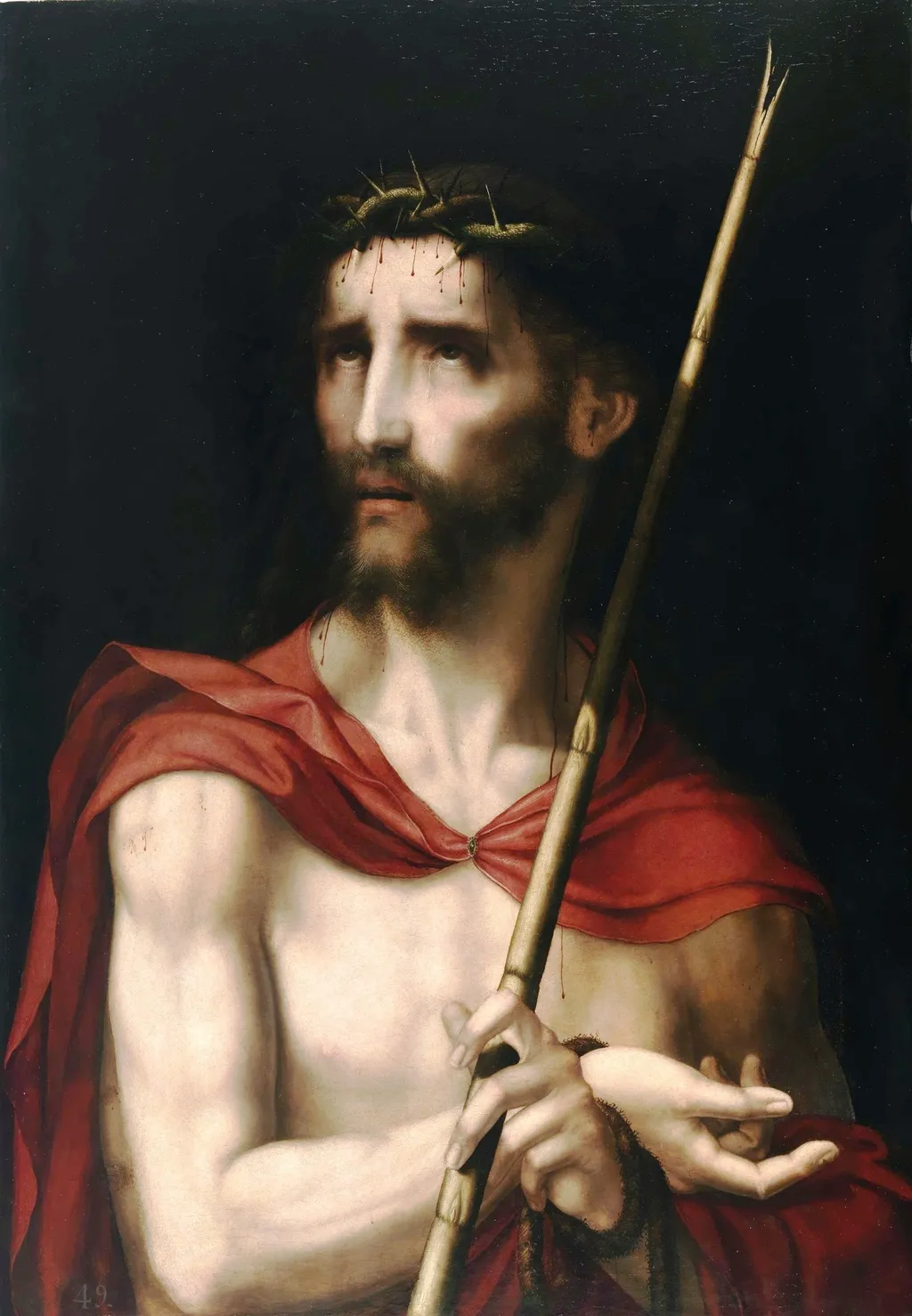
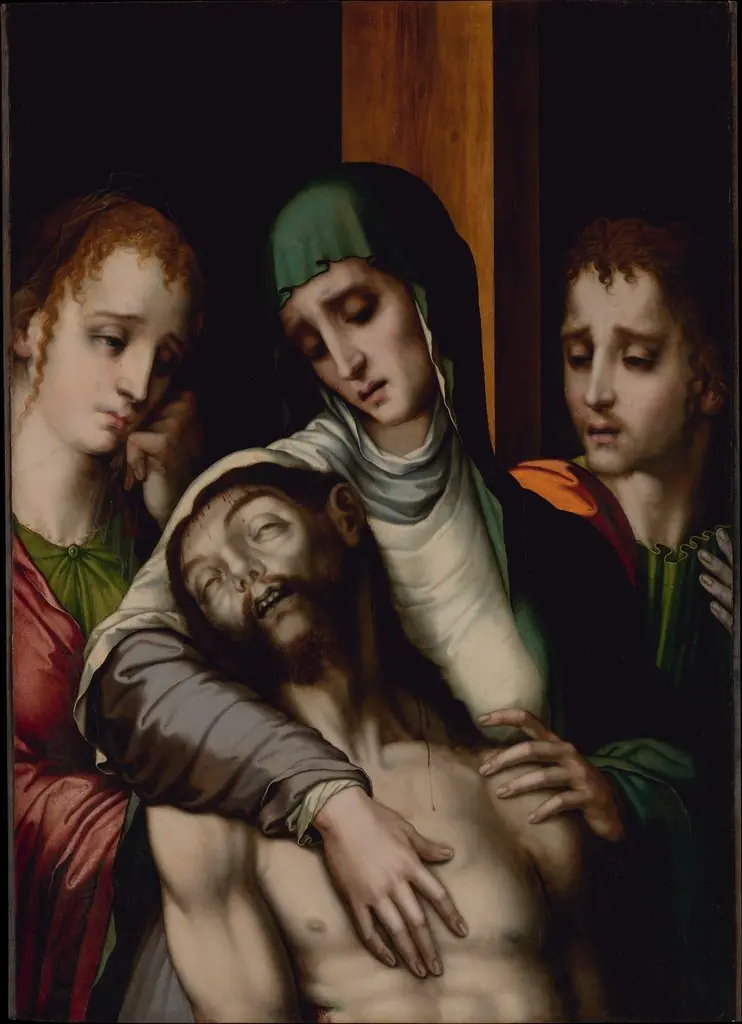
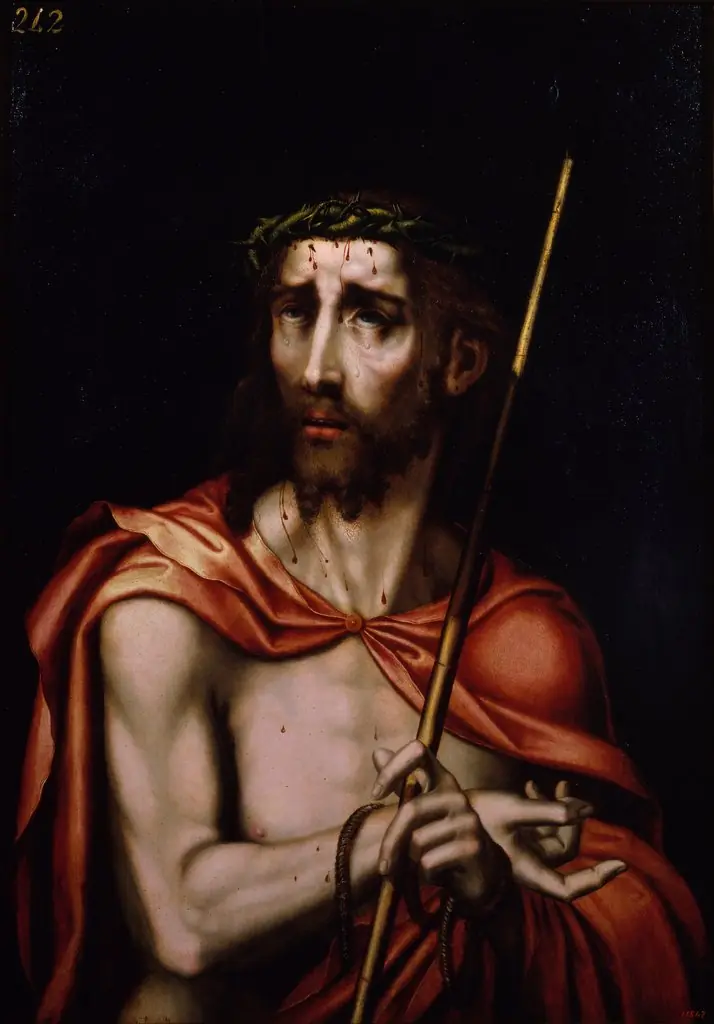
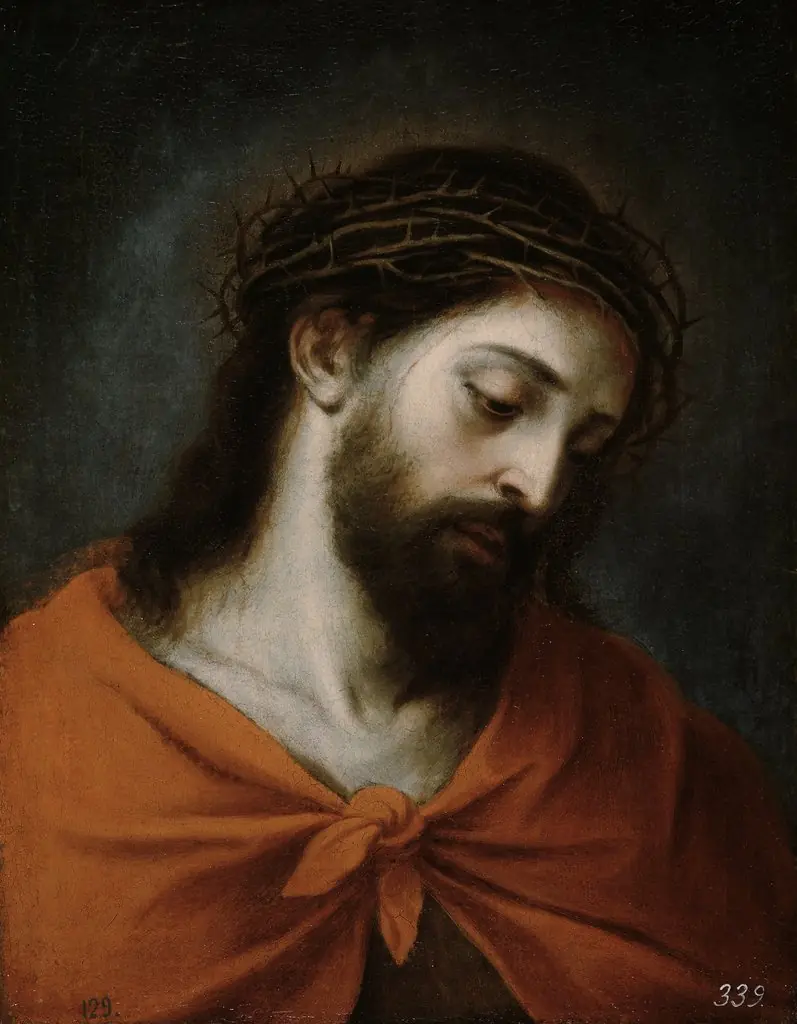
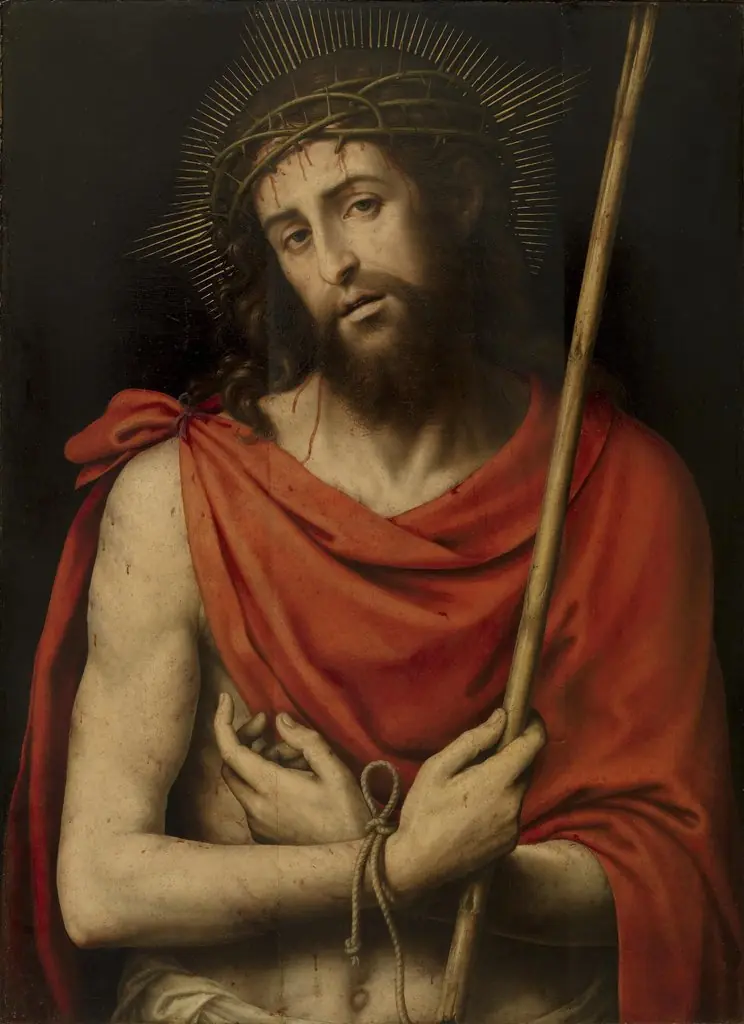
Ecce Homo is an oil painting by the Mannerist artist Luis de Morales. It dates from 1560 and is held in the collection of the Museo del Prado.
About this work
Subject & Meaning
" As indicated by its main subject, the painting centers on the figure of Jesus, emphasizing his suffering and humility.
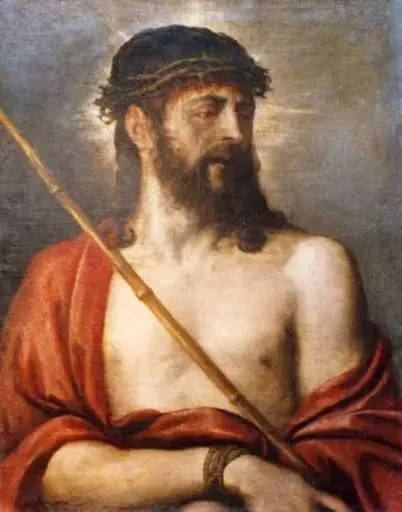
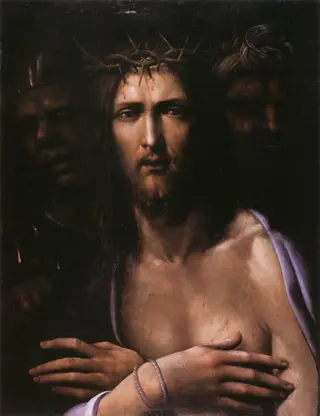
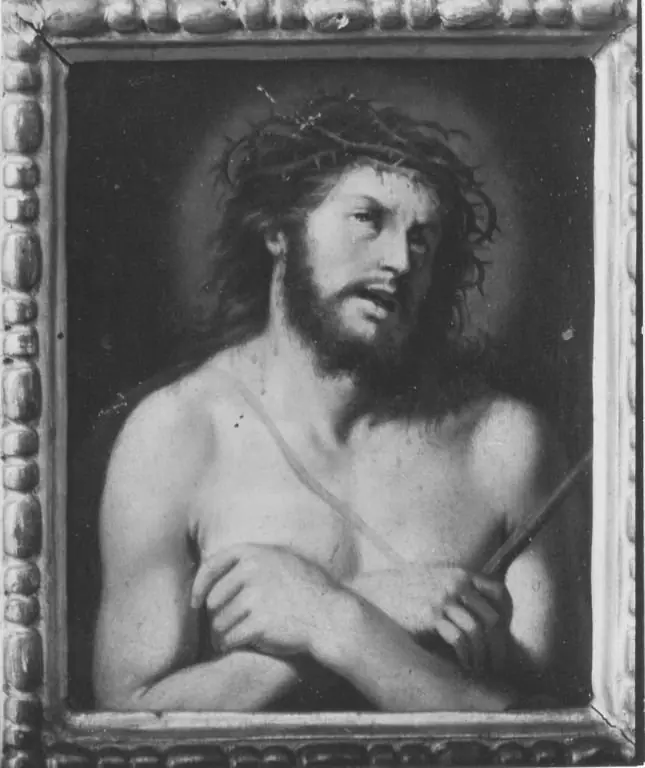
The work portrays Jesus Christ in the Ecce Homo moment, the biblical episode when Pontius Pilate presents the scourged Christ to the crowd proclaiming "Behold the Man." As indicated by its main subject, the painting centers on the figure of Jesus, emphasizing his suffering and humility. The iconography focuses on Christ’s wounded state and humble presentation, inviting the viewer to contemplate his Passion and the themes of redemption and mercy inherent in the scene.
Technique & Style
Luis de Morales executed this religious work using oil paint applied to a panel support. The painting measures 73 cm in height and 50.5 cm in width. Created in the mid-16th century, the piece depicts Jesus Christ as the main subject of the Ecce Homo theme. The work is classified as a religious painting.
History & Provenance
Ecce Homo is an oil-on-panel painting by Luis de Morales. The work is dated to 1560, with the Wikidata record also noting an inception point of 1565, reflecting the dating range associated with the piece. It measures 73 cm in height by 50.5 cm in width and depicts Jesus Christ as the Ecce Homo subject.
The painting is held in the collection of the Museo del Prado, where it is catalogued as P00941. The sources do not document a prior ownership chain, a specific commission, or any earlier provenance prior to its entry into the Prado's holdings.
The painting Ecce Homo by Luis de Morales is held at the Museo del Prado, where it is catalogued under inventory number P00941. It was created in 1560 and has been part of the museum's collection since its acquisition, forming part of the institution's religious art displays.
The work was exhibited in the museum's main galleries as part of the permanent collection, allowing public access to the piece within the context of 16th‑century Spanish religious painting.
Legacy
Luis de Morales's Ecce Homo, painted circa 1560 for the Convento de los Capuchinos in Zúñiga, established a powerful visual language for the Ecce Homo theme that resonated throughout Spanish religious art. The work's intense emotional realism and striking composition, particularly its depiction of Christ crowned with thorns, influenced subsequent Spanish artists in their devotional portrayals of Christ's suffering. Its presence in the Museo del Prado's collection since acquisition has cemented its status as a key reference point for the motif within the museum's narrative of Spanish Renaissance art.
The painting's legacy lies in its role as a benchmark for devotional intensity, shaping artistic interpretations of the subject for centuries after its creation.
Overview
Luis de Morales, a 16th‑century Spanish painter nicknamed “El Divino,” executed the oil painting Ecce Homo around 1560. The work is held in the Museo del Prado and exemplifies the artist’s focus on intensely devotional subjects, particularly scenes from Christ’s Passion.
Context
Ecce Homo belongs to a broader tradition of Passion imagery that flourished in 16th‑century Spain, a period marked by Counter‑Reformation emphasis on vivid, affective depictions of Christ’s suffering. Morales’s work aligns with this devotional climate, offering a contemplative focal point for viewers.
Own this work as a print
Artist & collection
Artist
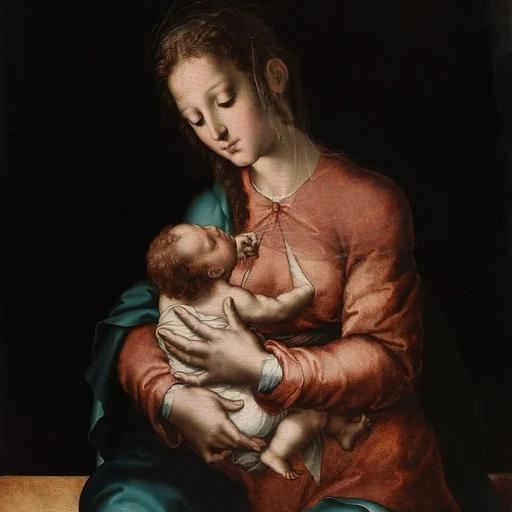
Luis de Morales (1509 – 9 May 1586) was a Spanish painter active during the Spanish Renaissance in the 16th century.