Artwork
荼枳尼天像|Dakini
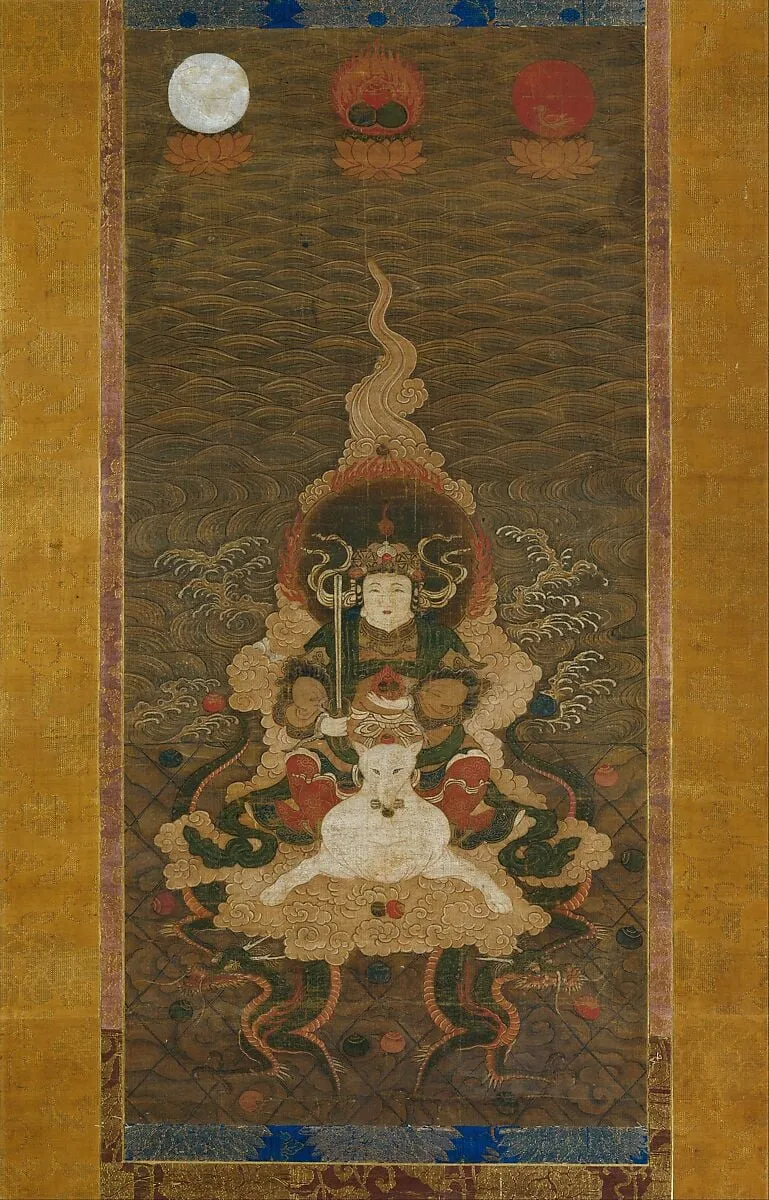
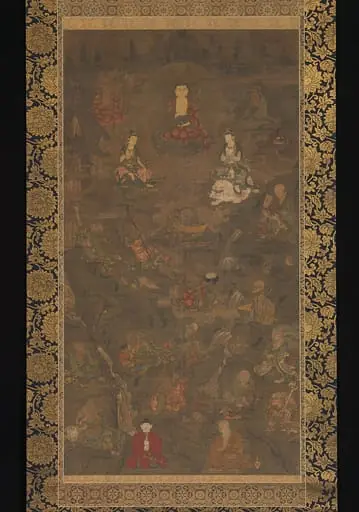
荼枳尼天像|Dakini is an ink painting. It dates from 1362 and is held in the collection of the Metropolitan Museum of Art. This hanging scroll depicts Dakini, a prominent figure in Japanese Buddhist cosmology.
About this work
Subject & Meaning
The inclusion of the dragon further emphasizes the deity's supernatural authority and connection to elemental forces.
Created in Japan in 1362, this hanging scroll portrays the deity Dakini (Dakiniten). The iconography prominently features the goddess accompanied by a fox, a dragon, and a sword. In Japanese religious tradition, Dakini is frequently associated with foxes, which serve as her messengers or mounts, while the sword symbolizes the cutting of ignorance or spiritual power.
The inclusion of the dragon further emphasizes the deity's supernatural authority and connection to elemental forces. As a work of religious genre painted with ink, color, and gold on hemp, the image functions as a focal point for veneration, representing the complex synthesis of Buddhist and indigenous beliefs characteristic of the period.
Technique & Style
Created in 1362 by an anonymous Japanese artist, this religious hanging scroll depicts the deity Dakini accompanied by a dragon, fox, and sword. The work is executed on a hemp support, utilizing a combination of ink, mineral pigments, and gold leaf. This specific assemblage of materials and the hanging scroll format are characteristic of Japanese Buddhist painting from the Nanboku-chō period.
The application of gold alongside color and ink suggests a formal style intended to convey the sacred status of the figure, adhering to traditional iconographic standards for such deities.
Context
Created in 1362 by an anonymous Japanese painter, the Dakini hanging scroll represents a significant example of medieval religious art. The work, executed in ink, color, and gold on hemp, depicts the deity alongside a dragon, fox, and sword, reflecting specific iconographic traditions of the period. Currently held in the collection of the Metropolitan Museum of Art, the painting serves as a key artifact for understanding the visual culture of 14th-century Japan.
While the artist remains unidentified, the piece's survival and inclusion in major institutional collections underscore its enduring value to art historical scholarship regarding religious imagery and the transmission of esoteric Buddhist themes in East Asian painting.
Overview
This hanging scroll depicts Dakini, a prominent figure in Japanese Buddhist cosmology. Rendered with ink, color, and gold on hemp, the artwork portrays a multi-armed goddess. She is shown standing atop a dragon, her hair appearing wild while her expression remains serene.
Her numerous hands grasp various attributes, including swords, skulls, and flaming jewels, set against a background that incorporates shimmering gold leaf.
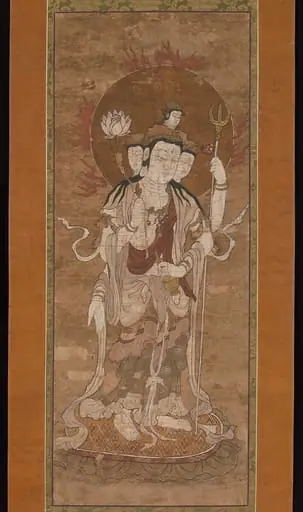
Artist & collection

- 十二天像(梵天)|One of the Twelve Devas: Bonten
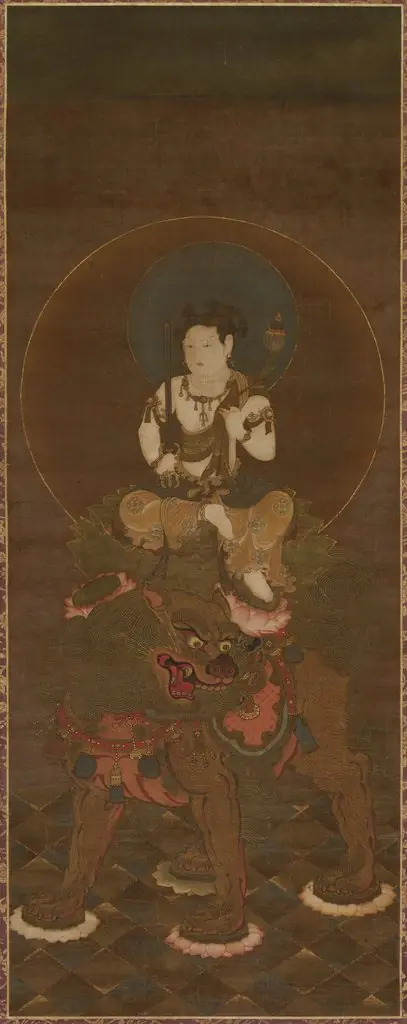 Monju with Five Hair Knots
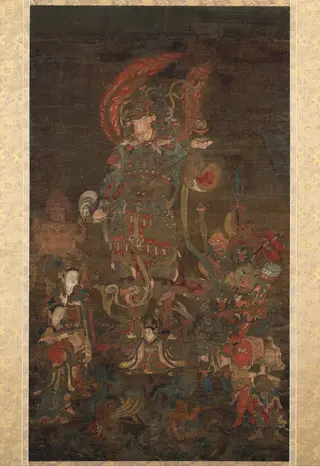 Bishamonten, the Guardian of the North, with his Retinue
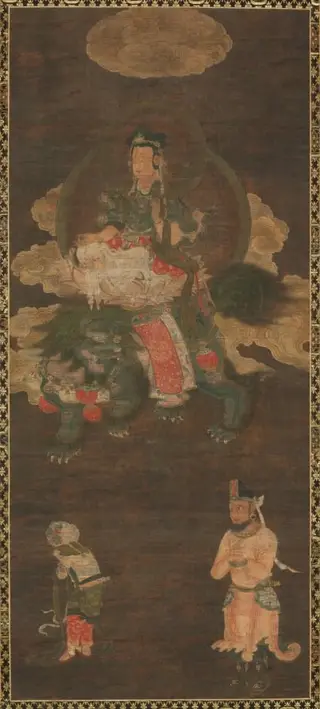 Shakyamuni Triad: Buddha Attended by Manjushri and Samantabhadra (Bodhisattva with Lion)
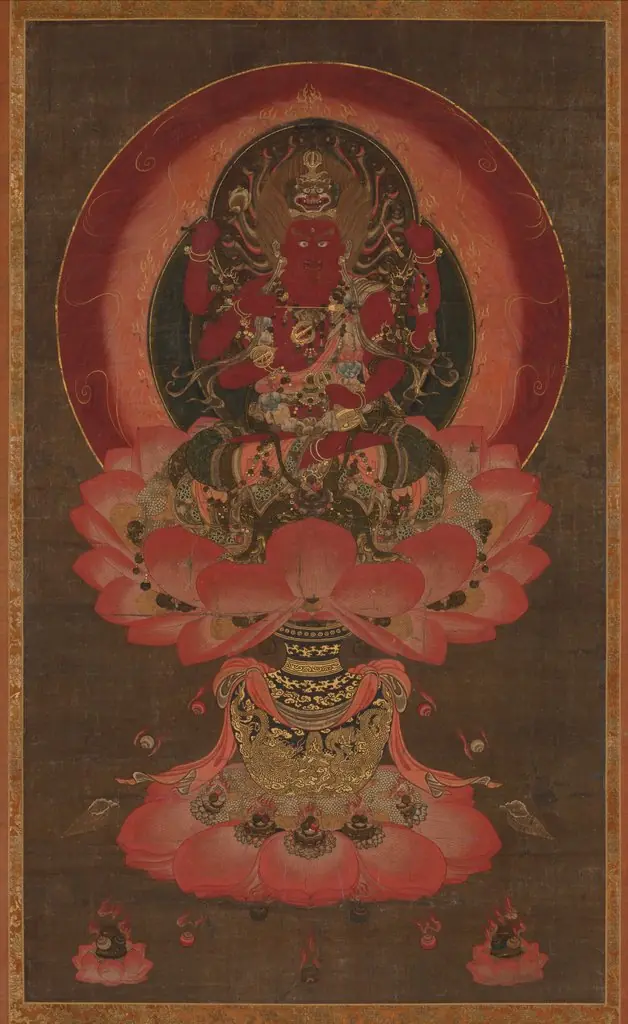 Aizen Myōō
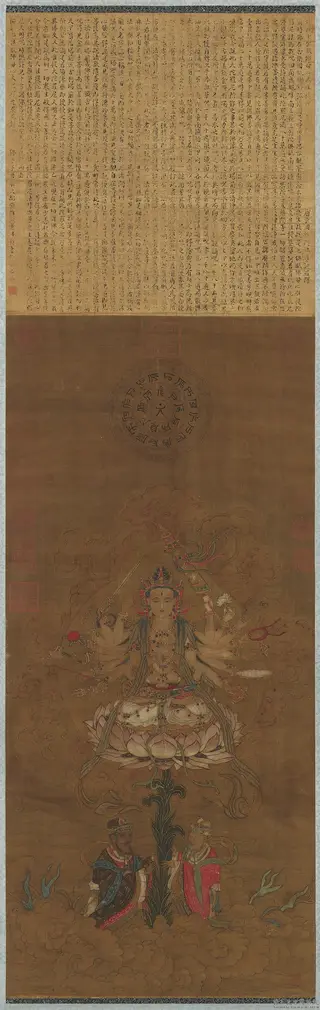 Cundi Bodhisattva
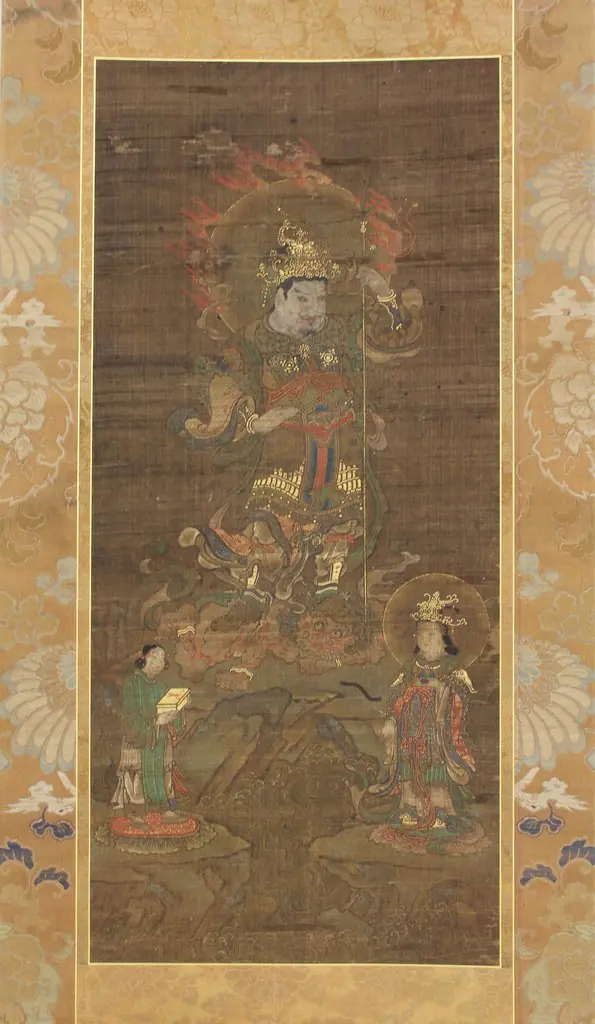 Mount Kurama Mandala: Bishamonten Triad (Kuramayama mandara: Bishamonten sanzonzō)
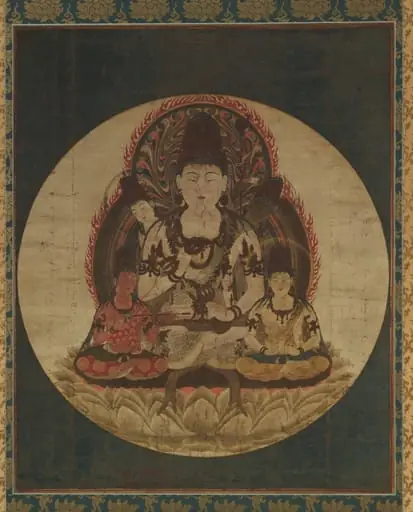 The Secret Five Bodhisattvas (Gohimitsu Bosatsu)
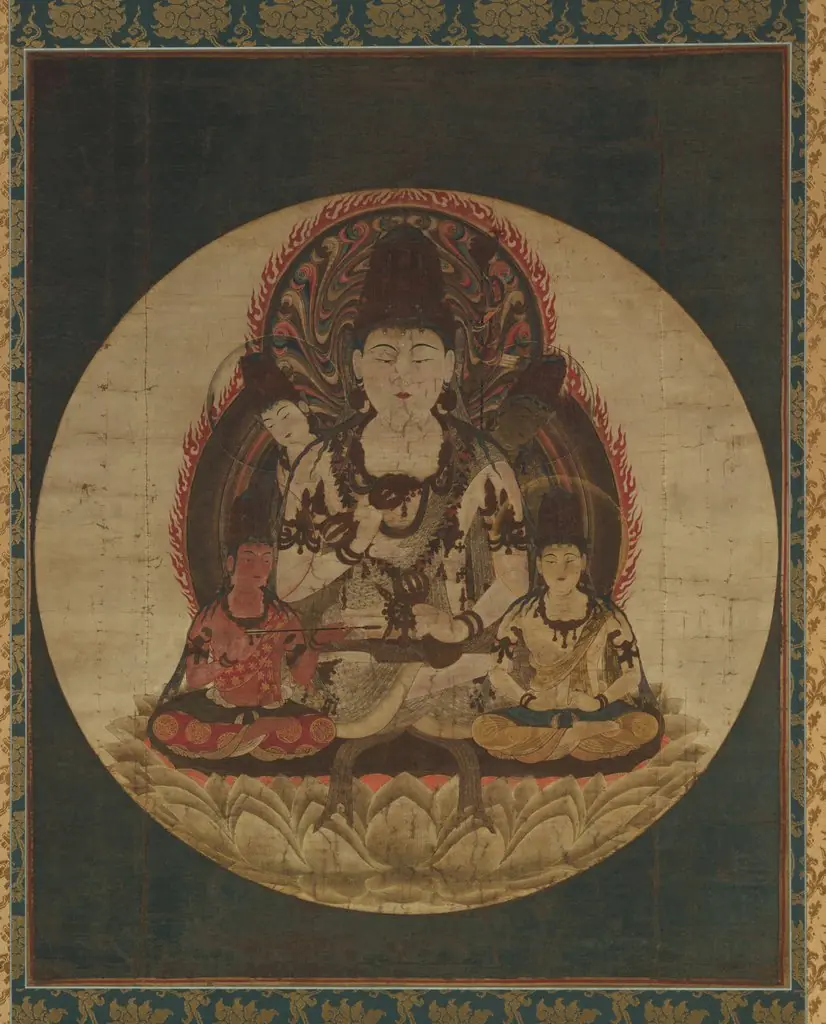 The Secret Five Bodhisattvas (Gohimitsu Bosatsu)
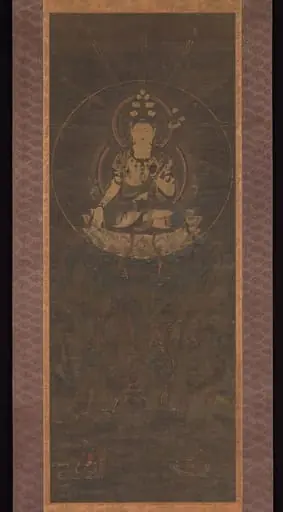 十一面観音影向図|Eleven-Headed Kannon on Mount Fudaraku
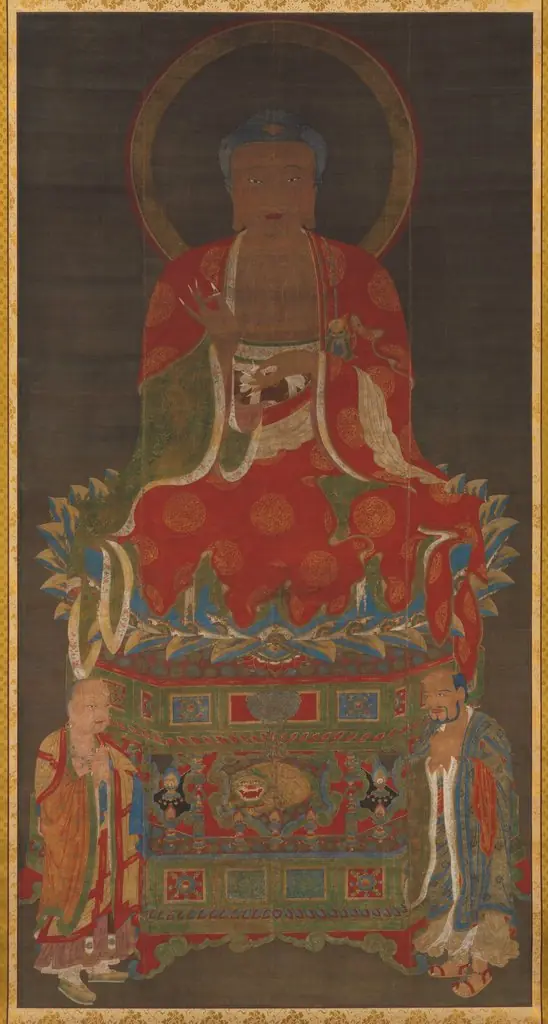 Shakyamuni with two attendants
 Buddhist Panel