Artwork
Descent of the Nine Luminaries and the Seven Stars at Kasuga
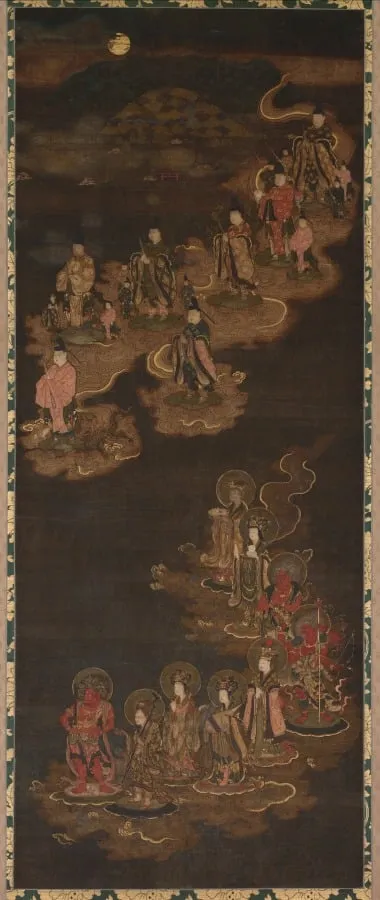
Descent of the Nine Luminaries and the Seven Stars at Kasuga is an unspecified painting by the Joseon dynasty painting artist Unknown. It dates from 1304 and is held in the collection of the Cleveland Museum of Art.
- Accession no.
- 2015.63
- Credit line
- Lillian M. Kern Memorial Fund
About this work
You see gold clouds, a red shrine gate, and nine glowing figures floating down toward a dark forest.
This painting was made to hang in a temple at Kasuga Shrine. The nine figures are stars from the Big Dipper, shown as gods visiting the sacred mountain. The artist used gold to make the sky feel like heaven touching earth.
To see more art like this, look up japan, nanbokuchō period (1336–92).
Overview
This medieval Japanese painting depicts celestial entities descending toward Kasuga Shrine in Nara, a site central to Shinto-Buddhist worship.
This medieval Japanese painting depicts celestial entities descending toward Kasuga Shrine in Nara, a site central to Shinto-Buddhist worship. Rendered in the honjibutsu mandala format, it merges Vedic cosmology with Esoteric Buddhist iconography. The composition divides vertically: upper registers show the Big Dipper’s stars, while lower sections portray the Nine Luminaries. Gold leaf and deep pigments create a luminous sky, suggesting divine presence intersecting the earthly realm.
Subject & Meaning
The painting illustrates the Nine Luminaries, solar, lunar, and planetary deities from Vedic tradition, alongside the seven stars of the Big Dipper, all portrayed as divine visitors. Their descent signifies celestial blessing upon Kasuga Shrine, reinforcing its spiritual authority. The figures, floating on cloud banks, embody cosmic order and the interconnection between heavenly bodies and earthly worship, reflecting medieval Japan’s syncretic religious worldview.
Technique & Style
Executed in the tradition of Chinese-derived deities-in-descent imagery, the work employs gold leaf to render clouds and halos, evoking heavenly radiance. Figures are outlined in ink with restrained color, contrasting against dark forested grounds. The composition’s vertical structure and hierarchical scale follow Buddhist mandala conventions, while the use of mineral pigments and metallic accents reflects the refined aesthetics of Kamakura to Nanbokuchō-period religious art.
History & Provenance
Created during the Nanbokuchō period (1336–1392), the painting was likely commissioned for use within Kasuga Shrine’s temple complex. It served liturgical purposes, hung during rituals invoking celestial protection. Its survival suggests continued reverence for the shrine’s astrological traditions.
The work remains tied to its original context, with no documented relocation, preserving its ritual function and regional identity.
Context
In medieval Japan, Shinto and Esoteric Buddhism coalesced around celestial worship, particularly at Kasuga, where deities were believed to manifest through natural phenomena. The Nine Luminaries, imported via Indian and Chinese esoteric texts, were adapted into local cosmology. This painting reflects a broader trend of integrating foreign astrological systems into indigenous shrine practices, reinforcing the sacredness of Nara’s landscape.
Legacy
The painting exemplifies the fusion of continental religious iconography with Japanese ritual needs. While later periods shifted toward more secular or minimalist aesthetics, this work remains a key reference for understanding medieval Japan’s spiritual cosmology. Its preservation offers insight into how celestial bodies were venerated not as abstract forces, but as active, descending deities within a localized sacred geography.
Artist & collection









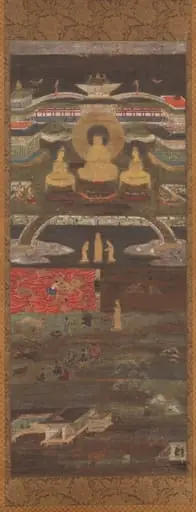 The White Path Between Two Rivers
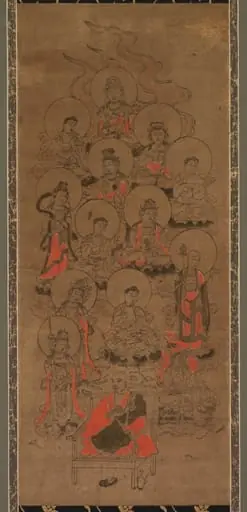 Twelve Buddhas and Kobo Daishi (Jusanbutsu)
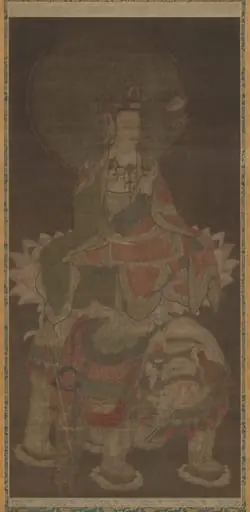 Samantabhadra
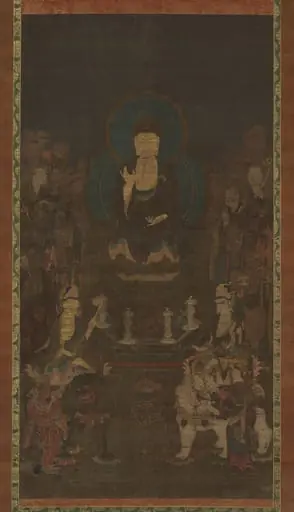 釈迦三尊十大弟子像|Shaka (Shakyamuni), the Historical Buddha, with Two Attendant Bodhisattvas and the Ten Great Disciples
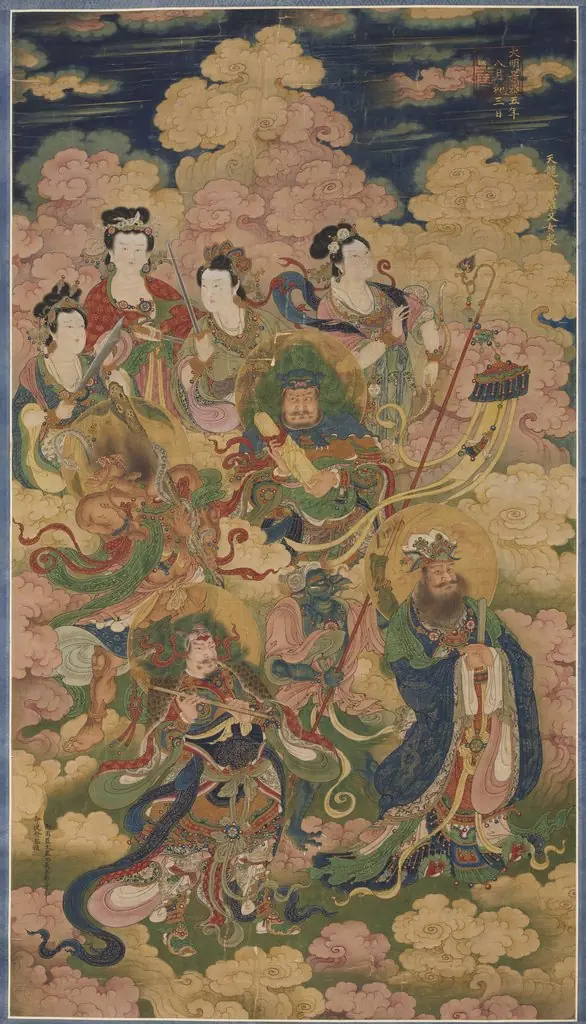 The Eight Hosts of Deva, Naga, and Yakshi
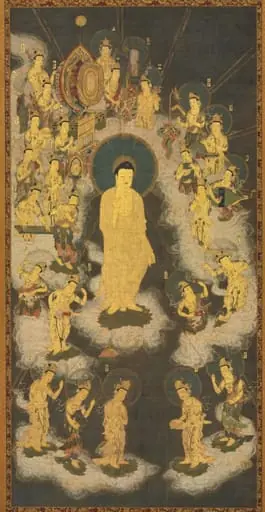 Welcoming Descent of Amida (Amida Raigō)
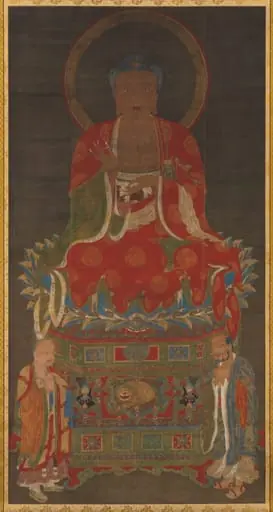 Shakyamuni with two attendants
 Buddhist Panel