Artwork
Devi Shrine
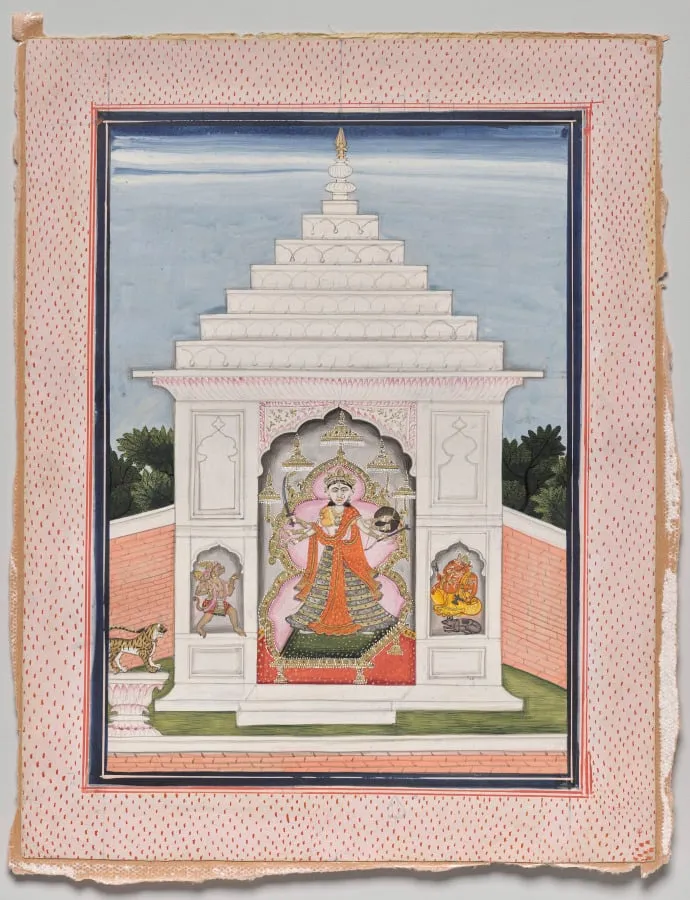
Devi Shrine is an unspecified painting by the Pahari Painting artist Unknown. It dates from 1810 and is held in the collection of the Cleveland Museum of Art. This painting depicts a Hindu goddess enshrined within a sacred architectural space, rendered to evoke her living presence.
- Accession no.
- 2020.80
- Credit line
- Gift of Nancy and Wayne Hunnicutt
About this work
Overview
This painting depicts a Hindu goddess enshrined within a sacred architectural space, rendered to evoke her living presence. Created in the Pahari region of northern India, likely in the kingdom of Mandi, it was designed not merely as representation but as a devotional vessel. The goddess is adorned with actual textiles and jewelry, blurring the boundary between image and idol.
Subject & Meaning
The six-armed goddess, armed with weapons, embodies protective power, particularly against threats to children. Her tiger, seated on a pedestal before her, symbolizes strength and control over primal forces. Flanking the shrine’s entrance, Hanuman and Ganesha act as guardians, Hanuman for devotion and Ganesha for removing obstacles, ensuring the sanctity and efficacy of worship.
Technique & Style
Artists employed fine brushwork and rich pigments to render intricate details of jewelry, fabric, and weaponry. The goddess’s attire includes real garments and ornaments, integrated into the painted surface to enhance tactile realism. The spatial composition is flattened yet carefully layered, emphasizing ritual hierarchy over naturalistic depth.
History & Provenance
Produced in the Himalayan foothills during the 18th or early 19th century, this work originated in the small kingdom of Mandi, known for its devotional painting traditions. Such images were central to household and temple worship, often commissioned by local royalty or devout patrons seeking divine favor. Their portability allowed them to be carried in processions or displayed during festivals.
Context
In the Pahari courts, deities were treated as honored guests, their images dressed and cared for as if alive. This practice reflected a broader devotional culture where the divine was approached with intimate, personal reverence. Paintings like this were not decorative but functional, serving as focal points for daily rituals and seasonal observances.
Legacy
These works exemplify a regional tradition that merged miniature painting techniques with living worship practices. Though lesser known than Mughal or Rajasthani styles, Pahari devotional paintings like this one preserved unique local interpretations of Hindu iconography, influencing later religious art in the Himalayan region.
Artist & collection









 Shaiva Shrines in a Landscape
 Untitled
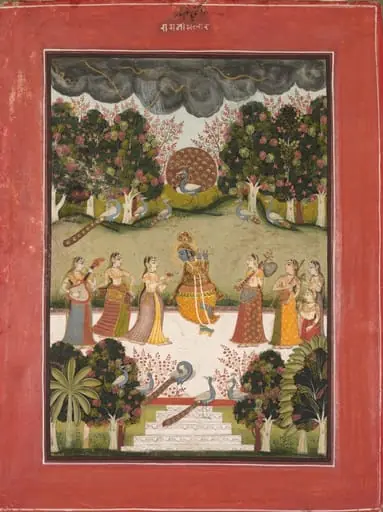 Malar Ragini: Krishna Playing the Flute to Seven Gopis Holding Musical Instruments, from the Ragamala Series
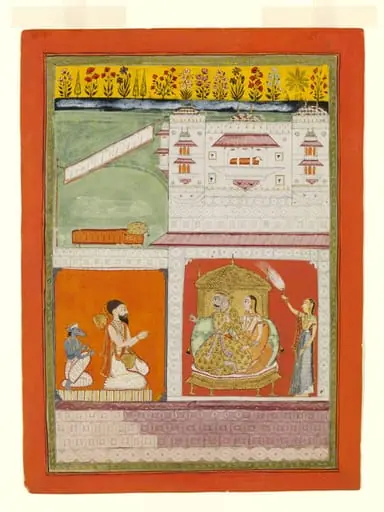 Sri Raga
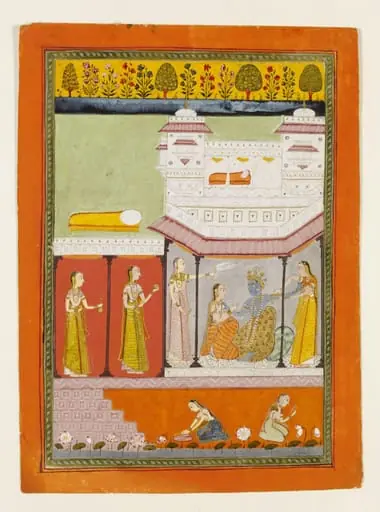 Bhairava Raga
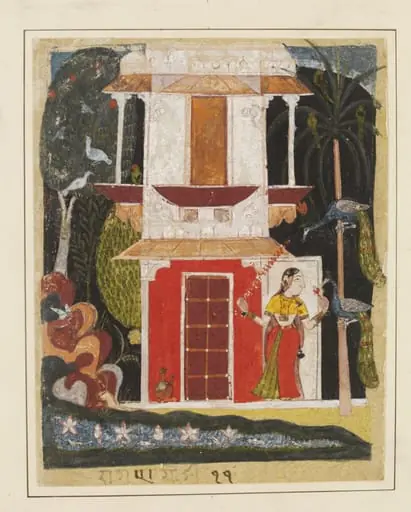 Gauri Ragini
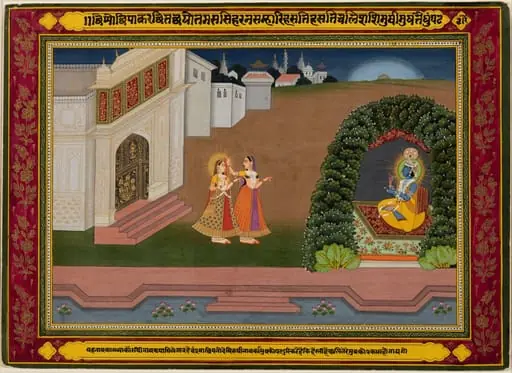 Radha’s Confidante Brings Her to Krishna, based on poetry of Bihari (Indian, 1595–1663)
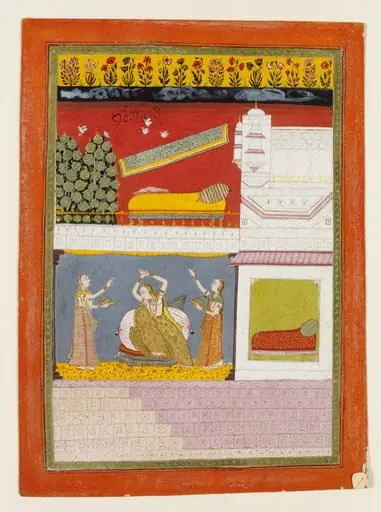 Varara Ragini
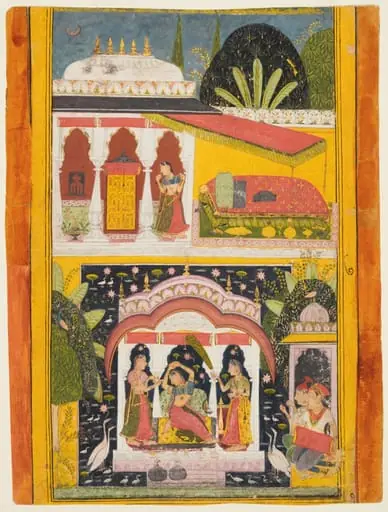 A Royal Woman in a Pavilion: Desavarari Ragini of Dipak, from a Ragamala
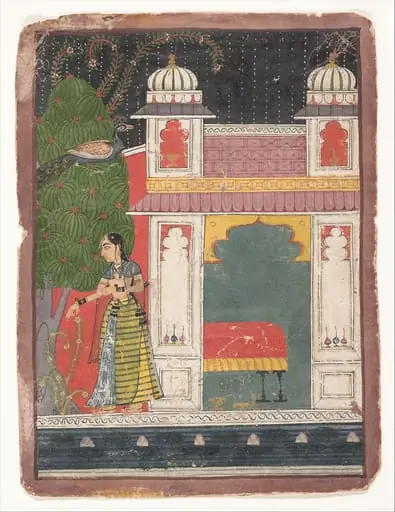 Untitled