Artwork
Diana or Artemis, Goddess of the Hunt
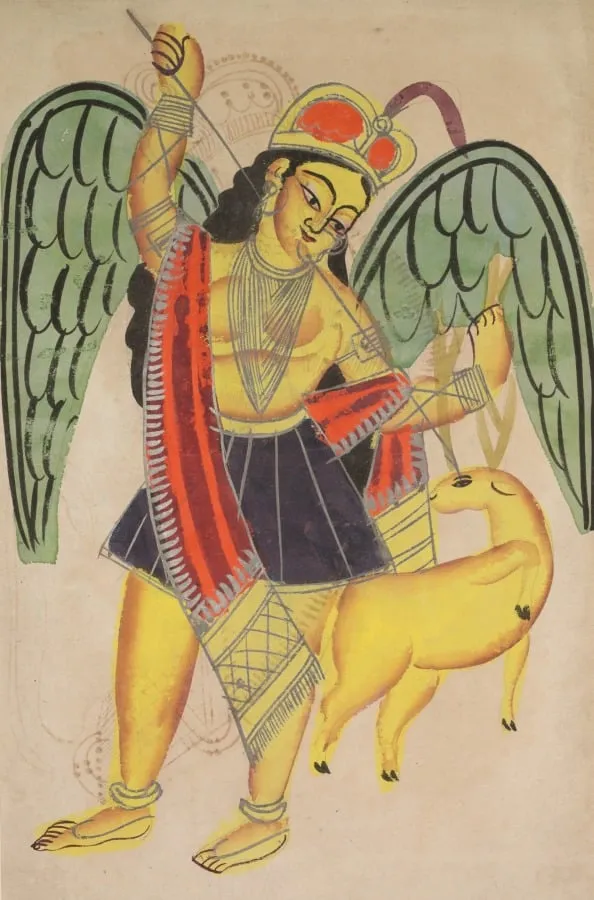
Diana or Artemis, Goddess of the Hunt is an unspecified painting by the Impressionist artist Unknown. It dates from 1890 and is held in the collection of the Cleveland Museum of Art. The work portrays a winged female figure identified with the huntress goddess Diana, known in Greek mythology as Artemis.
- Accession no.
- 2003.147
About this work
Overview
The work portrays a winged female figure identified with the huntress goddess Diana, known in Greek mythology as Artemis. She is shown wearing a short skirt, a British-style crown, and holding a spear, while a stag stands at her left side. The composition merges iconographic elements from several cultural traditions.
Subject & Meaning
The figure combines attributes of the Roman and Greek deities of the hunt with visual cues drawn from Indian religious art, such as the stylised hair reminiscent of Hindu goddesses. This syncretic portrayal reflects a broader 19th‑century Indian interest in re‑interpreting foreign myths through local visual language.
Technique & Style
Executed in the Kalighat school of painting, the piece employs the bold outlines, flat colour fields, and simplified forms characteristic of this Kolkata‑based genre. The style, developed by itinerant artists for mass‑produced prints, often incorporated eclectic motifs and a direct, graphic aesthetic.
Context
Kalighat painters worked in the bustling precincts of the Kalighat temple during the late 1800s, catering to a diverse clientele that included colonial officials and Indian patrons. The painting’s blend of European regal symbols and Indian divine iconography illustrates the cultural exchanges that shaped visual production in colonial Bengal.
Artist & collection









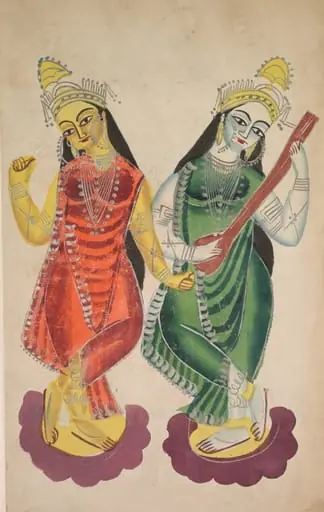
- Goddesses Lakshmi and Sarasvati (verso), from a Kalighat album
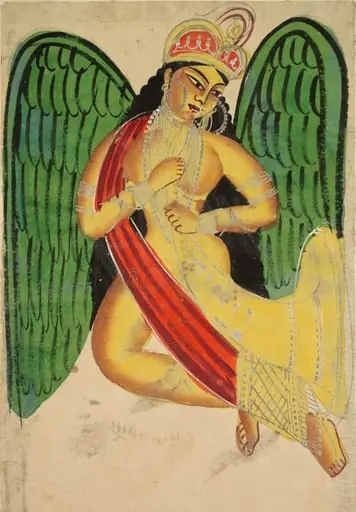 Winged Apsara with a Horn (recto)
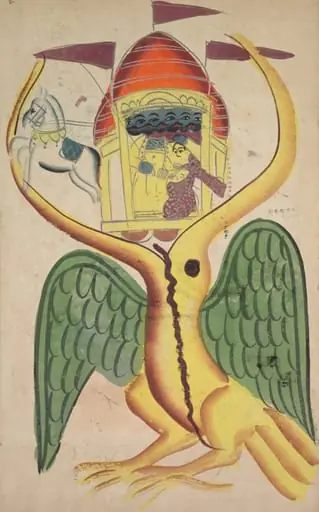 Jatayu hinders Ravana’s chariot, trying to prevent the abduction of Sita (recto), from a Kalighat album
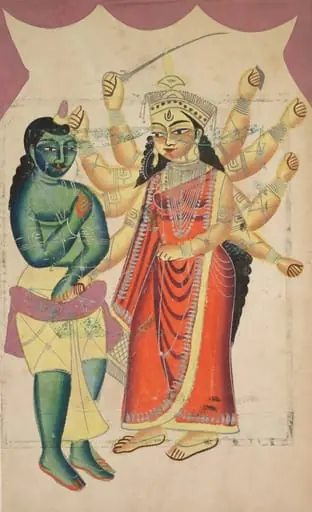 Durga (verso), from a Kalighat album
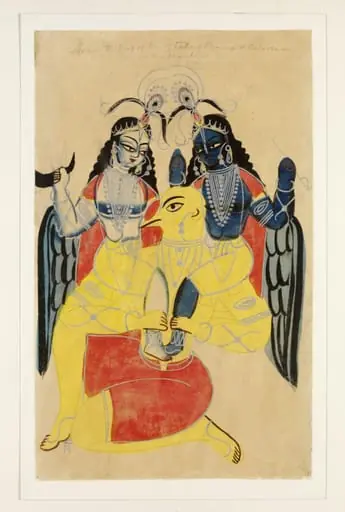 Balarama, Krishna and Garuda
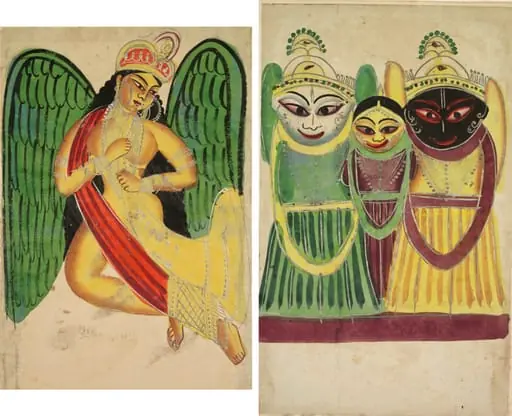 Winged Apsara with a Horn (recto); Jagannatha Trio (verso)
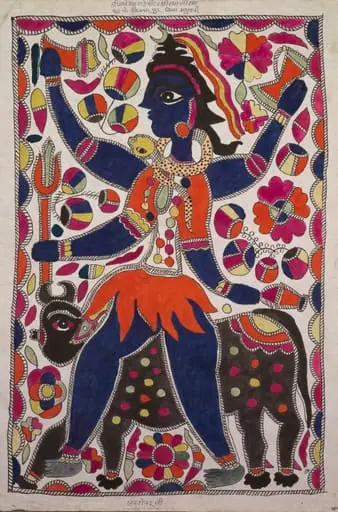 Shiva and Nandi
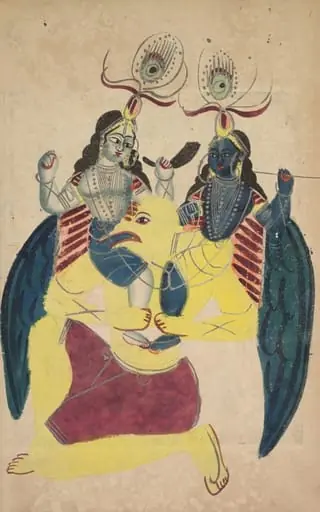 Garuda Carrying Balarama and Krishna (verso), from a Kalighat album
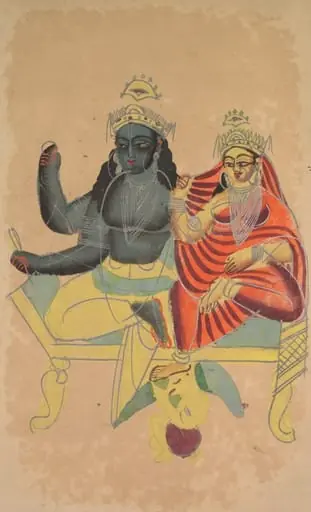 Vishnu and Lakshmi
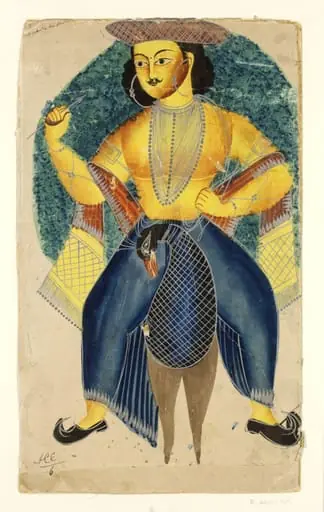 Karttikeya
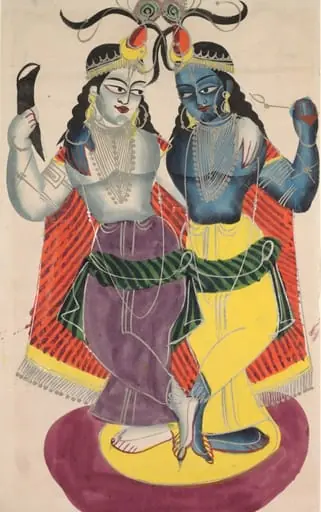 Balarama and Krishna
 Still Life with Game and a Greek Stele: Allegory of Autumn