Artwork
Dog with pups
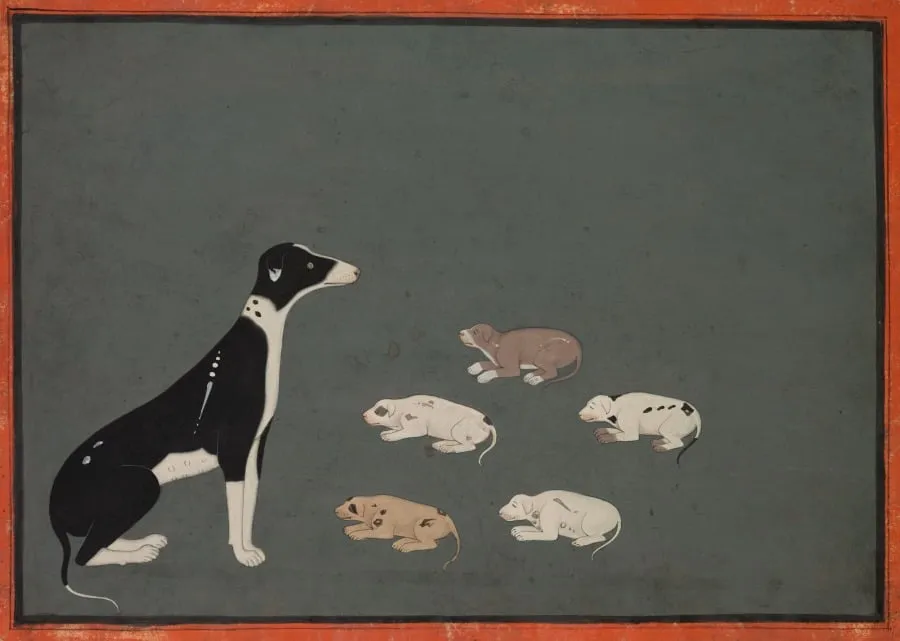
Dog with pups is an unspecified painting by the Rajput painting artist Unknown. It dates from 1780 and is held in the collection of the Cleveland Museum of Art. The work depicts a brown‑and‑white canine reclined on a plain surface, attentively nursing four diminutive puppies.
- Accession no.
- 1969.77
- Credit line
- Gift of Mr. and Mrs. William E. Ward in memory of her father, Charles Svec
About this work
If you like this, explore more works from india, rajasthan, ajmer, probably sawar school, 18th century.
You see a brown-and-white dog lying on the ground, nursing four tiny pups.
This painting comes from 18th-century India, likely made for a royal court. The dogs look well-fed and calm, no wild animals here. They were probably hunting dogs, prized by emperors who collected breeds from around the world.
If you like this, explore more works from india, rajasthan, ajmer, probably sawar school, 18th century.
Overview
The work depicts a brown‑and‑white canine reclined on a plain surface, attentively nursing four diminutive puppies. Rendered in a calm domestic setting, the scene emphasizes the animals’ well‑fed appearance and tranquil demeanor, suggesting a setting of comfort rather than the wilderness.
Subject & Meaning
The central figure is a likely hunting dog, a breed favored by Mughal rulers for sport and status. The presence of the nursing pups underscores themes of lineage and care, reflecting the imperial practice of maintaining and breeding prized dogs within the palace household.
Technique & Style
Executed in the 18th‑century Indian court tradition, the painting employs a restrained palette and precise brushwork to render fur texture and subtle shading. The composition’s focus on a single animal group, without elaborate background, aligns with the Sawar school’s preference for intimate, observational subjects.
History & Provenance
Dogs occupied a prominent place in Mughal royal life, with each pair of hunting dogs assigned a dedicated keeper. Historical records note Emperor Akbar’s enthusiasm for importing diverse breeds, while Jahangir later requested English hounds from Sir Thomas Roe. This patronage continued under subsequent emperors and regional vassal kings, providing the cultural context for such a depiction.
Context
The painting originates from 18th‑century India, likely commissioned for a royal court where animal portraiture served to document and celebrate the emperor’s prized possessions. The emphasis on well‑nourished, domesticated dogs reflects the court’s interest in breeding, training, and displaying exotic canine stock.
Legacy
Works of this type contribute to our understanding of Mughal attitudes toward animal husbandry and the cross‑cultural exchange of breeds. They also illustrate the artistic conventions of Indian court painters who blended realistic observation with the symbolic importance of royal leisure pursuits.
Artist & collection