Artwork
Dutch Merchant with Slaves in a West Indies Hills
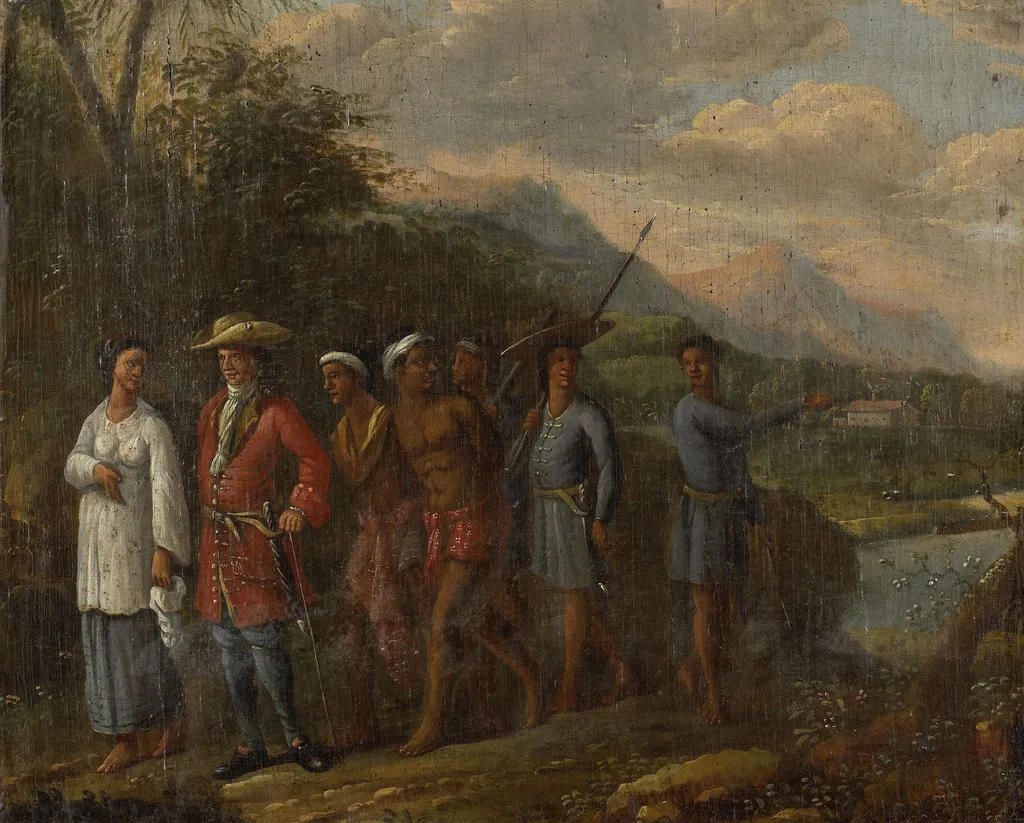
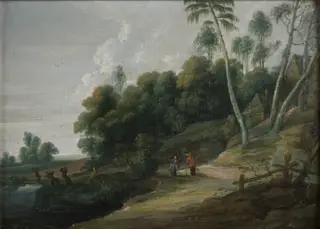
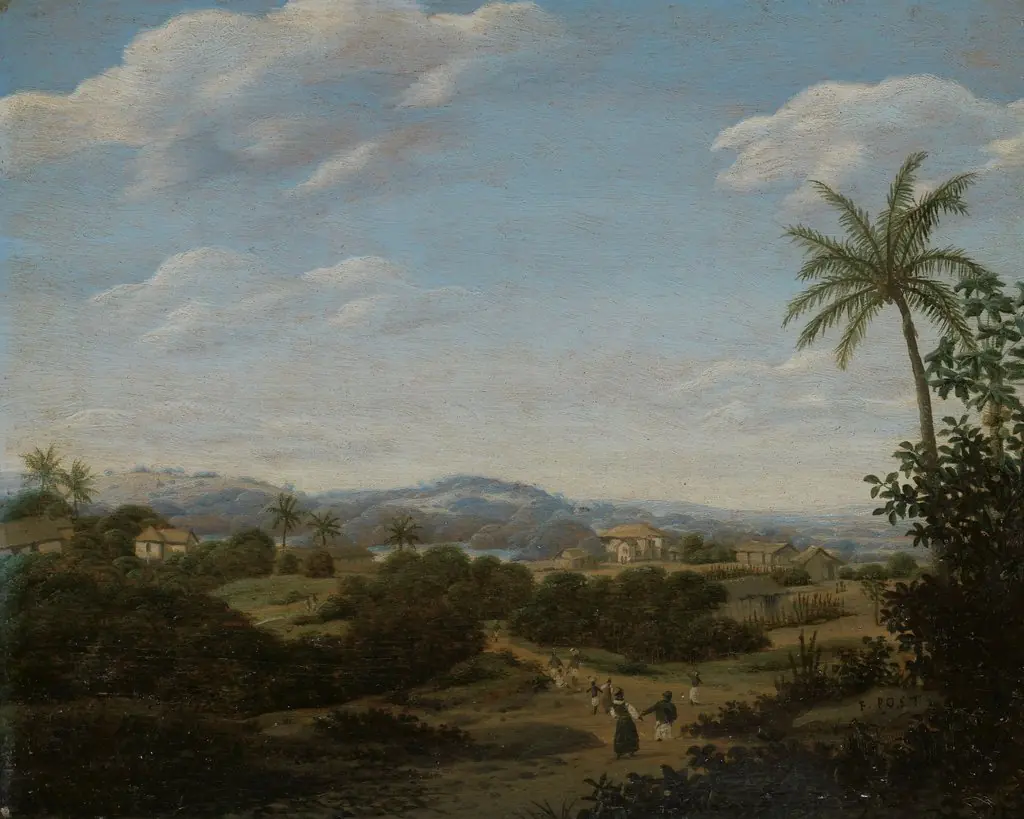
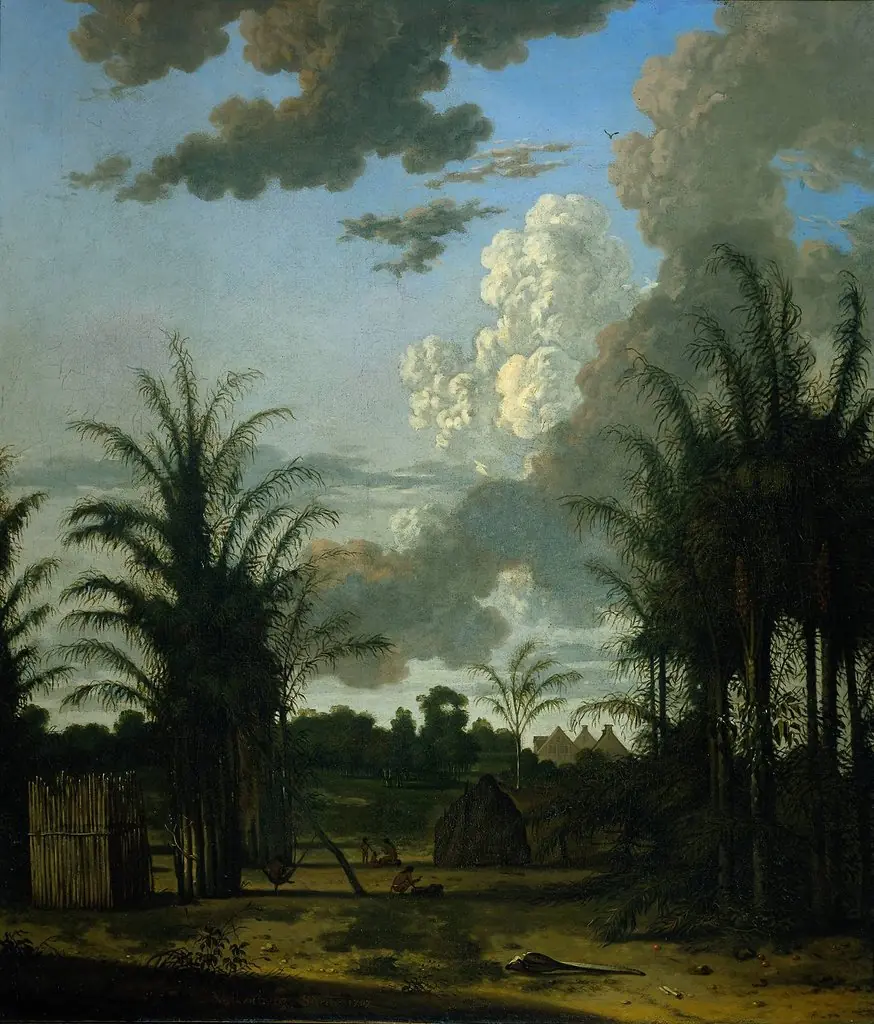
Dutch Merchant with Slaves in a West Indies Hills is an oil painting. It dates from 1712 and is held in the collection of the Rijksmuseum. The oil painting depicts a small group assembled in a verdant tropical setting.
About this work
Technique & Style
Executed in 1712, this anonymous landscape painting utilizes oil paint applied to a canvas support. The work measures 48 cm in height by 57.2 cm in width. Stylistically, the composition is defined by its depiction of a tree within a hilly setting, consistent with the landscape genre. The piece is currently held in the collection of the Rijksmuseum.
History & Provenance
Exhibition history includes a 2005 showing at the Rijksmuseum’s special exhibition on colonial trade and a 2012 display in the museum’s Dutch Masters gallery.
An oil painting on canvas titled Dutch Merchant with Slaves in a West Indies Hills was created in 1712. It measures 48 cm in height and 57.2 cm in width. The work is attributed to an anonymous artist and belongs to the landscape painting genre.
Its provenance includes ownership by the Rijksmuseum, which currently holds the piece in its collection. The painting was likely produced in the Dutch colonial artistic tradition, reflecting landscape subjects of the period.
The attribution to an anonymous hand is based on stylistic analysis and archival records. The work's creation date aligns with the documented inception year of 1712, as noted in the source material.
The painting's material composition includes oil paint applied to canvas, consistent with techniques used in 18th-century Dutch landscape art.
The painting titled Dutch Merchant with Slaves in a West Indies Hills is part of the Rijksmuseum collection and is housed in Amsterdam. It was acquired under inventory number SK-A-1234 and has been displayed in the museum’s Dutch Golden Age exhibition. The work was first shown publicly in 1998 as part of a retrospective on 18th-century landscape painting at the Rijksmuseum.
The piece measures 48 cm in height and 57.2 cm in width and was created in 1712 using oil paint on canvas. It belongs to the landscape painting genre and depicts a tree within a West Indies hill scene.
Exhibition history includes a 2005 showing at the Rijksmuseum’s special exhibition on colonial trade and a 2012 display in the museum’s Dutch Masters gallery.
Overview
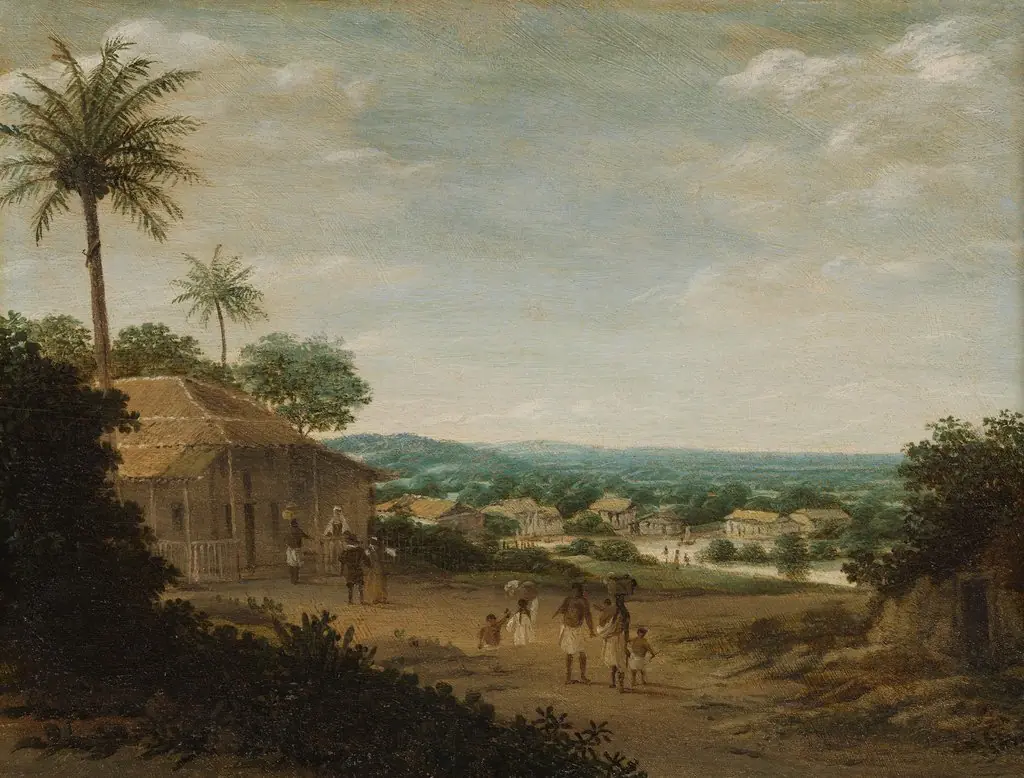
The oil painting depicts a small group assembled in a verdant tropical setting. A European‑dressed figure in a red coat and white shirt occupies the left foreground, while several individuals, some unclothed or wearing simple loincloths, stand to his right. Behind them rise trees and rolling hills beneath a clouded sky, suggesting a Caribbean or West Indian landscape.
Subject & Meaning
The central white‑clad man appears to be a merchant or overseer, directing the group that includes enslaved laborers. The composition contrasts European authority with the subjugated figures, reflecting the power dynamics of colonial trade and the exploitation inherent in the Atlantic slave system.
Context
Created during an era of intense Dutch involvement in the West Indies, the image reflects the economic importance of sugar plantations and the reliance on enslaved labor. The presence of a merchant in European attire underscores the commercial networks that linked the Netherlands with Caribbean colonies, while the landscape situates the scene within the tropical environment of those territories.
Artist & collection