Artwork
八仙図|Eight Daoist Immortals Welcoming Jurōjin
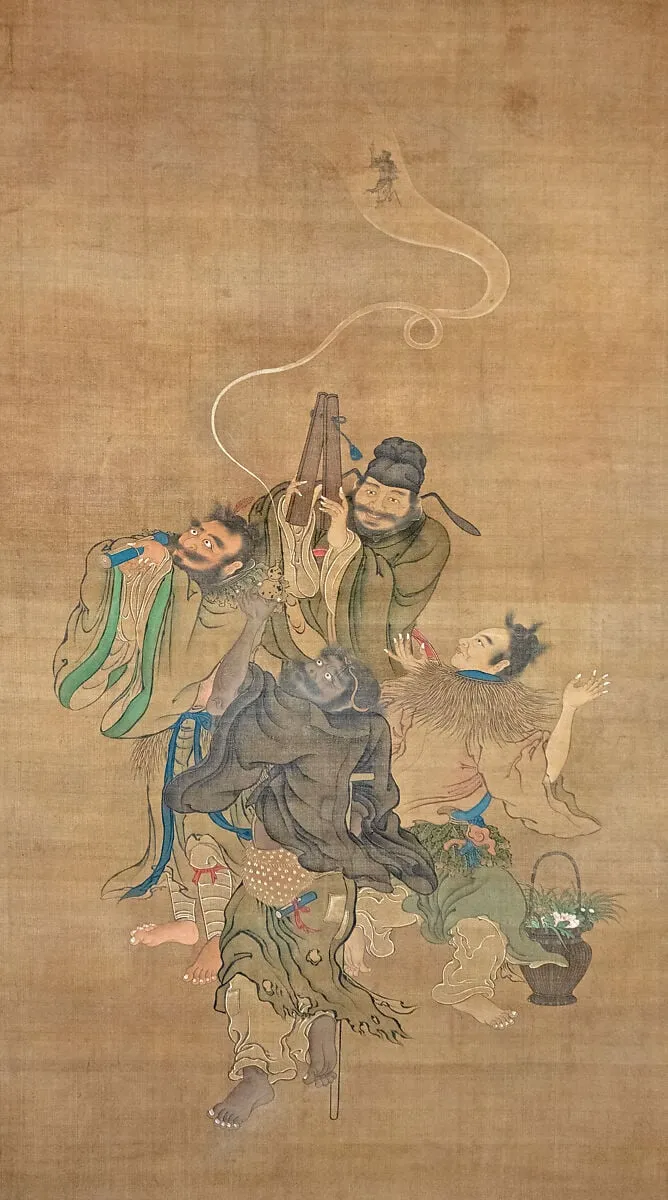
八仙図|Eight Daoist Immortals Welcoming Jurōjin is an ink painting. It dates from 1649 and is held in the collection of the Metropolitan Museum of Art. This hanging scroll, titled Eight Daoist Immortals Welcoming Jurōjin, is rendered in ink and color on silk.
About this work
Subject & Meaning
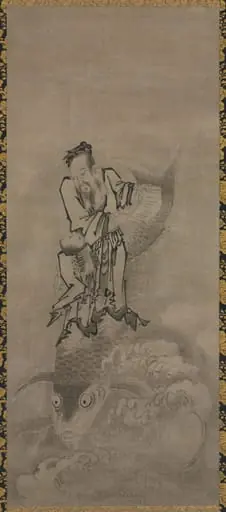
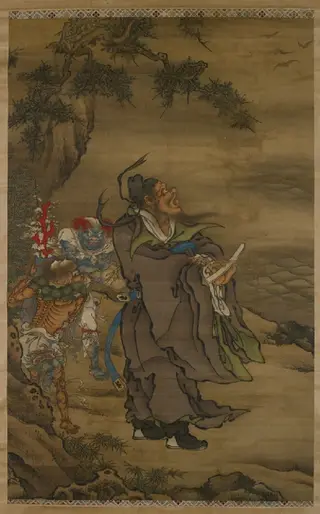
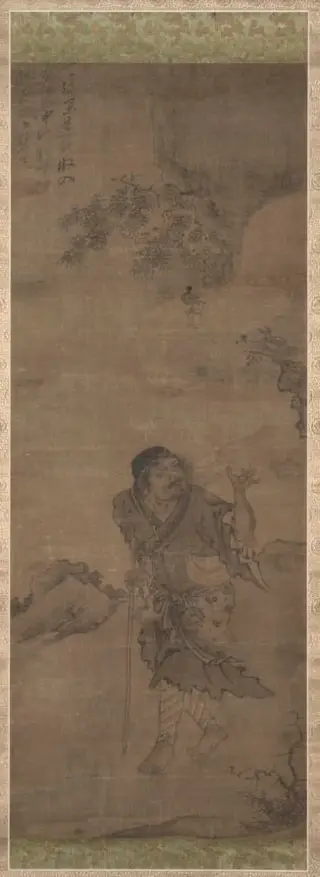
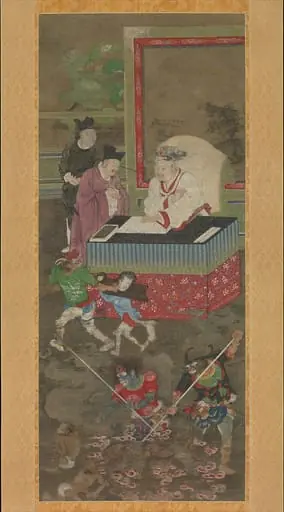
The painting depicts the Eight Daoist Immortals, a celebrated group of legendary figures within the Taoist tradition, gathered in a scene of welcoming.
The painting depicts the Eight Daoist Immortals, a celebrated group of legendary figures within the Taoist tradition, gathered in a scene of welcoming. The composition centers on the immortal Jurōjin, one of the Seven Gods of Fortune in East Asian belief, who is traditionally associated with longevity and is customarily shown accompanied by the Eight Immortals. Rendered in ink and color on silk as a hanging scroll, the work is classified as a religious painting, reflecting its devotional function within Taoist iconography.
The convergence of the Eight Immortals around Jurōjin symbolizes the bestowal of long life, prosperity, and good fortune, themes that made such imagery especially auspicious for ritual display and veneration.
History & Provenance
The hanging scroll titled Eight Daoist Immortals Welcoming Jurōjin was created in 1649 in China. While one internal record attributes the work to an unknown artist, external metadata identifies the painter as Zhou Zen. Executed in ink and color on silk, the piece measures 140.3 cm in height and 78.7 cm in width.
The work is currently held within the collection of the Metropolitan Museum of Art. Specific details regarding the original commission, the exact patron who ordered the piece, or the chain of ownership prior to its arrival at the museum are not provided in the available records. The creation date is firmly established as the year 1649, situating the artwork within the mid-seventeenth-century context of Chinese religious painting.
Context
The work, dated 1649 and housed in the Metropolitan Museum of Art, exemplifies 17th‑century Chinese religious painting, reflecting the popularity of Taoist Immortal subjects in elite patronage; scholarship identifies the hand of the itinerant master Zhou Zen, situating the piece within his documented oeuvre of ink‑and‑color scrolls that blend narrative figuration with symbolic Taoist motifs; its composition of the Eight Immortals welcoming the deity Jurōjin illustrates the cross‑cultural transmission of Daoist iconography into the Qing court aesthetic, a topic examined in recent studies of religious art in early modern China.
Overview
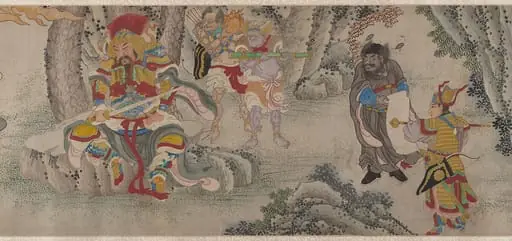
This hanging scroll, titled Eight Daoist Immortals Welcoming Jurōjin, is rendered in ink and color on silk. It depicts a celestial gathering where eight revered figures float on clouds, each bearing a distinct attribute. They are shown in homage to an elderly, long-bearded man, accompanied by a deer, signifying a scene of reverence and auspiciousness.
Technique & Style
Although the artist remains anonymous, the scroll demonstrates considerable artistic proficiency. The composition is characterized by its precise draftsmanship, evident in the careful rendering of forms and drapery. The use of vibrant colors applied to the silk surface contributes to the visual impact and enhances the celestial atmosphere of the depicted scene.
Artist & collection

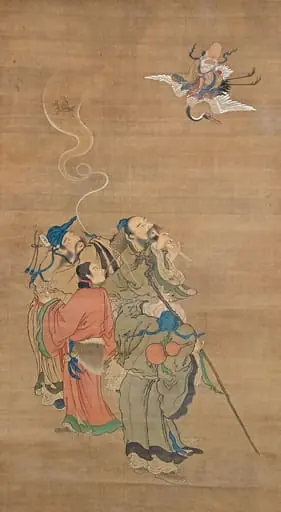
- 八仙図|Eight Daoist Immortals Welcoming Jurōjin
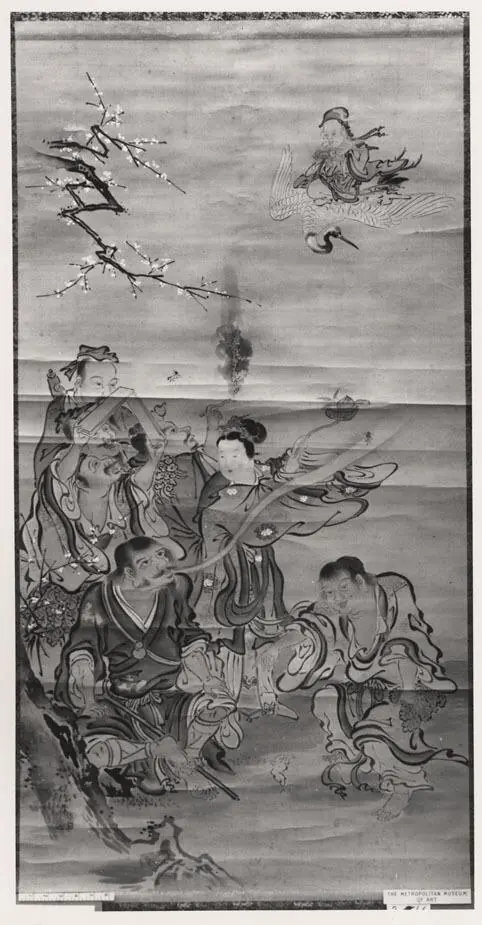 Eight Daoist Immortals
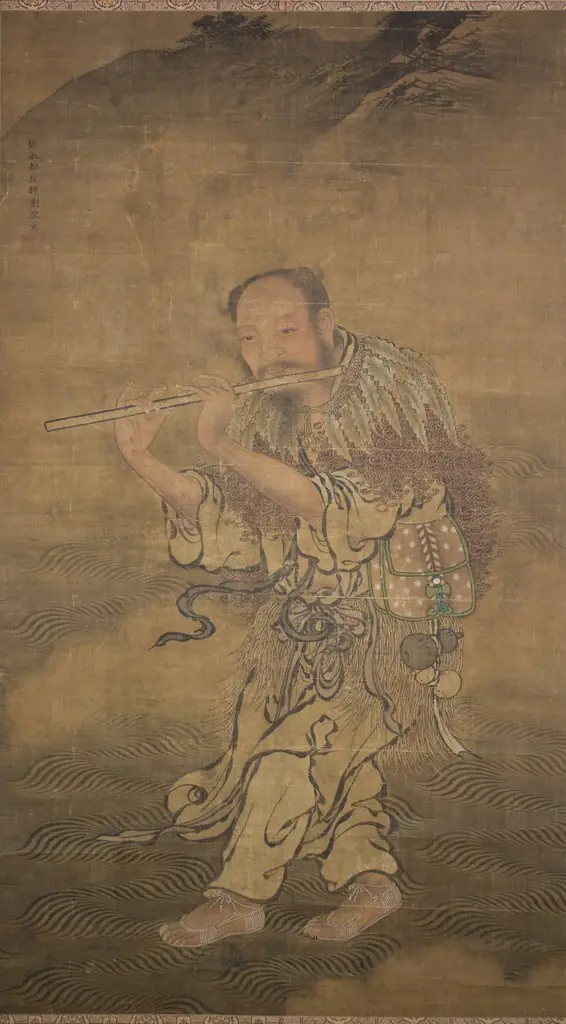 The Daoist Immortal Han Xiangzi
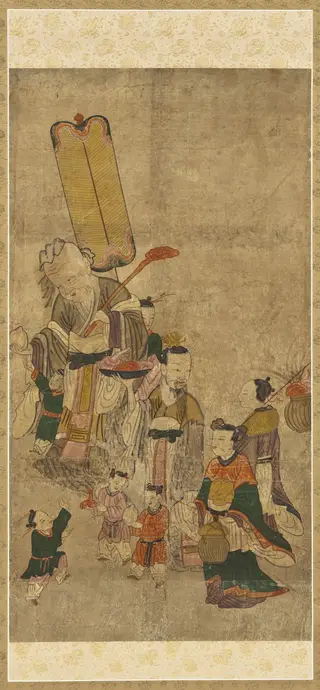 Dongfang Shuo (Tongbang Sak), one of the Eight Chinese Immortals
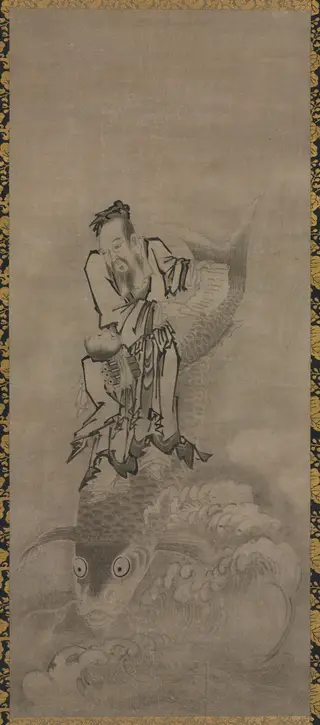 Hotei with Daoist Immortals
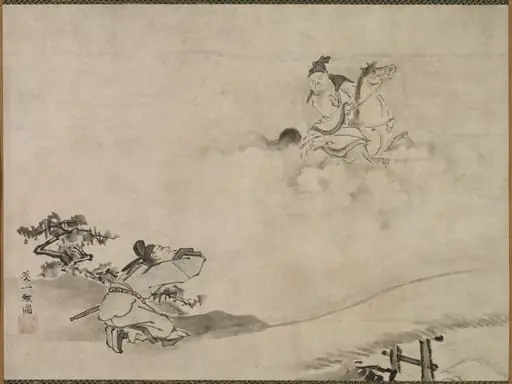 Daoist Immortal
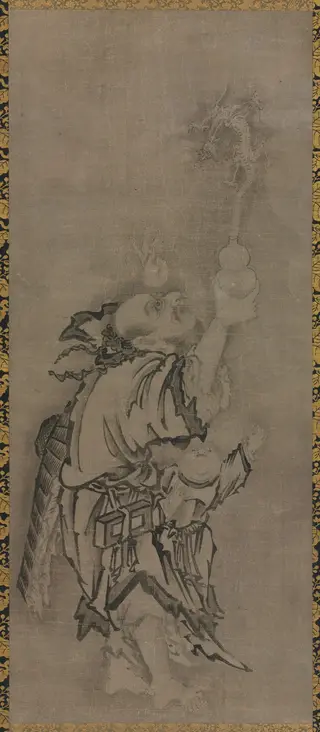 Hotei with Daoist Immortals: Immortal with Gourd and Dragon
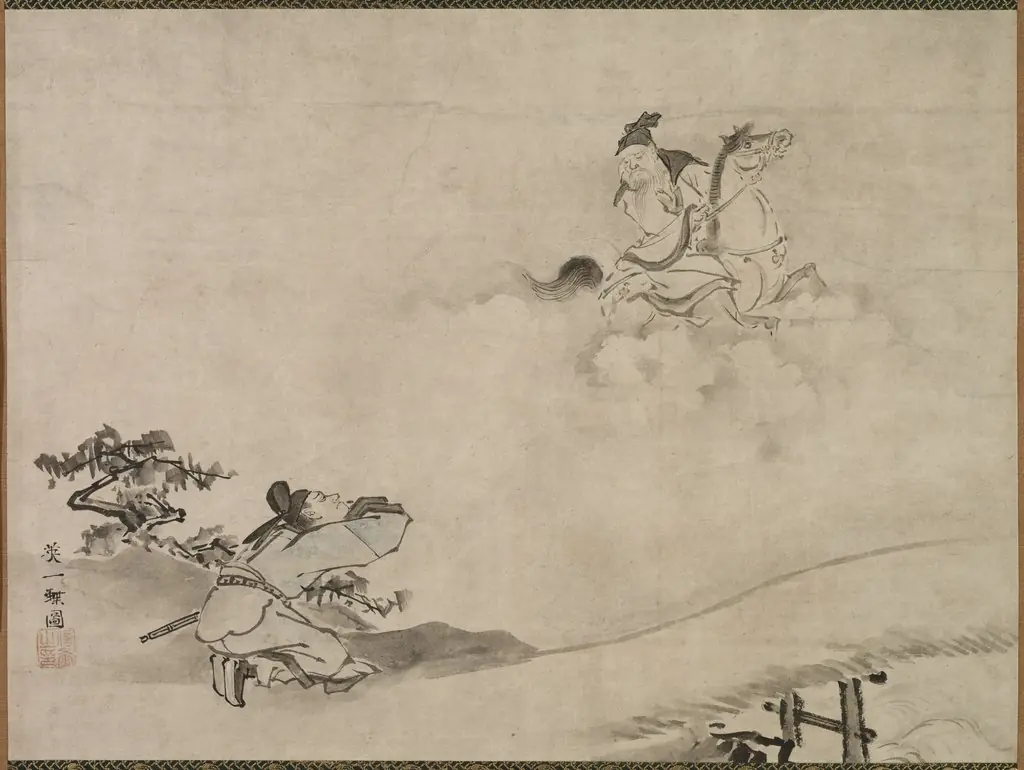 Daoist Immortal
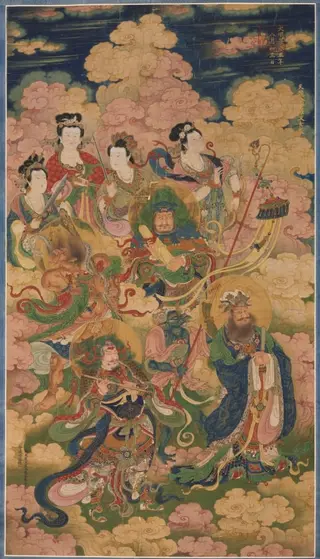 The Eight Hosts of Deva, Naga, and Yakshi
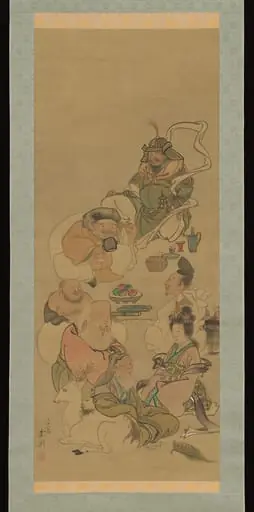 長澤蘆洲筆 七福神図|Seven Gods of Good Fortune