Artwork
Entombment, one of the Seven Sorrows of Mary
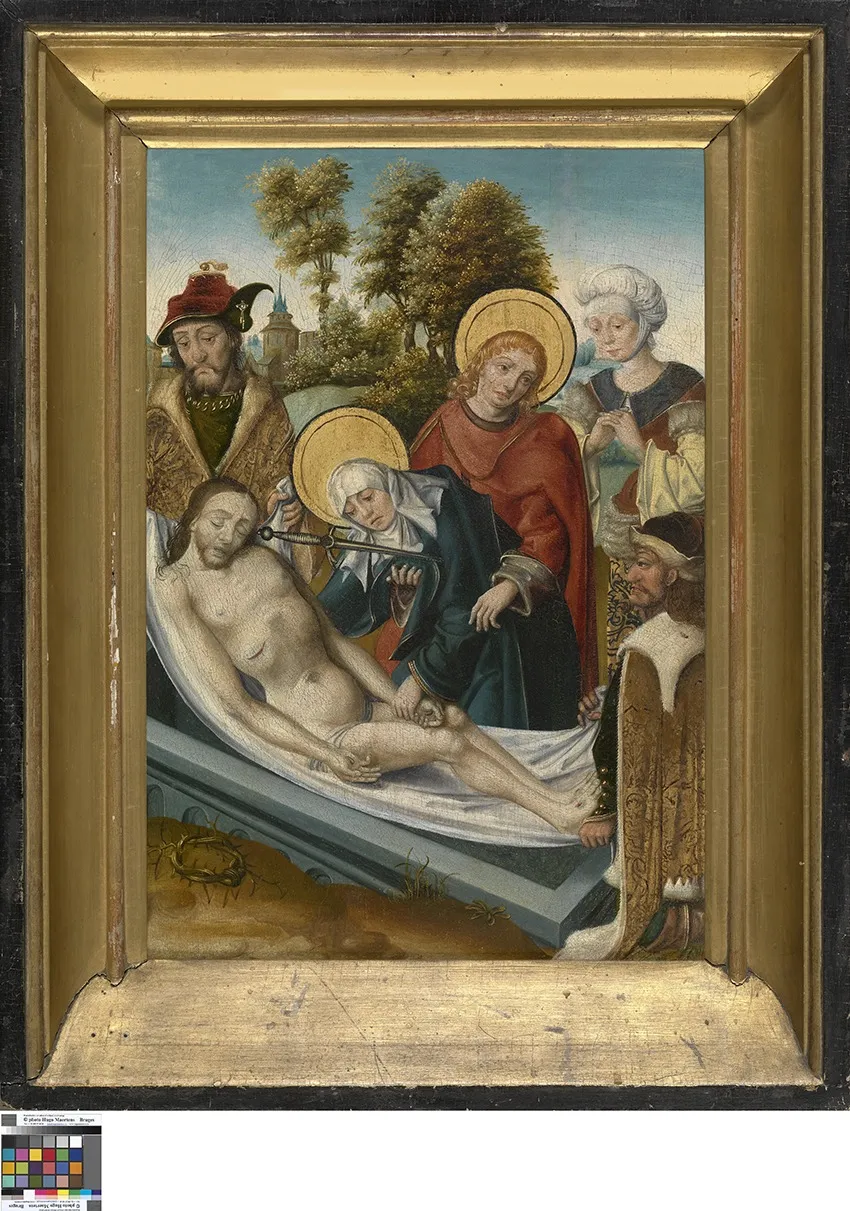
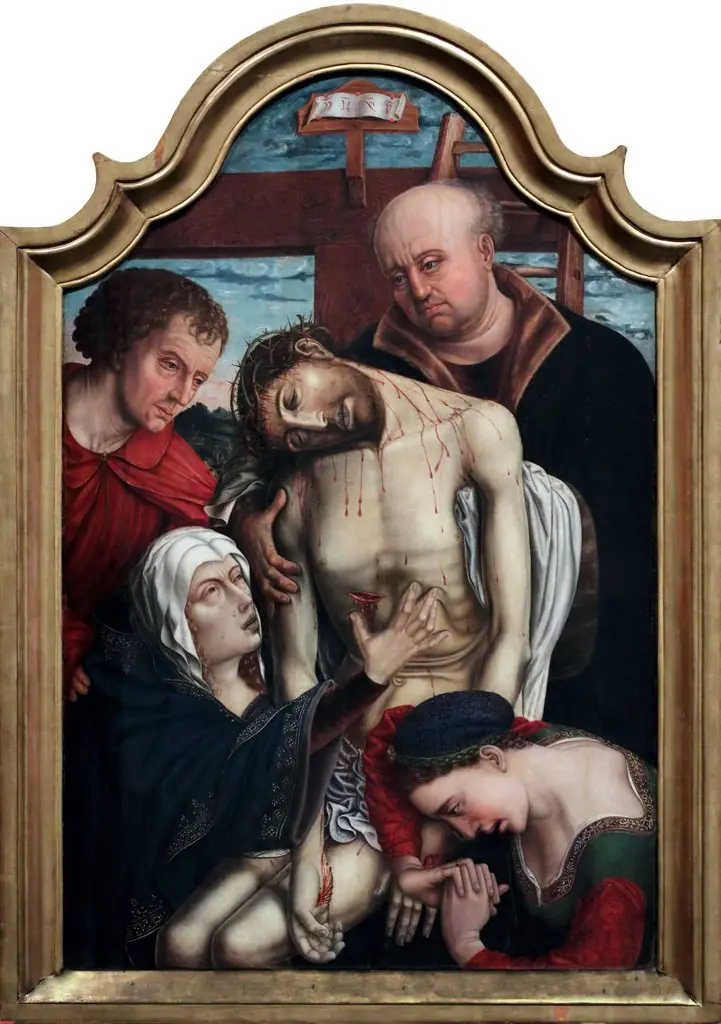
Entombment, one of the Seven Sorrows of Mary is an oil painting by the Northern Renaissance artist Unknown. It dates from 1501 and is held in the collection of the Groeningemuseum. Entombment is a painting depicting a somber scene from the Seven Sorrows of Mary, executed in oil paint.
About this work
Subject & Meaning
Key iconographic elements include the Crown of Thorns, which serves as a direct symbol of the Passion and suffering endured prior to death.
This early 16th-century panel painting illustrates the Entombment of Christ, a specific episode within the broader devotional theme of the Seven Sorrows of Mary. The composition focuses on the deposition and preparation of Jesus Christ's body for burial, a moment of profound grief for his mother. Key iconographic elements include the Crown of Thorns, which serves as a direct symbol of the Passion and suffering endured prior to death.
A sword is also depicted, likely representing the prophecy of Simeon that a sword would pierce Mary's soul, thereby linking the physical entombment to her spiritual anguish. The inclusion of a tree within the scene may further allude to the Cross or the Tree of Life, reinforcing the theological connection between Christ's death and redemption. As a work of religious art, the piece functions as a visual meditation on sacrifice and maternal sorrow.
Technique & Style
The Entombment, one of the Seven Sorrows of Mary is executed in oil paint on a wooden panel support. Created in 1501, this religious work measures 47.7 cm in height and 33.7 cm in width. The painting depicts the entombment of Christ, featuring figures such as Mary and Jesus Christ alongside symbolic elements including a tree, a sword, and a crown of thorns.
The composition is attributed to an anonymous master from Westphalia active at the beginning of the sixteenth century.
History & Provenance
The painting was created in 1501, executed in oil on panel by an anonymous Westphalian master. It entered the collection of the Groeningemuseum in Bruges, where it is now held as part of the Flemish Art Collection (Vlaamse Kunstcollectie). No further details of its commission, intermediate ownership, or earlier provenance are documented in the available sources.
The painting is held at the Groeningemuseum, where it is listed under inventory number 1880-0108. It was created in 1501 and has been part of the museum's collection since its acquisition. The work has been featured in exhibitions focusing on early Netherlandish religious art at the Groeningemuseum.
Legacy
Entombment, one of the Seven Sorrows of Mary, exerted quiet influence on later religious painting in the Low Countries, where its stark composition and devotional focus resonated with artists exploring Marian suffering. The work remained in the Groeningemuseum collection, preserving its visibility within Flemish art historical discourse and reinforcing the Seven Sorrows as a persistent motif in post-medieval devotional art. Its formal treatment of grief and symbolic details, such as the Crown of Thorns, informed contemporary interpretations of the entombment narrative, contributing to a sustained legacy of emotional intensity in sacred imagery.
Overview
Entombment is a painting depicting a somber scene from the Seven Sorrows of Mary, executed in oil paint. The composition focuses on a group surrounding a naked, crucifixion-wounded man laid on a cloth, set against a backdrop of a blue sky, trees, and a distant town.
Context
As part of the Seven Sorrows of Mary, this painting reflects a devotional theme common in Christian art, particularly in Catholic traditions, focusing on the sorrowful aspects of the Virgin Mary’s life.
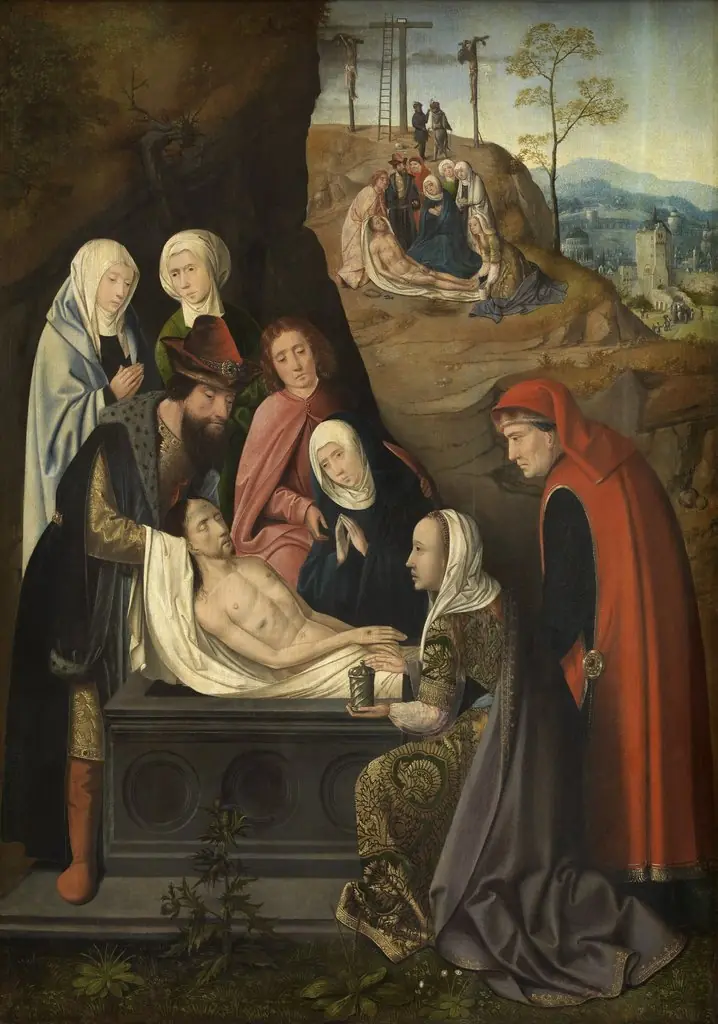
Artist & collection









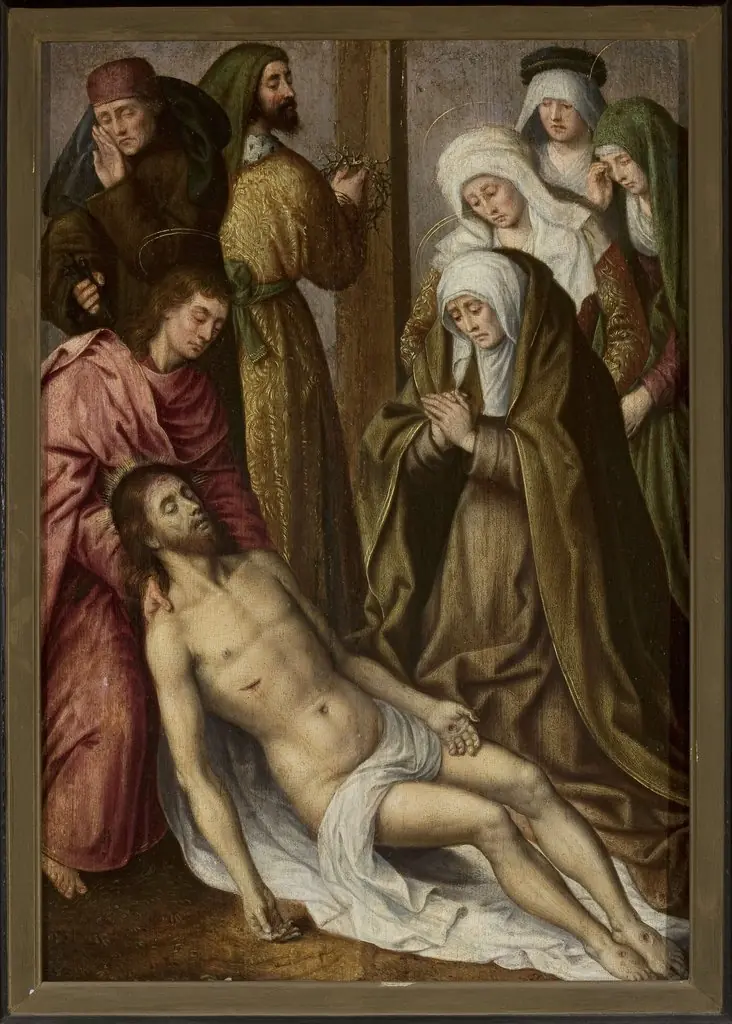 Mourning of Christ (Matthew 27:59–61; Mark 15:46–47; Luke 23:53–56; John 19:38–42)
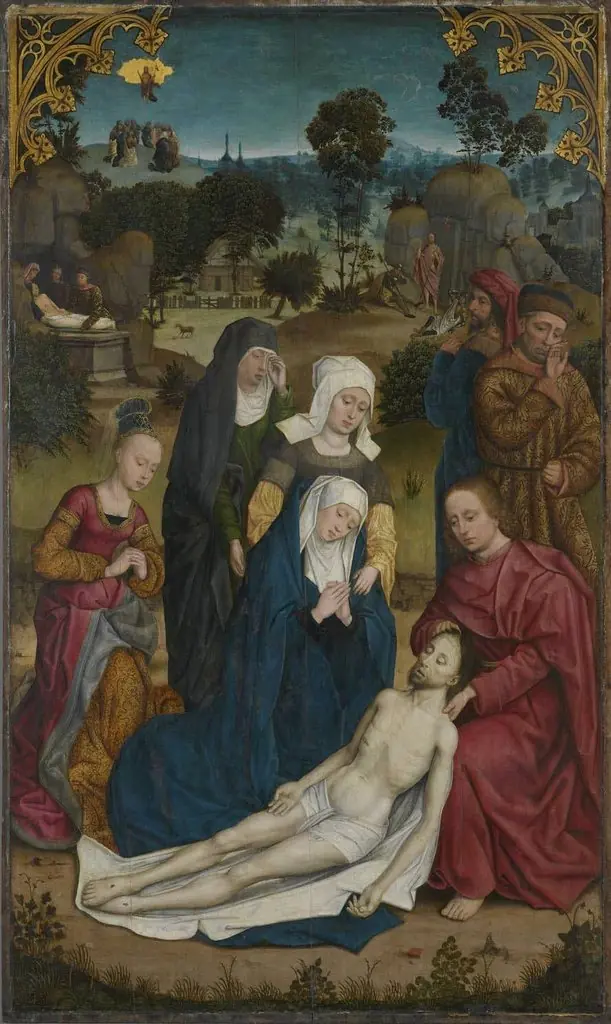 Crucifixion Altar: lamentation of Christ (outer part: fragment of an Angel, an Apostle and founders)
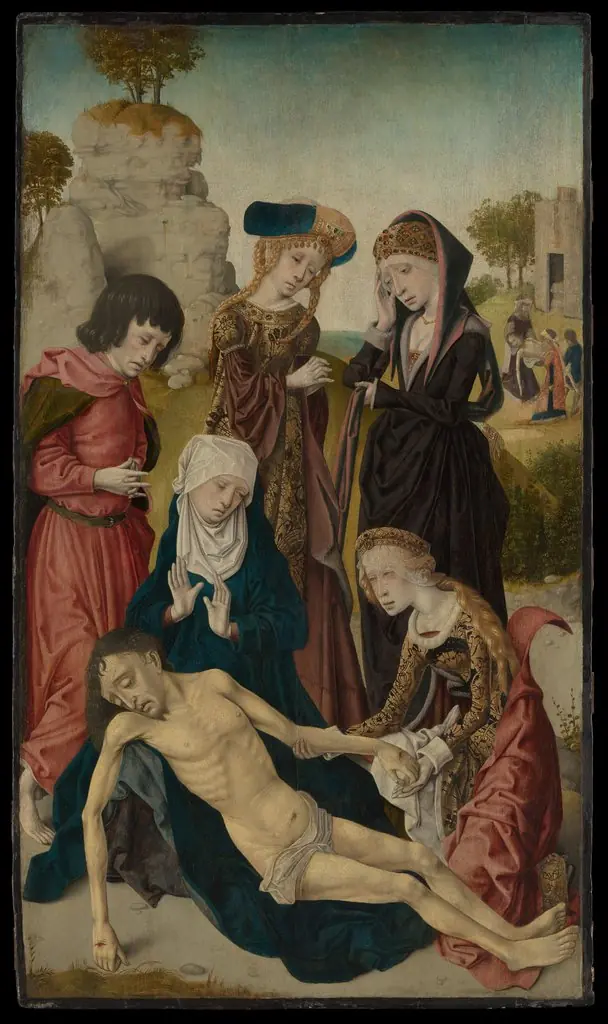 The Lamentation
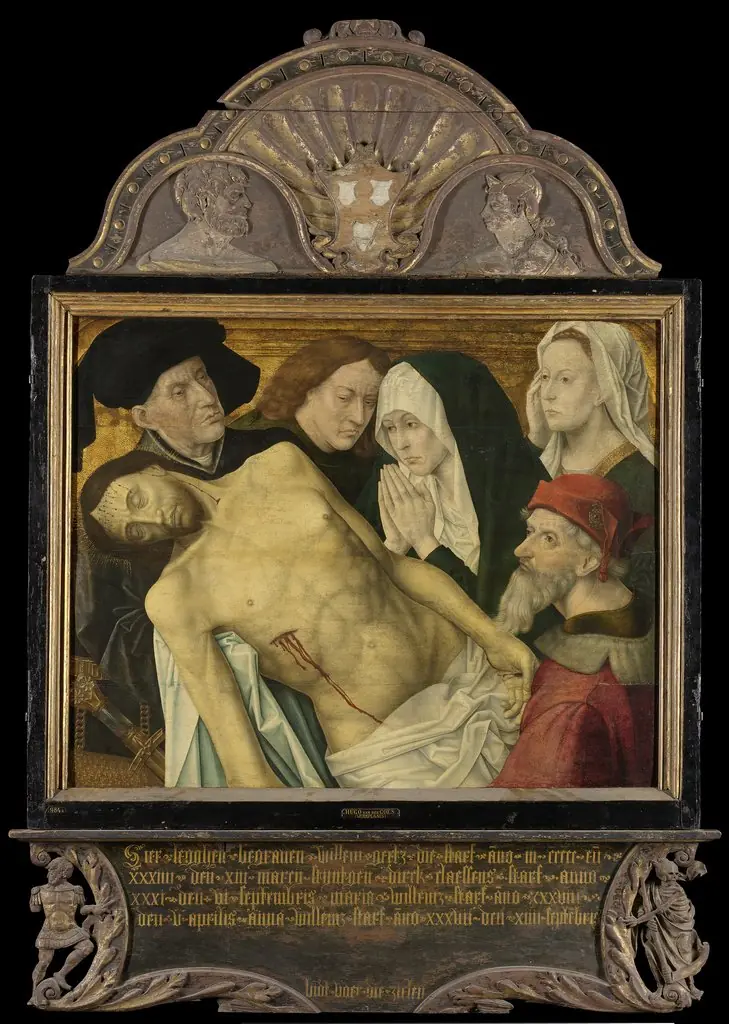 Central panel of a Memorial Triptych, formerly called the Gertz Memorial Triptych, with the Lamentation
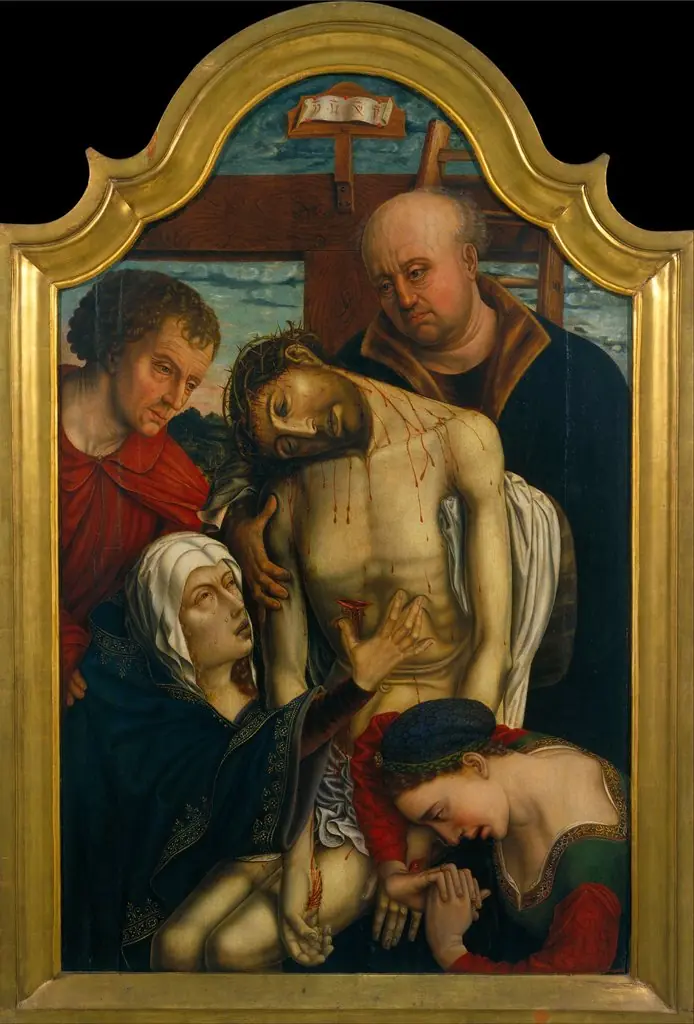 Descent from the Cross
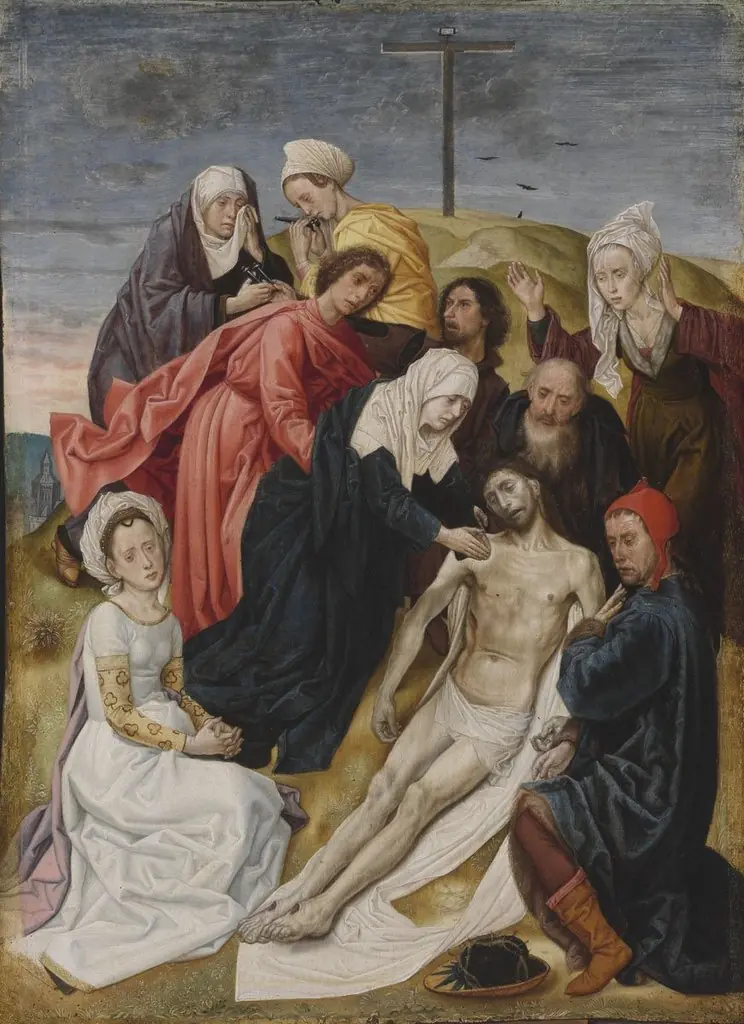 The Lamentation over the Dead Christ
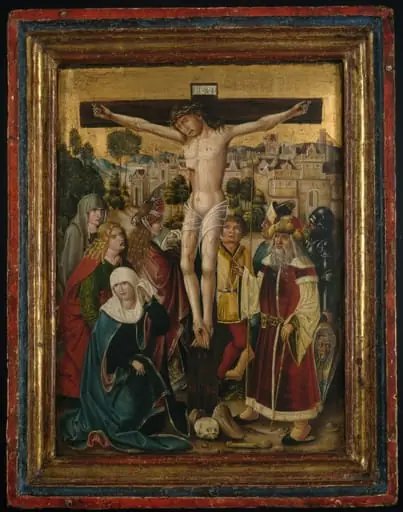 The Crucifixion
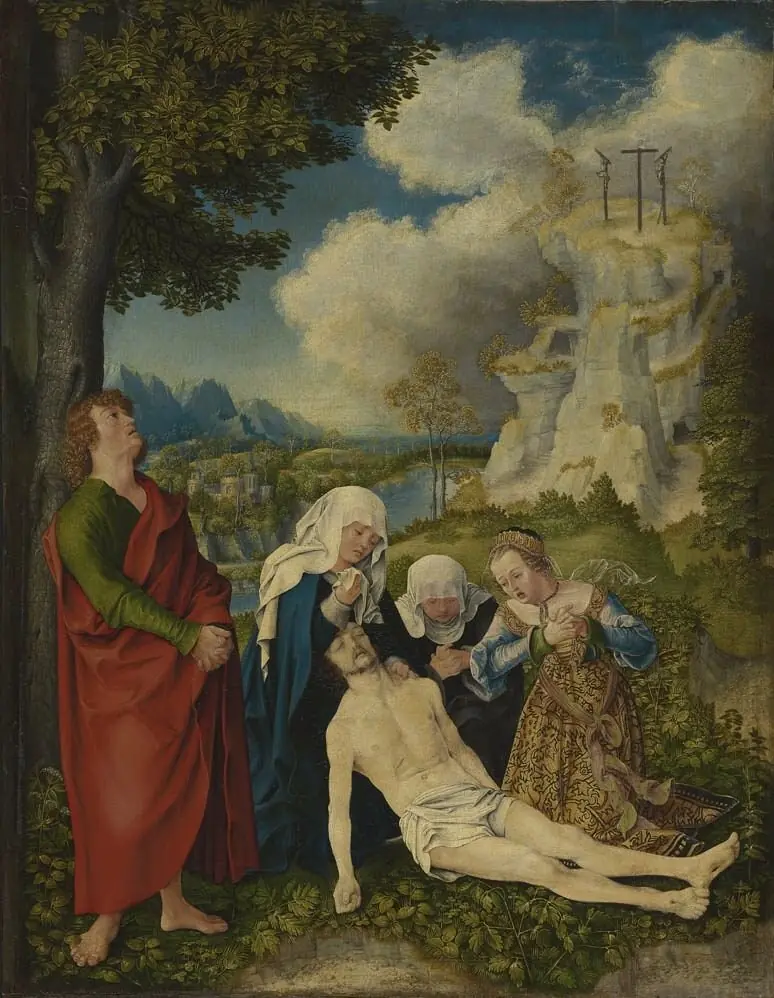 Lamentation of Christ
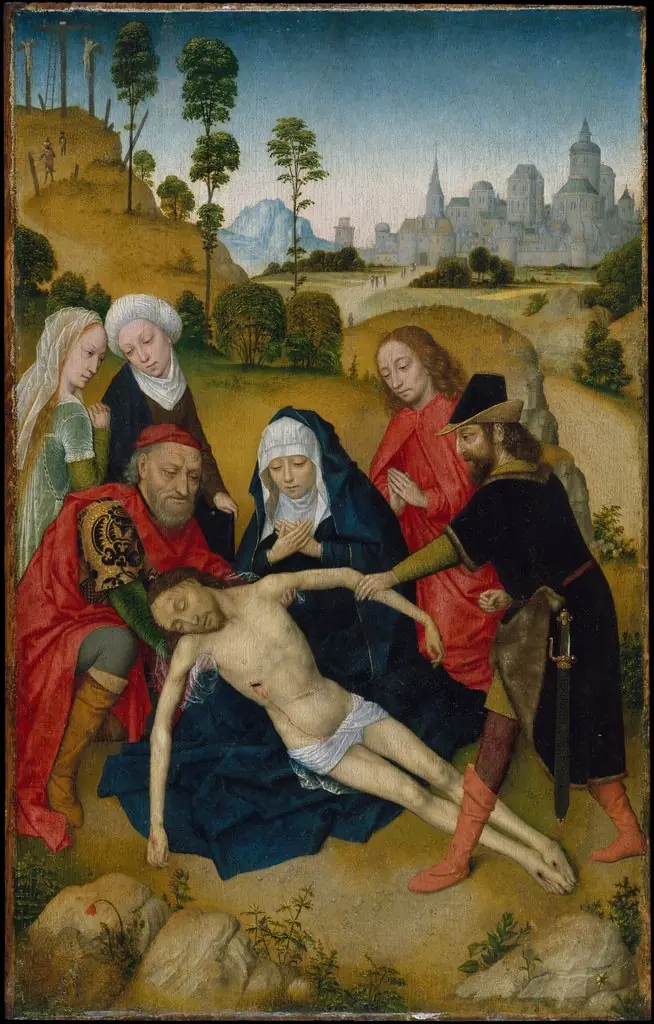 The Lamentation of Christ
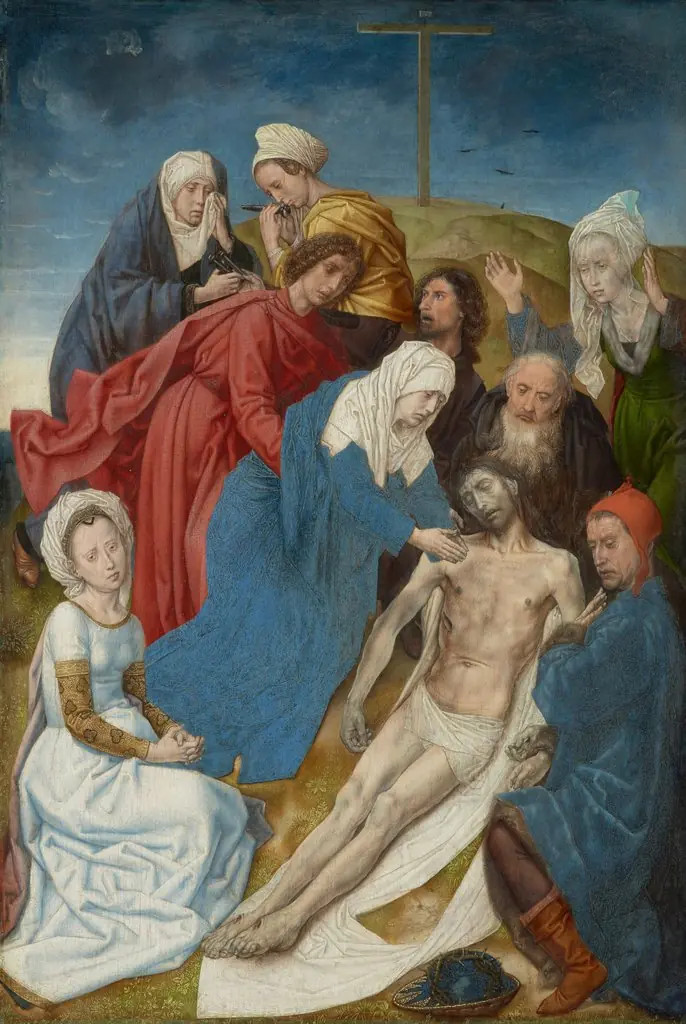 The Lamentation
 Die Kreuzabnahme
- Entombment and the Lamentaion over the dead Christ