Artwork
宋繡白鷹 軸
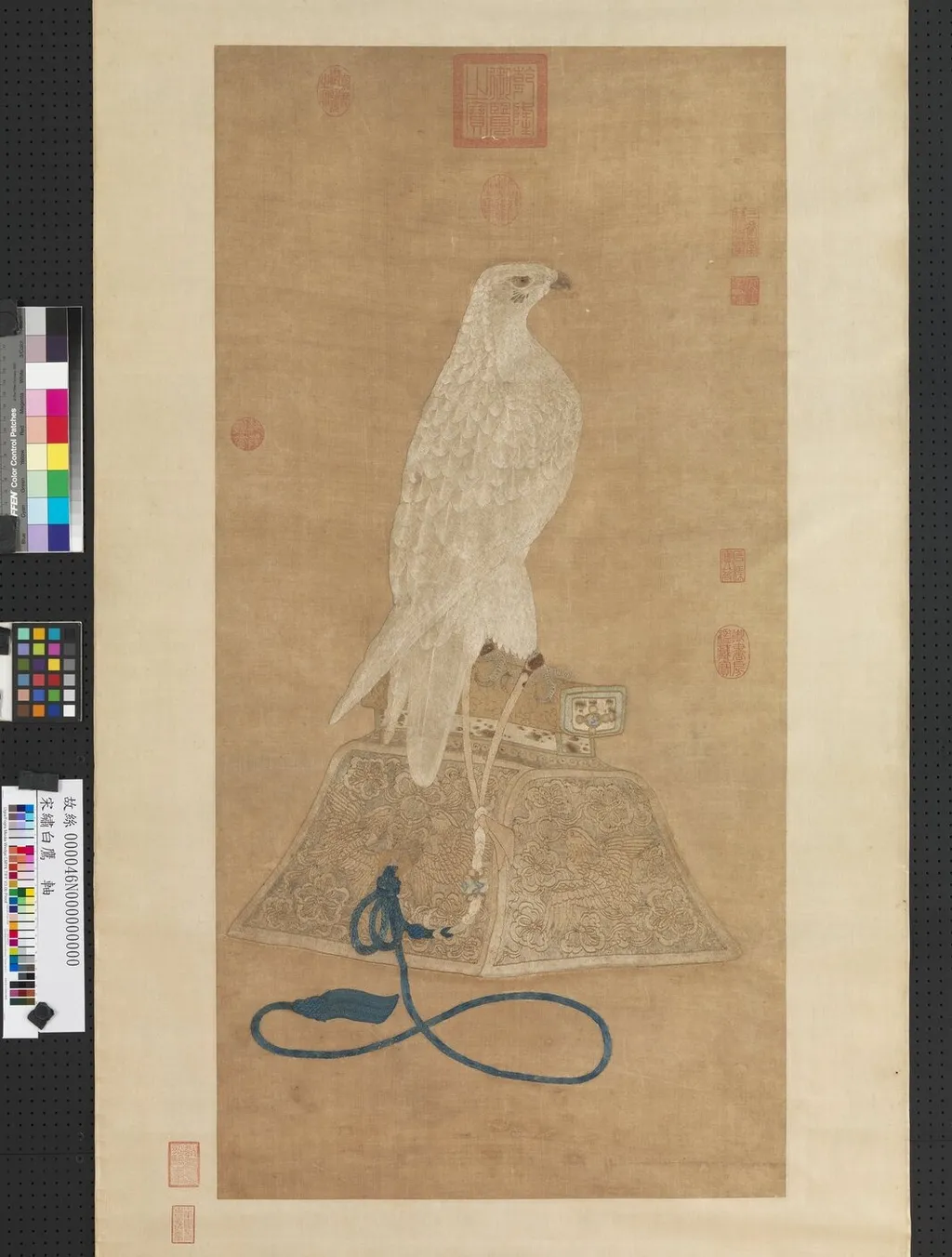
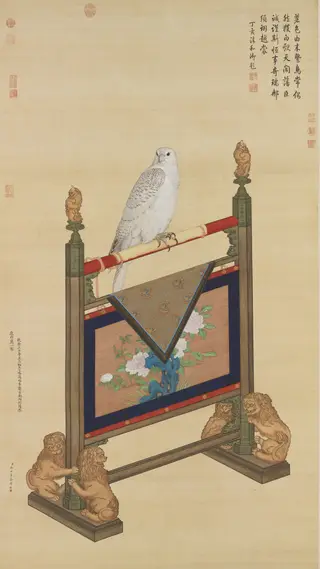
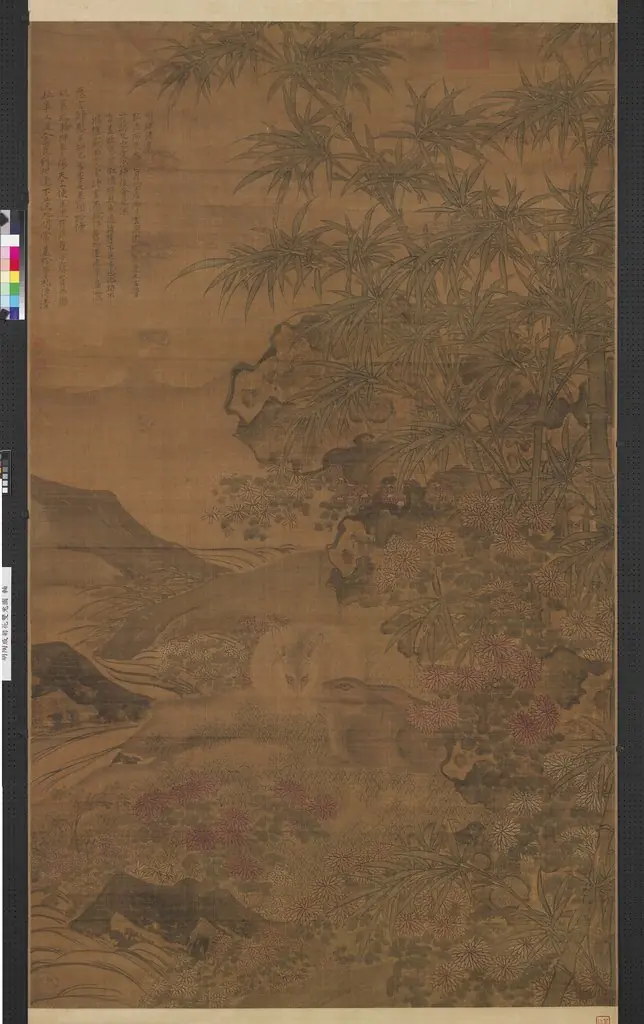
宋繡白鷹 軸 is an unspecified painting by the Romanesque artist Unknown. It dates from 1000 and is held in the collection of the National Palace Museum. This silk painting depicts a white falcon perched on an ornate stand, its leg bound by a slender blue leash.
About this work
Overview
This silk painting depicts a white falcon perched on an ornate stand, its leg bound by a slender blue leash. Executed with fine brushwork on a light brown background, the work emphasizes the bird’s alert posture and the detailed texture of its plumage. The piece is part of the National Palace Museum’s collection, reflecting the refined aesthetic of Song dynasty court art.
Subject & Meaning
The white falcon symbolizes vigilance and nobility, common themes in imperial hunting culture. Its poised stance and directed gaze suggest readiness, aligning with ideals of control and discipline valued in courtly life. The decorative base and leash imply domestication and status, reinforcing the bird’s role as a prized possession rather than a wild creature.
Technique & Style
Painted on silk with delicate brushstrokes, the artist used subtle gradations of white to render the falcon’s feathers, creating volume without heavy outlines. The blue leash contrasts sharply against the pale plumage, while the base features finely rendered patterns. The muted brown background enhances the subject’s clarity, characteristic of Song-era naturalism and restrained palette.
History & Provenance
The painting was likely produced during the Southern Song dynasty, when bird-and-flower subjects flourished in imperial ateliers. It entered the National Palace Museum’s collection following the relocation of imperial artifacts from Beijing to Taipei in the mid-20th century. Its preservation on silk attests to careful handling and storage over centuries.
Context
During the Song dynasty, hunting birds were cultivated as symbols of aristocratic refinement. Paintings of raptors served both as artistic exercises and as expressions of imperial power. This work aligns with a broader tradition of meticulous naturalism in court painting, where observation of nature was elevated to a disciplined art form.
Legacy
The painting exemplifies the technical precision and symbolic depth of Song dynasty bird-and-flower art. Its survival in near-original condition offers insight into the materials and methods of court artists. It continues to inform modern understanding of how nature was interpreted through controlled, elegant composition in Chinese painting.
Artist & collection