Artwork
Fudō Myōō with Four Attendants, Outlined in Seed Syllables
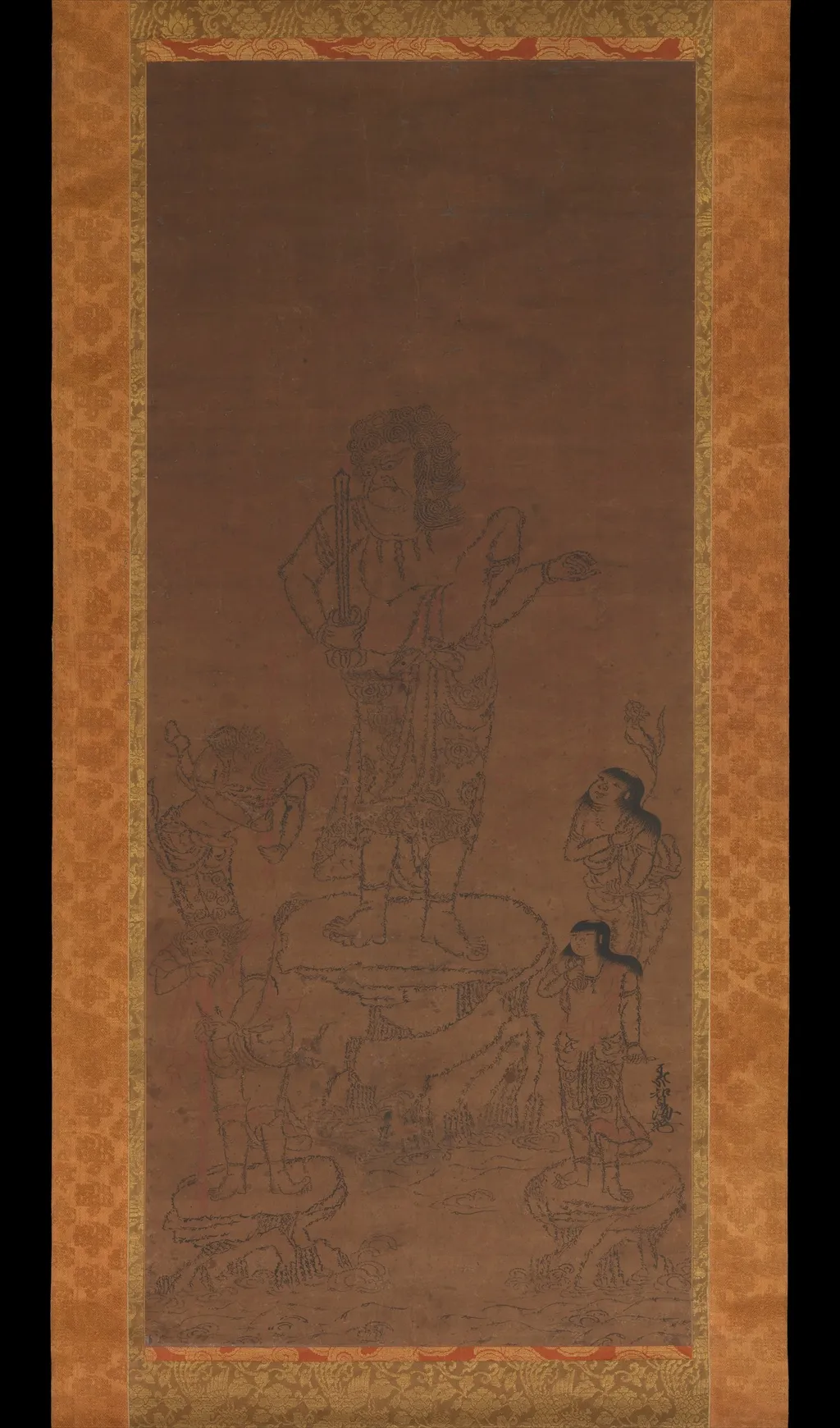
Fudō Myōō with Four Attendants, Outlined in Seed Syllables is an unspecified painting. It dates from 1449 and is held in the collection of the Metropolitan Museum of Art.
About this work
History & Provenance
The work, created in 1449 and attributed to the artist Chikai, is cataloged within the museum's holdings as a Japanese painting depicting a deity and a man.
The painting Fudō Myōō with Four Attendants, Outlined in Seed Syllables was created in Japan in 1449. While the primary entity record lists the artist as unknown, secondary cataloging attributes the work to the artist Chikai. The piece is currently held in the collection of the Metropolitan Museum of Art in New York.
The specific date of inception is recorded as January 1, 1449, marking its creation during the mid-fifteenth century.
The painting Fudō Myōō with Four Attendants, Outlined in Seed Syllables is held in the collection of the Metropolitan Museum of Art in New York. The work, created in 1449 and attributed to the artist Chikai, is cataloged within the museum's holdings as a Japanese painting depicting a deity and a man. While the specific accession number is not detailed in the provided records, the institution maintains the piece as part of its permanent collection.
The sources do not contain information regarding specific past exhibitions or a detailed provenance trail beyond its current location.
Context
Created in 1449, Fudō Myōō with Four Attendants, Outlined in Seed Syllables is a Japanese painting attributed to the artist Chikai and currently held by the Metropolitan Museum of Art. The work depicts the deity Fudō Myōō alongside four attendants, utilizing a distinctive technique where figures are outlined in seed syllables. As an artifact from mid-fifteenth-century Japan, the painting serves as a significant example of the period's religious art, reflecting specific iconographic traditions associated with the Myōō deities.
While the artist's broader career is not detailed in the available records, this specific piece stands as a documented contribution to the visual culture of the era, preserving the stylistic and spiritual characteristics of its time.
Overview
Fudō Myōō with Four Attendants, Outlined in Seed Syllables is a painted depiction of the Buddhist guardian deity Fudō Myōō flanked by four subordinate figures. The central figure stands upright, grasping a sword in one hand and a rope in the other, while the surrounding attendants assume distinct postures and expressions. The composition is distinguished by an overlay of seed syllables that trace the outlines of the forms.
Subject & Meaning
The central deity, Fudō Myōō, embodies immovable strength and the power to cut through illusion, symbolized by the sword and the binding rope. The four attendants, each rendered with individualized gestures, serve as extensions of the deity’s protective function, suggesting a collective guardianship. The inclusion of seed syllables, scriptural characters believed to contain intrinsic spiritual potency, adds a layer of esoteric meaning to the visual narrative.
Technique & Style
The painting employs a linear approach in which the primary contours of figures are defined by seed syllables, a practice that merges calligraphic elements with pictorial representation. This method creates a textured surface where textual symbols double as visual lines, reinforcing the connection between word and image. The overall style reflects a synthesis of devotional iconography and a codified symbolic language.
Artist & collection

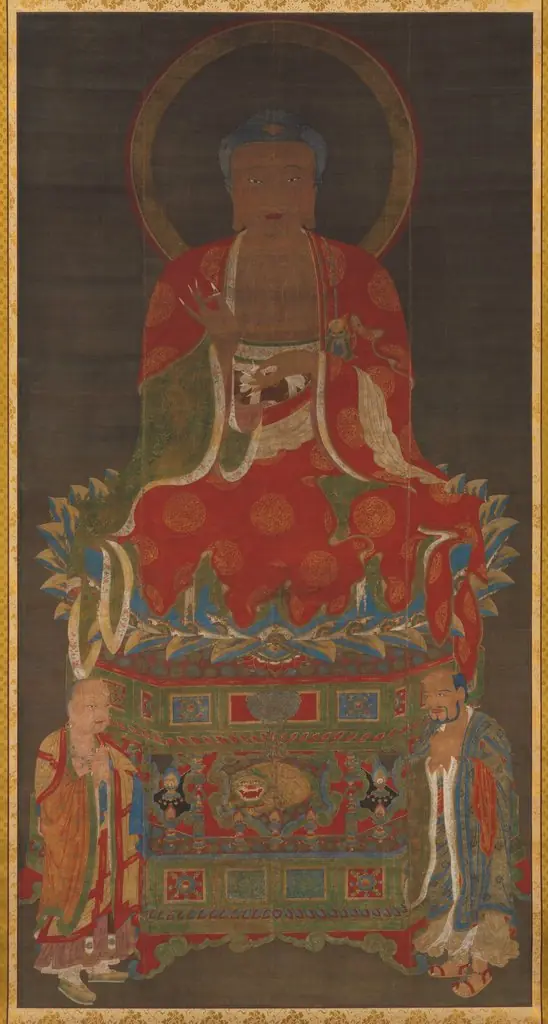
 Buddha Amitābha with Two Attending Bodhisattvas
 Daoist Immortal on a Qilin and Two Attendants
 The Four Deities of Mount Kōya
 Bathing of the Buddha Festival
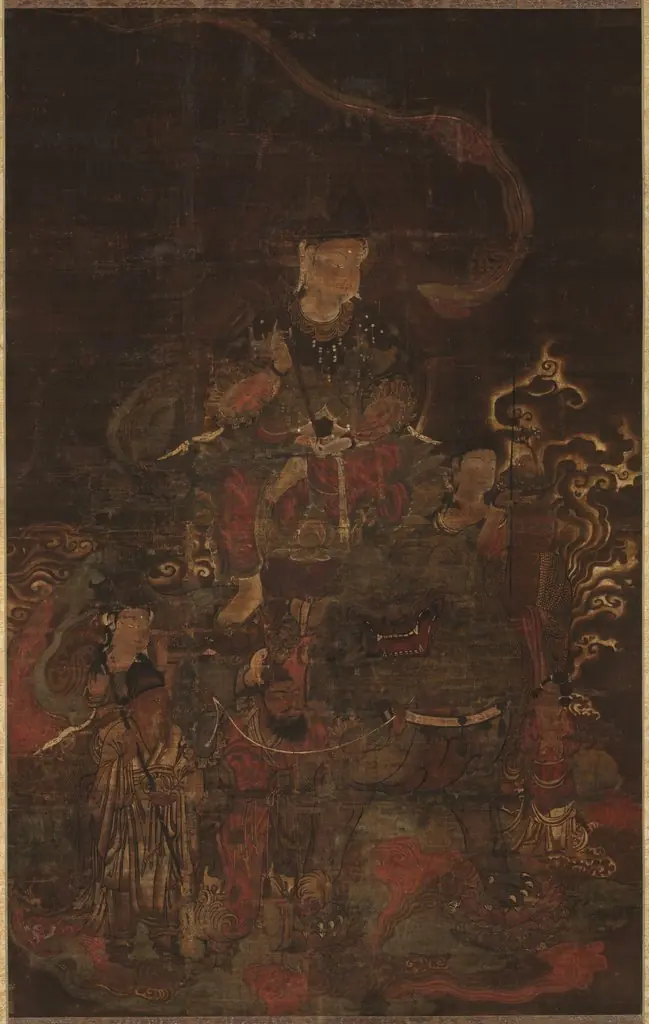 Monju Riding Lion with Attendants
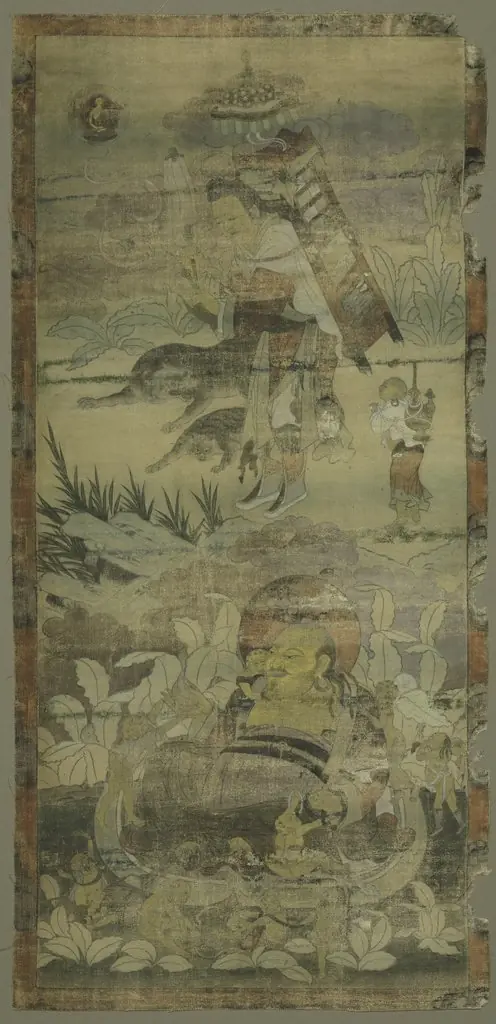 Lohans
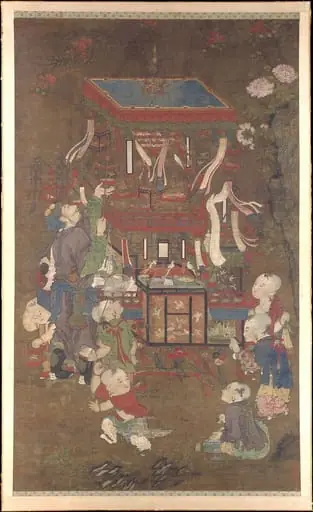 明 佚名 絹本設色 鳥販圖 軸|Bird peddler
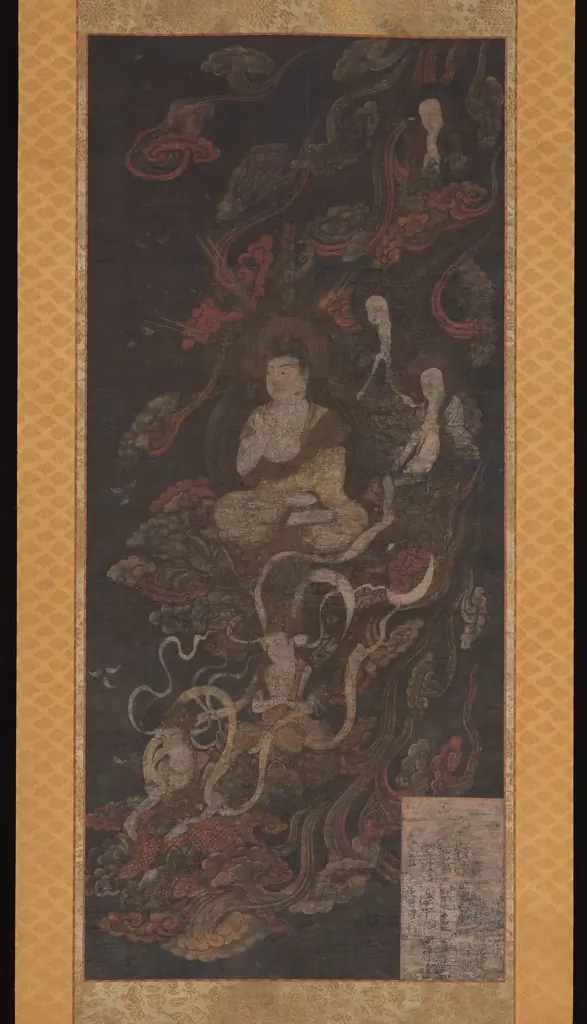 Welcoming Descent of Amida, the Buddha of Infinite Light, and His Holy Retinue
 Dongfang Shuo (Tongbang Sak), one of the Eight Chinese Immortals
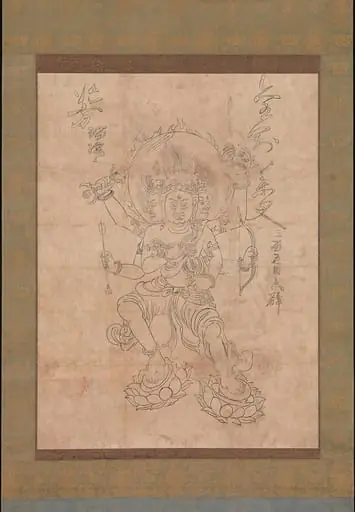 金剛夜叉明王|Kongōyasha Myōō