Artwork
Gaja Lakshmi, Ganesha, Krishna and Brahma
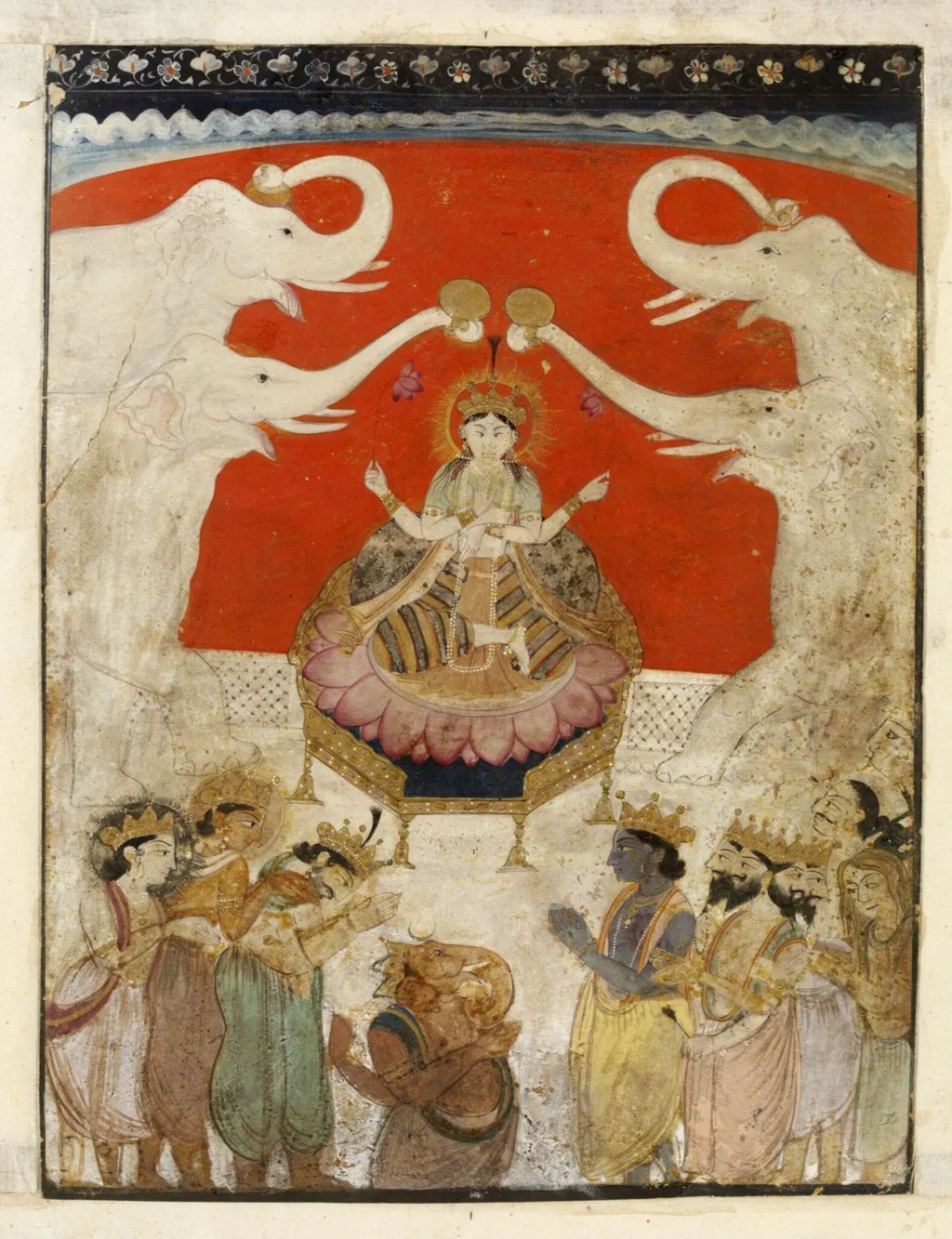
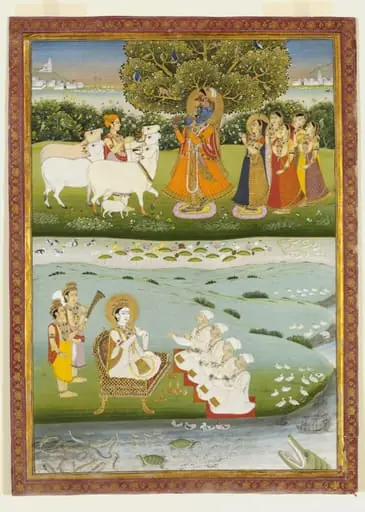
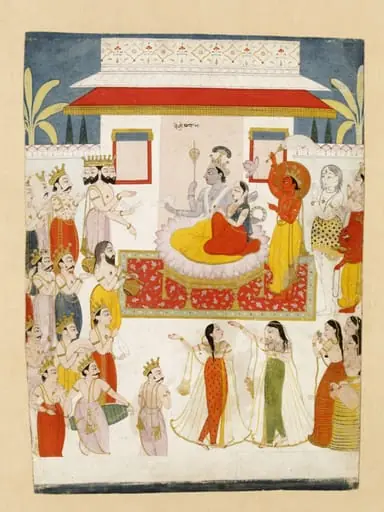
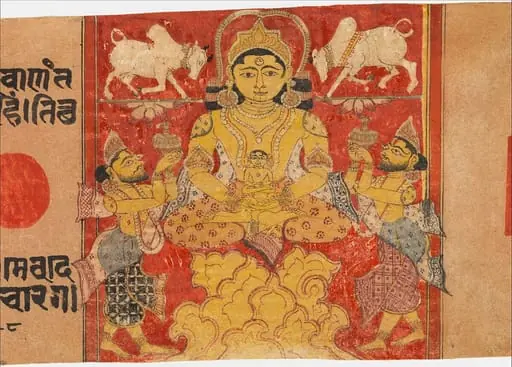
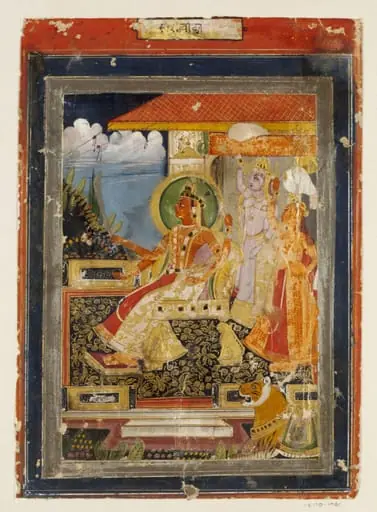
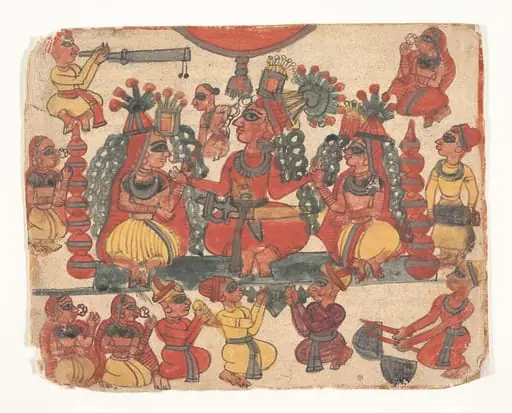
Gaja Lakshmi, Ganesha, Krishna and Brahma is a paint painting by the Rococo painting artist Unknown. It dates from 1760 and is held in the collection of the Victoria and Albert Museum. This 18th-century opaque watercolour on paper, dating to circa 1760, presents a vibrant depiction of a divine gathering.
About this work
Overview
This 18th-century opaque watercolour on paper, dating to circa 1760, presents a vibrant depiction of a divine gathering. At its core is a seated female figure surrounded by prominent Hindu deities and attendants, set against a distinctive red and blue backdrop.
Subject & Meaning
The central figure, identified by her golden halo and coin-holding gesture, is Gaja Lakshmi, the goddess of prosperity, uniquely depicted being bathed by elephants. She is accompanied by Ganesha, Krishna, and Brahma, symbolizing a convergence of divine attributes: prosperity, wisdom, divine love, and creation.
Technique & Style
Characterized by bright, flat colors, the painting employs a traditional opaque watercolour technique on paper. Notable compositional elements include the lotus-flower throne, an unusual design choice, and the dynamic curved trunks of the elephants, which introduce movement into the otherwise serene scene.
History & Provenance
Created around 1760, the painting's origins and ownership history prior to its current location are not detailed here. For comparable works, the Victoria and Albert Museum's collection offers insight into similar 18th-century Indian painting styles.
Context
This work reflects the religious and artistic traditions of 18th-century India, where such paintings served both devotional and decorative purposes. The inclusion of multiple major deities in one scene highlights the synthesizing nature of Hindu iconography during this period.
Legacy
While specific influence or notable exhibitions of this piece are not highlighted, it contributes to the broader understanding and appreciation of Indian miniature painting techniques and the evolution of Hindu deity representations in art.
Artist & collection