Artwork
Untitled
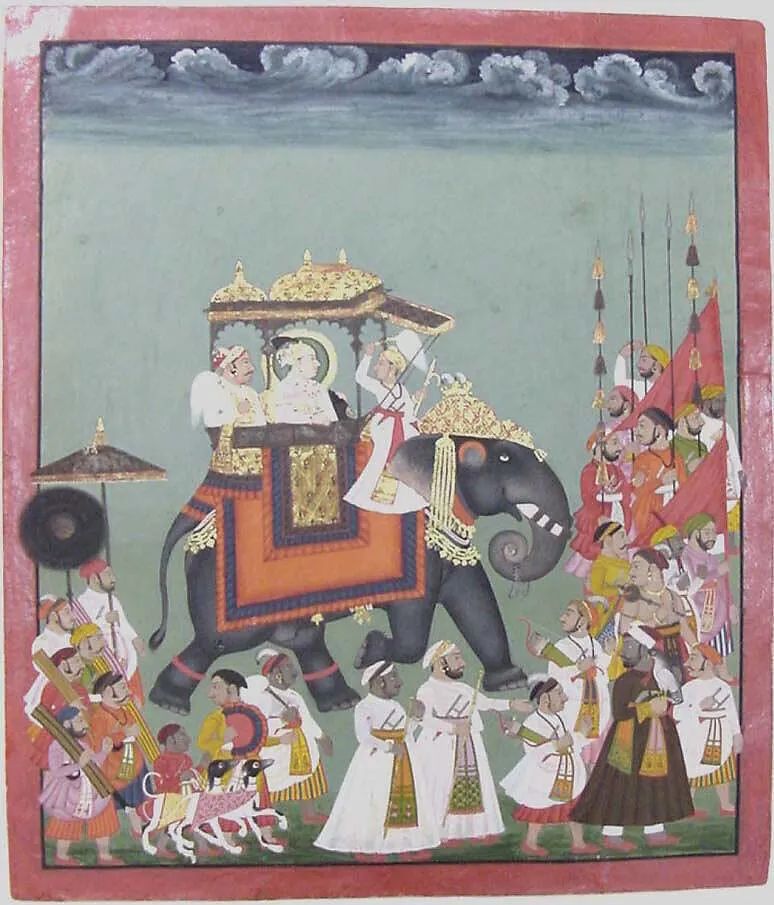
Untitled is a watercolor painting. It dates from 1755 and is held in the collection of the Metropolitan Museum of Art.
About this work
Subject & Meaning
The work functions primarily as a representation of these entities coexisting in a moment captured by an unknown artist of the region.
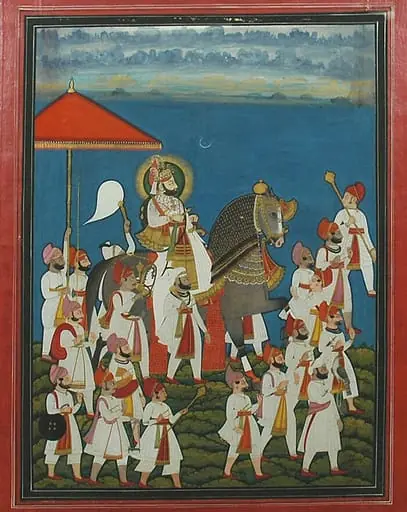
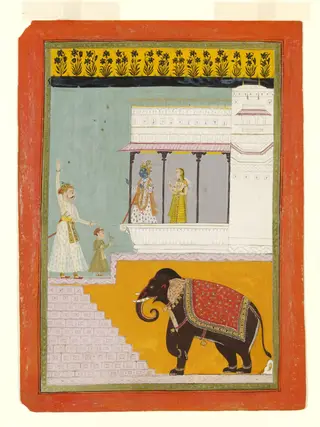
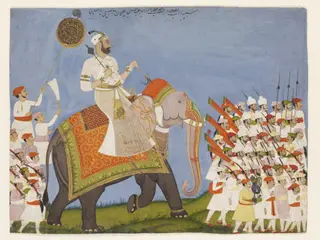
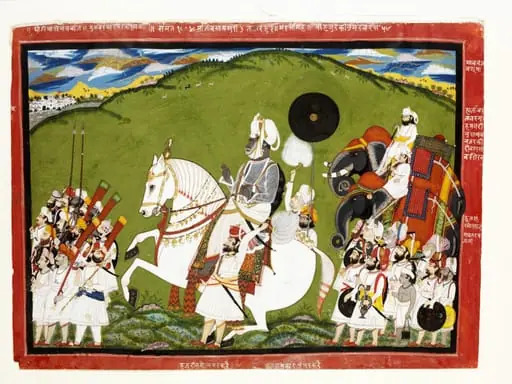
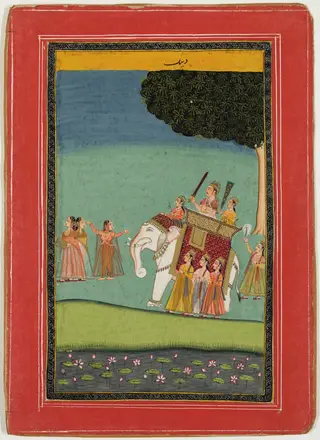
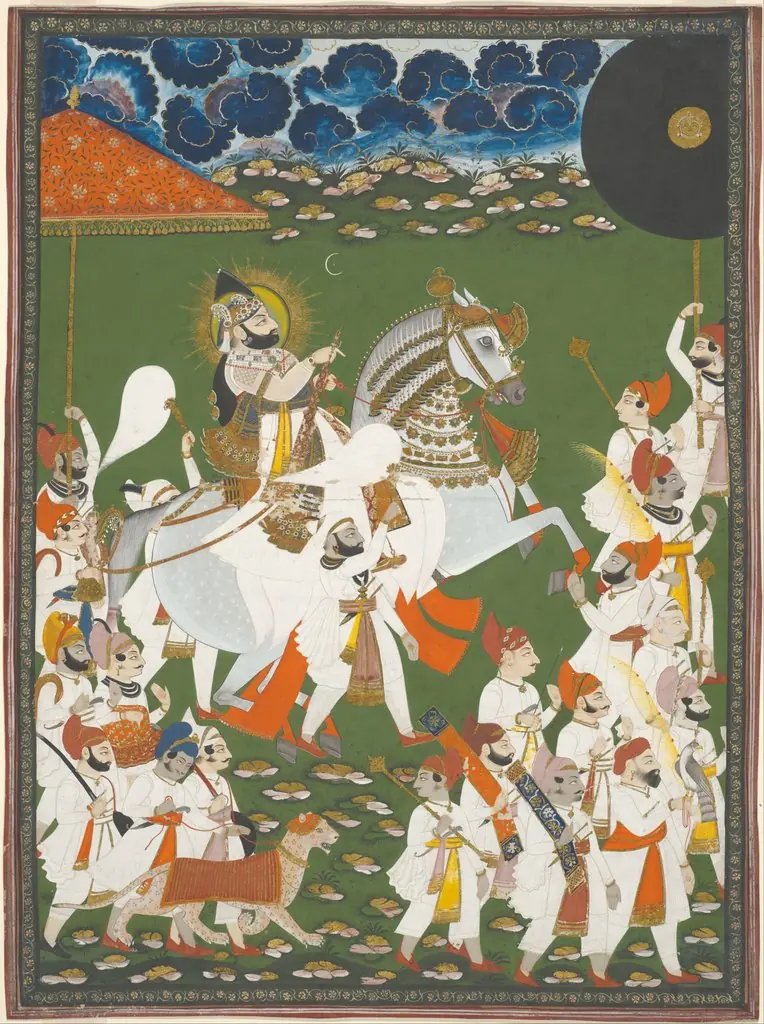
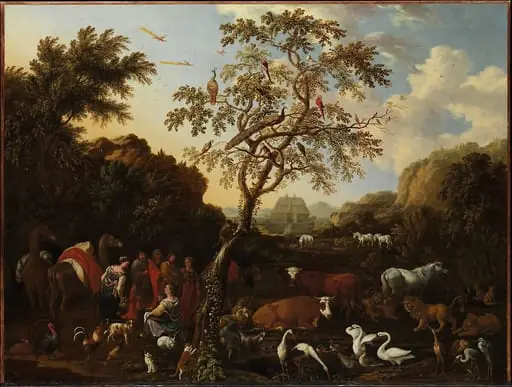
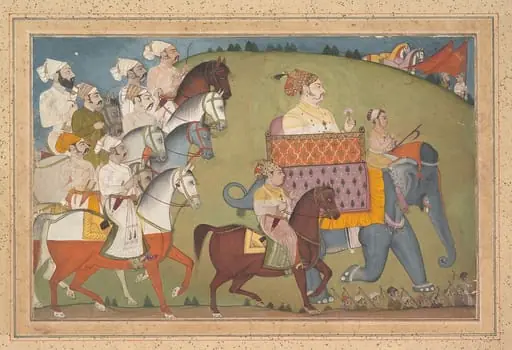
Created in Rajasthan, India, in 1755, this anonymous ink and opaque watercolor work depicts a genre scene featuring three distinct figures: a man, an elephant, and a dog. The composition brings together these specific subjects on paper, enhanced with gold detailing. While the visual elements clearly present an interaction between the human figure and the two animals within a specific cultural context, the available records do not elaborate on specific iconographic traditions, symbolic meanings, or the narrative intent behind this particular grouping.
The work functions primarily as a representation of these entities coexisting in a moment captured by an unknown artist of the region.
Technique & Style
Created in 1755 in Rajasthan, India, this anonymous work is executed in ink, opaque watercolor, and gold applied to a paper support. The piece measures 43.5 centimeters in height and 36.8 centimeters in width, characteristic of the regional painting traditions of that period. The formal composition depicts a man, an elephant, and a dog within a genre scene.
The integration of gold with opaque watercolor and ink suggests a technique designed to create luminous, decorative effects typical of Rajasthani manuscript and album painting practices. The medium combination allows for both fine linear definition and solid areas of color, while the inclusion of metallic elements indicates a level of luxury or ceremonial importance within its original context.
History & Provenance
The painting titled Untitled, executed in ink, opaque watercolor, and gold on paper, was created circa 1755 in the Rajasthan region of India. Its author is recorded as unknown, and it portrays a dog, an elephant, and a man within the genre‑scene category. The work measures 43.5 × 36.8 cm and is classified as a painting.
It entered the collection of the Metropolitan Museum of Art, New York, where it remains on view; the exact acquisition pathway is not specified in the documentation. The museum’s records list the piece’s inception as 1755‑01‑01, confirming its dating and provenance within the museum’s holdings.
Context
Scholars have highlighted the painting's role within 18th‑century Rajput visual culture, emphasizing its blend of naturalistic detail and symbolic exoticism. The depiction of a dog, elephant and man reflects contemporary Indian genre scenes that merged courtly patronage with European influences introduced through trade. As an anonymous work attributed to an Indian workshop, it illustrates the anonymity typical of miniature painting while providing insight into cross‑regional artistic exchange.
Its inclusion in the Metropolitan Museum of Art’s collection has enabled detailed technical analysis of ink, opaque watercolor and gold leaf application, positioning the piece as a key example for understanding the diffusion of stylistic motifs across Asia during the mid‑1700s.
Overview
This untitled painting, rendered in ink, opaque watercolor, and gold on paper, originates from the Mewar kingdom in what is now Rajasthan, India. It depicts a figure in a red coat mounted on a white elephant, accompanied by two dogs. The artwork is characterized by its flat perspective and vibrant palette, reflecting the artistic conventions prevalent in the royal courts of the region. Such works often served to document and celebrate the lives of the ruling elite.
Artist & collection