Artwork
Gajalakshmi: Lakshmi with Elephants
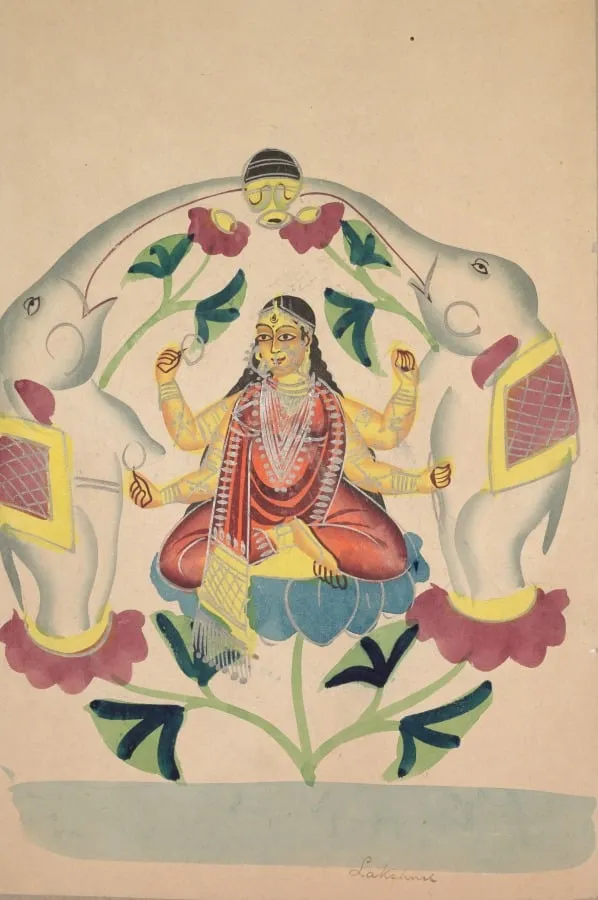
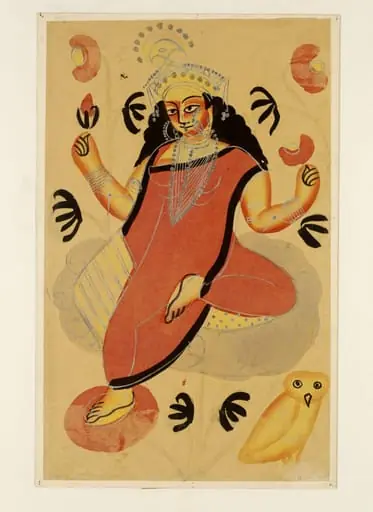
Gajalakshmi: Lakshmi with Elephants is an unspecified painting by the Bengal School artist Unknown. It dates from 1890 and is held in the collection of the Cleveland Museum of Art. The work depicts the Hindu goddess Lakshmi seated in the classic lotus posture upon a pink lotus blossom.
- Accession no.
- 2003.149
About this work
Overview
The work depicts the Hindu goddess Lakshmi seated in the classic lotus posture upon a pink lotus blossom. She is surrounded by two elephants whose trunks arch overhead, pouring water that creates a ceremonial shower. Lakshmi holds lotus flowers and is adorned with gold ornaments, while the elephants convey reverence through their gestures.
Subject & Meaning
Lakshmi, consort of Vishnu and deity of wealth and beauty, is presented in a ritual context where the elephants act as attendants, pouring water as a symbol of purification and abundance. The lotus throne underscores her association with purity and spiritual elevation, while the surrounding water emphasizes the flow of prosperity.
Technique & Style
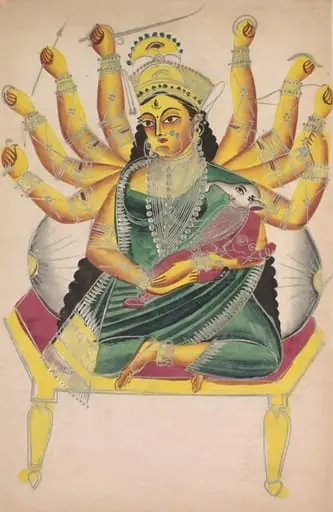
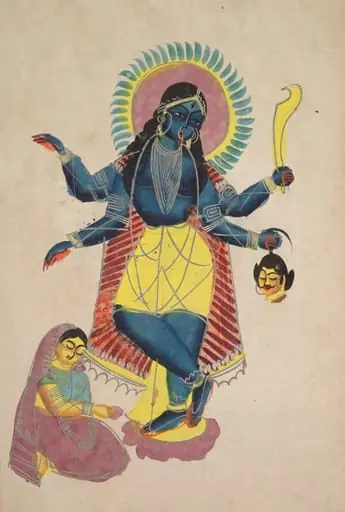
Executed in the Kalighat school of painting, the piece employs bold, uncomplicated outlines and flat, unmodulated colors characteristic of the genre. The composition relies on clear geometric shapes rather than chiaroscuro, allowing the figures to stand out sharply against the background, a style intended for rapid production and easy reproduction.
History & Provenance
Originating from the Kalighat district of Kolkata, the painting reflects the 19th‑century practice of creating inexpensive devotional images for pilgrims visiting the nearby shrine. Artists in this area produced such works quickly, using inexpensive pigments and paper, making them accessible to a broad audience.
Context
Kalighat paintings emerged as a response to the influx of pilgrims and the demand for portable religious imagery. The genre blends folk traditions with influences from colonial print culture, resulting in a distinctive visual language that balances narrative clarity with decorative vigor.
Legacy
Works from the Kalighat tradition continue to be studied for their role in democratizing religious art in Bengal. Their straightforward visual vocabulary and vivid coloration have informed later Indian popular art and remain a reference point for scholars examining the intersection of devotional practice and mass‑produced imagery.
Artist & collection