Artwork
Goddess Mangala, from a Devi Series
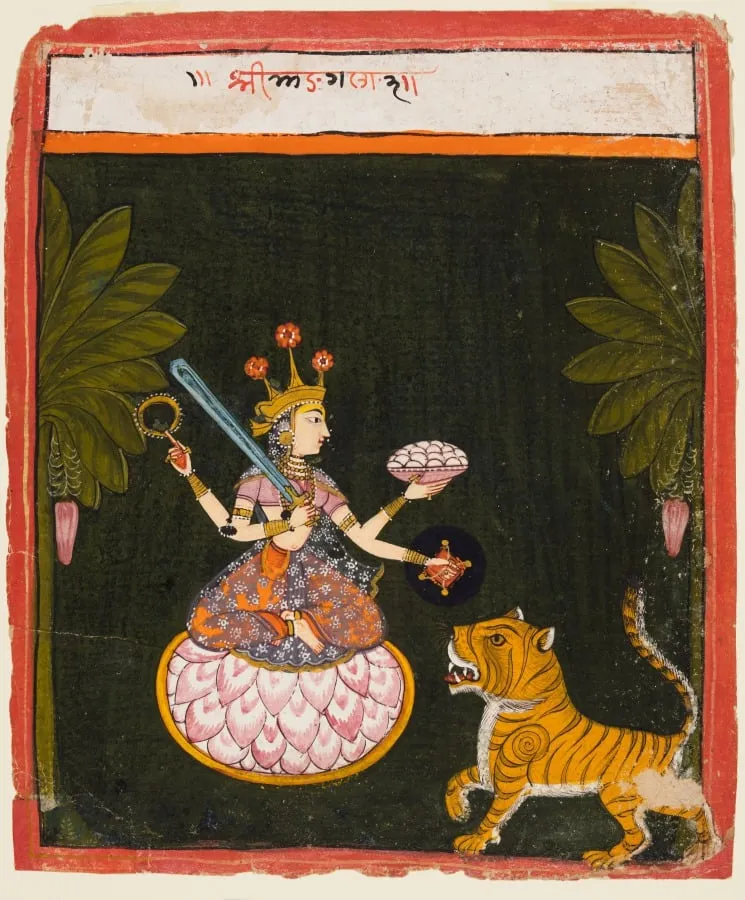
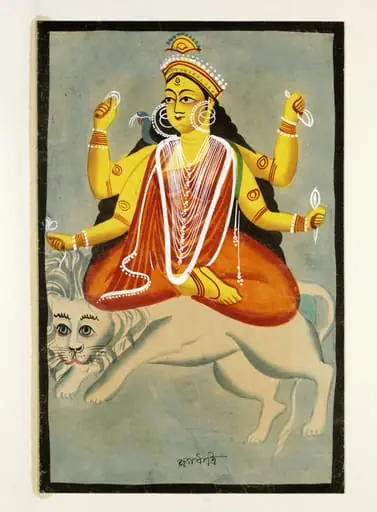
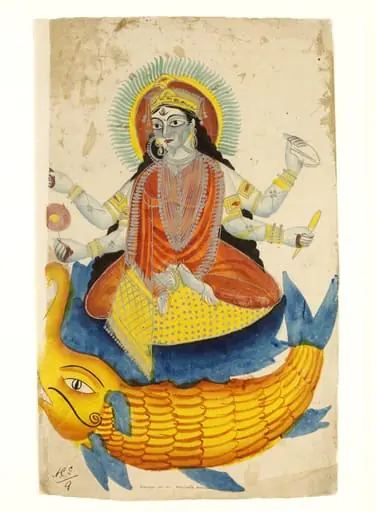
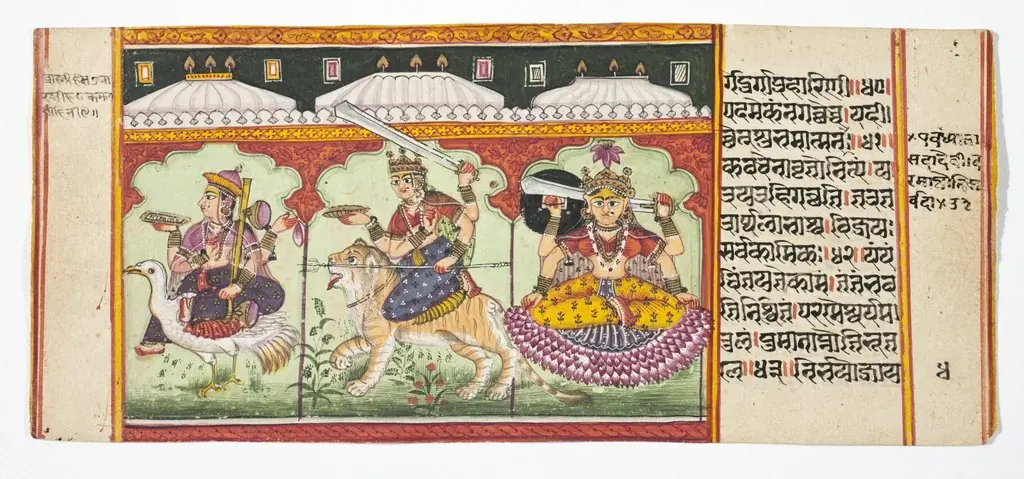
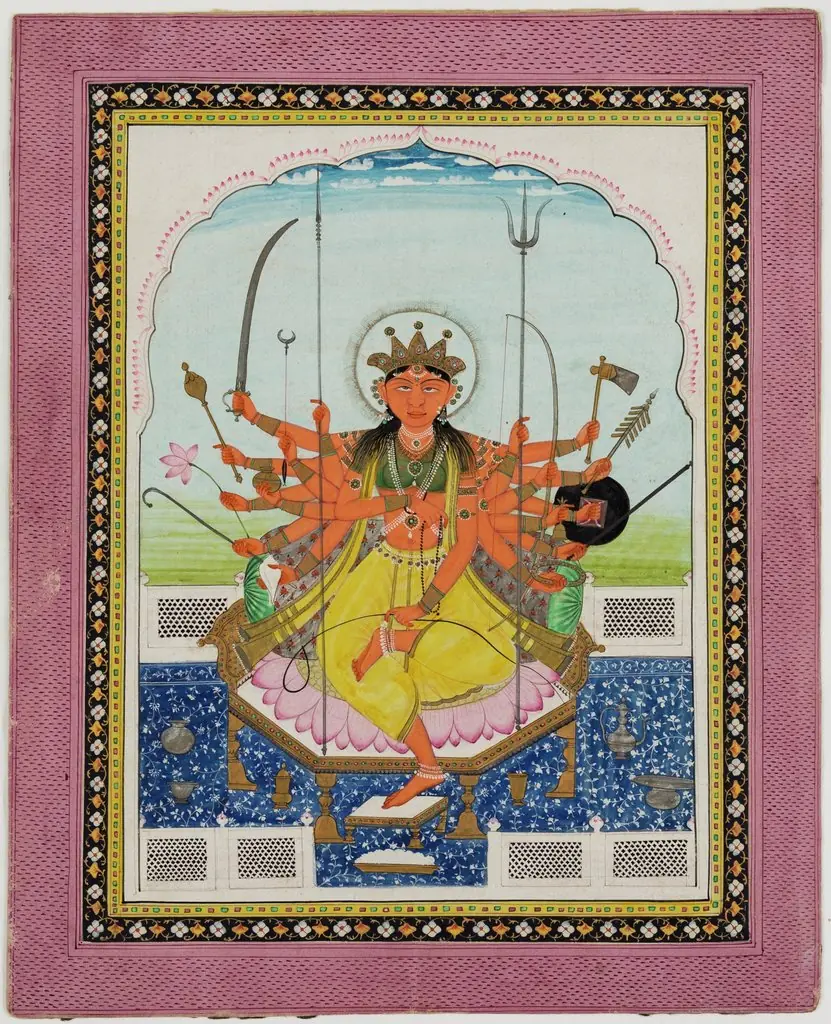
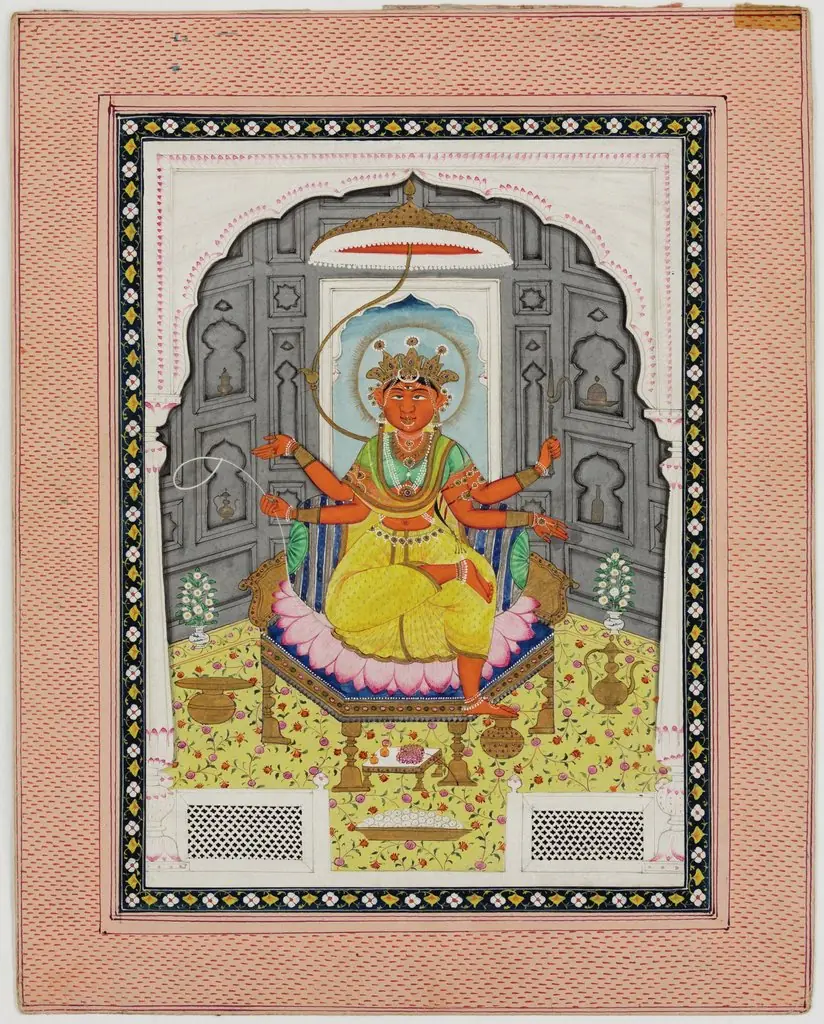
Goddess Mangala, from a Devi Series is an unspecified painting by the Baroque artist Unknown. It dates from 1660 and is held in the collection of the Cleveland Museum of Art. The painting depicts a four‑armed deity seated on an open lotus blossom against a deep green backdrop.
- Accession no.
- 2018.154
- Credit line
- Purchase and partial gift from the Catherine and Ralph Benkaim Collection; Severance and Greta Millikin Purchase Fund
About this work
Overview
The painting depicts a four‑armed deity seated on an open lotus blossom against a deep green backdrop. She is shown grasping a discus, a sword, a bowl of cakes, and a shield, while banana trees frame the composition and a tiger stands at her feet, serving as her mount.
Subject & Meaning
The figure represents a regional incarnation of the Hindu goddess Devi known locally as Mangala. Although the name does not appear in the principal Hindu scriptures, the iconography, lotus seat, tiger vehicle, and martial attributes, signals a divine protector associated with fertility, abundance, and martial strength within the local religious tradition.
Technique & Style
Rendered in a flat, decorative manner, the work employs bold outlines and a limited palette dominated by dark green and vivid reds. The lotus and surrounding foliage are stylized rather than naturalistic, emphasizing symbolic meaning over realistic depiction, a characteristic approach in many regional Indian devotional paintings.
Context
The painting belongs to a series of works devoted to various forms of the Devi, likely produced in the Rajasthan‑Ajmer area of India. Such series were commonly used in temples or household shrines to invoke the protective and nurturing aspects of the goddess for local worshippers.
Artist & collection